Press Brake Case Study: Upgrading From Manual Bending To Automated Production


Introduction: The Evolution of Metal Fabrication
In the competitive landscape of modern metal fabrication, the transition from manual labor to automated systems represents the most significant leap in productivity and profitability. This Press Brake Case Study: Upgrading From Manual Bending To Automated Production examines the journey of a mid-sized fabrication shop that faced the common bottleneck of manual bending limitations. As demand for high-precision, high-volume components increased, the reliance on manual press brake operators led to inconsistent bend angles, fatigue-related errors, and slow throughput.
HARSLE has observed that many manufacturers reach a plateau where manual operations can no longer keep pace with market expectations. By integrating advanced CNC press brake technology, shops can achieve repeatable accuracy that is impossible to maintain manually. This article explores the technical, operational, and financial implications of making the switch to automated bending, providing a roadmap for businesses looking to modernize their production lines.
The shift toward automation is not merely about replacing human labor; it is about augmenting the capabilities of the workforce. When a shop upgrades to a HARSLE CNC press brake, the operator transitions from a manual laborer to a system supervisor. This change reduces physical strain, minimizes scrap rates, and allows for the production of complex geometries that were previously considered too difficult or time-consuming to manufacture.
Throughout this case study, we will analyze the specific challenges faced by a typical fabrication facility, the selection process for new machinery, and the measurable outcomes of implementing automated bending solutions. By understanding these dynamics, shop owners can make informed decisions about their capital investments in metal fabrication equipment.
Key Considerations for Transitioning to Automation
Before investing in automated bending technology, it is essential to evaluate the current state of your production environment. The primary consideration is the volume and complexity of the parts being produced. If your shop frequently handles high-mix, low-volume production, the flexibility of a CNC press brake with quick-change tooling is paramount. Conversely, for high-volume, repetitive tasks, robotic integration or automated backgauge systems offer the highest return on investment.
Another critical factor is the skill level of your existing workforce. Upgrading to automated production requires a shift in mindset. Operators must be trained in CNC programming, machine maintenance, and quality control protocols. HARSLE provides comprehensive training programs to ensure that the transition is smooth and that the team is fully equipped to leverage the advanced features of the new equipment.
Space and layout optimization also play a significant role. Automated systems often require a larger footprint than manual machines, especially when incorporating robotic arms or material handling conveyors. A thorough site assessment is necessary to ensure that the workflow remains efficient and that safety protocols are strictly followed. Integrating a new press brake into an existing production line requires careful planning to avoid bottlenecks in upstream and downstream processes.
Financial justification is the final, and perhaps most important, consideration. While the initial capital expenditure for a high-end CNC press brake is significant, the long-term savings in labor costs, material waste, and increased throughput provide a compelling ROI. Shops must analyze their current cost-per-part and project the reduction in overhead that automation will provide over the machine’s lifecycle.
Technical Details: The HARSLE Advantage
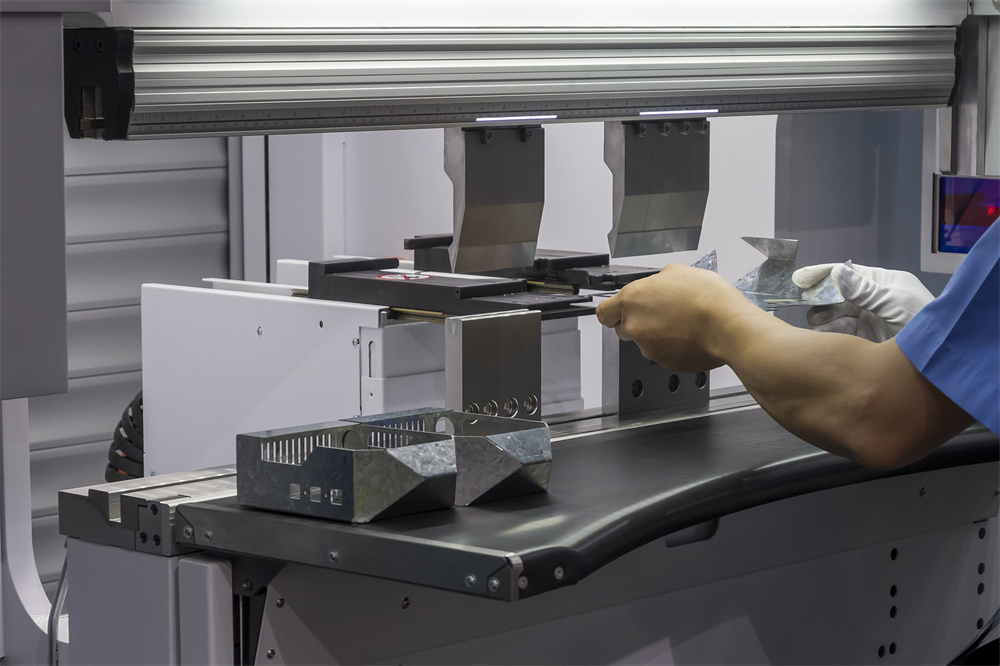
The core of this Press Brake Case Study: Upgrading From Manual Bending To Automated Production lies in the technical superiority of HARSLE’s CNC systems. Our press brakes are equipped with high-precision hydraulic synchronization, ensuring that the ram remains perfectly parallel to the bed throughout the entire bending cycle. This is achieved through advanced proportional valve technology and high-resolution linear encoders that provide real-time feedback to the controller.
The CNC controller itself is the brain of the operation. Modern HARSLE controllers support 3D simulation, allowing operators to visualize the bending process before the first piece of metal is touched. This feature significantly reduces setup time and prevents costly mistakes. Furthermore, the integration of multi-axis backgauges allows for the precise positioning of complex parts, enabling the creation of intricate shapes with minimal manual intervention.
Tooling flexibility is another technical pillar. HARSLE offers a wide range of quick-change clamping systems that allow operators to swap out punches and dies in seconds rather than minutes. This capability is essential for shops that need to pivot quickly between different job orders. By reducing downtime between setups, the overall machine utilization rate increases dramatically, directly impacting the bottom line.
Safety is non-negotiable in automated production. HARSLE machines are equipped with state-of-the-art laser light curtains and safety interlocks that monitor the bending zone in real-time. These systems automatically stop the machine if an obstruction is detected, protecting the operator without sacrificing productivity. This combination of speed, precision, and safety is what sets HARSLE apart in the metal fabrication equipment market.
Selection Advice: Choosing the Right Equipment
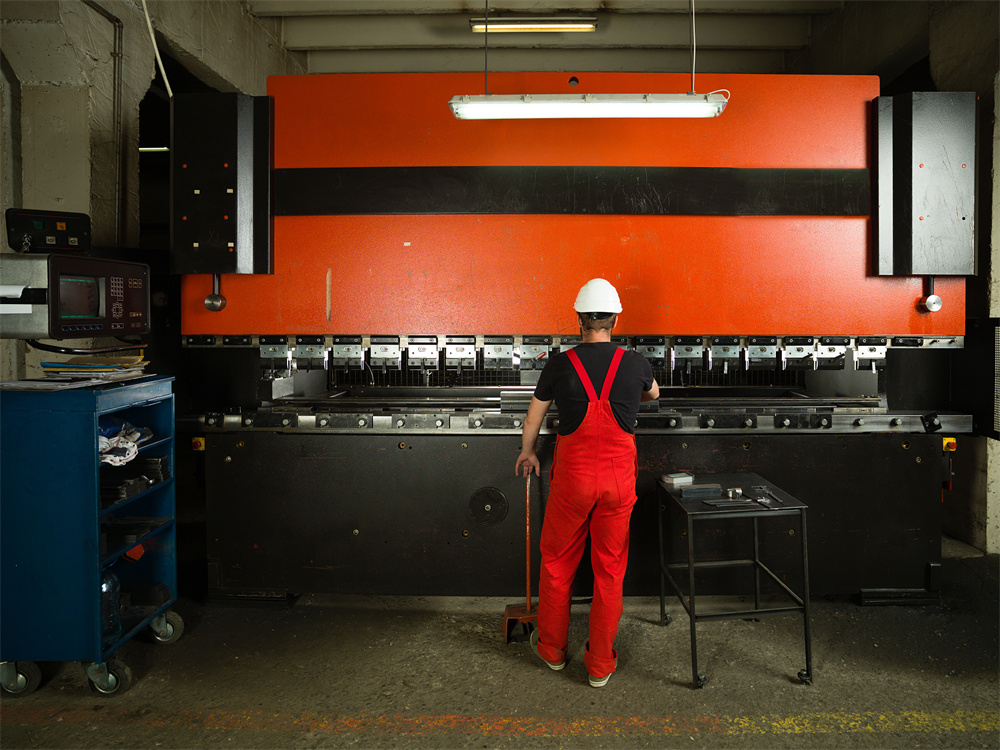
When selecting a press brake for your shop, start by defining your material requirements. Consider the maximum thickness, length, and tensile strength of the materials you typically bend. A machine that is undersized will struggle with heavy-duty tasks, leading to premature wear and poor bend quality, while an oversized machine may be an unnecessary expense. HARSLE offers a diverse range of tonnages and bed lengths to match your specific production needs.
Evaluate the software ecosystem. The best press brake is only as good as the software that drives it. Look for systems that offer offline programming capabilities, allowing your engineers to prepare bending sequences in the office while the machine is busy on the shop floor. This “lights-out” preparation capability is a game-changer for maximizing machine uptime.
Consider the level of automation required. Do you need a fully robotic cell, or would a semi-automated system with an advanced backgauge and automatic crowning be sufficient? HARSLE consultants work closely with clients to perform a gap analysis, identifying the specific areas where automation will provide the most benefit. We emphasize a modular approach, allowing you to start with a high-performance CNC press brake and add automation features as your business grows.
Finally, prioritize after-sales support and service. A press brake is a long-term asset, and you need a partner who provides reliable maintenance, spare parts availability, and technical support. HARSLE’s global network ensures that you are never left waiting for critical components. Investing in a brand with a proven track record of reliability is the best insurance policy for your production line.
FAQ: Common Questions About Press Brake Upgrades
How long does it take to see an ROI on a CNC press brake?
While every shop is different, many of our clients see a return on investment within 18 to 36 months, depending on the volume of work and the reduction in scrap rates and labor costs.
Is it difficult to train staff on new CNC press brakes?
HARSLE provides comprehensive training sessions. While there is a learning curve, most operators find that the intuitive interface of our CNC controllers makes the transition from manual to automated bending much easier than expected.
What kind of maintenance is required for a CNC press brake?
Regular maintenance includes checking hydraulic fluid levels, cleaning the backgauge rails, inspecting tooling for wear, and performing periodic software updates. We provide a detailed maintenance schedule with every machine.
Can I bend complex shapes with a standard CNC press brake?
Yes, with the right tooling and multi-axis backgauge configuration, you can achieve highly complex geometries. Our 3D simulation software helps you verify the feasibility of a design before you start bending.
Why choose HARSLE over other manufacturers?
HARSLE combines high-quality engineering with competitive pricing and world-class support. Our focus on innovation and customer-centric solutions makes us a leader in the metal fabrication equipment industry.
Conclusion: Embracing the Future of Fabrication
The transition from manual bending to automated production is a transformative step for any metal fabrication business. As demonstrated in this Press Brake Case Study: Upgrading From Manual Bending To Automated Production, the benefits—ranging from increased precision and speed to improved safety and reduced labor costs—are substantial. By choosing the right HARSLE press brake and investing in the necessary training and infrastructure, you position your shop for long-term success in an increasingly demanding market.
Automation is not just a trend; it is the new standard for industrial manufacturing. As technology continues to evolve, the gap between those who embrace automation and those who rely on manual methods will only widen. Now is the time to evaluate your production capabilities and take the necessary steps to modernize your facility. With HARSLE as your partner, you can navigate this transition with confidence, knowing that you have the best equipment and support in the industry.
We invite you to reach out to our team of experts to discuss your specific fabrication challenges. Whether you are looking to upgrade a single machine or overhaul your entire production line, HARSLE has the expertise and the technology to help you achieve your goals. Let us help you turn your production bottlenecks into competitive advantages.