
How a Back Gauge Press Brake System Enhanced Repeatability in Industrial Fabrication

Introduction
In the modern landscape of metal fabrication, precision is not merely a goal; it is the baseline requirement for survival. As industries demand tighter tolerances and more complex geometries, the role of the press brake has evolved from a simple bending tool to a highly sophisticated, computer-controlled powerhouse. Central to this evolution is the back gauge system. When we analyze how a back gauge press brake system enhanced repeatability in industrial fabrication, we uncover the secret to high-volume, high-accuracy production that defines market leaders today.
Repeatability refers to the ability of a machine to produce the same part with identical dimensions time after time, regardless of the operator’s skill level or the time of day. In manual or older hydraulic systems, repeatability was often compromised by human error, material spring-back variations, and mechanical drift. The integration of advanced, multi-axis back gauge systems has effectively removed these variables, turning the press brake into a reliable, automated partner in the fabrication workflow.
HARSLE has been at the forefront of this technological shift, engineering systems that prioritize structural rigidity and software-driven accuracy. By understanding the mechanics of these systems, fabricators can significantly reduce scrap rates, minimize setup times, and increase overall throughput. This article explores the technical nuances, operational benefits, and strategic considerations for implementing advanced back gauge technology in your facility.
Whether you are a job shop handling small batches or a large-scale manufacturer producing thousands of identical components, the back gauge is the unsung hero of your production line. It dictates the positioning of the sheet metal before the punch descends, ensuring that every bend occurs at the exact coordinate required. As we delve deeper, we will examine how these systems have transformed the industry standard for quality control.
Key Considerations for Repeatability
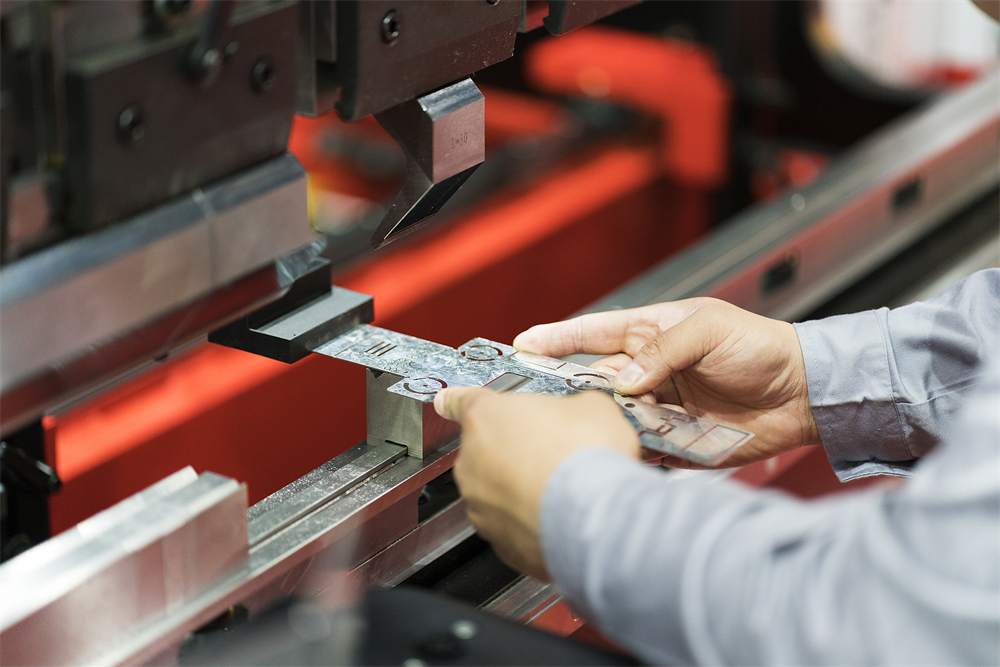
Achieving consistent repeatability in metal fabrication is a multifaceted challenge. The primary factor is the positioning accuracy of the back gauge. If the gauge fingers do not return to the exact programmed position within a few microns, the bend line will shift, leading to cumulative errors in the final part dimensions. Modern systems utilize high-precision ball screws and linear guides to ensure that the X-axis (depth) and R-axis (height) movements are perfectly repeatable.
Another critical consideration is the material behavior. Different metals, and even different batches of the same metal, exhibit varying degrees of spring-back. A sophisticated back gauge system, when integrated with a CNC controller, allows for real-time adjustments. By compensating for material thickness variations and tensile strength differences, the system ensures that the back gauge position remains optimal for the specific material being processed, thereby maintaining repeatability across diverse production runs.
The rigidity of the back gauge assembly itself is often overlooked. During the bending process, the sheet metal exerts significant force. If the back gauge fingers or the support beam flexes under this pressure, the part will not be held securely, leading to inconsistent bend angles. High-quality HARSLE press brakes utilize reinforced back gauge structures that resist deformation, ensuring that the reference point remains stable throughout the entire bending cycle.
Finally, the human element must be addressed. Even with the best machinery, operator fatigue or inconsistent loading techniques can introduce errors. Advanced back gauge systems often include visual aids, such as LED indicators or laser positioning, which guide the operator in placing the sheet correctly. By standardizing the loading process, the back gauge system acts as a quality control gate, ensuring that the machine only cycles when the part is correctly positioned.
Technical Details of Modern Back Gauge Systems
Modern back gauge systems are typically defined by their axis count. A standard 2-axis (X and R) system allows for depth and height adjustment, which is sufficient for most simple bending tasks. However, for complex parts, 4-axis, 6-axis, or even 8-axis systems are employed. These additional axes allow for independent movement of the gauge fingers, enabling the bending of tapered parts or parts with non-parallel flanges, which would be impossible to achieve with a fixed-position gauge.
The drive mechanism is the heart of the back gauge. HARSLE utilizes high-torque AC servo motors coupled with precision ball screws. This combination provides rapid acceleration and deceleration without sacrificing positioning accuracy. The use of closed-loop feedback systems—where the controller constantly monitors the actual position of the gauge fingers against the programmed position—ensures that any deviation is corrected in milliseconds, maintaining the integrity of the bend.
Software integration is the brain of the operation. Modern CNC controllers, such as those found on HARSLE machines, allow for the storage of thousands of part programs. Each program contains the specific back gauge coordinates for every bend in a sequence. This eliminates the need for manual setup between jobs, drastically reducing downtime. Furthermore, offline programming software allows engineers to simulate the bending process, calculating the exact back gauge positions before the material even reaches the shop floor.
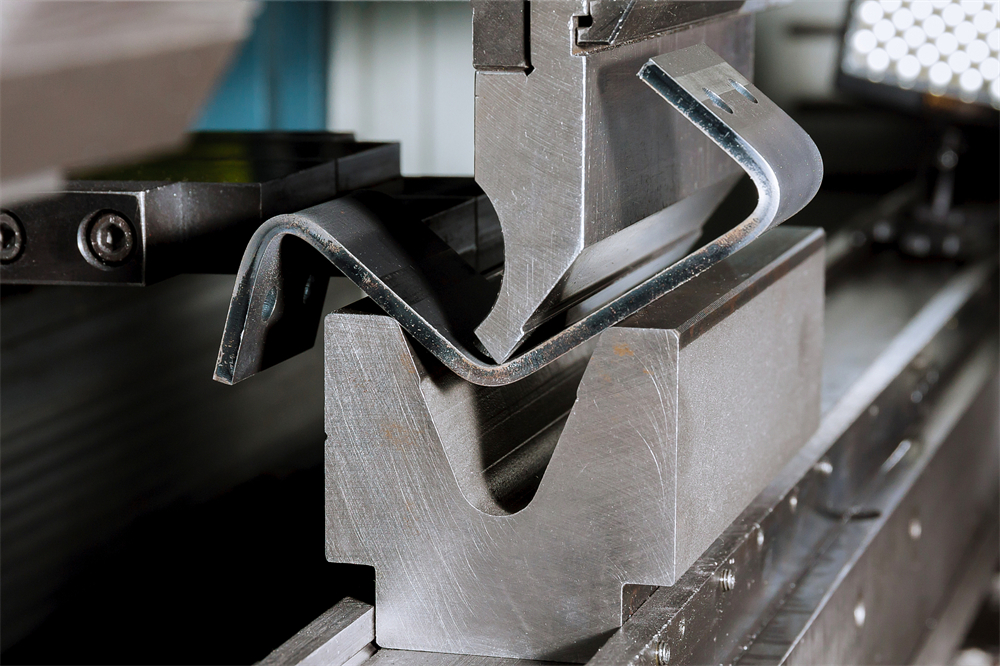
Advanced features like “finger-retraction” are also vital. During the bending process, the sheet metal moves as it is formed. If the back gauge fingers remain in a fixed position, they can interfere with the metal, causing deformation or marking. Modern systems automatically retract the fingers the moment the punch contacts the material, allowing the metal to flow freely while maintaining the reference point for the next bend. This feature is essential for maintaining high-quality finishes and dimensional accuracy.
Selection Advice for Fabricators
When selecting a press brake, the back gauge system should be a primary point of evaluation. First, assess the complexity of your typical part portfolio. If you primarily produce simple brackets, a robust 2-axis system may suffice. However, if your shop handles complex enclosures, cabinets, or aerospace components, investing in a 4-axis or 6-axis system will provide the versatility needed to handle future growth and more intricate designs.
Consider the speed and travel range of the back gauge. A system that moves quickly between positions reduces the cycle time per part, which is critical for high-volume production. Additionally, ensure that the travel range of the X-axis is sufficient for your largest parts. A back gauge that lacks the necessary reach will force operators to use manual stops, which immediately compromises the repeatability and safety of the operation.
Durability and maintenance are also paramount. Look for systems that feature sealed linear guides and protected ball screws to prevent dust and metal shavings from entering the mechanism. HARSLE designs its back gauge systems with ease of maintenance in mind, providing accessible lubrication points and modular components that can be replaced quickly if necessary. A machine that is easy to maintain will provide a higher return on investment over its lifespan.
Finally, evaluate the software compatibility. The best back gauge system is useless if it cannot communicate with your existing CAD/CAM workflow. Ensure that the press brake controller supports standard file formats and can be integrated into your shop’s network. The ability to push programs directly from the office to the machine floor is a hallmark of a modern, efficient fabrication facility.
FAQ
- Q: How does a back gauge improve repeatability compared to manual stops?
A: Manual stops are prone to human error and mechanical wear. A CNC back gauge uses servo-driven precision to return to the exact coordinate every time, eliminating the variability inherent in manual positioning. - Q: Can a back gauge system compensate for material thickness variations?
A: Yes, modern CNC controllers can adjust the back gauge position based on measured material thickness, ensuring that the bend angle remains consistent even if the sheet metal gauge varies slightly. - Q: What is the difference between a 2-axis and a 4-axis back gauge?
A: A 2-axis system controls depth (X) and height (R). A 4-axis system adds independent control for each finger (X1, X2), allowing for non-parallel or tapered bends. - Q: How often should I calibrate my back gauge system?
A: Calibration frequency depends on usage. For high-precision work, a monthly check is recommended, while standard production shops should perform a full calibration every quarter to ensure accuracy. - Q: Does HARSLE offer custom back gauge configurations?
A: Yes, HARSLE provides tailored solutions to meet specific production needs, including extended travel ranges and specialized finger designs for unique part geometries.
Conclusion
The journey toward perfect repeatability in industrial fabrication is paved with technological advancements, and the back gauge press brake system is arguably the most significant contributor to this progress. By automating the positioning process, reducing human error, and compensating for material variables, these systems have enabled fabricators to achieve levels of precision that were once thought impossible. As we have explored, the integration of high-speed servo motors, robust structural design, and intelligent CNC software allows HARSLE machines to deliver consistent, high-quality results across every bend.
For any fabrication business looking to scale, improve quality, or reduce waste, upgrading to a modern back gauge system is a strategic investment. It is not just about buying a machine; it is about adopting a standard of excellence that permeates the entire production workflow. By carefully considering your specific needs, maintaining your equipment, and leveraging the power of CNC technology, you can ensure that your shop remains competitive in an increasingly demanding market.
Ultimately, the success of your fabrication projects depends on the reliability of your tools. A well-engineered back gauge system provides the foundation for that reliability, turning complex bending tasks into routine, repeatable operations. As you look to the future of your manufacturing capabilities, remember that the precision of your back gauge is the precision of your final product. Choose wisely, maintain diligently, and watch your production efficiency soar.