
Punching Machine Setup Guide: Key Parameters for Accuracy and Productivity


Technical Overview of Industrial Punching Systems
In the modern metal fabrication landscape, the efficiency of your production line is inextricably linked to your Punching Machine Setup: Key Parameters for Accuracy and Productivity. HARSLE punching machines are engineered to provide high-speed, high-precision performance, but achieving these results requires a deep understanding of the mechanical and software-driven variables that govern the punching process. Whether you are operating a mechanical turret punch or a high-tonnage hydraulic system, the setup phase is the foundation of every successful project.
The punching process involves the shearing of metal through the application of force via a punch and die set. This process is not merely about applying pressure; it is about managing the clearance, alignment, and material flow to ensure that the resulting hole or form meets strict engineering tolerances. When a machine is improperly set up, the consequences range from excessive burr formation and tool wear to catastrophic machine failure or part rejection.
HARSLE systems integrate advanced CNC controllers that allow operators to fine-tune these parameters with digital precision. However, the physical setup—the mechanical alignment of the turret, the selection of the correct die clearance, and the calibration of the stroke depth—remains a manual skill that defines the quality of the final product. Understanding the interplay between these variables is essential for any operator looking to maximize the ROI of their metal fabrication equipment.
By focusing on the Punching Machine Setup: Key Parameters for Accuracy and Productivity, shops can significantly reduce downtime caused by tool breakage or material deformation. This guide serves as a comprehensive manual for optimizing your HARSLE machinery, ensuring that every cycle is as efficient and accurate as the last. We will explore the technical nuances that separate average production runs from world-class manufacturing standards.
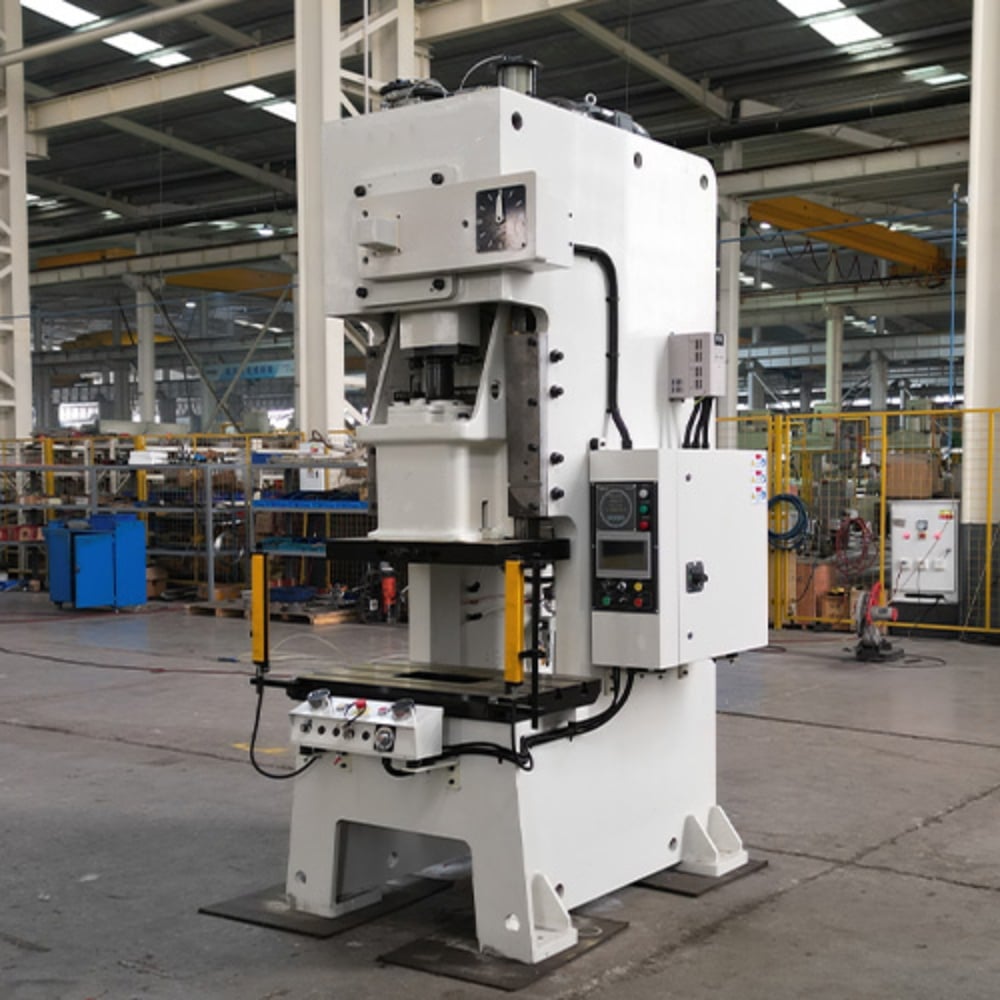
Core Parameters for Precision Punching
The first core parameter in any punching machine setup is the die clearance. Die clearance is the gap between the punch and the die, and it is the most critical factor in determining the quality of the edge finish. If the clearance is too tight, the machine will require excessive force, leading to rapid tool wear and potential cracking of the punch. If the clearance is too wide, the material will be pulled into the gap, resulting in large, jagged burrs and poor dimensional accuracy.
Stroke depth and speed are the next critical variables. The stroke depth must be precisely calibrated to ensure that the punch penetrates the material just enough to complete the shear without striking the die face. Striking the die face, even slightly, can cause micro-fractures in the tool steel, leading to premature failure. HARSLE machines allow for programmable stroke limits, which should be verified for every new material thickness and tool set.
Material clamping and positioning represent the third pillar of accuracy. If the sheet metal is not held firmly against the worktable or if the clamps are not positioned to account for the material’s internal stresses, the part will shift during the punching cycle. This leads to cumulative errors in hole placement, especially on large sheets where the weight of the material can cause sagging or bowing if not properly supported by the machine’s brush or ball-transfer tables.
Finally, tool lubrication and maintenance parameters cannot be overlooked. The friction generated during the punching process creates heat, which can cause the material to gall or stick to the punch. Proper lubrication reduces this friction, extends tool life, and improves the surface finish of the punched hole. Operators must ensure that the lubrication system is calibrated to deliver the correct volume of fluid based on the material type and punching frequency.
Calculation Method for Optimal Performance
Calculating the required punching force is a fundamental step in the Punching Machine Setup: Key Parameters for Accuracy and Productivity. The formula for force is generally expressed as: Force (P) = Perimeter of the hole (L) × Material Thickness (t) × Shear Strength of the material (S). By calculating this value, operators can ensure they are not exceeding the tonnage capacity of their HARSLE machine, which protects both the machine frame and the tooling.
Determining the correct die clearance involves a percentage calculation based on the material thickness. For standard mild steel, the clearance is typically 10% to 15% of the material thickness per side. For harder materials like stainless steel, this percentage may need to be increased to account for the material’s higher work-hardening rate. Using a digital caliper to verify the actual thickness of the incoming material batch is a vital step, as nominal thickness often varies from actual measured thickness.
For complex shapes, the perimeter calculation must be precise. If you are punching a non-standard shape, the perimeter is the sum of all linear segments. It is also important to factor in the “stripping force,” which is the force required to pull the punch out of the material after the hole is formed. This is typically 5% to 10% of the total punching force. If the stripping force is not accounted for, the machine may experience issues with material lifting or tool binding.
Software-assisted calculation is the modern standard. HARSLE’s CNC interface allows operators to input material properties and hole dimensions, automatically suggesting the optimal stroke speed and force settings. However, operators should always cross-reference these suggestions with the physical tool manufacturer’s recommendations to ensure that the specific tool geometry—such as a shear angle on the punch face—is being utilized correctly to reduce the required tonnage.
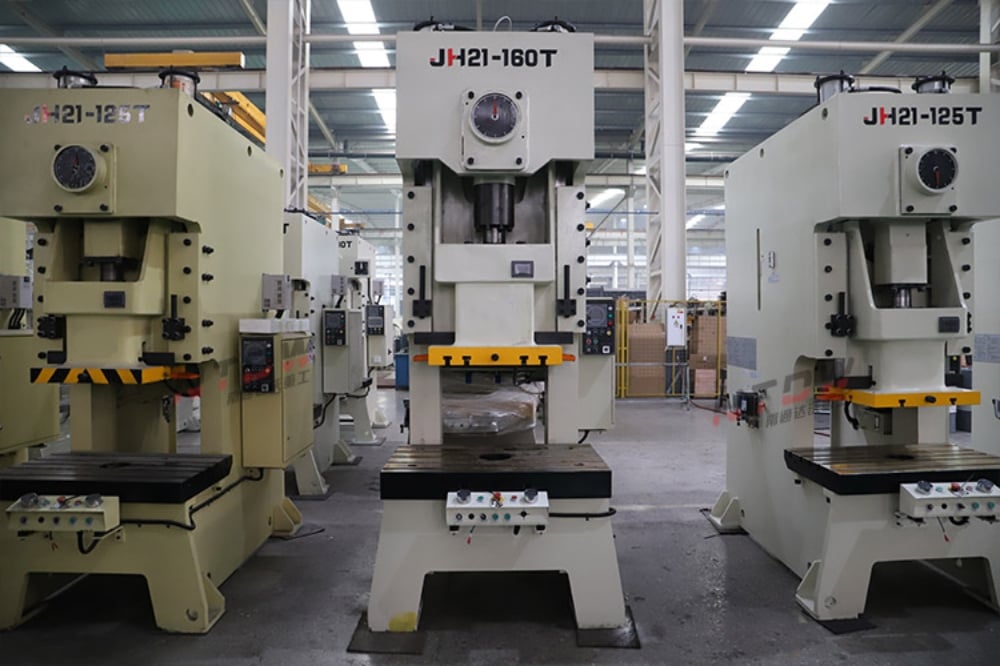
Parameter Table for Standard Materials
| Material Type | Thickness (mm) | Clearance (% of t) | Recommended Speed (spm) | Lubrication Requirement |
|---|---|---|---|---|
| Mild Steel | 1.0 – 3.0 | 10% – 12% | 300 – 500 | Standard Oil |
| Stainless Steel | 1.0 – 2.5 | 15% – 20% | 200 – 350 | High-Pressure Synthetic |
| Aluminum | 1.0 – 4.0 | 8% – 10% | 400 – 600 | Light Mist |
| Copper/Brass | 0.5 – 2.0 | 10% | 250 – 400 | Standard Oil |
The table above provides a baseline for HARSLE punching machine operations. It is important to note that these values are starting points. Environmental factors, such as ambient temperature and the specific alloy composition of the metal, can necessitate minor adjustments. Always perform a test punch on a scrap piece of the same material batch before beginning a production run to verify the edge quality and dimensional accuracy.
Common Engineering Mistakes in Punching Setup
One of the most frequent mistakes in the Punching Machine Setup: Key Parameters for Accuracy and Productivity is the failure to account for tool wear. As a punch dulls, the required force increases, and the quality of the hole degrades. Many operators continue to run dull tools, hoping to finish a batch, but this leads to excessive burrs that require secondary deburring operations, effectively negating any productivity gains from high-speed punching.
Another common error is improper turret alignment. Over time, the mechanical components of the turret can experience slight shifts due to vibration or heavy usage. If the punch and die are not perfectly concentric, the tool will experience uneven wear, and the hole will be distorted. Regular alignment checks using a precision centering pin are mandatory for maintaining the high tolerances expected of HARSLE equipment.
Ignoring the material grain direction is a mistake often made by novice operators. When punching complex shapes, the grain of the metal can influence how the material flows during the shearing process. If the layout is not optimized to account for this, the part may warp or twist upon release from the clamps. A well-planned nesting strategy, integrated into the HARSLE software, can mitigate these issues by ensuring that the punching sequence minimizes internal stress buildup.
Finally, the neglect of the stripping plate is a significant oversight. The stripping plate must be set to the correct height to ensure it holds the material flat during the entire punching and retraction cycle. If the plate is too high, the material will lift with the punch, causing damage to the sheet and potentially the tool. If it is too low, it may mark the surface of the material. Fine-tuning the stripping plate height is a simple but vital step that is often rushed.
Selection Checklist for Punching Machinery
- Tonnage Capacity: Ensure the machine has at least 20% more tonnage than your maximum calculated requirement to avoid running at the limit.
- Turret Configuration: Choose a turret layout that minimizes tool changes for your most frequent production parts.
- CNC Controller Compatibility: Verify that the machine software integrates seamlessly with your existing CAD/CAM workflow.
- Material Handling: Assess the need for automated loading and unloading systems to maximize productivity.
- Tooling Versatility: Ensure the machine supports a wide range of standard and custom tool shapes for future-proofing.
- Maintenance Accessibility: Check that the machine design allows for easy access to the turret and hydraulic systems for routine service.
- Support and Training: Confirm that the manufacturer provides comprehensive training on the Punching Machine Setup: Key Parameters for Accuracy and Productivity.
By following this checklist, you can ensure that your investment in HARSLE metal fabrication equipment is aligned with your long-term production goals. A machine is only as good as the setup process that supports it, and prioritizing these technical parameters will yield dividends in both quality and throughput. Remember that the goal is not just to punch holes, but to create a repeatable, high-quality process that minimizes waste and maximizes the value of every sheet of metal processed.
Frequently Asked Questions (FAQ)
How often should I check the die clearance on my HARSLE machine?
Die clearance should be verified whenever you change tools or switch to a different material thickness. For high-volume production, it is recommended to check the clearance at the start of every shift to account for potential tool wear.
What is the primary cause of burrs on punched parts?
Burrs are most commonly caused by excessive die clearance or dull tooling. If your clearance is set correctly, inspect the punch and die for signs of chipping or rounding on the cutting edges.
Can I use the same lubrication for all metal types?
No. Different materials have different friction coefficients. Stainless steel, for example, requires a high-pressure synthetic lubricant to prevent galling, whereas aluminum can often be processed with a lighter mist to prevent residue buildup.
How does the punching speed affect accuracy?
While higher speeds increase productivity, they can also introduce vibration and heat. If you notice a loss in accuracy at high speeds, consider reducing the stroke rate or checking the stability of your material clamping system.
What is the importance of the stripping plate in the setup?
The stripping plate is essential for keeping the material flat and ensuring the punch is cleanly extracted from the hole. Proper adjustment prevents material deformation and protects the tooling from damage during the return stroke.












