Press Brake Tooling and Accessories Price Guide for Better ROI


Price Range Overview: Understanding the Investment Landscape
Investing in high-quality press brake tooling is one of the most critical decisions a metal fabrication shop can make. When analyzing the Press Brake Tooling Accessories Price Better ROI, it is essential to understand that the market is segmented into three distinct tiers: entry-level, mid-range, and premium industrial-grade tooling. Entry-level tooling, often sourced from mass-market suppliers, may seem attractive due to low upfront costs, but these tools frequently lack the precision hardening required for long-term production cycles.
Mid-range tooling represents the sweet spot for most job shops. These tools are typically manufactured from high-grade alloy steel and undergo induction hardening to reach 50-55 HRC. Prices in this category vary based on the complexity of the profile, such as standard V-dies versus specialized radius tooling. For a standard 835mm segment, you can expect to pay anywhere from $300 to $800, depending on the manufacturer’s reputation and the precision tolerances guaranteed.
Premium tooling, often custom-engineered for high-volume production or exotic materials, sits at the top of the price spectrum. These tools often feature specialized coatings like nitriding or chrome plating to reduce friction and prevent galling. While the initial investment can be 30% to 50% higher than standard tooling, the longevity and reduced setup times often lead to a significantly better ROI over the tool’s lifespan.
Understanding these price ranges requires looking beyond the sticker price. A cheap tool that requires frequent regrinding or causes scrap parts due to poor angle consistency is ultimately more expensive than a premium tool that lasts three times as long. HARSLE emphasizes that the true cost of tooling is measured by the cost-per-bend, not the cost-per-purchase.
Finally, the market for accessories—such as hydraulic clamping systems, crowning tables, and laser safety guards—adds another layer to your budget. These components are not just add-ons; they are integral to the machine’s performance. A well-configured machine with premium tooling and advanced accessories will always outperform a base-model machine with budget tooling, regardless of the initial price difference.
Main Cost Drivers: What Influences the Price Tag?
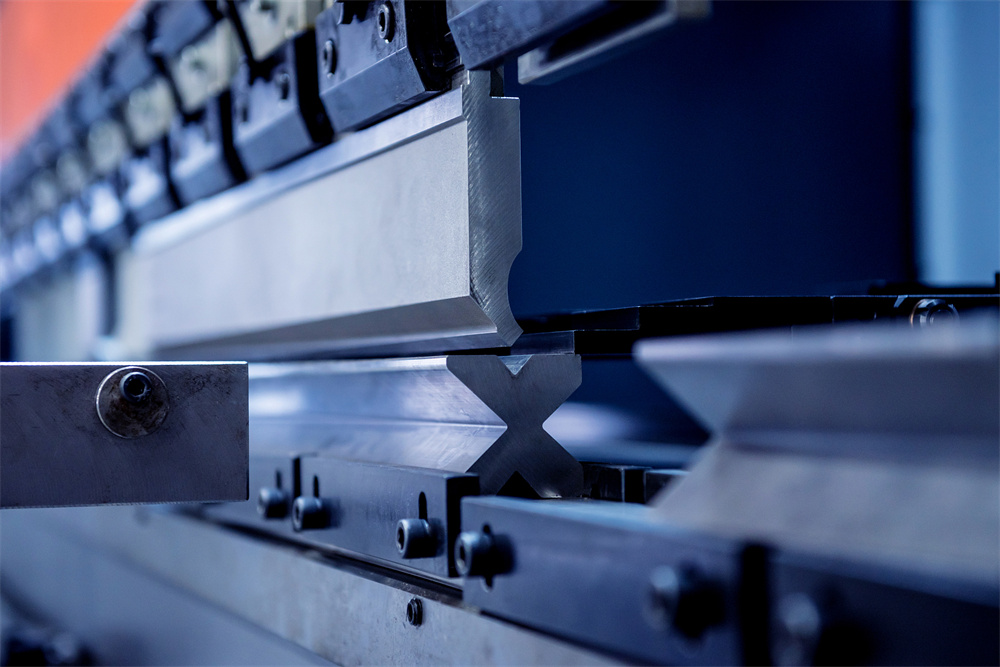
Several technical factors dictate the Press Brake Tooling Accessories Price Better ROI. The primary driver is the material composition of the tool itself. High-carbon, high-chrome steels provide the best balance of toughness and wear resistance. When manufacturers use inferior steel grades, the tools lose their edge quickly, leading to inconsistent bend angles and the need for frequent, costly replacements.
The heat treatment process is the second major cost driver. Induction hardening is the industry standard, but the depth and uniformity of the hardened layer are what separate high-quality tools from budget alternatives. A deeper hardened layer allows for multiple regrinding cycles, effectively extending the life of the tool by years. This is a critical factor when calculating the long-term ROI of your fabrication equipment.
Precision grinding and tolerance levels also play a significant role. Tools ground to a tolerance of ±0.01mm are significantly more expensive to produce than those with standard tolerances. However, in modern CNC press brakes, these tight tolerances are necessary to ensure that the machine’s software can accurately predict bend outcomes. If your tooling is inconsistent, your machine’s advanced features become effectively useless.
Complexity of the profile is another factor. Standard punches and dies are mass-produced and therefore more affordable. Conversely, complex shapes, such as gooseneck punches for deep box bending or specialized hemming tools, require more machining time and specialized engineering, driving up the price. Shops should evaluate their specific product mix to determine if they truly need custom tooling or if standard profiles can be adapted.
Lastly, brand reputation and support services contribute to the cost. Established manufacturers provide technical documentation, compatibility guarantees, and reliable supply chains. When you purchase from a reputable source like HARSLE, you are paying for the assurance that the tooling will fit your machine perfectly and perform as specified, reducing the risk of downtime and installation errors.
Configuration Impact: How Tooling Setup Affects Efficiency
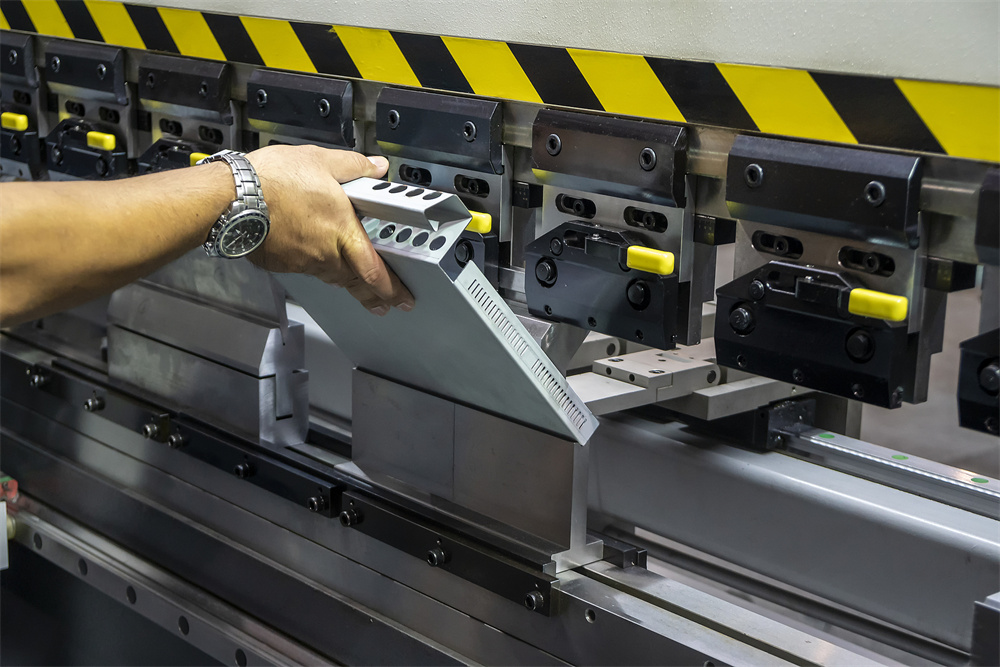
The configuration of your press brake tooling has a direct impact on your operational efficiency. A well-thought-out tooling setup minimizes tool changes, which is one of the biggest hidden costs in metal fabrication. By utilizing modular tooling systems, operators can quickly swap segments to accommodate different bend lengths without needing to remove the entire tool set from the machine.
Hydraulic clamping systems are a game-changer for ROI. While they increase the initial investment, they drastically reduce setup time. Manual clamping requires the operator to tighten individual bolts, which is time-consuming and prone to human error. Hydraulic systems allow for rapid, repeatable clamping, ensuring that the tool is perfectly seated every time, which is crucial for maintaining bend accuracy across large batches.
Crowning systems are another essential configuration element. As a press brake bends metal, the machine bed and ram tend to deflect under load. A high-quality crowning table compensates for this deflection, ensuring a consistent bend angle across the entire length of the workpiece. Without a proper crowning system, you will spend excessive time adjusting the machine for different material thicknesses and lengths, leading to wasted material and labor.
The integration of laser angle measurement systems is the final piece of the configuration puzzle. These systems provide real-time feedback to the CNC controller, allowing the machine to adjust the ram position automatically to compensate for material springback. While this adds to the initial cost, the reduction in scrap parts and the elimination of manual angle checking provide a massive boost to your overall ROI.
Hidden Costs: The Real Price of Cheap Tooling
Many fabricators fall into the trap of focusing solely on the purchase price, ignoring the hidden costs associated with low-quality tooling. The most immediate hidden cost is downtime. When a tool chips or wears prematurely, production stops. If you don’t have a backup, you are losing money every minute the machine sits idle. This is why the Press Brake Tooling Accessories Price Better ROI must account for the cost of potential downtime.
Scrap rates are another significant hidden expense. Inaccurate tooling leads to inconsistent bend angles, which means more parts fail quality control inspections. In a high-volume environment, a 1% increase in scrap rate can cost thousands of dollars per year. High-quality, precision-ground tooling minimizes these errors, paying for itself through material savings alone.
Maintenance and regrinding costs are often overlooked. Cheap tooling is often made of softer steel that requires more frequent sharpening. If you have to send your tools out for regrinding every few months, the logistics and service costs will quickly exceed the price of a more durable, premium tool set. Investing in nitrided or hardened tools reduces the frequency of maintenance, keeping your machines running longer.
Operator frustration and labor inefficiency are also hidden costs. When tools don’t fit correctly or require constant shimming to achieve the desired angle, your operators spend more time setting up the machine than actually bending parts. This inefficiency reduces your shop’s throughput and increases the labor cost per part. A well-engineered tooling system allows for faster, easier setups, keeping your team productive and motivated.
ROI Calculation: Measuring the Value of Your Investment
To calculate the ROI of your press brake tooling, you must look at the total cost of ownership (TCO) rather than just the initial price. Start by calculating the cost of the tooling over its expected lifespan. If a premium tool costs $2,000 but lasts for 500,000 bends, while a budget tool costs $800 but lasts for only 100,000 bends, the premium tool is clearly the better financial choice.
Next, factor in the labor savings. Estimate how much time is saved per setup with high-quality, quick-change tooling. If you perform three setups per day and save 15 minutes per setup, you are gaining 45 minutes of production time daily. Over a 250-day work year, that is nearly 190 hours of additional production capacity. Multiply this by your shop’s hourly rate to see the direct impact on your bottom line.
Consider the reduction in scrap and rework. Track your current scrap rate and estimate the reduction you could achieve with more precise tooling. Even a 0.5% reduction in scrap can result in thousands of dollars in material savings, especially when working with expensive materials like stainless steel or aluminum. This is a key component of the Press Brake Tooling Accessories Price Better ROI equation.
Finally, factor in the increased machine availability. By reducing the frequency of maintenance and the time spent on troubleshooting, you increase the overall equipment effectiveness (OEE) of your press brake. Higher OEE means you can take on more work without needing to purchase additional machinery, effectively deferring capital expenditure for new equipment.
Buying Advice: How to Choose the Right Tooling
When selecting tooling, start by auditing your current production requirements. Are you primarily bending thin-gauge sheet metal, or are you working with heavy plate? Do you need to perform complex, multi-stage bends, or are your parts relatively simple? Your tooling selection should be driven by your specific applications, not by what is currently on sale.
Always prioritize compatibility. Ensure that the tooling system you choose is compatible with your machine’s clamping style—whether it is European style, American style, or a proprietary system. Mixing and matching incompatible tools is a recipe for disaster, potentially damaging your machine’s ram or bed and creating significant safety hazards for your operators.
Don’t be afraid to ask for technical support. A reputable supplier like HARSLE will provide guidance on tool selection based on your material thickness, bend radius, and machine tonnage. They can help you choose the right V-opening for your material, ensuring that you achieve the correct bend angle without overstressing the tool or the machine.
Consider the future. If you plan to expand your capabilities, look for a tooling system that is modular and expandable. Investing in a system that allows you to add specialized dies or punches later is more cost-effective than having to replace your entire tooling inventory when your product mix changes. Always keep a list of your most frequently used tools and ensure you have backups for critical items.
FAQ: Frequently Asked Questions
- How often should I replace my press brake tooling? There is no set timeframe, as it depends on usage, material type, and maintenance. If you notice inconsistent bend angles, burrs on the workpiece, or visible wear on the tool edge, it is time to consider regrinding or replacement.
- Can I use different brands of tooling on my HARSLE press brake? Yes, as long as the clamping style and dimensions are compatible. However, we recommend using HARSLE-approved tooling to ensure optimal performance and safety.
- What is the difference between air bending and bottom bending? Air bending uses the machine’s tonnage to push the metal into a V-die without bottoming out, allowing for flexibility. Bottom bending forces the metal into the die, providing higher precision but requiring more tonnage.
- How do I prevent tool galling? Use high-quality, properly hardened tooling and ensure your material is clean. For stainless steel, consider using specialized coatings or protective films to reduce friction.
- Is it worth investing in a crowning table? Absolutely. A crowning table is essential for achieving consistent bend angles across the entire length of the part, especially when working with long, thin materials.