
Understanding Punching Machine Capacity, Tonnage, and Material Thickness Limits: A Comprehensive Guide


Technical Overview: The Fundamentals of Punching Force
In the world of precision metal fabrication, understanding punching machine capacity, tonnage, and material thickness limits is the cornerstone of operational efficiency and equipment longevity. A punching machine is a high-force industrial tool designed to shear, pierce, or form sheet metal by applying concentrated pressure through a punch and die set. The ability to execute these tasks accurately depends entirely on the machine’s rated tonnage—the maximum force it can exert without sustaining structural damage or compromising the quality of the workpiece.
For operators and shop managers, the relationship between force, material properties, and tool geometry is not merely theoretical; it is a daily practical requirement. When a punch enters a sheet of metal, it must overcome the material’s shear strength to create a clean hole. If the machine lacks the necessary tonnage, the punch will fail to penetrate, potentially damaging the hydraulic system or the tool itself. Conversely, over-specifying a machine leads to unnecessary capital expenditure and higher energy consumption.
HARSLE engineering standards emphasize that punching capacity is not a static number but a dynamic variable influenced by the material’s tensile strength, the perimeter of the shape being punched, and the thickness of the material. By mastering these variables, fabricators can ensure that their HARSLE equipment operates within its optimal performance envelope, reducing downtime and extending the lifespan of expensive tooling.
This guide serves as a technical roadmap for professionals looking to optimize their production lines. We will explore the physics behind punching, the mathematical formulas required for daily operations, and the critical selection criteria that define a successful fabrication project. Whether you are working with mild steel, stainless steel, or aluminum, the principles outlined here remain the universal standard for industrial metalworking.
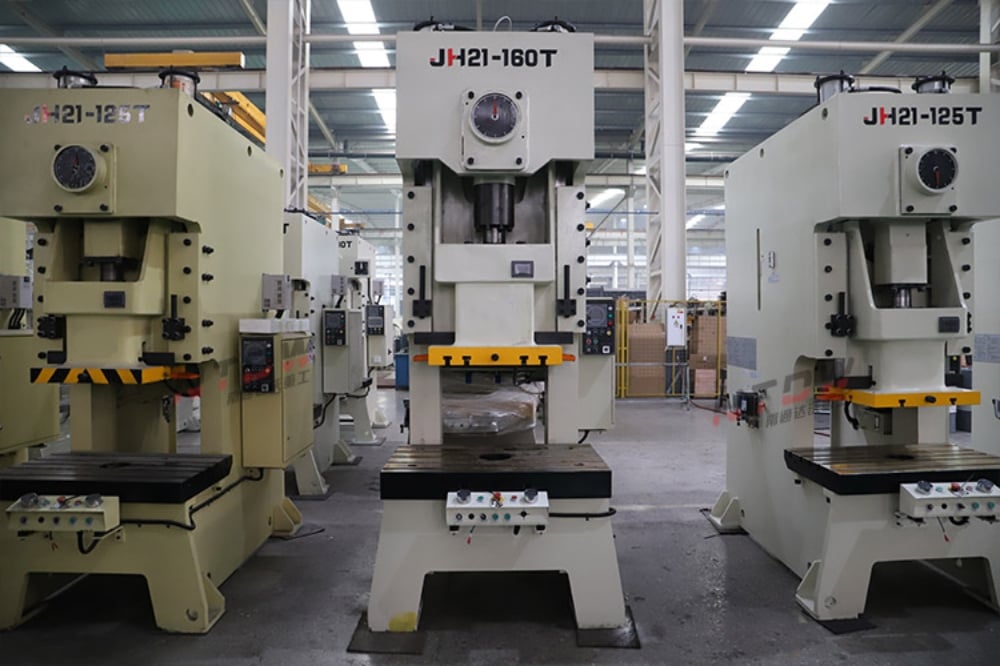
Core Parameters: Defining Capacity and Tonnage
Tonnage is the primary metric for any punching machine. It represents the total force that the ram can exert on the punch. In hydraulic punching machines, this force is generated by the hydraulic cylinders and is measured in tons or kilonewtons (kN). Understanding this capacity is vital because it dictates the maximum size and thickness of the material that can be processed. If a machine is rated for 30 tons, it cannot safely process a job requiring 35 tons of force, regardless of the material type.
Material thickness limits are intrinsically linked to tonnage. As material thickness increases, the force required to shear through it increases proportionally. However, it is not just thickness that matters; the material’s shear strength is equally critical. For instance, stainless steel is significantly harder and has a higher shear strength than mild steel, meaning a 5mm sheet of stainless steel will require substantially more tonnage than a 5mm sheet of mild steel.
Another core parameter is the ‘stripping force.’ After the punch penetrates the material, the punch must be withdrawn. The material often grips the punch tightly, requiring a specific amount of force to ‘strip’ the punch from the sheet. HARSLE machines are designed with robust stripping mechanisms to handle this, but operators must account for this force when calculating the total load on the machine’s frame and hydraulic components.
Finally, the punch-to-die clearance is a critical parameter that influences the required tonnage. If the clearance is too tight, the machine requires more force to overcome friction and shear resistance. If the clearance is too wide, the material will bend rather than shear, resulting in poor edge quality and excessive burrs. Proper clearance settings allow the machine to operate at its most efficient tonnage level, preserving both the machine and the tooling.
Calculation Method: Determining Required Tonnage
To calculate the required tonnage for a specific punching operation, engineers use a standard formula based on the material’s properties and the geometry of the hole. The basic formula is: Tonnage = (L × T × S) / 2000 (for tons) or (L × T × S) / 1000 (for kN), where L is the perimeter of the shape, T is the material thickness, and S is the shear strength of the material.
Let’s break down the variables. The perimeter (L) is the total length of the cut. For a circular hole, this is the circumference (π × diameter). For a square, it is the sum of all four sides. The thickness (T) is the gauge of the sheet metal. The shear strength (S) is typically estimated as 80% of the material’s ultimate tensile strength. By multiplying these three factors, you arrive at the total force required to shear the material.
It is important to include a safety factor in your calculations. HARSLE recommends adding at least 15-20% to your calculated tonnage to account for tool dullness. As a punch wears down, it becomes less efficient, requiring more force to penetrate the same material. If you calculate your tonnage based on a brand-new, razor-sharp punch, you may find your machine struggling once the tool begins to show signs of wear.
Consider the following example: Punching a 50mm diameter hole in 6mm mild steel. The perimeter is 3.14 × 50 = 157mm. The shear strength of mild steel is approximately 350 N/mm². The calculation would be (157 × 6 × 350) / 1000 = 329.7 kN, which is approximately 33.6 tons. In this scenario, a 40-ton machine would be the appropriate choice to ensure a safety margin and account for tool wear over time.
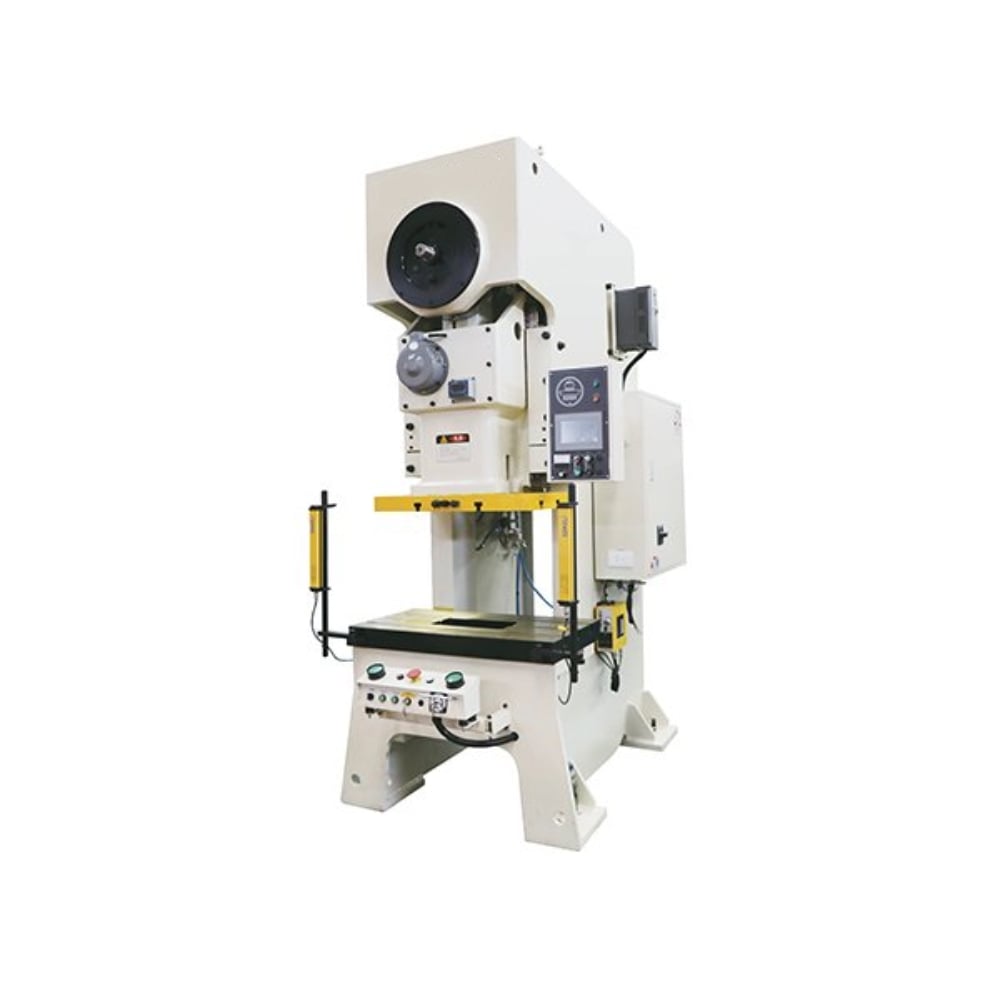
Parameter Table: Material and Tonnage Reference
The following table provides a general reference for punching force requirements based on common material types and thicknesses. Please note that these values are estimates and should be verified against specific material data sheets.
| Material Type | Thickness (mm) | Shear Strength (N/mm²) | Force per mm of Perimeter (kN/mm) |
|---|---|---|---|
| Mild Steel | 2.0 | 350 | 0.70 |
| Mild Steel | 5.0 | 350 | 1.75 |
| Stainless Steel | 2.0 | 550 | 1.10 |
| Stainless Steel | 5.0 | 550 | 2.75 |
| Aluminum (5052) | 2.0 | 200 | 0.40 |
| Aluminum (5052) | 5.0 | 200 | 1.00 |
This table illustrates the significant impact of material type on machine capacity. As shown, stainless steel requires nearly 60% more force than mild steel for the same thickness. When planning your production schedule, always refer to these material-specific constants to avoid overloading your HARSLE punching equipment.
Common Engineering Mistakes
One of the most frequent mistakes in metal fabrication is ignoring the impact of tool dullness on tonnage requirements. Many operators assume that if a machine is rated for 50 tons, it can handle a 50-ton job indefinitely. However, as the punch and die edges round off, the force required to shear the material increases significantly. Operating a machine at its absolute limit with dull tools is a recipe for catastrophic failure, including cracked frames or broken hydraulic seals.
Another common error is failing to account for the ‘stripping force’ in the overall machine load. While the primary force is the downward shear, the upward force required to remove the punch from the material can be up to 10-15% of the total punching force. If the machine is already operating at 95% of its capacity, the additional stripping load can push the system into an overload state, triggering safety shutdowns or causing mechanical stress.
Ignoring the punch-to-die clearance is another frequent oversight. Many shops use a ‘one-size-fits-all’ clearance for all materials. This is inefficient. Harder materials require larger clearances to prevent the punch from binding, while softer materials require tighter clearances to prevent burrs. Using the wrong clearance not only increases the required tonnage but also drastically reduces the life of the punch and die set.
Finally, many operators fail to consider the ‘stagger’ of the punch. If you are punching multiple holes simultaneously, the total tonnage is the sum of all holes. If all punches hit the material at the exact same time, the machine experiences a massive, instantaneous shock load. By using staggered punch lengths, the force is distributed over a longer period, reducing the peak tonnage required and smoothing out the operation of the machine.
Selection Checklist: Choosing the Right HARSLE Machine
When selecting a punching machine, start by defining your maximum material thickness and the largest hole diameter you intend to punch. These two factors will dictate the minimum tonnage required. Always aim for a machine with a capacity 20% higher than your calculated maximum to ensure longevity and flexibility for future projects.
Consider the throat depth of the machine. The throat depth determines how far into the sheet you can punch. If you are working with large panels, a deep-throat machine is essential. HARSLE offers various configurations to suit different sheet sizes, so ensure your choice aligns with your typical workpiece dimensions.
Evaluate the tool changing system. If your production involves frequent changes between different hole shapes or sizes, an automatic tool changer (ATC) or a multi-tool station can significantly increase throughput. Manual tool changes are time-consuming and can lead to operator fatigue, which increases the risk of errors.
Check the control system and software integration. Modern HARSLE punching machines come with advanced CNC controllers that can optimize the punching sequence, monitor tonnage in real-time, and provide diagnostic feedback. A machine that integrates well with your existing CAD/CAM software will streamline your workflow and reduce the time from design to finished part.
Finally, consider the maintenance and support infrastructure. A punching machine is a long-term investment. Ensure that the manufacturer provides comprehensive training, readily available spare parts, and responsive technical support. HARSLE’s commitment to after-sales service ensures that your equipment remains productive throughout its entire lifecycle.
FAQ: Frequently Asked Questions
Q: How often should I sharpen my punching tools?
A: Sharpening frequency depends on the material type and the number of hits. As a rule of thumb, sharpen tools when you notice an increase in burr height or when the machine starts to sound strained. Regular maintenance prevents excessive tonnage requirements.
Q: Can I punch materials thicker than the machine’s rated capacity?
A: No. Attempting to punch material beyond the rated thickness can cause permanent damage to the machine’s frame, hydraulic system, and tooling. Always adhere to the manufacturer’s specifications.
Q: Why does my machine vibrate excessively during punching?
A: Excessive vibration often indicates that the machine is operating near its tonnage limit, the tools are dull, or the material is not properly clamped. Check your tool sharpness and ensure the workpiece is securely held.
Q: What is the benefit of using a hydraulic punching machine over a mechanical one?
A: Hydraulic machines offer better control over the punching speed and force, allow for easier adjustment of the stroke, and are generally safer and more energy-efficient for a wide range of material thicknesses.
Q: How do I calculate the perimeter for complex shapes?
A: For complex shapes, the perimeter is the sum of all linear segments and the circumference of any curved segments. CAD software can automatically calculate this value for you, which is the most accurate method.












