
A Guide to Laser Cutting Machine Automation for High-Volume Manufacturing


Technical Overview: The Evolution of Laser Cutting Machine Automation
In the modern landscape of metal fabrication, the transition from manual operation to fully integrated systems has become the defining factor for competitive success. A Laser Cutting Machine Automation High-Volume Manufacturing setup is no longer a luxury; it is a fundamental requirement for shops aiming to reduce lead times and labor costs. At HARSLE, we define automation not just as a robotic arm, but as a holistic ecosystem where material loading, cutting, sorting, and unloading occur in a seamless, continuous loop.
The core of this technology lies in the integration of fiber laser sources with advanced CNC control systems and automated material handling units (AMHUs). By utilizing high-speed fiber lasers, manufacturers can achieve cutting speeds that were previously impossible, but these speeds create a bottleneck at the loading and unloading stages. Automation solves this by ensuring the laser head is never idle, effectively increasing the machine’s duty cycle from 40% in manual setups to over 90% in automated environments.
Furthermore, the integration of IoT-enabled sensors allows for real-time monitoring of the cutting process. These sensors track nozzle wear, gas pressure, and lens temperature, feeding data back to the central controller. When the system detects a deviation from the optimal parameters, it can automatically adjust the feed rate or trigger a maintenance alert, preventing costly scrap in high-volume production runs.
The shift toward Industry 4.0 has also introduced the concept of the ‘lights-out’ factory. In this model, a laser cutting machine operates autonomously during night shifts or weekends, processing pre-loaded material stacks without human intervention. This capability is essential for high-volume manufacturers who need to maximize their return on investment (ROI) by keeping their capital equipment running 24/7.
Core Parameters for High-Volume Laser Automation
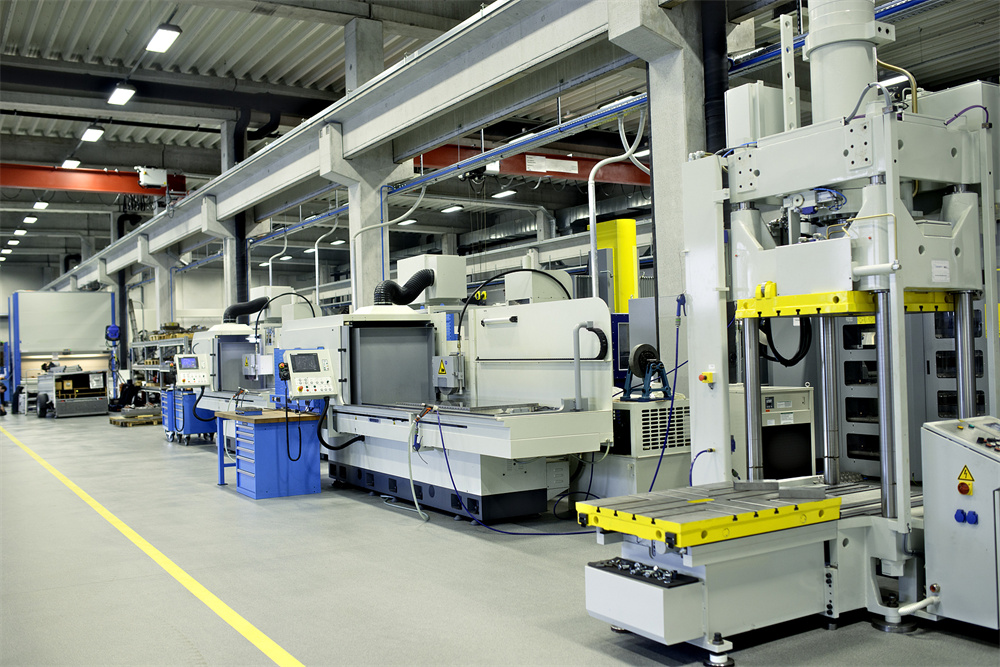
To successfully implement a Laser Cutting Machine Automation High-Volume Manufacturing strategy, one must master the core technical parameters. The most critical is the laser power density, which is a function of the laser source wattage and the beam focus diameter. For high-volume production, choosing the correct wattage—typically ranging from 6kW to 30kW—is essential to balance speed with edge quality.
Another vital parameter is the gas assist pressure and purity. In automated systems, the gas delivery must be consistent to ensure that the cut quality remains uniform across thousands of parts. Automated gas switching systems allow the machine to toggle between nitrogen (for stainless steel) and oxygen (for mild steel) without manual intervention, which is crucial for mixed-material production lines.
The acceleration and deceleration rates of the gantry system also play a significant role in high-volume efficiency. When cutting complex geometries with many small holes or intricate contours, the machine spends more time accelerating and decelerating than at top speed. High-end automated machines feature advanced motion control algorithms that optimize the path planning to maintain high average speeds, reducing the cycle time per part.
Finally, the nesting efficiency is a parameter that directly impacts material utilization. Automated nesting software uses sophisticated algorithms to pack parts as tightly as possible on a sheet, minimizing scrap. In high-volume manufacturing, even a 2% increase in material utilization can translate into tens of thousands of dollars in annual savings, making the software component of the automation suite just as important as the hardware itself.
Calculation Method: ROI and Throughput Analysis
Calculating the effectiveness of a Laser Cutting Machine Automation High-Volume Manufacturing investment requires a structured approach. The primary metric is the Cost Per Part (CPP), which is calculated by dividing the total hourly operating cost by the number of parts produced per hour. Total hourly cost includes electricity, assist gas, consumables (nozzles/lenses), labor, and the amortized cost of the machine.
To determine the throughput, use the following formula: Throughput = (Total Sheet Processing Time + Loading/Unloading Time) / Number of Parts per Sheet. In a manual system, the loading/unloading time is often equal to or greater than the cutting time. In an automated system, the loading/unloading time is reduced to a few seconds, as the system swaps pallets while the laser continues to work on the next sheet.
Another essential calculation is the Break-Even Point (BEP). This is the volume of production required to justify the additional capital expenditure of the automation system. By comparing the labor savings and the increased output capacity against the cost of the automation unit, manufacturers can determine how many months it will take for the system to pay for itself. Typically, for high-volume shops, this period ranges from 18 to 36 months.
Finally, consider the ‘OEE’ (Overall Equipment Effectiveness). OEE is the product of Availability, Performance, and Quality. Automation significantly boosts Availability by reducing downtime and Performance by maintaining consistent speeds. By tracking these metrics, HARSLE users can identify specific areas where their production line might be underperforming and make data-driven adjustments to their workflow.
Parameter Table: Recommended Settings for High-Volume Production
| Material Type | Thickness (mm) | Laser Power (kW) | Assist Gas | Speed (m/min) |
|---|---|---|---|---|
| Mild Steel | 3.0 | 6.0 | Oxygen | 12.5 |
| Mild Steel | 10.0 | 10.0 | Oxygen | 3.2 |
| Stainless Steel | 2.0 | 6.0 | Nitrogen | 22.0 |
| Stainless Steel | 6.0 | 10.0 | Nitrogen | 6.5 |
| Aluminum | 3.0 | 8.0 | Nitrogen | 15.0 |
Common Engineering Mistakes in Automation
One of the most frequent mistakes in implementing a Laser Cutting Machine Automation High-Volume Manufacturing system is neglecting the material handling logistics. Many manufacturers invest in a high-speed laser but fail to upgrade their material storage or part-sorting capabilities. If the laser cuts faster than the parts can be cleared, the machine will eventually sit idle, defeating the purpose of the automation.
Another common error is the lack of proper maintenance scheduling. Automated systems are complex and require rigorous adherence to maintenance protocols. Skipping a lens cleaning or failing to calibrate the sensors can lead to a cascade of errors. In high-volume environments, a single machine failure can halt the entire production line, making preventive maintenance a non-negotiable aspect of the operation.
Ignoring the quality of the raw material is also a frequent oversight. Automated loading systems are sensitive to sheet flatness and surface oxidation. If the material is warped or covered in heavy rust, the height-sensing system may struggle, leading to head crashes or inconsistent cuts. High-volume manufacturers must ensure that their material suppliers provide consistent, high-quality sheets to maintain the reliability of the automated process.
Finally, many companies fail to train their operators for the transition to automation. While automation reduces the need for manual labor, it increases the need for skilled technicians who can troubleshoot the software, manage the nesting, and perform advanced maintenance. Relying on operators who are only trained for manual machines will lead to underutilization of the system’s advanced features.
Selection Checklist for Automated Laser Systems
- Power Requirements: Does the laser source match your thickest material requirements?
- Automation Level: Do you need a simple pallet changer or a full tower storage system?
- Software Compatibility: Does the machine integrate with your existing ERP or CAD/CAM software?
- Service and Support: Does the manufacturer offer local technical support and spare parts availability?
- Floor Space: Does your facility have the necessary footprint for the loading/unloading towers?
- Energy Efficiency: What is the power consumption per part produced?
- Safety Features: Does the system include light curtains, safety scanners, and interlocked enclosures?
- Scalability: Can the automation system be expanded if your production volume grows?
FAQ: Laser Cutting Machine Automation
How does automation affect the quality of the cut?
Automation generally improves cut quality by ensuring consistent parameters and reducing human error. Automated height sensing and nozzle cleaning keep the beam focused and the gas flow stable, resulting in cleaner edges.
Is it possible to retrofit automation onto an existing laser?
Yes, many HARSLE laser systems are designed with modularity in mind. You can often add pallet changers or loading towers to an existing machine, provided the control system supports the integration.
What is the biggest challenge in high-volume laser automation?
The biggest challenge is usually the ‘downstream’ process—sorting and stacking parts. While the laser can cut quickly, organizing the parts efficiently requires advanced software and, in some cases, robotic sorting arms.
How often should I perform maintenance on an automated laser?
Maintenance should be performed according to the manufacturer’s schedule, typically based on operating hours. Daily checks include nozzle inspection and lens cleaning, while monthly checks involve checking gas lines and cooling systems.
Can I cut different materials in the same automated batch?
Yes, modern automated systems can be programmed to switch between different material types and thicknesses, provided the loading system is equipped to handle multiple material stacks.
What is the role of AI in laser automation?
AI is increasingly used for predictive maintenance and real-time process optimization. It can analyze cutting data to predict when a nozzle will fail or suggest the best cutting path to minimize heat distortion.












