
Case Study: Achieving Better Bend Consistency with a Digital Press Brake Controller


Introduction
In the modern metal fabrication landscape, precision is the currency of success. For job shops and large-scale manufacturing facilities alike, the ability to produce identical parts across multiple shifts is the hallmark of a high-performing operation. However, achieving consistent bend angles remains a persistent challenge due to variables such as material spring-back, thickness fluctuations, and operator fatigue. This article explores a comprehensive Case Study: Achieving Better Bend Consistency A Digital Press Brake Controller, demonstrating how HARSLE technology transforms shop floor efficiency.
When manual or legacy hydraulic systems are used, the reliance on operator intuition often leads to inconsistent results. A slight variation in the material batch or a change in ambient temperature can throw off a bend by several degrees, leading to costly scrap and rework. By integrating a sophisticated digital controller, fabricators can move from an art-based process to a data-driven science, ensuring that every bend meets the exact specifications of the CAD design.
This case study focuses on a mid-sized fabrication firm that struggled with a 12% scrap rate on complex stainless steel enclosures. By upgrading their existing infrastructure to a HARSLE-equipped digital press brake system, they were able to reduce this rate to under 1%. The transition highlights the critical role of software-driven compensation and real-time feedback loops in modern metal forming.
Throughout this article, we will examine the technical nuances of digital control, the selection criteria for upgrading your equipment, and the long-term benefits of investing in high-precision CNC press brake technology. Whether you are a shop owner looking to scale or an engineer seeking to optimize production, understanding these digital advancements is essential for maintaining a competitive edge.
Key Considerations for Bend Consistency
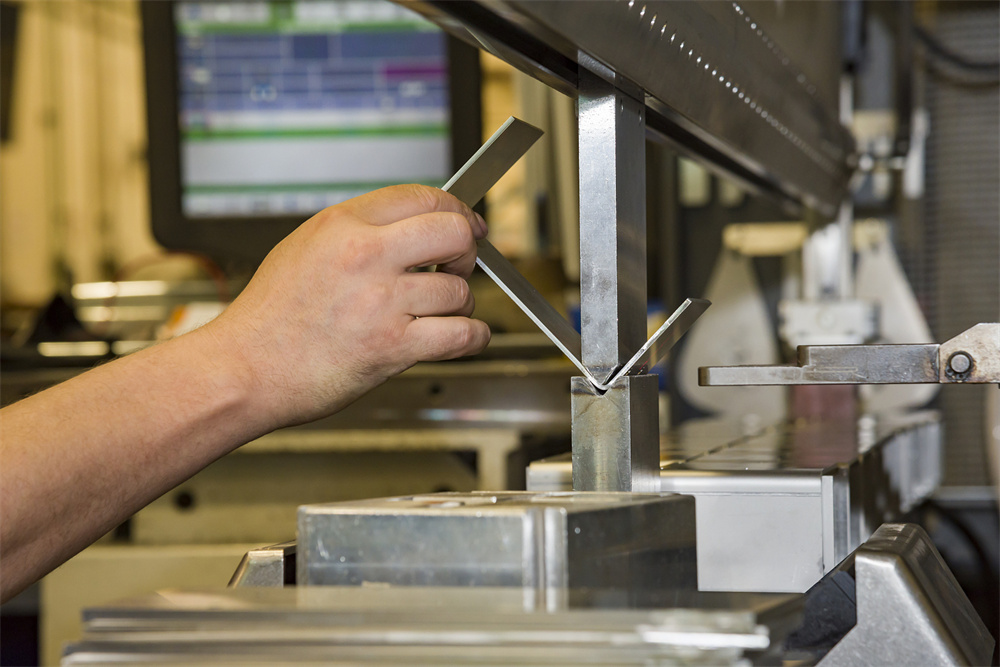
Achieving consistent bends is not merely about the force applied; it is about managing the variables that influence the metal’s behavior. The first consideration is material variability. Even within the same grade of steel, variations in tensile strength and thickness can cause significant differences in spring-back. A digital controller mitigates this by allowing operators to input material properties directly, enabling the machine to adjust the ram depth automatically.
The second consideration is the mechanical state of the press brake. Over time, hydraulic systems can experience thermal drift, where the oil temperature changes the viscosity and, consequently, the ram positioning accuracy. Digital controllers equipped with temperature compensation sensors can adjust the stroke in real-time, ensuring that the first part of the morning is as accurate as the last part of the afternoon.
Thirdly, tooling wear and alignment play a massive role. A digital controller can store tool profiles and track usage, alerting operators when it is time for maintenance or replacement. This proactive approach prevents the gradual degradation of bend quality that often goes unnoticed until a batch of parts is already out of tolerance.
Finally, the human element cannot be ignored. Manual bending requires a high level of skill and constant vigilance. By automating the backgauge positioning and the ram depth, a digital controller reduces the cognitive load on the operator. This allows the operator to focus on material handling and safety, leading to more consistent performance throughout a long shift.
Technical Details: How Digital Controllers Work
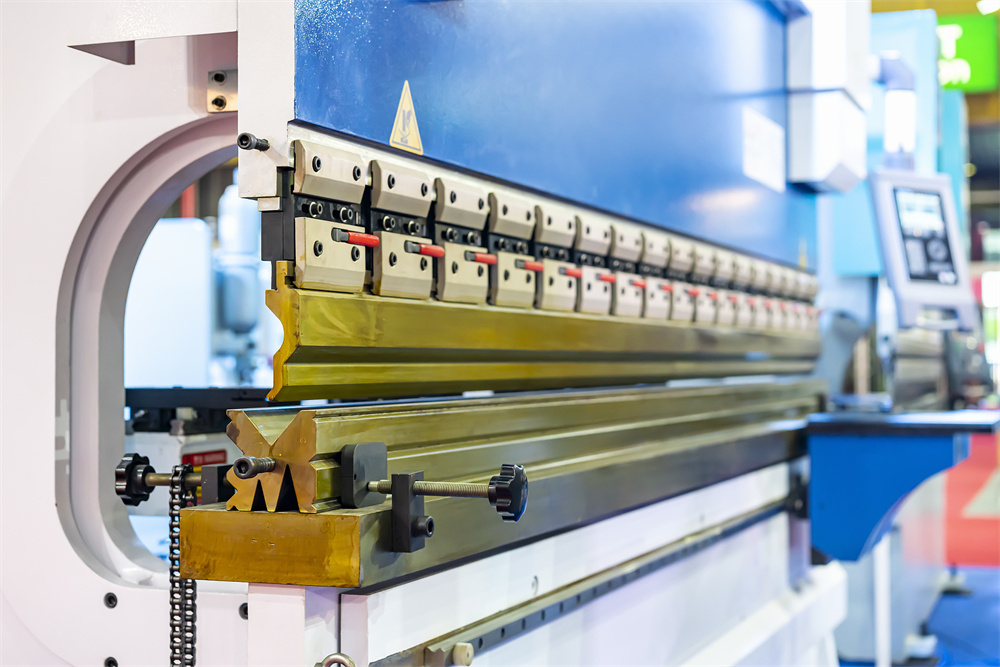
At the heart of a modern HARSLE press brake is the CNC controller, which acts as the “brain” of the machine. Unlike traditional mechanical stops, a digital controller uses high-resolution encoders to monitor the position of the ram and the backgauge with micron-level accuracy. This closed-loop system ensures that the machine is always aware of its exact position relative to the target bend angle.
The controller utilizes advanced algorithms to calculate spring-back compensation. By analyzing the material thickness, bend angle, and tensile strength, the software predicts how much the metal will rebound after the pressure is released. It then adjusts the ram depth to “over-bend” the part just enough so that it settles at the desired angle. This feature is the single most important factor in achieving consistent results across different material batches.
Furthermore, digital controllers facilitate multi-axis control. While a basic machine might only control the Y-axis (ram) and X-axis (backgauge), a high-end digital controller can manage R-axis (vertical backgauge movement), Z-axis (finger movement), and even crowning systems. The crowning system is particularly vital for long bends, as it compensates for the deflection of the machine bed, ensuring a uniform bend angle across the entire length of the workpiece.
Data integration is another technical advantage. Modern controllers can import 3D CAD files directly, automatically generating the bending sequence and tool setup. This eliminates manual programming errors and ensures that the machine is configured exactly as the design intended. The ability to save these programs means that repeat orders can be set up in seconds, guaranteeing that the 100th batch is identical to the first.
Selection Advice: Choosing the Right Controller
When selecting a digital press brake controller, the first step is to assess your production requirements. If your shop primarily handles simple, high-volume parts, a mid-range controller with basic Y and X axis control may suffice. However, if you are performing complex, multi-bend operations on varying material thicknesses, investing in a high-end controller with 3D visualization and automatic compensation is essential.
Compatibility with your existing software ecosystem is also critical. Ensure that the controller can communicate with your CAD/CAM software. A seamless workflow from design to machine reduces the risk of data entry errors and speeds up the transition from prototype to production. Look for controllers that support industry-standard file formats and offer robust networking capabilities for remote monitoring.
Consider the user interface and ease of training. A powerful controller is only effective if your operators can use it efficiently. Look for systems with intuitive touchscreens, graphical programming, and built-in help features. HARSLE controllers are designed with the operator in mind, featuring clear visual feedback and simplified menus that reduce the learning curve for new staff.
Finally, evaluate the support and service provided by the manufacturer. A digital controller is a complex piece of technology that requires software updates and occasional technical support. Choose a partner like HARSLE that offers comprehensive training, reliable remote diagnostics, and a commitment to long-term software support. This ensures that your investment remains productive for years to come.
FAQ: Digital Press Brake Controllers
What is the primary benefit of a digital controller?
The primary benefit is consistency. By automating ram positioning and compensating for material spring-back, digital controllers eliminate the variability associated with manual operation, resulting in higher part quality and lower scrap rates.
Can a digital controller be retrofitted to an older press brake?
In many cases, yes. HARSLE offers retrofit solutions that can bring modern CNC capabilities to older hydraulic press brakes, significantly extending the life and productivity of your existing equipment.
How does the controller handle material spring-back?
The controller uses a database of material properties and mathematical models to calculate the required over-bend. It then adjusts the ram depth automatically to ensure the part reaches the target angle after the pressure is released.
Is it difficult to train operators on a new digital controller?
Modern controllers are designed to be user-friendly. With graphical interfaces and 3D simulation, operators can visualize the bending process before making the first part, which drastically reduces the training time compared to traditional mechanical systems.
How often should the controller be calibrated?
While digital controllers are highly stable, it is recommended to perform a routine check of the backgauge and ram positioning accuracy as part of your regular preventative maintenance schedule, typically every six months or after significant tooling changes.
Conclusion
The transition to a digital press brake controller is one of the most impactful upgrades a metal fabrication shop can make. As demonstrated in this Case Study: Achieving Better Bend Consistency A Digital Press Brake Controller, the shift from manual reliance to digital precision yields immediate improvements in quality, efficiency, and profitability. By managing the complex variables of material behavior and machine deflection, digital controllers empower fabricators to tackle more complex projects with confidence.
HARSLE remains committed to providing the industry with the tools necessary to excel in a competitive market. Our range of CNC press brakes and digital controllers is designed to meet the diverse needs of modern manufacturing, from small job shops to large-scale production lines. By focusing on intuitive design, robust software, and reliable hardware, we help our clients achieve the consistency that their customers demand.
As you look to the future of your fabrication business, consider the long-term value of investing in high-precision technology. The initial cost of a digital controller is quickly offset by the reduction in scrap, the increase in throughput, and the ability to take on higher-margin, complex work. We invite you to explore the HARSLE product catalog and speak with our technical team to determine the best solution for your specific application needs. Achieving better bend consistency is not just a goal—it is a standard that HARSLE helps you maintain every single day.












