
دليل تركيب المكبس: إعداد الموقع، التسوية والتكليف

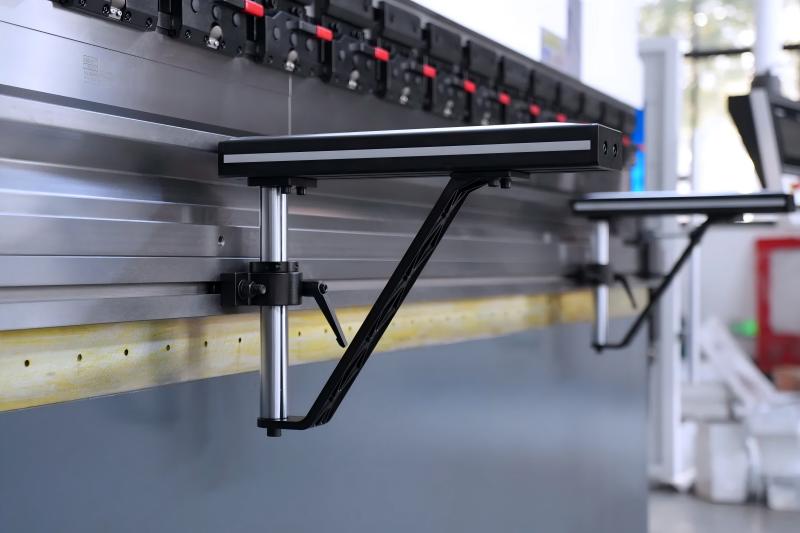
إجابة قصيرة: before a press brake arrives, prepare a level, solid floor or foundation rated for the machine’s weight and point loads, an electrical supply that matches the machine (voltage, frequency, breaker size), enough space and crane or forklift capacity to unload and position it, and the correct hydraulic oil. On site: unload and position, level the machine (typically to about 0.02–0.05 mm/m along the bed, per the manufacturer), connect power, fill oil, check rotation and run-in, calibrate axes and test-bend, then train operators. Small and medium press brakes usually stand on a good industrial floor; heavy and long machines need a dedicated reinforced-concrete foundation.

Foundation Requirements
| Machine size | Typical foundation |
|---|---|
| Small press brakes (up to ≈ 100 t, ≤ 3.2 m) | Flat industrial concrete floor in good condition, often 150–200 mm or more thick; check with the manufacturer’s layout drawing |
| Medium (≈ 100–300 t, 3–4 m) | Good industrial floor or local reinforced foundation pads under the side frames |
| Heavy (≈ 300 t+, 4–8 m), tandem machines | Dedicated reinforced-concrete foundation designed to the manufacturer’s foundation drawing, often with a pit or anchor bolts |
Always follow the foundation drawing supplied with your machine, and have a local civil engineer check the floor’s load capacity and the soil. Never place a press brake across an expansion joint.
Pre-Installation Checklist
- Space: machine footprint plus working area in front (for long parts) and service access behind for the backgauge and hydraulic unit.
- Height: enough ceiling height for the machine and crane hook during unloading.
- Lifting: crane or forklifts rated above the machine weight, with suitable slings; follow the lifting points on the drawing.
- Electrical: correct voltage and frequency, main breaker and cable size per the electrical diagram, proper grounding.
- Hydraulic oil: the specified grade and quantity (often ISO VG 46 anti-wear). See the hydraulic oil guide.
- Environment: temperature within the operating range; away from heavy vibration sources.
Installation and Commissioning Steps
- Unload and inspect for transport damage; photograph the packing and any damage.
- Position the machine on the foundation or anchor plates.
- Clean rust-preventive coating from machined surfaces with a suitable solvent.
- Level the machine with a precision level on the bed or die holder, along and across, to the manufacturer’s tolerance; tighten anchor bolts if used and re-check.
- Connect power by a qualified electrician; check phase rotation before running the pump.
- Fill hydraulic oil through a filter to the correct level.
- Run in: start the pump, bleed air by cycling the ram slowly, check for leaks.
- Reference and calibrate Y1/Y2, backgauge axes and crowning per the manual.
- Check safety systems: light curtains or laser guards, E-stops, guards and interlocks.
- Test-bend full-length parts; check angles along the bed.
- Train operators on operation, programming, safety and daily maintenance.
- Re-check level after the first weeks of operation, especially on new concrete.
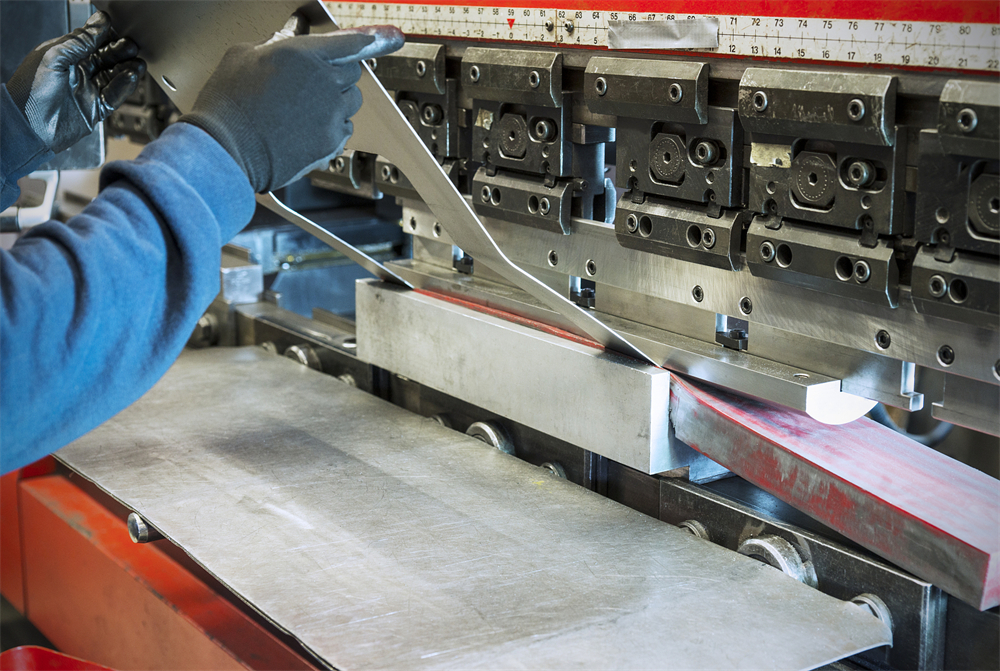
Common Installation Mistakes
- Installing on a thin or cracked floor, or across an expansion joint.
- Skipping precise leveling, which causes uneven angles along the bend.
- Wrong phase rotation, so the pump runs backwards.
- Filling unfiltered oil or the wrong oil grade.
- Not re-checking level after the concrete settles.
Document press brake installation acceptance before the first production job
Record lifting and access, foundation and leveling checks, utility and safeguarding status, and supplier sign-off. Inspect a representative bend after installation with the intended tooling.
أسئلة شائعة
Does a press brake need a special foundation?
Small and medium machines usually stand on a good industrial concrete floor. Heavy, long and tandem press brakes need a dedicated foundation to the manufacturer’s drawing.
How long does press brake installation take?
For a standard CNC press brake, typically one to a few days including leveling, commissioning and basic training, once the site is prepared.
Can I install a press brake myself?
Positioning and leveling can be done by an experienced maintenance team following the manual; electrical connection must be done by a qualified electrician, and commissioning is best done with the manufacturer’s support.
Installation Support from KAVDO
Planning a KAVDO مكبس? Ask us for the layout drawing, foundation requirements and installation and training options for your model through the صفحة الاتصال. Importing your machine? See buying a press brake from China.
