Hydraulic Press Buying Guide: Price Ranges for Small, Medium, and Large Models


Price Range Overview: Understanding the Investment
Investing in a hydraulic press is a significant capital expenditure for any metal fabrication facility. When embarking on a Hydraulic Press Buying Guide: Price Ranges for Small, Medium, and Large Models, it is essential to understand that pricing is rarely a flat figure. Instead, it is a reflection of tonnage, bed size, control sophistication, and build quality. For small-scale operations, such as jewelry making or small component assembly, entry-level presses can range from $5,000 to $15,000. These machines are typically benchtop or compact floor models designed for light-duty tasks.
Moving into the medium-range category, which serves the majority of mid-sized job shops and automotive parts manufacturers, the price spectrum shifts significantly. You can expect to invest between $20,000 and $80,000 for a robust, reliable hydraulic press. These machines often feature advanced PLC controls, safety light curtains, and higher tonnage capacities ranging from 100 to 500 tons. The versatility of these machines allows for deep drawing, blanking, and punching operations, making them the workhorses of the industry.
Large-scale industrial hydraulic presses, often custom-engineered for heavy-duty forging or aerospace applications, represent the top tier of the market. Prices for these behemoths can start at $150,000 and easily exceed $1,000,000 depending on the level of automation and integration required. These systems are not just machines; they are complete production cells that include material handling, heating elements, and sophisticated data logging capabilities to ensure precision in high-pressure environments.
Understanding these price tiers is the first step in your procurement process. By aligning your production requirements with the appropriate category, you avoid the common mistake of over-investing in features you do not need or under-investing in a machine that will fail under the stress of your specific application. HARSLE recommends conducting a thorough audit of your current and projected production volume before requesting quotes from manufacturers.
Main Cost Drivers in Hydraulic Press Manufacturing
The primary driver of cost in any hydraulic press is the tonnage capacity. Tonnage represents the maximum force the press can exert, and it dictates the structural requirements of the frame. A higher tonnage requires thicker steel plates, more robust hydraulic cylinders, and a more powerful motor to drive the pump. Consequently, as you scale up in force, the material costs and engineering complexity increase exponentially, directly impacting the final purchase price.
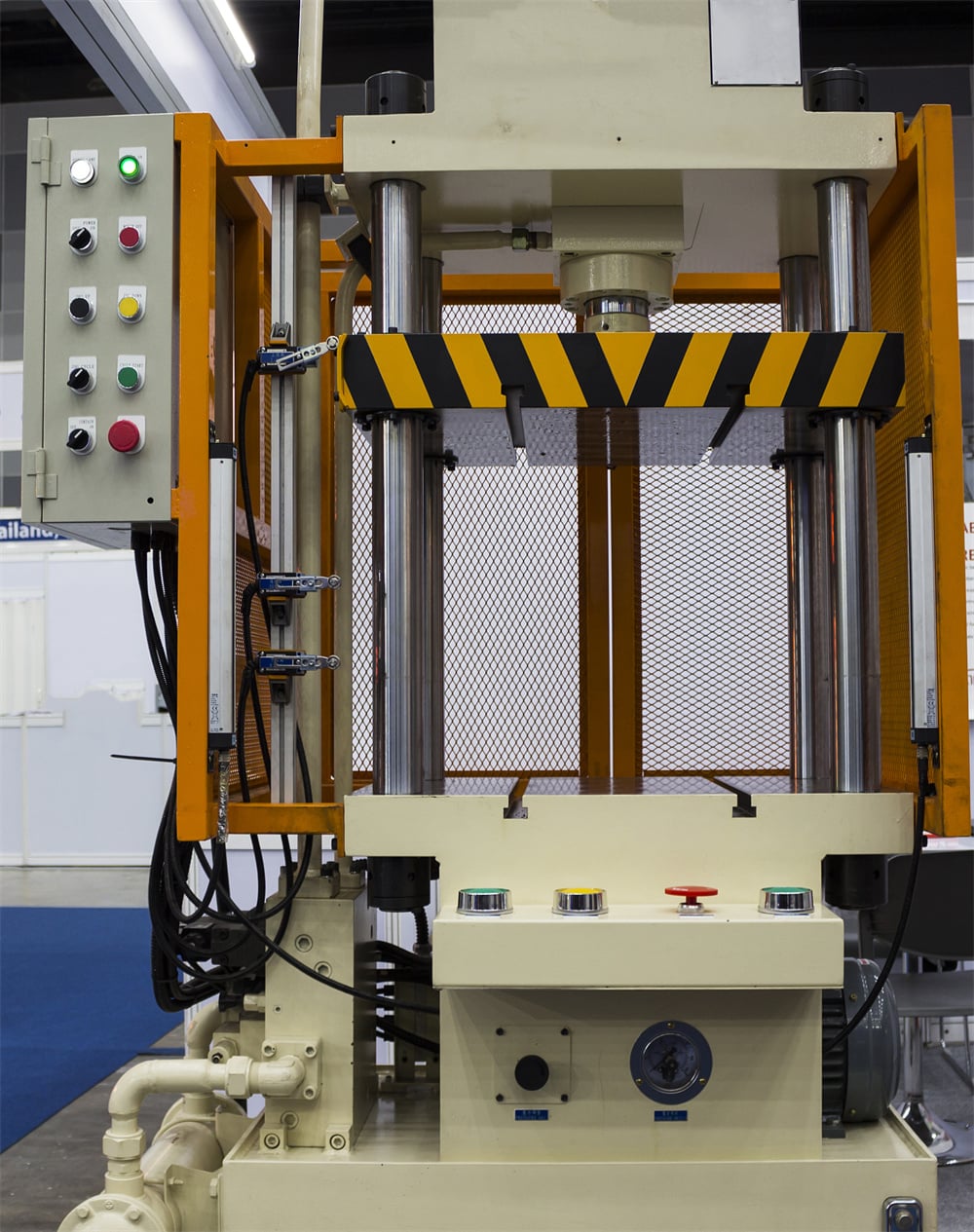
Another critical cost factor is the frame design. C-frame presses are generally more affordable due to their open-access design, which makes them ideal for smaller, repetitive tasks. However, they are prone to deflection under high loads. H-frame or four-column presses offer superior rigidity and parallelism, which is necessary for precision metal forming. The engineering required to maintain this parallelism under extreme pressure adds a premium to the cost, but it is a necessary investment for high-tolerance parts.
The hydraulic system itself—comprising the pump, valves, seals, and fluid cooling systems—is the heart of the machine. High-quality components from reputable global brands (such as Bosch Rexroth or Parker) increase the initial cost but significantly reduce long-term maintenance expenses. Cheap, off-brand hydraulic components are a common source of downtime, leading to hidden costs that often exceed the initial savings of a lower-priced machine.
Finally, the control system plays a massive role in the price. A manual press with simple push-button controls is significantly cheaper than a CNC-integrated press with touch-screen interfaces, recipe storage, and real-time pressure monitoring. Modern fabrication facilities increasingly demand these advanced controls to ensure repeatability and to integrate the press into Industry 4.0 workflows, which adds to the upfront investment but pays dividends in efficiency.
Configuration Impact: Customization vs. Standard Models
When reviewing a Hydraulic Press Buying Guide: Price Ranges Small, Medium, Large Models, one must consider the impact of configuration. Standard models are mass-produced, which allows manufacturers to achieve economies of scale and offer lower prices. If your application fits within the standard specifications—such as a standard bed size, stroke length, and daylight opening—you will always find the best value by choosing a stock machine.
However, many fabrication tasks require custom configurations. This might include a larger bolster plate to accommodate oversized dies, a longer stroke for deep-draw applications, or specialized heating platens for composite molding. Each customization requires re-engineering the machine’s frame and hydraulic circuit. These modifications can add 20% to 50% to the base price of the press, depending on the complexity of the changes requested.
Safety configurations are another area where costs can vary. While all reputable manufacturers include basic safety features, advanced options such as laser scanners, light curtains, dual-hand controls, and interlocked safety cages are essential for compliance with international safety standards. Investing in these features is non-negotiable, but the level of sophistication you choose will affect the final quote. HARSLE emphasizes that safety should never be compromised for price.
Integration with peripheral equipment is the final configuration factor. If your press needs to communicate with robotic arms, automatic feeders, or scrap removal systems, the control system must be upgraded to handle these inputs and outputs. This level of automation turns a standalone press into a production line, significantly increasing the cost but also drastically improving the throughput and reducing labor costs over the life of the machine.
Hidden Costs: Beyond the Sticker Price
The purchase price is only the tip of the iceberg. When budgeting for a hydraulic press, you must account for installation and commissioning. Large presses often require specialized foundations, including reinforced concrete pads to handle the weight and vibration. If your facility floor is not prepared, you may face significant civil engineering costs before the machine even arrives.
Shipping and logistics are also major considerations, especially for international purchases. Large presses are often shipped in multiple containers or on flat-rack vessels, requiring heavy-duty cranes for unloading and positioning. These logistical costs can range from a few thousand dollars to tens of thousands depending on the distance and the complexity of the rigging required to move the machine into your facility.
Operational costs, specifically energy consumption, are often overlooked. A hydraulic press is a high-energy consumer. Modern machines with variable frequency drives (VFDs) or servo-hydraulic systems are much more efficient than traditional constant-displacement pump systems. While a VFD-equipped press might have a higher upfront cost, the energy savings over five years can be substantial, often offsetting the initial price difference.
Maintenance and spare parts represent the final category of hidden costs. You must factor in the cost of hydraulic oil, filter changes, seal replacements, and potential downtime. Choosing a manufacturer with a strong local service network and readily available spare parts is crucial. If you buy a machine from a manufacturer that lacks support in your region, a simple seal failure could result in weeks of downtime, costing you far more than the price of the machine itself.
ROI Calculation: Justifying the Investment
Calculating the Return on Investment (ROI) for a hydraulic press requires a clear understanding of your production goals. Start by calculating the cost per part. This includes the machine’s depreciation, energy usage, labor costs, and the cost of raw materials. By comparing this to your current production method—whether it is manual labor, outsourcing, or using an older, less efficient machine—you can determine the payback period.
Consider the throughput increase. A modern hydraulic press with faster cycle times and automated material handling can produce significantly more parts per hour than an older model. If your current bottleneck is the press, the increase in output can lead to higher revenue, which is a direct contributor to a positive ROI. Use the following formula to estimate your payback: (Total Investment Cost) / (Annual Savings + Increased Profit from Higher Output) = Payback Period in Years.
Quality improvements also play a role in ROI. A more precise press results in fewer rejected parts and less scrap material. In industries like automotive or aerospace, where quality standards are stringent, the ability to consistently produce parts within tolerance is a competitive advantage. Reduced rework and lower scrap rates directly improve your bottom line and should be factored into your ROI analysis.
Finally, consider the resale value. High-quality hydraulic presses from reputable brands maintain their value well over time. If your business needs change in the future, a well-maintained, high-quality press can be sold on the secondary market for a significant portion of its original cost. This residual value acts as a hedge against your initial investment, making the total cost of ownership much lower than it appears on paper.
Buying Advice: How to Choose the Right Model
When using this Hydraulic Press Buying Guide: Price Ranges Small, Medium, Large Models, the first piece of advice is to define your application clearly. Are you doing simple bending, deep drawing, or complex forging? The application dictates the type of press you need. Do not buy a 500-ton press if your maximum requirement is 100 tons; you will be paying for capacity you never use and wasting energy in the process.
Second, prioritize build quality and support. A hydraulic press is a long-term asset that should last for decades. Look for manufacturers with a proven track record, ISO certifications, and a commitment to after-sales service. Ask for references from other companies in your industry that have purchased similar machines. Their experience with the machine’s reliability and the manufacturer’s support will be invaluable.
Third, involve your operators in the selection process. They are the ones who will be using the machine daily. Their input on ergonomics, control interface, and ease of maintenance can prevent future headaches. A machine that is difficult to operate or maintain will lead to operator frustration and increased downtime, regardless of how much it cost.
Lastly, always negotiate for training and installation support. A complex hydraulic press is only as good as the person operating it. Ensure that the purchase agreement includes comprehensive training for your staff on operation, safety, and basic maintenance. This ensures that you hit the ground running and maximize the productivity of your new equipment from day one.
Frequently Asked Questions (FAQ)
- What is the typical lifespan of a hydraulic press? With proper maintenance, a high-quality hydraulic press can last 20 to 30 years or more.
- How often should I change the hydraulic oil? This depends on usage, but generally, oil should be analyzed annually and changed every 2,000 to 4,000 operating hours.
- Can I use a standard press for specialized materials? Yes, but you may need to adjust the pressure settings and potentially use specialized tooling or heating elements.
- What is the difference between a press brake and a hydraulic press? A press brake is specifically designed for bending sheet metal, while a hydraulic press is a more versatile machine used for a wide range of forming, punching, and assembly tasks.
- How do I know if I need a custom-built press? If your part dimensions, tonnage requirements, or production speed cannot be met by any standard model on the market, a custom-built solution is necessary.
- Are there financing options available for industrial presses? Yes, most reputable manufacturers and distributors offer leasing or financing plans to help manage the capital expenditure.