
Einstellung des Sicherheitsventils der Hydraulikpresse: Sicherer Schritt-für-Schritt-Leitfaden

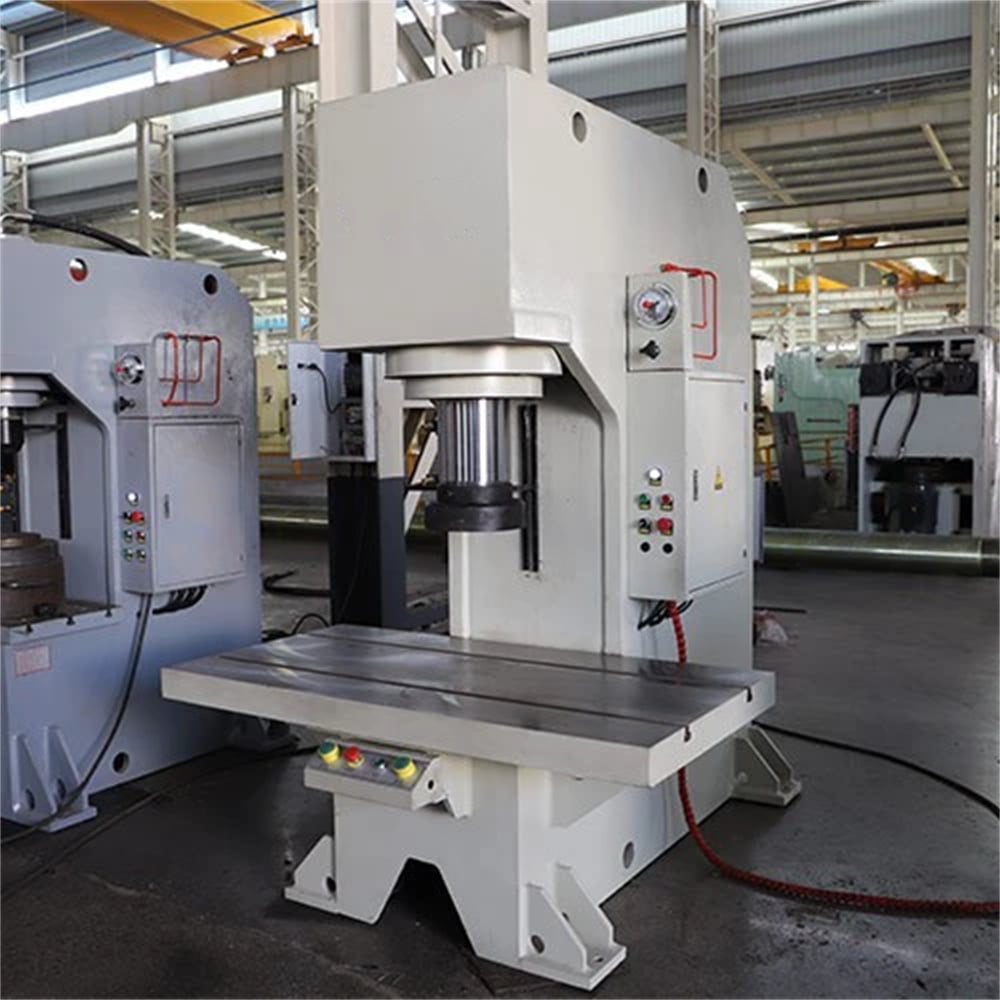
Kurze Antwort: the relief valve limits the maximum pressure, and therefore the maximum force, of a hydraulic press. To adjust it safely: (1) find the press’s rated maximum pressure on the nameplate or hydraulic schematic, (2) fit a calibrated gauge, (3) loosen the lock nut, (4) press against a solid block, (5) turn the adjusting screw in small steps (clockwise usually increases pressure) until the gauge shows the required value, and (6) lock the nut and record the setting. Never set it above the rated maximum. This work should only be done by trained maintenance staff.
What the Relief Valve Does
When system pressure reaches the valve’s setting, the relief valve opens and sends oil back to the tank. This protects the pump, cylinder, frame, hoses and tooling from overload. The setting therefore decides the maximum tonnage: Force = Pressure × Cylinder area. See the hydraulic press formula and calculator.
Many presses have more than one pressure valve: the main relief valve, a separate valve for return pressure, and on some machines a proportional pressure valve controlled by the PLC. Check the hydraulic schematic to identify which valve you are adjusting.
Safety First
- Only trained maintenance staff should adjust pressure valves.
- Never exceed the press’s rated pressure; the frame, cylinder and hoses are designed for it.
- Use a solid steel block on the bed, centered under the ram, rated for the full load.
- Keep hands and body clear of the die area; use two-hand or remote controls.
- Never loosen fittings on a pressurized circuit.
Step-by-Step Adjustment
- Find the specification: maximum working pressure on the nameplate, in the manual or on the hydraulic schematic (for example 25 MPa / 250 bar).
- Fit a calibrated gauge at the test point near the pump or valve block. Don’t rely on an old panel gauge alone.
- Warm up the oil to normal operating temperature (35–50 °C).
- Set up the test: place the steel block centered under the ram.
- Loosen the lock nut on the relief valve adjusting screw.
- Press against the block and hold pressure. Read the gauge.
- Adjust in small steps (a quarter turn or less). On most valves, clockwise increases pressure and counter-clockwise decreases it; confirm in the valve documentation.
- Stop at the required pressure. If the press needs a lower maximum force for a job, set the working pressure on the control (or the working pressure valve), not by turning the main relief valve down permanently.
- Tighten the lock nut, repeat the test twice, and confirm the reading is stable.
- Record the date, setting and gauge used in the maintenance log.
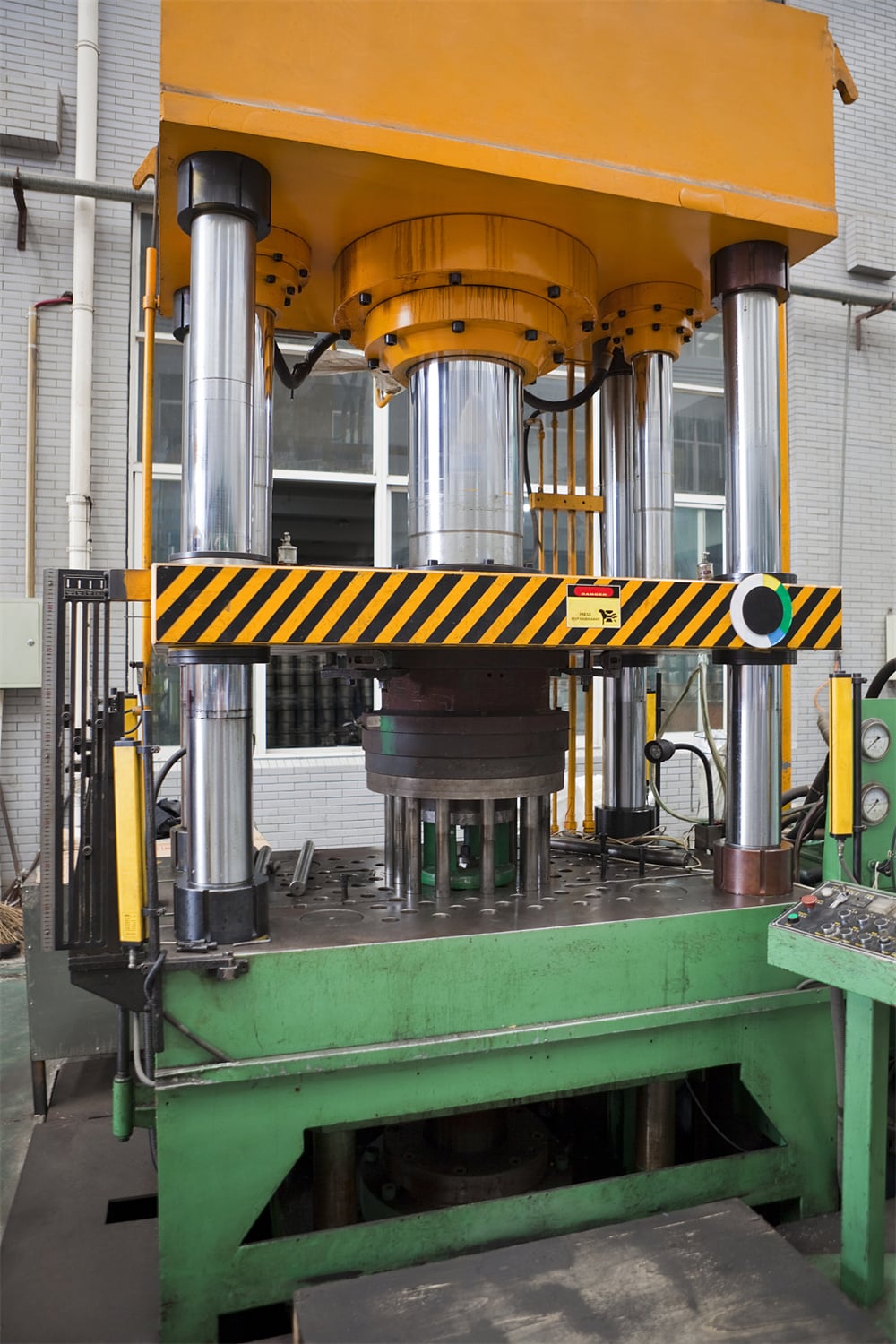
Relief Valve Problems
| Symptom | Likely cause | Fix |
|---|---|---|
| Press can’t reach rated pressure | Relief set too low, dirt holding the valve open, worn seat; or the pump is weak | Check the setting; clean or replace the valve; test the pump. See not building pressure |
| Pressure won’t change when adjusting | Wrong valve, stuck spool, broken spring, pilot line blocked | Check the schematic; service the valve |
| Chattering / screaming noise | Valve near its cracking pressure, air in the oil, worn seat | Set slightly higher than working pressure; bleed air; service the valve |
| Oil overheating | Valve dumping continuously | Check the setting and unloading circuit. See overheating |
| Pressure drifts over time | Loose lock nut, spring fatigue | Re-set, lock and record; replace the spring or valve |
Keep the hydraulic pressure setting traceable to the manufacturer’s instructions
Record model and serial number, the relevant alarm and available pressure readings. Refer pressure limit changes and testing to qualified service with the approved specification for the exact circuit.
Häufig gestellte Fragen
Which way do I turn a relief valve to increase pressure?
On most valves, clockwise (screwing in) increases pressure. Always confirm in the valve or press documentation, and never exceed the rated maximum.
How high should the relief valve be set?
At the press’s rated maximum working pressure, as stated by the manufacturer, typically a little above the highest working pressure the press needs.
Can I increase the relief pressure to get more tonnage?
No. Exceeding the rated pressure can damage the cylinder, frame and hoses and create a serious safety hazard. If you need more force, use a press with higher rated tonnage.
Need Help?
See how to diagnose valve problems Und how to fix a hydraulic press. For KAVDO presses, contact our service team with the model and the pressure readings before adjusting.
