How to Estimate Hydraulic Press Price Before You Buy: A Comprehensive Guide


Price Range Overview
When you begin the journey to expand your production capabilities, learning how to estimate hydraulic press price before you buy is the most critical step in your financial planning. Hydraulic presses are not one-size-fits-all commodities; they are highly engineered systems designed for specific force, speed, and precision requirements. Generally, entry-level C-frame hydraulic presses for small-scale assembly or light stamping can range from $15,000 to $40,000. Mid-range industrial four-column presses typically fall between $50,000 and $150,000, depending on tonnage and automation levels.
For heavy-duty manufacturing, such as deep drawing or large-scale forging, prices can easily exceed $250,000 to $500,000. These high-end machines often include advanced PLC controls, integrated safety light curtains, and custom-engineered bed sizes. Understanding these broad tiers helps you categorize your needs before reaching out to manufacturers like HARSLE for a formal quotation.
It is important to note that the “sticker price” is only the beginning. When you estimate hydraulic press price before you buy, you must account for the total cost of ownership. This includes shipping, rigging, installation, and the necessary foundation work required for high-tonnage equipment. A machine that appears cheap upfront may end up costing more due to lack of efficiency or higher maintenance requirements over its lifecycle.
Market volatility in steel and electronic components also plays a significant role in current pricing. Because hydraulic presses rely heavily on high-grade steel for the frame and sophisticated hydraulic manifolds for operation, global supply chain fluctuations can impact lead times and final costs. Always request a quote that is valid for a specific period to ensure your budget remains accurate during the procurement process.
Main Cost Drivers
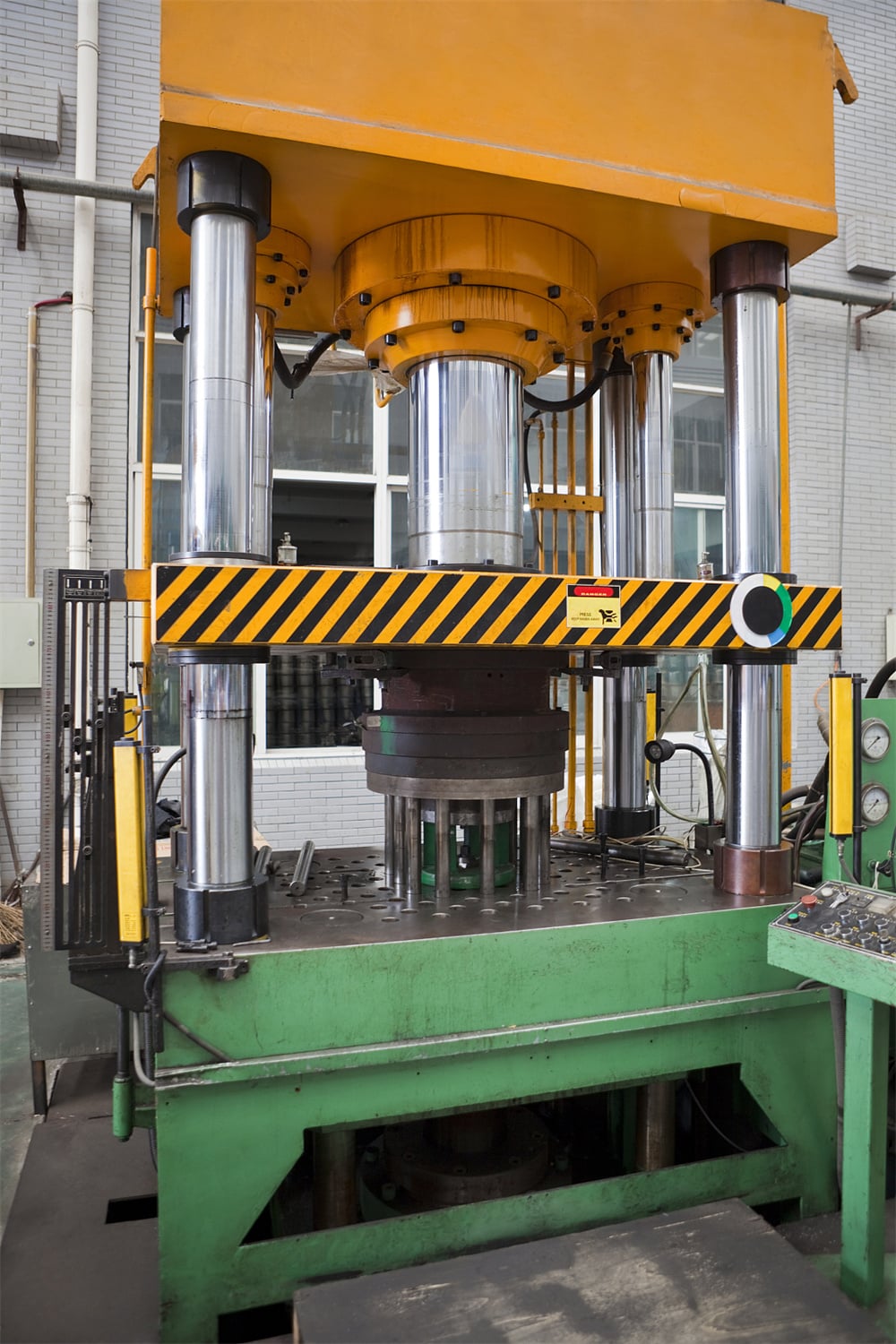
The primary driver of any hydraulic press price is the tonnage capacity. Tonnage represents the maximum force the machine can exert, and it dictates the thickness and material type you can process. A 100-ton press is significantly cheaper than a 1,000-ton press because the latter requires a much larger, more robust frame, heavier hydraulic cylinders, and a more powerful motor to maintain structural integrity under extreme pressure.
Another major cost factor is the daylight and stroke length. Daylight is the maximum opening between the press bed and the slide, while stroke length is the distance the slide travels. Machines with large daylight and long strokes require taller, more complex frames and longer hydraulic cylinders, which increases material costs and manufacturing complexity. If your application doesn’t require a large opening, opting for a more compact design can save you significant capital.
The hydraulic system itself is a major cost component. High-performance presses use variable displacement pumps and proportional valves to provide precise control over speed and pressure. These components are more expensive than standard fixed-displacement pumps but offer superior energy efficiency and process repeatability. When you estimate hydraulic press price before you buy, consider whether your application requires this level of precision or if a standard hydraulic circuit will suffice.
Control systems also influence the final price. Basic manual controls are cost-effective but limit the machine’s versatility. Modern CNC or PLC-based control systems allow for programmable cycle times, pressure profiles, and data logging. While these systems add to the initial investment, they often pay for themselves by reducing scrap rates and increasing operator productivity. HARSLE offers various control configurations to match different operational needs.
Configuration Impact
The configuration of the press frame—C-frame vs. H-frame (four-column)—is a fundamental decision that impacts both functionality and price. C-frame presses provide excellent access to the work area from three sides, making them ideal for assembly, straightening, and small-part stamping. They are generally more affordable but have limitations regarding off-center loading and frame deflection under high tonnage.
Four-column or H-frame presses are designed for stability and uniform pressure distribution. These are the workhorses of the metal fabrication industry, used for deep drawing, blanking, and heavy forming. Because they require four precision-ground columns and a robust bolster plate, they are more expensive to manufacture. However, the increased rigidity ensures higher part quality and longer tool life, which is a critical consideration for high-volume production.
Customization is the final piece of the configuration puzzle. Do you need a heated platen for composite molding? Do you require a die cushion for deep drawing operations? Do you need an automatic feeding system or a robotic interface? Each of these add-ons increases the price. When you estimate hydraulic press price before you buy, list your “must-have” features versus your “nice-to-have” features to keep your project within budget.
Safety features are non-negotiable but also impact the final cost. Modern safety standards require light curtains, dual-hand controls, and interlocked guarding. While these are essential for operator protection, they represent a significant portion of the machine’s cost. Never look to cut costs by compromising on safety, as the long-term liability and potential for accidents far outweigh the initial savings.
Hidden Costs
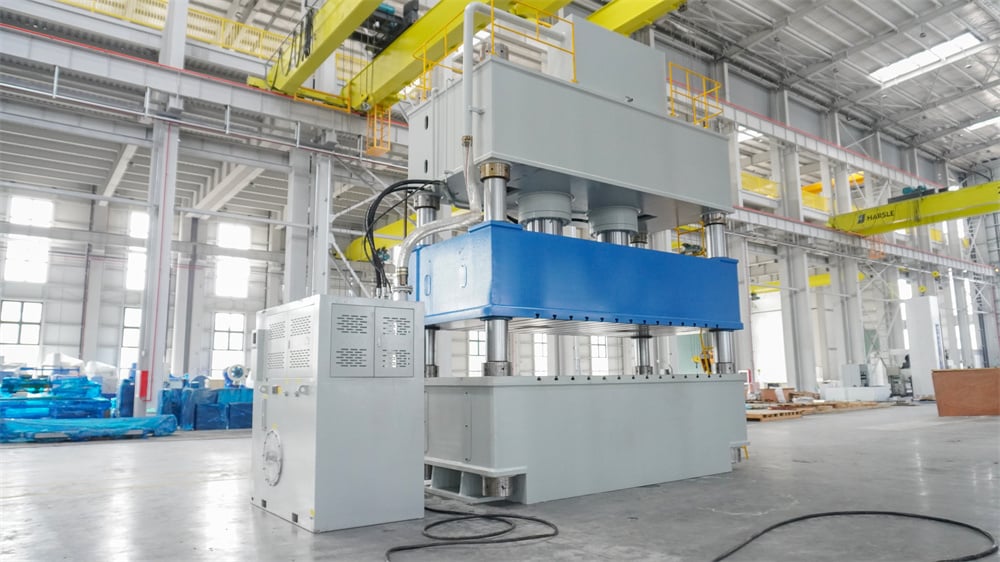
Many buyers fail to account for the “hidden” costs of installation. A hydraulic press is a heavy piece of machinery that often requires a reinforced concrete foundation. Depending on the soil conditions and the weight of the press, the cost of site preparation can range from a few thousand dollars to tens of thousands. Always consult with a structural engineer before finalizing your purchase.
Shipping and rigging are often overlooked. Because these machines are oversized and heavy, they require specialized flatbed transport and crane services for unloading and positioning. If your facility does not have a high-capacity overhead crane, you will need to hire a professional rigging company. These costs should be factored into your total budget early in the planning phase.
Energy consumption is a long-term operational cost. Older hydraulic designs or poorly maintained systems can be energy-intensive. Modern presses with servo-driven hydraulic systems can reduce energy consumption by 30% to 50% compared to traditional constant-run systems. When you estimate hydraulic press price before you buy, consider the energy savings over the machine’s 10-20 year lifespan; a slightly more expensive machine with a servo-pump may be cheaper in the long run.
Maintenance and spare parts availability also represent hidden costs. Choosing a reputable manufacturer like HARSLE ensures that you have access to technical support and readily available spare parts. Buying a “bargain” machine from an unknown source can lead to extended downtime if a critical component fails and no support is available. Always factor in the cost of a service contract or training for your maintenance team.
ROI Calculation
To justify the investment, you must calculate the Return on Investment (ROI). Start by determining the cost per part. If your new press can produce parts 20% faster than your current equipment, calculate the labor savings and the increased revenue from higher throughput. A faster cycle time directly translates to a lower cost per unit, which improves your competitive edge in the market.
Consider the reduction in scrap rates. A high-precision hydraulic press with programmable pressure control will produce more consistent parts, reducing the amount of wasted material and the time spent on rework. If you are currently losing 5% of your production to defects, a new press that reduces that to 1% can provide a massive boost to your bottom line.
Factor in the versatility of the machine. Can the press be used for multiple applications? A machine that can handle both stamping and forming is more valuable than a single-purpose press. By increasing the utilization rate of the equipment, you shorten the payback period. When you estimate hydraulic press price before you buy, look at the machine as a profit center rather than just an expense.
Finally, consider the tax implications and depreciation. Many regions offer tax incentives or accelerated depreciation for capital investments in manufacturing equipment. Consult with your financial advisor to understand how these benefits can offset the initial purchase price. A well-planned investment in HARSLE machinery can significantly improve your company’s valuation and operational capacity.
Buying Advice
Before signing a purchase agreement, define your technical requirements clearly. What is the maximum force required? What is the bed size? What is the required cycle time? Having a detailed specification sheet will prevent you from over-buying features you don’t need or under-buying capacity that will limit your future growth. HARSLE’s technical team can assist you in refining these specifications to ensure the machine is perfectly suited to your needs.
Request references from the manufacturer. A reputable company will be happy to provide contact information for existing customers who use similar equipment. Speaking with other shop owners about their experience with the machine’s reliability, ease of use, and the manufacturer’s support can provide invaluable insights that you won’t find in a brochure.
Evaluate the training and support package. A hydraulic press is a complex machine, and your operators need to be properly trained to use it safely and efficiently. Ask about on-site training, remote diagnostic capabilities, and the availability of technical manuals. A manufacturer that invests in your success after the sale is worth a premium price.
Finally, trust your gut regarding the partnership. You are entering a long-term relationship with your machinery supplier. You want a partner who is responsive, transparent, and committed to your long-term success. When you estimate hydraulic press price before you buy, remember that the lowest price is rarely the best deal. Focus on value, reliability, and the support you will receive throughout the life of the machine.
FAQ
- How long does a hydraulic press typically last? With proper maintenance, a high-quality industrial hydraulic press can last 20 to 30 years or more.
- What is the difference between a hydraulic press and a mechanical press? Hydraulic presses offer constant force throughout the entire stroke and are generally easier to control for deep drawing, while mechanical presses are faster but have limited force at the top of the stroke.
- Can I customize the bed size of my HARSLE press? Yes, HARSLE offers custom bed sizes and daylight openings to meet specific application requirements.
- What maintenance is required for a hydraulic press? Regular oil changes, filter replacements, seal inspections, and checking the hydraulic system for leaks are essential for longevity.
- Does HARSLE provide installation services? HARSLE provides comprehensive support, including installation guidance and on-site commissioning services to ensure your press is set up correctly.