
Best Press Brake Applications for Precision Sheet Metal Workshops: A Comprehensive Guide


Introduction
In the modern landscape of metal fabrication, the ability to deliver high-precision components consistently is the hallmark of a successful workshop. Among the various tools available to fabricators, the press brake stands as the cornerstone of the production floor. Understanding the best press brake applications for precision sheet metal workshops is essential for shop owners looking to optimize their workflow, reduce material waste, and meet the increasingly stringent demands of industries such as aerospace, automotive, and electronics.
HARSLE has long been at the forefront of providing advanced metal fabrication equipment designed to meet these exact needs. Whether you are dealing with complex geometries or high-volume production runs, the right press brake application can transform your operational efficiency. This guide explores the technical nuances, strategic applications, and selection criteria necessary to elevate your workshop’s capabilities using state-of-the-art bending technology.
Precision is not merely about hitting a specific angle; it is about repeatability, material integrity, and the integration of smart technology. As workshops transition toward Industry 4.0, the role of the press brake has evolved from a simple bending tool to a sophisticated, data-driven hub of production. By leveraging the right applications, fabricators can achieve tighter tolerances and faster turnaround times, ultimately gaining a competitive edge in a crowded market.
Throughout this article, we will delve into the specific processes that define high-precision bending, the importance of CNC synchronization, and how to select the right machinery for your specific workshop requirements. From thin-gauge electronics enclosures to heavy-duty structural components, the versatility of the modern press brake is unmatched when applied correctly.
Key Considerations for Precision Bending
Achieving precision in sheet metal fabrication requires a holistic approach that considers material properties, tooling selection, and machine calibration. The first key consideration is material springback. Every metal has a unique elastic recovery rate, and failing to account for this during the bending process will inevitably lead to inaccurate angles. Advanced HARSLE press brakes utilize real-time compensation systems to adjust the ram position, ensuring the final angle is perfect regardless of material variance.
Another critical factor is the choice of tooling. Precision workshops must invest in high-quality, hardened, and ground tooling to ensure consistency across the entire length of the bend. Worn or low-quality dies can introduce inconsistencies that propagate throughout the production run. Furthermore, the selection of the V-opening width is vital; it must be optimized based on the material thickness and the desired bend radius to prevent cracking or excessive deformation.
The environment of the workshop also plays a significant role. Precision bending is sensitive to temperature fluctuations and vibrations. Ensuring that your press brake is installed on a stable, reinforced foundation is non-negotiable for high-tolerance work. Additionally, maintaining a clean workspace prevents debris from interfering with the backgauge or the die surfaces, which could otherwise lead to surface marks or dimensional errors on the finished part.
Finally, operator expertise remains a pillar of precision. While modern CNC controllers handle the heavy lifting, the operator must understand the fundamentals of bend allowances, K-factors, and the sequence of operations. Training staff to utilize the full potential of the machine’s software—such as offline programming and 3D simulation—can drastically reduce setup times and minimize the risk of human error in complex multi-bend parts.
Technical Details of Modern Press Brake Applications
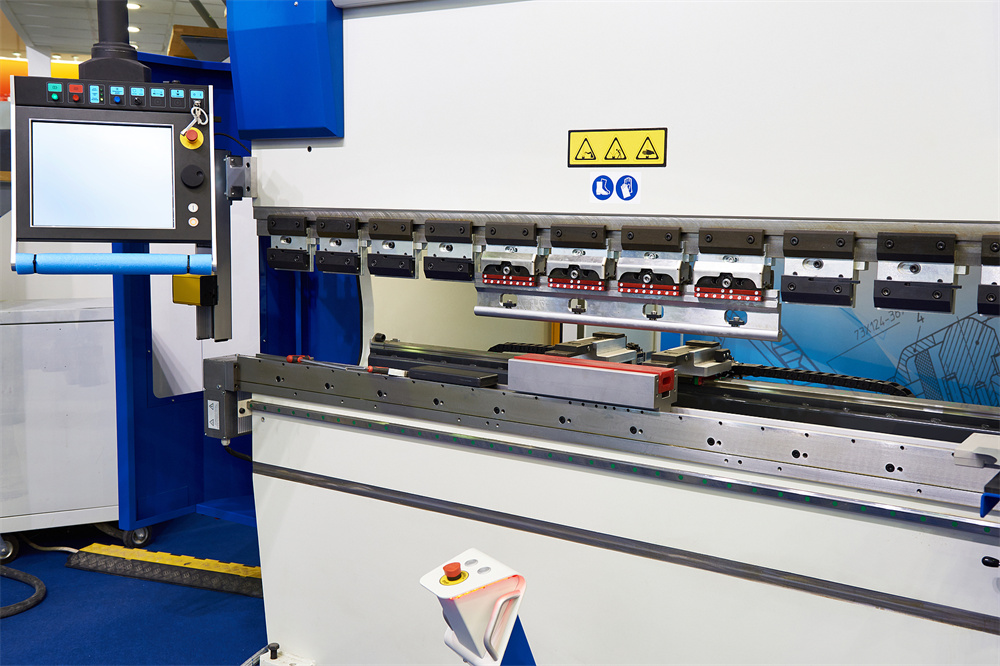
The technical evolution of the press brake has been driven by the need for higher speed and greater accuracy. Modern CNC synchronized hydraulic press brakes utilize multi-axis backgauges, typically ranging from 4 to 8 axes, allowing for the manipulation of complex parts that require non-parallel bends or tapered shapes. These axes work in tandem with the ram to ensure that the material is positioned exactly where it needs to be for every single bend.
One of the most significant technical advancements is the integration of crowning systems. As a press brake applies force, the machine frame can deflect slightly, which would normally result in a bend angle that varies from the center to the ends of the part. Hydraulic or mechanical crowning systems compensate for this deflection by applying an opposing force, ensuring a uniform bend angle across the entire length of the bed. This is particularly crucial for long, thin parts where even minor deflection is magnified.
Smart control panels have revolutionized the user experience. These interfaces allow operators to input CAD files directly, which the machine then translates into a bending sequence. The software can automatically calculate the required tonnage, suggest the optimal tooling, and even warn the operator about potential collisions before the process begins. This level of automation is essential for workshops handling high-mix, low-volume production where setup time is the primary bottleneck.
Furthermore, energy efficiency has become a technical priority. Modern hydraulic systems are designed to operate only when the ram is in motion, significantly reducing power consumption compared to older, continuously running pumps. Some systems even incorporate regenerative braking, capturing energy during the descent of the ram to be reused in subsequent cycles. This not only lowers operational costs but also aligns with the growing industrial trend toward sustainable manufacturing practices.

Selection Advice for Precision Workshops
When selecting the best press brake for your precision workshop, the first step is to define your production scope. Are you focusing on thin-gauge stainless steel for medical devices, or are you bending thick carbon steel for heavy machinery? The tonnage requirements and bed length must be matched to your most demanding parts, while also considering the flexibility needed for future growth. It is often better to slightly over-specify the tonnage to ensure the machine operates well within its capacity, which extends the lifespan of the hydraulic components.
Consider the level of automation you require. If your workshop handles repetitive, high-volume tasks, investing in a robotic bending cell can provide unmatched consistency and 24/7 production capabilities. However, for shops that thrive on custom, one-off projects, a highly versatile manual-load CNC press brake with quick-change tooling systems will offer a better return on investment. The ability to switch between jobs in minutes rather than hours is a key differentiator in the precision market.
Evaluate the software ecosystem of the manufacturer. A press brake is only as good as the software that drives it. Look for systems that offer seamless integration with your existing CAD/CAM software. The ability to perform offline programming means that your machine can stay in production while your engineers prepare the next job, effectively eliminating downtime. HARSLE provides comprehensive software support that ensures your team can maximize the machine’s output from day one.
Finally, do not overlook the importance of after-sales support and maintenance. Precision machinery requires regular calibration and service to maintain its accuracy. Choose a partner that offers local technical support, readily available spare parts, and comprehensive training programs. A press brake is a long-term investment, and the quality of the support you receive will directly impact your workshop’s uptime and long-term profitability.
FAQ: Best Press Brake Applications
- What is the most important factor for precision bending? The most important factor is the repeatability of the ram and backgauge positioning, combined with effective deflection compensation (crowning).
- How does material thickness affect press brake selection? Thicker materials require higher tonnage and more robust frames to prevent deflection. You must calculate the required bending force based on the material’s tensile strength and the V-die opening.
- Can a press brake handle complex 3D parts? Yes, modern CNC press brakes with multi-axis backgauges and advanced software can handle complex, multi-bend parts with high precision.
- How often should a press brake be calibrated? For precision workshops, it is recommended to perform a full calibration check at least once a year, or more frequently if the machine is used for high-tolerance aerospace or medical components.
- What is the advantage of a CNC synchronized press brake? It ensures that both hydraulic cylinders move in perfect unison, providing consistent pressure and angle accuracy across the entire length of the bend.
Conclusion
The best press brake applications for precision sheet metal workshops are those that leverage modern technology to achieve repeatable, high-quality results with minimal waste. By focusing on the integration of CNC synchronization, proper tooling selection, and advanced software, fabricators can significantly enhance their production capabilities. HARSLE remains committed to providing the industrial machinery necessary to meet these high standards, ensuring that your workshop is equipped to handle the challenges of today and the innovations of tomorrow.
Investing in the right equipment is only the beginning. Success in precision fabrication requires a commitment to continuous improvement, operator training, and rigorous maintenance schedules. As you evaluate your workshop’s needs, remember that the goal is not just to bend metal, but to create value through precision, efficiency, and reliability. With the right strategy and the right machinery, your workshop can set the benchmark for quality in the metal fabrication industry.
Whether you are upgrading your existing fleet or setting up a new facility, the insights provided in this guide serve as a roadmap for achieving excellence. By prioritizing precision in every bend, you ensure the longevity of your parts, the satisfaction of your customers, and the sustained growth of your business. Explore the HARSLE range of press brakes today to find the perfect fit for your precision fabrication requirements.












