Common Press Brake Applications in Electrical Cabinet Production: A Comprehensive Guide


Introduction to Electrical Cabinet Manufacturing
In the modern industrial landscape, electrical cabinets serve as the backbone of infrastructure, housing sensitive components that power everything from residential smart homes to massive data centers and heavy manufacturing plants. The structural integrity, aesthetic finish, and precise dimensions of these cabinets are non-negotiable. At the heart of this fabrication process lies the press brake, a machine that transforms flat sheet metal into complex, rigid enclosures. Understanding the common press brake applications in electrical cabinet production is essential for manufacturers aiming to optimize their workflow and product quality.
HARSLE has long been at the forefront of providing high-performance metal fabrication equipment tailored to the specific needs of the electrical enclosure industry. Electrical cabinets require high levels of repeatability, as components must fit perfectly within standardized frames. Whether it is a small wall-mounted junction box or a large, multi-door floor-standing server rack, the bending process dictates the final assembly efficiency. By leveraging advanced CNC press brake technology, manufacturers can achieve the tight tolerances required for IP-rated sealing and electromagnetic interference (EMI) shielding.
The evolution of electrical cabinet design—moving toward thinner, high-strength materials—has placed new demands on bending technology. Modern cabinets often feature complex flange designs for structural rigidity, which requires sophisticated tooling and precise ram control. This guide explores how press brakes are utilized in this sector, the technical challenges involved, and how HARSLE solutions empower fabricators to meet these rigorous industry standards.

Key Considerations for Electrical Cabinet Fabrication
When producing electrical cabinets, the primary goal is to create a rigid, protective shell that can withstand environmental stressors. The first key consideration is material thickness and type. Most electrical enclosures are manufactured from cold-rolled steel, stainless steel, or aluminum. Each material reacts differently under pressure, requiring the press brake operator to account for spring-back—a phenomenon where the metal attempts to return to its original flat state after the bending force is released. HARSLE press brakes utilize advanced crowning systems to compensate for this, ensuring consistent bend angles across the entire length of the workpiece.
Another critical factor is the bend sequence. Electrical cabinets often involve multiple bends on a single sheet, such as the main body wrap or the door panels. A poorly planned sequence can lead to collisions between the workpiece and the machine frame. Modern CNC controllers allow for 3D simulation of the bending process, enabling operators to visualize the sequence before the first piece of metal is even cut. This minimizes scrap rates and significantly reduces setup time, which is vital for high-mix, low-volume production environments.
Thermal management and ventilation are also essential in cabinet design. Many enclosures feature louvered panels or perforated sections for airflow. These features often require specialized punching or forming operations that can be integrated into the press brake workflow. By using modular tooling, manufacturers can switch between standard bending and specialized forming tasks, making the press brake a versatile hub for the entire enclosure fabrication process.
Finally, the aesthetic quality of the cabinet cannot be overlooked. In many commercial and industrial settings, the cabinet is visible to the end-user. Marks, scratches, or inconsistent bend radii can detract from the professional appearance of the product. Using high-quality, polished tooling and protective films during the bending process is a standard practice for HARSLE users to ensure a pristine finish that meets the high expectations of the electrical industry.
Technical Details: Bending Processes and Tooling
The technical execution of bending electrical cabinets involves several distinct processes. Air bending is the most common method, where the punch pushes the metal into the die without bottoming out. This method is highly flexible, as a single set of tools can produce a variety of angles by simply adjusting the depth of the ram stroke. For electrical cabinets, where precision is paramount, HARSLE’s hydraulic synchronization ensures that the ram remains perfectly parallel to the bed, providing uniform bend angles from one end of the cabinet to the other.
Bottom bending is another technique used when higher precision is required for specific cabinet components. By forcing the metal to the bottom of the die, the spring-back effect is significantly reduced, resulting in a more accurate bend angle. This is particularly useful for the door frames of electrical cabinets, where the door must sit flush against the gasket to maintain the enclosure’s IP rating. The choice between air bending and bottom bending depends on the material thickness and the required tolerance levels of the specific design.
Tooling selection is perhaps the most critical technical detail. Electrical cabinets often feature “hemming” or “flattened” edges to provide a smooth, safe surface for technicians and to add structural strength to the cabinet door. This requires a two-stage bending process: an initial 30-degree bend followed by a flattening operation. HARSLE offers a wide range of specialized tooling, including gooseneck punches that allow for the bending of complex, deep-box shapes without interference. These tools are designed for durability and ease of changeover, supporting the rapid production cycles required in modern manufacturing.
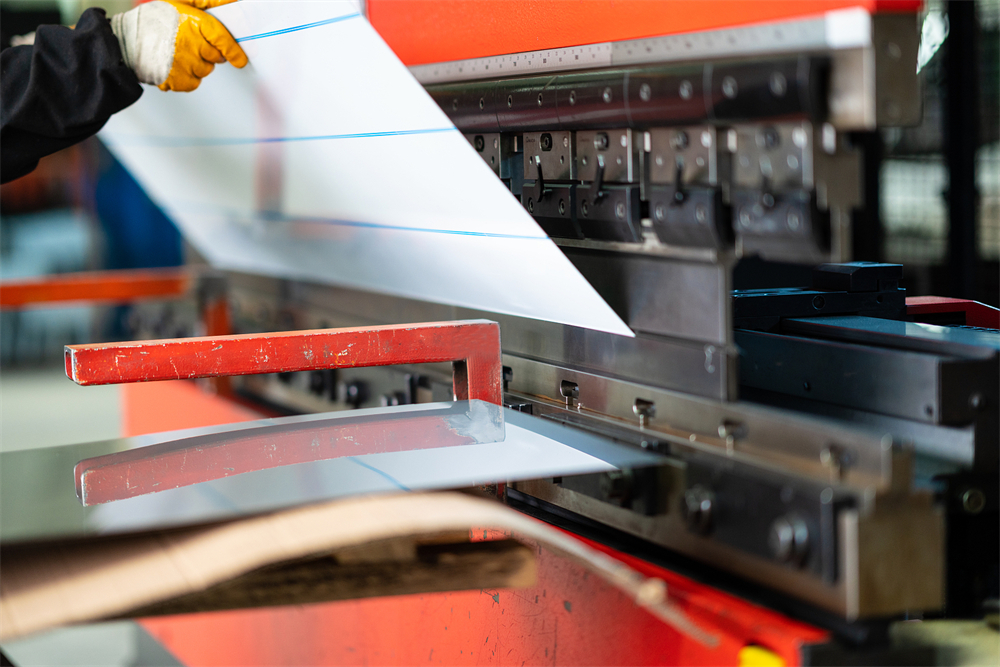
Furthermore, the integration of backgauges is a game-changer for cabinet production. A multi-axis CNC backgauge allows for the precise positioning of the sheet metal, ensuring that every bend is located exactly where it needs to be. For cabinets with multiple flanges, the backgauge can move dynamically to support the sheet, reducing the physical strain on the operator and increasing the speed of the bending cycle. This level of automation is what separates high-efficiency production lines from traditional manual shops.
Selection Advice: Choosing the Right HARSLE Press Brake
Selecting the right press brake for electrical cabinet production requires a careful assessment of your current and future needs. The first metric to consider is the tonnage. While electrical cabinets are typically made from thinner gauge sheet metal, the length of the cabinet can be significant. A 3-meter or 4-meter press brake is often necessary to accommodate large floor-standing enclosures. HARSLE provides a range of tonnage capacities, ensuring that you have enough force to bend the material without over-stressing the machine, which can lead to premature wear and tear.
The controller interface is another vital selection criterion. In the electrical cabinet industry, where designs change frequently, a user-friendly, intuitive CNC controller is essential. HARSLE’s control systems are designed to minimize the learning curve, allowing operators to program complex bends in minutes. Features like offline programming software allow engineers to design the cabinet on a computer and send the bending program directly to the machine, eliminating manual data entry errors and maximizing machine uptime.
Energy efficiency and maintenance requirements should also be factored into your decision. Modern hydraulic press brakes from HARSLE are equipped with energy-saving features, such as variable frequency drives (VFDs) that adjust the motor speed based on the actual demand. This not only reduces electricity costs but also lowers the noise level in the factory. Additionally, consider the availability of local service and support. HARSLE’s global network ensures that spare parts and technical assistance are readily available, minimizing downtime and keeping your production line moving.
Finally, consider the modularity of the machine. As your business grows, your cabinet designs may become more complex. Investing in a press brake that supports modular tooling and can be upgraded with additional axes (such as R-axis or Z-axis backgauges) provides a future-proof solution. By choosing a machine that can adapt to new technologies, you protect your investment and ensure that your fabrication capabilities remain competitive in an ever-evolving market.
Frequently Asked Questions (FAQ)
1. Why is precision so important in electrical cabinet bending?
Precision is critical because electrical cabinets must house components that are often mounted on standardized DIN rails. If the cabinet is not bent accurately, the internal components may not align, leading to assembly issues, poor sealing against dust and moisture, and potential safety hazards.
2. How does HARSLE handle spring-back in thin sheet metal?
HARSLE press brakes use advanced CNC controllers that calculate spring-back based on material properties. By adjusting the ram depth and using precision crowning systems, the machine compensates for the material’s tendency to spring back, ensuring the final angle is exactly as programmed.
3. Can a press brake be used for other tasks besides bending?
Yes, with the right tooling, a press brake can perform punching, hemming, and even light forming operations. This versatility makes it a central piece of equipment for electrical cabinet production, reducing the need for multiple specialized machines.
4. What maintenance is required for a HARSLE press brake?
Regular maintenance includes checking hydraulic fluid levels, inspecting seals, cleaning the backgauge rails, and ensuring that the tooling is free of debris. HARSLE provides a comprehensive maintenance manual with every machine to help operators keep their equipment in top condition.
5. Is offline programming necessary for cabinet production?
While not strictly necessary, offline programming is highly recommended for high-mix production. It allows you to simulate the bending process, check for collisions, and optimize the sequence before the machine starts, which significantly increases productivity and reduces waste.
Conclusion
The role of the press brake in electrical cabinet production cannot be overstated. It is the primary tool that defines the structural integrity, functionality, and visual appeal of the final product. By understanding the common applications—from simple enclosure wraps to complex, multi-flange door panels—manufacturers can better leverage their equipment to achieve superior results. HARSLE remains committed to providing the industry with high-precision, reliable, and efficient press brake solutions that meet the demanding requirements of modern electrical enclosure fabrication.
Investing in the right technology is only the first step. By focusing on proper tooling, operator training, and routine maintenance, fabricators can ensure that their HARSLE press brakes continue to deliver high-quality parts for years to come. As the demand for smarter, more robust electrical infrastructure continues to grow, the ability to produce high-quality cabinets quickly and accurately will remain a key competitive advantage. Whether you are a small shop or a large-scale manufacturer, HARSLE has the expertise and the machinery to help you succeed in the competitive world of metal fabrication.