
How a High-Precision Press Brake Improved Quality Control in Appliance Manufacturing

Introduction
In the competitive landscape of modern appliance manufacturing, the margin for error is virtually non-existent. Consumers demand sleek, seamless, and durable products, ranging from refrigerators and washing machines to high-end HVAC systems. At the heart of these products lies the sheet metal enclosure, which requires absolute precision in every bend. This is where the implementation of a high-precision press brake becomes a transformative asset for manufacturers.
When we analyze how a high-precision press brake improved quality control in appliance manufacturing, we are looking at a shift from manual, variable-heavy processes to automated, data-driven precision. Appliance manufacturers often struggle with spring-back, material thickness variations, and inconsistent bend angles that lead to assembly line bottlenecks. By upgrading to advanced CNC-controlled press brakes, companies can ensure that every single component meets the exact design specifications required for high-volume production.
HARSLE has observed that the transition to high-precision bending technology is not merely an equipment upgrade; it is a fundamental shift in quality assurance strategy. By integrating real-time feedback loops and advanced crowning systems, manufacturers can eliminate the need for secondary rework, significantly reducing scrap rates and improving the overall aesthetic finish of the final appliance. This article explores the technical nuances and strategic advantages of adopting this technology.
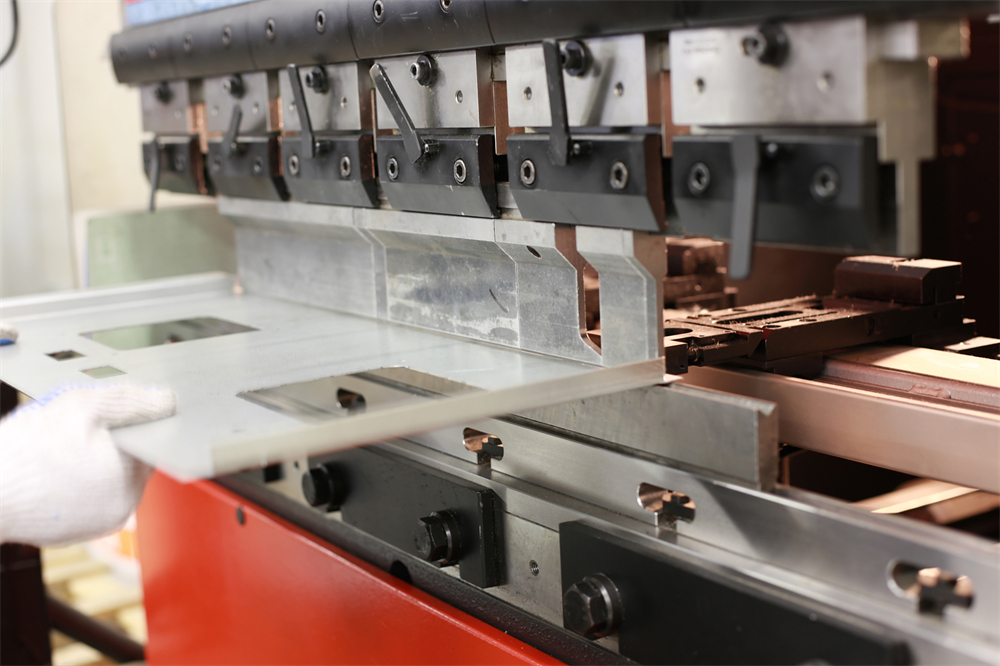
Key Considerations for Appliance Manufacturers
The appliance industry is characterized by high-volume production runs where consistency is the primary metric of success. When considering the integration of a high-precision press brake, manufacturers must first evaluate their material handling requirements. Appliances often utilize thin-gauge stainless steel or pre-coated metals that are highly susceptible to surface damage. A high-precision machine minimizes the risk of marking and ensures that the cosmetic integrity of the appliance is maintained throughout the bending process.
Another critical consideration is the complexity of the part geometry. Modern appliances feature intricate designs with multiple bends, flanges, and cutouts. A standard press brake may struggle to maintain tolerances across a complex sequence of operations, leading to cumulative errors. High-precision systems utilize multi-axis backgauges that allow for complex, multi-stage bending without the need for manual repositioning, which is a common source of human error in traditional fabrication environments.
Energy efficiency and floor space utilization are also paramount. Appliance manufacturing facilities are often tightly packed with assembly lines and robotic cells. Modern high-precision press brakes are designed with compact footprints and energy-saving features, such as servo-driven hydraulic systems that only consume power during the active bending cycle. This not only reduces operational costs but also aligns with the sustainability goals that many appliance brands now prioritize.
Finally, the integration of software is a key differentiator. Modern press brakes are no longer standalone machines; they are part of a connected digital ecosystem. By utilizing offline programming software, engineers can simulate the bending process before a single sheet of metal is touched. This “virtual bending” capability allows for the identification of potential collisions or quality issues, ensuring that the production process is optimized for quality control before the machine even starts its shift.
Technical Details: Achieving Precision in Bending
The technical superiority of a high-precision press brake lies in its ability to compensate for variables that affect bend accuracy. One of the most significant challenges in sheet metal fabrication is material spring-back—the tendency of metal to return to its original shape after the bending force is removed. High-precision machines utilize advanced angle-measuring systems, such as laser sensors or contact-based probes, to measure the bend angle in real-time and automatically adjust the ram position to compensate for spring-back.
Crowning systems are another critical technical feature. When a press brake applies force, the machine frame and the bed can deflect, leading to inconsistent bend angles along the length of the part. High-precision press brakes employ hydraulic or mechanical crowning systems that counteract this deflection, ensuring that the pressure is distributed evenly across the entire length of the die. This is essential for long, thin panels used in refrigerator doors or oven casings, where even a slight deviation can result in a misaligned assembly.

The backgauge system is the “brain” of the press brake’s positioning accuracy. High-precision machines feature multi-axis backgauges (often 4 to 6 axes) that can move in X, R, Z1, and Z2 directions. This allows for the precise positioning of the sheet metal, even when the part has complex shapes or non-parallel edges. By automating the positioning, the machine removes the variability associated with manual stops, ensuring that every part is identical to the CAD model.
Furthermore, the hydraulic system in a high-precision press brake is designed for extreme repeatability. Using high-response proportional valves and closed-loop feedback, the ram can be positioned with an accuracy of within 0.01mm. This level of control is necessary for the tight tolerances required in modern appliance design, where components must fit together perfectly to ensure proper sealing, structural integrity, and aesthetic appeal.
Selection Advice: Choosing the Right Equipment
When selecting a press brake for appliance manufacturing, the first step is to define the specific material and thickness range. Appliance manufacturers typically work with cold-rolled steel, stainless steel, and aluminum in thicknesses ranging from 0.5mm to 3mm. Choosing a machine with the correct tonnage and bed length is crucial; over-specifying leads to unnecessary capital expenditure, while under-specifying leads to machine strain and poor quality.
Evaluate the controller interface. In a high-volume appliance factory, the ease of use for operators is a major factor in maintaining consistent quality. Look for controllers that offer intuitive graphical programming, 3D visualization, and easy integration with ERP or MES systems. A controller that provides clear instructions to the operator reduces the learning curve and minimizes the potential for setup errors.
Consider the availability of tooling and quick-change systems. Appliance manufacturing often involves frequent changeovers between different product models. A high-precision press brake should be equipped with a hydraulic or pneumatic tool clamping system that allows for rapid die changes. This reduces downtime and ensures that the machine spends more time producing parts and less time being set up.
Finally, prioritize the manufacturer’s support and service network. A high-precision press brake is a long-term investment. Ensure that the supplier provides comprehensive training for your operators, as well as reliable technical support and spare parts availability. HARSLE, for instance, emphasizes not just the sale of the machine, but the ongoing partnership to ensure that the equipment continues to perform at peak precision throughout its lifecycle.
FAQ
How does a high-precision press brake reduce scrap rates?
By using real-time angle measurement and automatic crowning, the machine ensures that the first part is as accurate as the last. This eliminates the trial-and-error process that leads to wasted material.
What is the role of the backgauge in quality control?
The backgauge ensures that the sheet metal is positioned exactly where it needs to be for every bend. High-precision multi-axis backgauges eliminate manual positioning errors, ensuring consistent dimensions across all parts.
Can a high-precision press brake handle different types of materials?
Yes, modern CNC controllers allow operators to input material properties, such as tensile strength and thickness, which the machine uses to automatically calculate the required bending force and compensation parameters.
How often should a high-precision press brake be calibrated?
Calibration frequency depends on usage, but for high-precision appliance manufacturing, it is recommended to perform a full calibration check at least once every six months to ensure the ram and backgauge remain within tolerance.
Conclusion
The integration of a high-precision press brake is a definitive step toward achieving world-class quality control in appliance manufacturing. By addressing the fundamental challenges of material variability, structural deflection, and human error, these machines provide the consistency required for modern, high-volume production lines. As appliance designs become more complex and consumer expectations for quality continue to rise, the ability to produce perfect bends every time will remain a critical competitive advantage.
Investing in the right technology, such as the advanced solutions offered by HARSLE, allows manufacturers to streamline their operations, reduce waste, and deliver superior products to the market. When you choose to prioritize precision in your metal fabrication process, you are not just buying a machine; you are securing the future quality and reliability of your brand. For manufacturers looking to elevate their production standards, the transition to high-precision bending is the most effective path forward.