
Hydraulic Press Machine Cost Guide for Sheet Metal and Stamping Applications


Price Range Overview for Hydraulic Press Machines
Investing in a hydraulic press for sheet metal and stamping applications is a significant capital expenditure that requires a deep understanding of market pricing. Generally, the cost of a hydraulic press machine for sheet metal stamping applications ranges from $20,000 for entry-level, low-tonnage units to over $500,000 for high-precision, automated production lines. Understanding where your specific requirements fall within this spectrum is the first step in budget planning.
For small-scale job shops or prototyping facilities, a standard C-frame hydraulic press typically costs between $20,000 and $60,000. These machines are versatile but often require more manual intervention. As you move toward mid-range production, 4-column hydraulic presses designed for consistent stamping cycles usually command prices between $70,000 and $150,000, depending on the bed size and integrated control systems.
High-end, heavy-duty stamping presses, often integrated with robotic feeding systems and advanced safety light curtains, represent the top tier of the market. These systems are essential for automotive or aerospace manufacturing where precision and speed are non-negotiable. Prices for these fully automated cells can easily exceed $250,000, reflecting the complexity of the engineering and the quality of the hydraulic components used.
It is important to note that the “sticker price” is rarely the final cost. Freight, installation, commissioning, and specialized tooling must be factored into your total budget. HARSLE recommends that buyers allocate an additional 10-15% of the machine’s base price to cover these logistical and setup expenses to ensure a smooth transition from purchase to production.
Main Cost Drivers in Hydraulic Press Selection
The primary driver of cost in any hydraulic press is the tonnage capacity. Tonnage refers to the amount of force the press can exert on the workpiece. Higher tonnage requires larger hydraulic cylinders, more robust frame structures, and more powerful pump motors, all of which drive up the manufacturing cost. Selecting the correct tonnage is a balance between your current needs and future growth potential.
Another significant cost factor is the bed size and daylight opening. A larger bed allows for larger dies and more complex stamping patterns, but it also requires a heavier frame to prevent deflection under load. If your stamping applications involve deep drawing or complex geometries, the daylight (the distance between the slide and the bolster) must be sufficient, which increases the height and steel content of the machine.
The quality of the hydraulic system and control electronics cannot be overlooked. Premium presses utilize high-end proportional valves and PLC (Programmable Logic Controller) systems that allow for precise control over speed, pressure, and stroke length. While cheaper alternatives exist, investing in high-quality components reduces downtime and maintenance costs over the machine’s lifecycle, providing better long-term value.
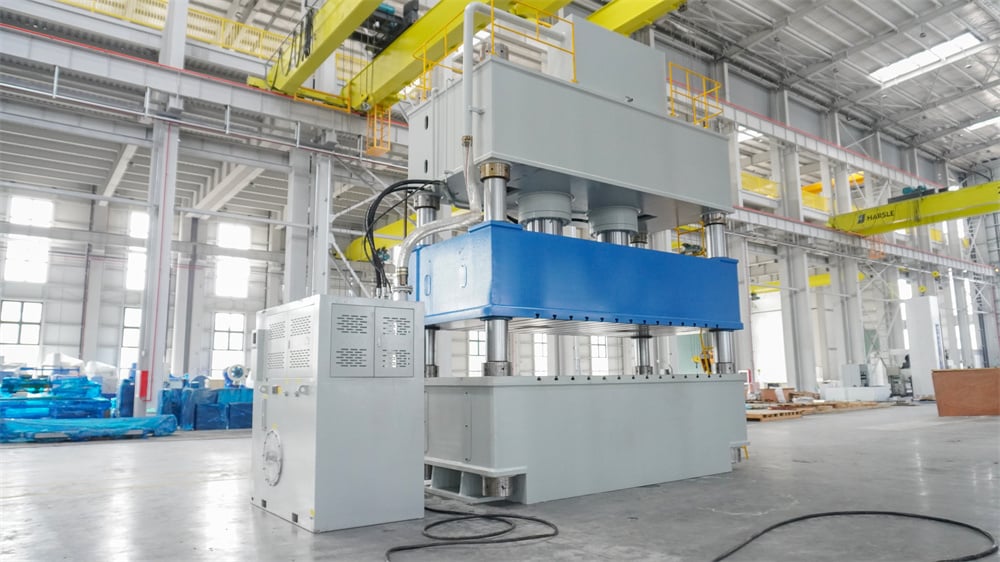
Finally, the frame design—whether C-frame, H-frame, or 4-column—impacts the price. C-frame presses are generally more affordable and offer better access to the work area, but they are prone to deflection under high loads. 4-column presses provide superior stability and parallelism, making them the preferred choice for high-precision stamping, albeit at a higher price point due to the complexity of the guiding system.
Configuration Impact on Total Investment
Customization is where the cost of a hydraulic press machine for sheet metal stamping applications can fluctuate significantly. Standard machines are built for general-purpose work, but most industrial applications require specific configurations to optimize throughput. Adding features like quick die change systems, hydraulic cushions, or automated part ejection can add thousands of dollars to the base price.
Safety features are a non-negotiable configuration cost. Modern stamping operations must comply with strict safety standards, such as light curtains, dual-hand controls, and safety interlocks. While these features increase the initial investment, they are essential for protecting operators and avoiding costly legal liabilities. HARSLE prioritizes safety-first engineering in all our hydraulic press configurations.
Control systems represent a major technological investment. Basic manual controls are sufficient for simple bending or punching, but CNC-controlled systems allow for repeatable, complex stamping sequences. These systems can store hundreds of programs, reducing setup time between jobs. If your shop handles high-mix, low-volume production, the investment in a sophisticated CNC interface will pay for itself through increased efficiency.
Energy efficiency is an increasingly important configuration factor. Variable frequency drives (VFDs) and servo-hydraulic systems are becoming standard in modern presses. These systems adjust the motor speed based on the demand, significantly reducing energy consumption compared to traditional constant-speed pumps. While the upfront cost is higher, the reduction in monthly utility bills makes these configurations highly attractive for high-volume production environments.
Hidden Costs to Consider
When budgeting for a hydraulic press, many buyers focus solely on the machine price and forget the hidden costs associated with installation and operation. Foundation requirements are a classic example. A heavy-duty stamping press may require a reinforced concrete pit or a specialized vibration-dampening foundation to ensure accuracy and prevent damage to the facility floor. These civil engineering costs can be substantial.
Tooling is another major hidden expense. The press is only as good as the dies it uses. High-quality stamping dies are precision-engineered components that can cost as much as the press itself. When calculating your budget, ensure you have a clear plan for die design, manufacturing, and maintenance. Neglecting the quality of your tooling will lead to poor part quality and increased scrap rates.
Maintenance and spare parts should be factored into your annual operating budget. Hydraulic presses require regular oil changes, filter replacements, and seal inspections. Additionally, having a stock of critical spare parts—such as proximity sensors, solenoid valves, and hydraulic hoses—on-site can prevent days of downtime in the event of a minor failure. Always ask the manufacturer for a recommended spare parts list during the purchasing process.
Training is an often-overlooked cost. Operating a modern hydraulic press requires skilled personnel who understand both the machine controls and the principles of metal forming. Investing in professional training for your operators will improve safety, increase machine longevity, and ensure that you are getting the most out of your investment. Factor in the cost of travel for trainers or the time lost during on-site training sessions.
ROI Calculation for Stamping Equipment
Calculating the Return on Investment (ROI) for a hydraulic press involves looking beyond the purchase price. Start by determining the cost per part. This includes the machine’s hourly operating cost (electricity, maintenance, labor) divided by the number of parts produced per hour. A more expensive, faster machine may actually have a lower cost per part than a cheaper, slower one.
Consider the reduction in scrap rates. High-precision hydraulic presses with advanced pressure control produce fewer defective parts. If your current process has a 5% scrap rate, and a new press reduces that to 1%, the savings in raw material and labor over the course of a year can be massive. This reduction in waste is a direct contributor to your ROI.
Evaluate the impact on lead times. A more efficient press allows you to take on more work and meet tighter deadlines, potentially opening up new revenue streams. If the new machine allows you to perform operations that were previously outsourced, you can capture that profit margin internally. These indirect benefits are often the most significant drivers of long-term profitability.
Finally, consider the resale value. High-quality hydraulic presses from reputable manufacturers like HARSLE retain their value well over time. When calculating ROI, factor in the potential trade-in or resale value of the machine after 5 to 10 years of service. A machine that is built to last will always be a better financial asset than a low-cost, disposable alternative.
Buying Advice: Making the Right Choice
Before purchasing, define your application requirements with extreme precision. Are you doing simple blanking, or are you performing deep drawing? Do you need a constant force throughout the stroke, or do you need to vary the pressure? Understanding the physics of your specific stamping application will help you avoid over-specifying or under-specifying your machine.
Always request a demonstration or visit a reference site. Seeing the machine in action, hearing the noise levels, and observing the ease of use for the operator can provide insights that a brochure cannot. Ask the manufacturer about their after-sales support. A machine is only as good as the support behind it; ensure that the supplier has a local presence or a robust remote support system.
Compare total cost of ownership (TCO) rather than just the purchase price. A machine that is slightly more expensive but uses 30% less electricity and requires less frequent maintenance will be cheaper in the long run. Ask for energy consumption data and maintenance schedules from the manufacturers you are considering.
Finally, look for modularity. As your business grows, your needs may change. A press that allows for the addition of peripheral equipment—such as coil feeders, straighteners, or robotic arms—will grow with your business. HARSLE designs its presses with future-proofing in mind, ensuring that your investment remains relevant as your production requirements evolve.
Frequently Asked Questions (FAQ)
What is the typical lifespan of a hydraulic press?
With proper maintenance, a high-quality hydraulic press can last 20 to 30 years. Regular oil analysis, seal replacements, and structural inspections are key to extending the machine’s life.
How do I determine the tonnage required for my stamping application?
Tonnage is calculated based on the material thickness, tensile strength, and the perimeter of the cut or bend. It is recommended to consult with a HARSLE engineer to perform a force calculation based on your specific die design.
Is a hydraulic press better than a mechanical press for stamping?
Hydraulic presses offer full tonnage throughout the entire stroke and better control over pressure, making them ideal for deep drawing and complex forming. Mechanical presses are generally faster and better suited for high-speed blanking operations.
What are the most common maintenance tasks for a hydraulic press?
Routine maintenance includes checking hydraulic fluid levels, replacing filters, inspecting hoses for leaks, and ensuring that all safety sensors and light curtains are functioning correctly.
Can I automate my hydraulic press later?
Yes, most modern hydraulic presses are designed to be integrated with automation systems. It is best to discuss your long-term automation goals with the manufacturer at the time of purchase to ensure the control system is compatible with future upgrades.


