
Press Brake Applications In HVAC Ductwork And Ventilation Component Manufacturing: A Comprehensive Guide


Introduction to Press Brake Applications In HVAC Ductwork And Ventilation Component Manufacturing
The modern HVAC (Heating, Ventilation, and Air Conditioning) industry relies heavily on the precision and efficiency of metal fabrication. At the heart of this production process lies the press brake, a machine indispensable for transforming flat sheet metal into the complex geometries required for ductwork, plenums, and ventilation housings. As global demand for energy-efficient climate control systems grows, the role of high-performance press brakes has become more critical than ever.
HARSLE understands that the HVAC sector demands high-volume production without compromising on dimensional accuracy. Whether it is creating standard rectangular ducts, complex transitions, or specialized ventilation components, the press brake serves as the primary tool for achieving the necessary bends. This article explores the technical nuances, operational considerations, and strategic advantages of utilizing advanced press brake technology in the HVAC manufacturing landscape.
In the context of HVAC manufacturing, the term ‘Press Brake Applications In HVAC Ductwork Ventilation Component Manufacturing’ encompasses a wide range of bending operations. From simple 90-degree flanges on duct edges to intricate multi-bend profiles on air handling unit (AHU) casings, the versatility of the press brake is unmatched. By leveraging CNC-controlled systems, manufacturers can ensure that every component fits perfectly during on-site assembly, reducing installation time and minimizing air leakage.
Furthermore, the shift toward sustainable building practices has increased the use of diverse materials, including galvanized steel, stainless steel, and aluminum. Each material presents unique challenges regarding spring-back and bend allowance. Modern press brakes, equipped with advanced software and compensation systems, allow operators to navigate these challenges with ease, ensuring that the final ventilation components meet stringent industry standards for airflow and structural integrity.
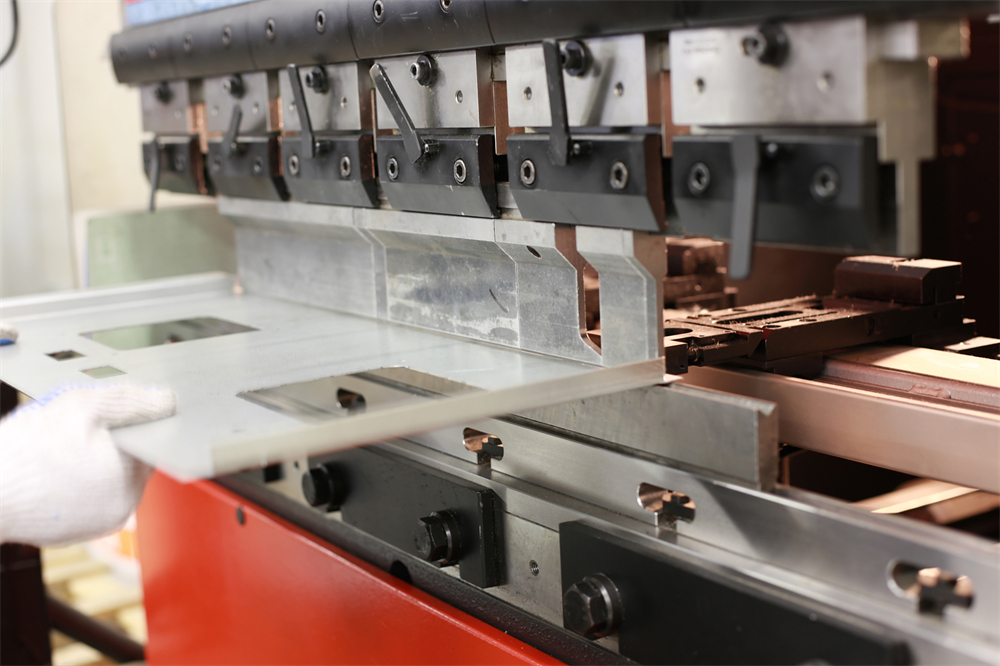
Key Considerations for HVAC Metal Fabrication
When integrating a press brake into an HVAC production line, several key considerations must be addressed to maximize throughput and quality. The first is material handling. HVAC components often involve large, thin-gauge sheets that are cumbersome to maneuver. Utilizing a press brake with an integrated sheet follower system or a robotic loading interface can significantly reduce operator fatigue and improve safety, while also ensuring consistent bend quality across large panels.
Another critical factor is the repeatability of the bending process. HVAC ductwork is often produced in batches where uniformity is essential for modular assembly. If a bend angle varies by even a fraction of a degree, it can lead to gaps in the ductwork, resulting in energy loss and noise pollution. HARSLE press brakes utilize high-precision backgauge systems and real-time angle measurement sensors to guarantee that every piece produced is identical to the first, regardless of material thickness variations.
Tooling selection is equally vital. HVAC manufacturing often requires specialized tooling, such as gooseneck punches for deep box sections or radius tooling for smooth airflow transitions. Choosing the right tooling configuration reduces the number of setups required, thereby increasing the overall equipment effectiveness (OEE). Manufacturers should prioritize quick-change clamping systems to minimize downtime during product changeovers, which is a common occurrence in custom ventilation projects.
Finally, the integration of software is paramount. Modern press brakes are no longer standalone machines; they are part of a digital ecosystem. By utilizing offline programming software, HVAC manufacturers can simulate the bending process before a single piece of metal is cut. This allows for the detection of potential collisions and the optimization of bend sequences, which is particularly useful for complex ventilation components that require multiple bends in quick succession.
Technical Details of Press Brake Operations
The technical operation of a press brake in the HVAC sector involves a deep understanding of bending physics. When bending thin-gauge galvanized steel, the primary concern is the ‘spring-back’ effect, where the metal attempts to return to its original shape after the pressure is released. HARSLE’s CNC controllers feature sophisticated algorithms that calculate the required over-bend angle based on material properties, ensuring the final product reaches the exact desired angle.
The backgauge system is the unsung hero of HVAC component manufacturing. In the production of ductwork, the backgauge must be fast, accurate, and capable of handling multiple axes. For components with complex geometries, such as tapered transitions or offset bends, a multi-axis backgauge (X, R, Z1, Z2) allows the operator to position the sheet precisely, ensuring that the bend line is perfectly aligned with the previous features of the component.
Hydraulic systems in modern press brakes have also evolved to provide better control over the bending speed and force. For delicate ventilation components, a slow, controlled approach is necessary to prevent surface marking or material cracking. Conversely, for high-volume production of standard duct sections, high-speed approach and return cycles are required to maximize output. HARSLE’s hydraulic systems are designed to balance these requirements, offering variable speed control that adapts to the specific needs of the job.
Quality control is an ongoing process in the production line. As shown in the image below, experts use precision measuring tools to verify the accuracy of the bends. This level of diligence is necessary to ensure that the ventilation system will perform as designed. By incorporating automated quality checks and laser-based angle measurement systems, manufacturers can maintain high standards while keeping production speeds high.

Selection Advice for HVAC Manufacturers
Selecting the right press brake for HVAC applications requires a strategic approach. First, evaluate your typical material thickness and length. If your facility primarily produces standard 1.2-meter to 3-meter duct sections, a mid-sized hydraulic press brake with a 100-ton to 160-ton capacity is usually sufficient. However, if you are fabricating large-scale industrial air handling units, you may require a tandem press brake setup to handle longer sheets.
Consider the level of automation required. For high-mix, low-volume production, a standard CNC press brake with quick-change tooling is ideal. For high-volume, repetitive work, investing in an automated bending cell—where a robot handles the material and the press brake performs the bends—can drastically reduce labor costs and increase consistency. HARSLE offers a range of solutions, from entry-level manual machines to fully automated robotic cells, tailored to your specific production volume.
Energy efficiency is another growing concern. Modern servo-electric or hybrid press brakes consume significantly less power than traditional hydraulic machines, as they only draw energy during the bending cycle. For facilities looking to reduce their carbon footprint and operational costs, these technologies are a wise long-term investment. Additionally, they often require less maintenance, as there are fewer hydraulic components to service.
Finally, look for a partner, not just a supplier. The manufacturer should provide comprehensive training, reliable after-sales support, and access to spare parts. HARSLE prides itself on offering extensive technical support to ensure that your press brake remains operational and productive for years to come. When evaluating a machine, ask about the availability of local technicians and the ease of software updates, as these factors will influence your long-term productivity.
Frequently Asked Questions (FAQ)
1. What is the most important feature for a press brake used in HVAC ductwork?
Precision and repeatability are the most important features. Because HVAC components must fit together perfectly to prevent air leaks, the press brake must be able to produce consistent bends across large batches. A high-quality CNC controller and a multi-axis backgauge are essential for this.
2. How does material thickness affect press brake selection?
Material thickness determines the required tonnage of the press brake. Thicker materials require more force to bend. For HVAC applications, which often use thin-gauge sheet metal, you need a machine that can provide precise control at lower tonnages to avoid damaging the material.
3. Can a press brake be used for non-standard ventilation components?
Yes, modern press brakes are highly versatile. With the right tooling and CNC programming, you can create complex shapes, transitions, and custom housings for specialized ventilation systems. Offline programming software allows you to design and test these shapes before bending.
4. How often should I perform maintenance on my press brake?
Regular maintenance is crucial for longevity. Daily checks should include inspecting the tooling for wear and ensuring the backgauge is clear of debris. Monthly and annual maintenance, including hydraulic fluid checks and software calibration, should be performed according to the manufacturer’s manual to ensure optimal performance.
5. Why choose HARSLE for HVAC manufacturing equipment?
HARSLE offers a wide range of high-performance metal fabrication machinery designed for reliability and precision. Our machines are built with the latest technology to help HVAC manufacturers increase efficiency, reduce waste, and maintain high quality standards.
Conclusion
The application of press brakes in HVAC ductwork and ventilation component manufacturing is a cornerstone of modern industrial efficiency. By selecting the right machinery, investing in proper tooling, and utilizing advanced CNC technology, manufacturers can significantly improve their production capabilities. Whether you are a small shop or a large-scale industrial facility, the precision offered by HARSLE press brakes ensures that your ventilation components are built to last, perform efficiently, and meet the rigorous demands of the HVAC industry.
As the industry continues to evolve, the integration of automation and smart manufacturing will become even more prevalent. Staying ahead of these trends by choosing versatile and reliable equipment is the key to long-term success. We invite you to explore the HARSLE range of press brakes and discover how our solutions can be tailored to meet your specific manufacturing needs, helping you achieve superior results in every project you undertake.












