Press Brake Price Comparison Guide: Hydraulic, Mechanical, and CNC Models


Price Range Overview: Understanding the Market Landscape
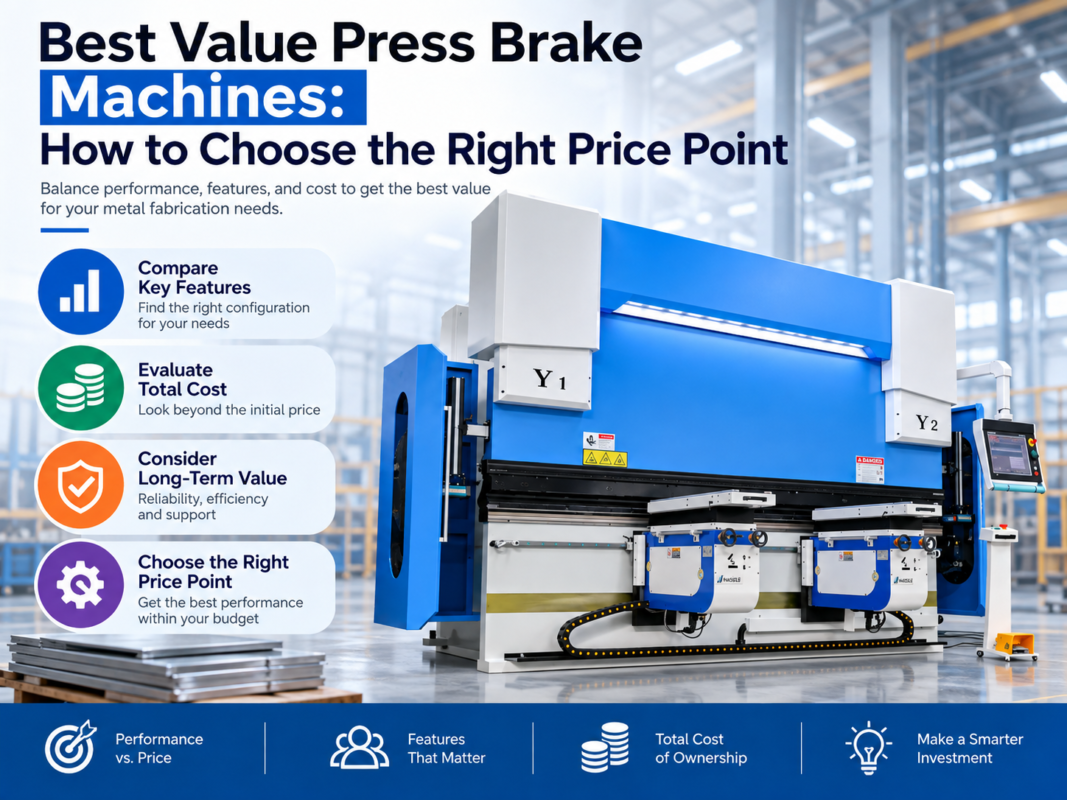
Investing in a press brake is one of the most significant capital expenditures a metal fabrication shop will undertake. When conducting a Press Brake Price Comparison Guide: Hydraulic, Mechanical, and CNC Models, it is essential to recognize that prices vary drastically based on technology, tonnage, and bending length. Mechanical press brakes, while largely considered legacy technology, remain the most affordable entry point, often ranging from $10,000 to $30,000 for refurbished or smaller units. However, their lack of precision and safety features limits their utility in modern, high-tolerance environments.
Hydraulic press brakes represent the industry standard for mid-to-high-range production. A standard hydraulic machine with basic NC (Numerical Control) capabilities typically starts around $35,000 and can scale up to $100,000 depending on the bending force and bed length. These machines offer a balance of power, reliability, and cost-effectiveness, making them the workhorse of the average fabrication shop.
At the top of the spectrum are CNC (Computer Numerical Control) press brakes. These machines integrate advanced software, multi-axis backgauges, and automatic crowning systems. Prices for high-end CNC models start at approximately $80,000 and can easily exceed $300,000 for large-scale, automated robotic cells. The investment here is not just in the hardware, but in the software-driven efficiency and repeatability that modern manufacturing demands.
Understanding these tiers is the first step in your procurement process. While the initial sticker price is a major factor, it is vital to view the purchase through the lens of long-term production requirements. A machine that is too cheap may end up costing more in downtime and scrap metal, while an over-engineered machine may never see a return on investment if the shop’s volume does not justify the advanced features.
Main Cost Drivers: What Influences the Price Tag?
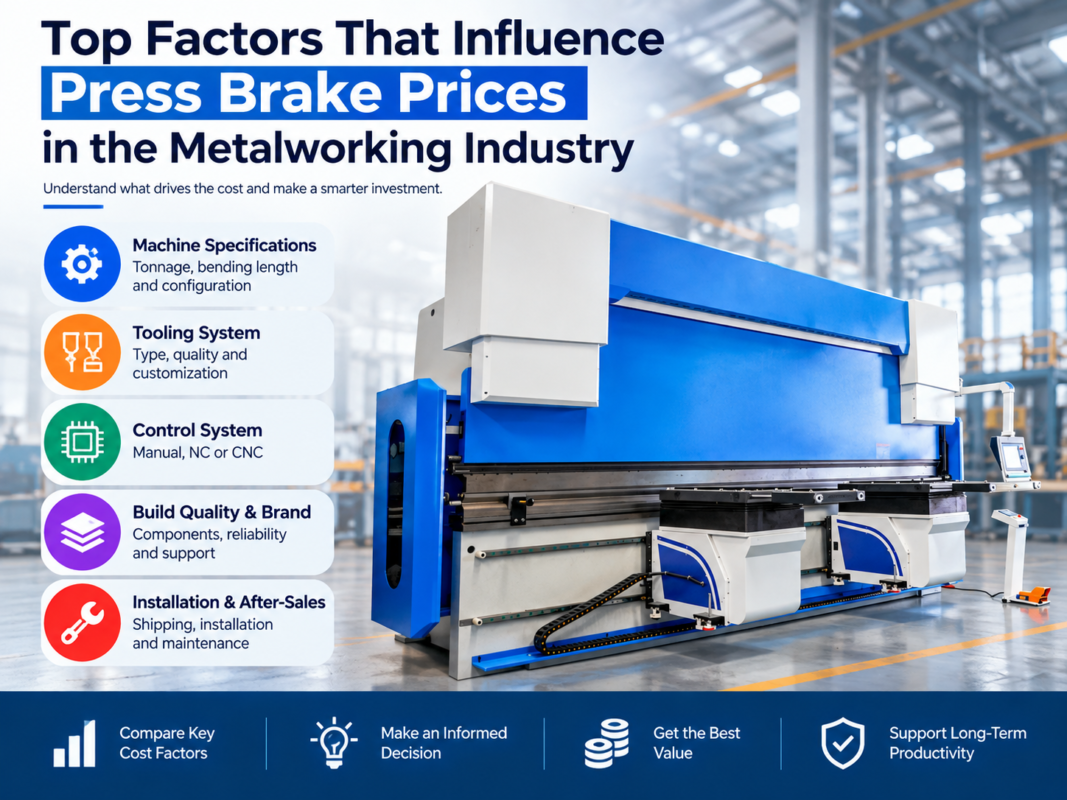
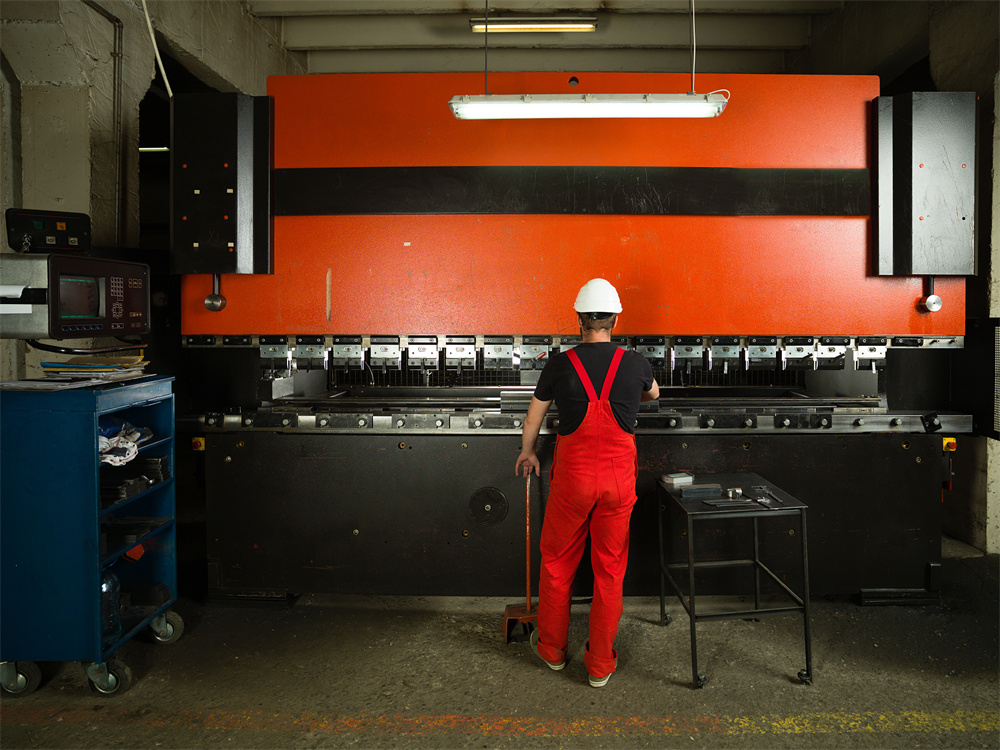
Several technical specifications act as primary drivers for the cost of a press brake. Tonnage is the most obvious factor; the force required to bend thicker or harder materials necessitates larger hydraulic cylinders, heavier frames, and more robust structural components. As tonnage increases, the cost of the machine rises exponentially due to the raw material and engineering requirements for the frame.
Bending length is the second major cost driver. A machine designed to bend 10-foot sheets requires a much longer bed and ram than a 4-foot machine. This length requires precision machining of the bed to ensure parallelism across the entire stroke. Any deviation in the bed’s flatness results in inaccurate bends, so manufacturers charge a premium for the precision required to maintain accuracy over long distances.
The control system is perhaps the most significant differentiator in modern pricing. An entry-level NC controller allows for basic depth and backgauge positioning, which is sufficient for simple, repetitive tasks. Conversely, a high-end CNC controller allows for complex 3D programming, offline simulation, and integration with ERP systems. The software development and the high-speed processors required for these controllers add significant value to the total package.
Finally, the quality of the hydraulic and electrical components plays a role. HARSLE and other top-tier manufacturers utilize high-quality valves, pumps, and sensors from reputable global suppliers. Cheaper machines often use inferior components that may fail sooner, leading to higher maintenance costs. Investing in premium components ensures that the machine remains operational for years, protecting your initial capital outlay.
Configuration Impact: Customization and Tooling
The configuration of your press brake can either save you money or add substantial costs. One of the most common upgrades is the backgauge system. A standard 2-axis backgauge is suitable for basic bends, but as you move to 4, 6, or 8-axis systems, the price increases significantly. These extra axes allow for complex, multi-angle bends in a single setup, drastically reducing handling time and increasing throughput.
Crowning systems are another critical configuration choice. Manual crowning is cheaper but requires time-consuming adjustments by the operator. Hydraulic or motorized CNC crowning systems allow the machine to automatically compensate for bed deflection, ensuring consistent bend angles across the entire length of the part. For shops dealing with varying material thicknesses and lengths, an automatic crowning system is an essential, albeit expensive, upgrade.
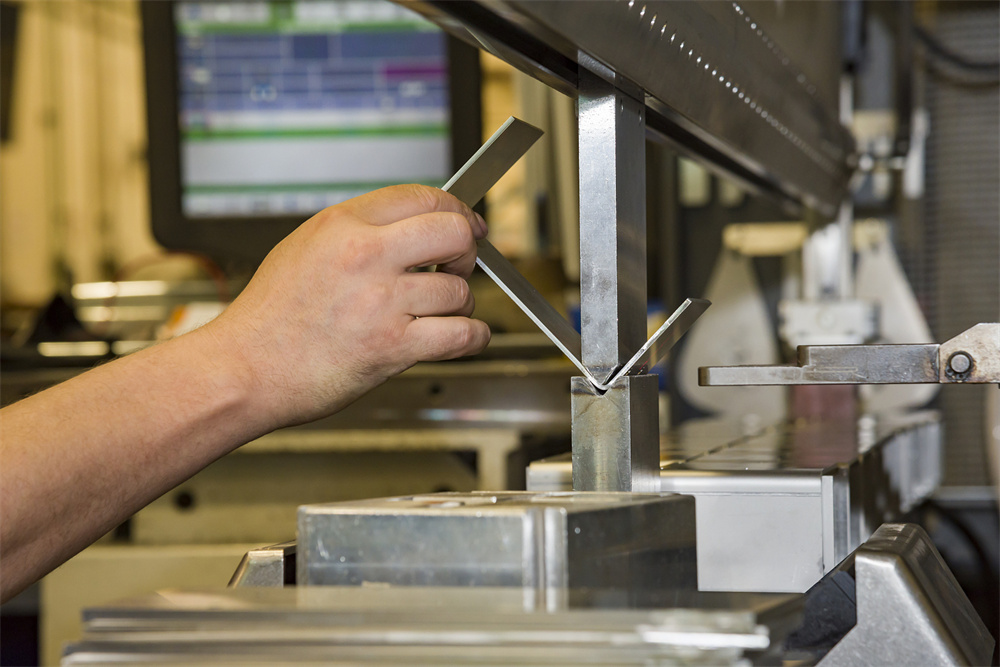
Tooling is often overlooked in the initial budget but is a major cost factor. Standard V-dies and punches are relatively inexpensive, but specialized tooling for complex profiles, hemming, or radius bending can cost thousands of dollars. When comparing prices, ensure you are comparing “apples to apples” regarding the included tooling packages, as a machine that seems cheaper may actually be missing the necessary dies to perform your specific work.
Safety features also impact the final price. Modern safety regulations require light curtains, laser scanners, and interlocked guards. While these are non-negotiable for operator safety, the sophistication of the safety system—such as dynamic laser monitoring that allows for faster ram speeds—can add to the total cost. Never compromise on safety to save on the purchase price, as the liability and potential for injury far outweigh any savings.
Hidden Costs: Beyond the Sticker Price
When evaluating a Press Brake Price Comparison: Hydraulic, Mechanical, CNC Models, it is crucial to account for hidden costs that often appear after the machine is delivered. Installation and commissioning are the first of these. Large press brakes require specialized rigging, reinforced concrete foundations, and professional electrical hookups. These costs can range from a few thousand to over ten thousand dollars depending on the machine size and site requirements.
Training is another frequently underestimated expense. Even the most intuitive CNC controller requires training for operators to reach peak efficiency. If your team is not properly trained, the machine will operate at a fraction of its potential, leading to a poor return on investment. Factor in the cost of professional training sessions, either on-site or at the manufacturer’s facility, as part of your total budget.
Maintenance and consumables are ongoing costs that must be considered. Hydraulic oil, filters, seals, and electrical components will eventually require replacement. Furthermore, the cost of electricity to run the hydraulic pump—or the energy-efficient servo-electric systems—should be factored into your operational overhead. Some modern machines offer energy-saving modes that can significantly reduce utility bills over the life of the machine.
Finally, consider the cost of software and updates. If you are using offline programming software to prepare jobs before they reach the shop floor, you will likely have annual licensing fees. Additionally, keeping your machine’s firmware updated to ensure compatibility with new CAD/CAM software is an ongoing operational requirement that should be included in your long-term financial planning.
ROI Calculation: Justifying the Investment
Calculating the Return on Investment (ROI) for a press brake requires looking at more than just the purchase price. Start by analyzing your current labor costs. A CNC press brake with advanced features can reduce setup times by 50% or more compared to a manual or mechanical machine. If your operators spend hours adjusting backgauges and crowning, that is lost revenue that a more expensive machine could reclaim.
Consider the reduction in scrap rates. Precision CNC machines provide consistent, repeatable bends, which means fewer rejected parts. In industries where material costs are high—such as stainless steel or aluminum fabrication—a reduction in scrap can pay for the price difference between a basic and an advanced machine in a very short time.
Throughput is another key metric. If your current machine is a bottleneck in your production line, the cost of the machine is secondary to the potential revenue lost by not being able to fulfill orders. A faster, more automated machine allows you to take on more work, increase your capacity, and potentially enter new markets that require higher precision.
Finally, consider the resale value. High-quality hydraulic and CNC press brakes from reputable manufacturers like HARSLE hold their value significantly better than mechanical or low-end machines. When you eventually decide to upgrade or sell the equipment, the higher initial investment often results in a much better recovery of capital, making the total cost of ownership lower over the long term.
Buying Advice: How to Choose the Right Model
Choosing the right press brake requires a thorough assessment of your current and future needs. Start by listing the materials you work with most frequently, their thicknesses, and the maximum bend lengths you require. Do not buy a machine based on the largest part you might make once a year; instead, size the machine for 90% of your daily production to ensure you are not paying for capacity you rarely use.
Evaluate your shop’s technical capabilities. If your team is comfortable with advanced software and programming, a high-end CNC machine will be a powerful asset. If your shop relies on manual, hands-on operation, a simpler hydraulic machine with a user-friendly NC controller might be more effective. The best machine is one that your team can operate efficiently and safely.
Research the manufacturer’s support network. A press brake is a long-term investment, and you need to know that parts, service, and technical support are readily available. HARSLE provides comprehensive support, ensuring that your machine stays operational and that your team has the resources they need to succeed. Check for local service technicians, the availability of spare parts, and the manufacturer’s reputation for customer service.
Finally, always request a demonstration or a test bend. Seeing the machine in action, testing the controller’s interface, and verifying the accuracy of the bends on your own material is the best way to ensure you are making the right choice. Do not rely solely on brochures; get hands-on experience with the equipment before signing the purchase agreement.
FAQ: Frequently Asked Questions
- What is the main difference between hydraulic and mechanical press brakes? Mechanical press brakes use a flywheel and clutch system, which is fast but lacks the precision and safety of modern hydraulic systems. Hydraulic machines offer better control, higher accuracy, and are safer for operators.
- Why are CNC press brakes more expensive than NC models? CNC models include advanced software, multi-axis control, and automated features like crowning and tool changing, which significantly increase productivity and precision compared to basic NC controllers.
- How often should I perform maintenance on my press brake? Routine maintenance, including checking hydraulic fluid, cleaning filters, and inspecting tooling, should be performed according to the manufacturer’s schedule, typically every 500 to 1,000 operating hours.
- Can I upgrade my press brake later? While some features like backgauges or software can be upgraded, the core structure and tonnage are fixed. It is usually more cost-effective to purchase the necessary capacity and features upfront.
- What is the expected lifespan of a professional press brake? With proper maintenance, a high-quality hydraulic or CNC press brake can easily last 15 to 20 years or more in a standard fabrication environment.