Industrial Fiber Laser Cutter Acceptance Test for Sheet Metal Production


Use a laser cutter acceptance test to prove the proposed machine on your production drawings. Define acceptable edge condition and dimensional tolerances before the trial, then compare measured part quality and cycle time across several sheets. Ask who supplies test material, gas and inspection records.
Separate test-sheet results from line throughput
Time loading, nesting or program change, piercing, cutting, unloading and inspection separately. Include one part that uses a frequently run material and one that challenges the machine’s intended capacity. Keep the approved setup and test data with the purchase specification.
Related reading Fiber Laser Cutter Buying Guide: Choose Power, Bed and Options
Technical Overview: The Evolution of Fiber Laser Technology
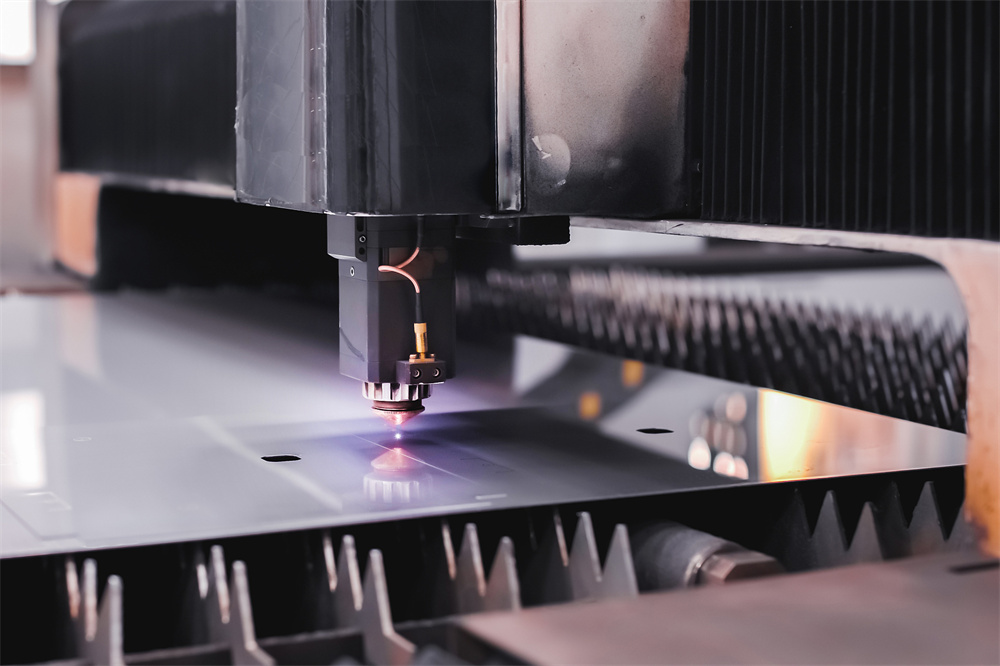
In the modern landscape of metal fabrication, the transition from mechanical shearing and plasma cutting to high-precision fiber laser technology has redefined production standards. A Buyer’s Industrial Laser Cutting Machines Sheet Metal Production requires a deep understanding of how these machines function. Unlike CO2 lasers, which rely on gas mixtures and complex mirror systems, fiber lasers generate the beam within an active optical fiber, delivering it directly to the cutting head. This results in superior wall-plug efficiency, minimal maintenance requirements, and exceptional beam quality.
The core of a modern industrial laser cutting machine lies in its resonator, which determines the power output and beam stability. KAVDO’s integration of high-performance fiber sources ensures that the energy density at the focal point is sufficient to vaporize metal instantly, leaving a clean, burr-free edge. This technology is particularly effective for reflective materials like aluminum, copper, and brass, which were historically difficult to process with older laser systems.
Beyond the laser source, the motion control system—comprising high-torque servo motors, precision rack-and-pinion drives, and rigid machine frames—dictates the machine’s accuracy and speed. A Buyer’s Guide to Industrial Laser Cutting Machines for Sheet Metal Production must emphasize that the machine is only as good as its structural integrity. Vibration damping and thermal stability are critical factors that allow for high-speed contouring without sacrificing dimensional tolerances.
Furthermore, the integration of advanced CNC controllers allows for seamless communication between CAD/CAM software and the hardware. This digital workflow enables nesting optimization, which significantly reduces material waste—a primary concern for high-volume sheet metal production facilities. By leveraging intelligent software, operators can maximize the utilization of every sheet, directly impacting the bottom line of the fabrication business.
Core Parameters: Defining Performance and Capability
When evaluating a laser cutting machine, the first parameter to consider is the laser power, usually measured in kilowatts (kW). Power levels typically range from 1kW to 30kW or more. Higher power does not just mean faster cutting; it means the ability to pierce and cut thicker materials with higher quality. For thin-gauge sheet metal, 3kW to 6kW is often sufficient, while heavy-duty industrial applications requiring 20mm+ plate processing necessitate 10kW and above.
The second critical parameter is the cutting area or bed size. Standard industrial sizes include 1500mm x 3000mm, 2000mm x 4000mm, and 2500mm x 6000mm. Choosing the right bed size depends on the raw material dimensions provided by your suppliers. An undersized bed leads to excessive material handling and potential scrap, while an oversized bed may occupy valuable floor space unnecessarily. Always account for the loading and unloading clearance required for your specific workflow.
Beam quality, often represented by the M2 factor, is a measure of how closely the laser beam approaches an ideal Gaussian beam. A lower M2 value indicates a tighter focus, which is essential for fine detail work and high-speed cutting of thin materials. Buyers should also look at the acceleration and positioning speed of the gantry. High acceleration allows the machine to reach cutting speeds faster, which is vital for complex parts with many small holes or intricate geometries.
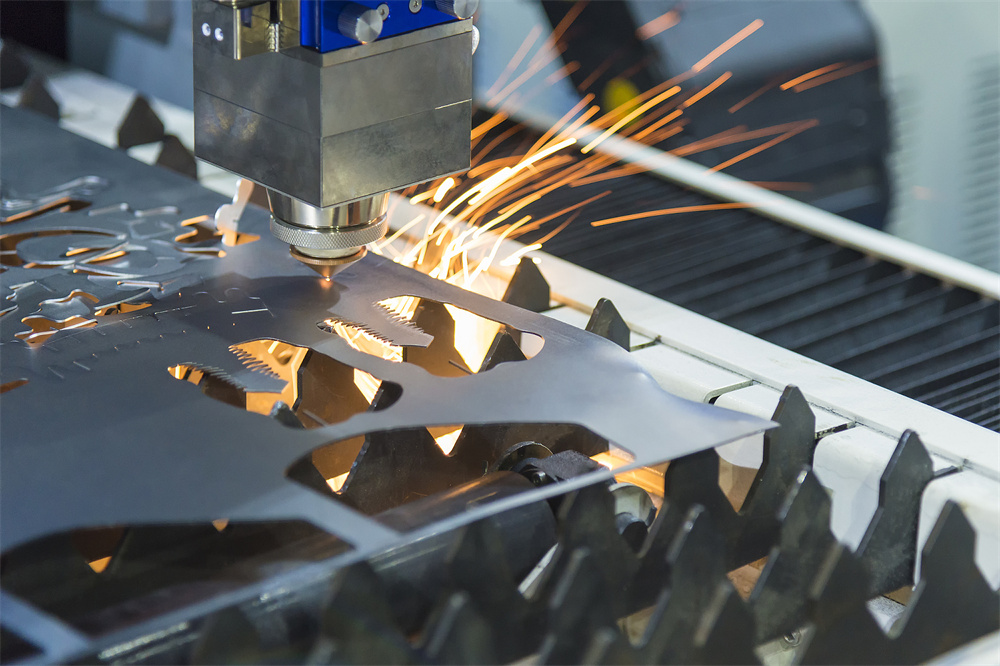
Finally, the gas assist system is a parameter often overlooked by novices. The choice between oxygen, nitrogen, and compressed air as an assist gas significantly affects the cut quality and cost. Nitrogen is typically used for stainless steel and aluminum to prevent oxidation, while oxygen is used for mild steel to assist in the exothermic reaction. Understanding the gas consumption rates and the machine’s ability to switch between gases automatically is essential for operational efficiency.
Calculation Method: Determining ROI and Throughput
To justify the investment in a laser cutting machine, one must calculate the expected throughput and return on investment (ROI). The primary calculation involves the ‘Cost Per Part,’ which includes electricity consumption, assist gas costs, nozzle wear, lens maintenance, and labor. By analyzing the cutting speed for specific material thicknesses, you can determine the number of parts produced per hour.
Another vital calculation is the ‘Nesting Efficiency.’ By using specialized software, you can calculate the percentage of the sheet metal that becomes a finished part versus scrap. A 5% increase in nesting efficiency can lead to thousands of dollars in annual savings for high-volume shops. When comparing machines, ask the manufacturer for a time study on your specific parts to see how their software handles nesting and common-line cutting.
Depreciation and maintenance costs should also be factored into the long-term financial model. Fiber lasers are generally low-maintenance, but the protective windows and nozzles are consumables that must be replaced regularly. Calculate the total cost of ownership (TCO) over a five-year period, including the initial purchase price, energy costs, and the cost of consumables, to get a clear picture of the machine’s financial viability.
Lastly, consider the ‘Energy Efficiency Ratio.’ Modern fiber lasers are significantly more efficient than older CO2 models, often converting over 30% of electrical energy into laser light. Comparing the power consumption of different models under load will help you estimate your monthly utility bills. A machine that is slightly more expensive upfront but consumes 20% less power can often pay for itself within the first two years of operation.
Parameter Table: Quick Reference for Selection
| Tipo de material | Espessura (mm) | Recommended Power (kW) | Gás de assistência |
|---|---|---|---|
| Aço macio | 1-6 | 3-6 | Oxygen |
| Aço macio | 10-20 | 8-12 | Oxygen |
| Aço inoxidável | 1-5 | 3-6 | Nitrogênio |
| Aço inoxidável | 8-15 | 8-15 | Nitrogênio |
| Alumínio | 1-4 | 3-6 | Nitrogênio |
| Alumínio | 6-12 | 8-12 | Nitrogênio |
Common Engineering Mistakes in Laser Selection
One of the most frequent mistakes is over-specifying or under-specifying laser power. Buying a 20kW laser when your average production involves 2mm mild steel is a waste of capital, as the machine will never operate at its peak efficiency. Conversely, buying a low-power machine for thick plate production will result in slow cutting speeds, poor edge quality, and excessive downtime due to piercing issues.
Another common error is ignoring the importance of the machine’s frame construction. A lightweight frame may be cheaper, but it will suffer from vibrations at high speeds, leading to ‘wavy’ cut edges and inaccurate dimensions. Always prioritize a heavy-duty, stress-relieved steel frame that can handle the dynamic forces generated by high-speed servo motors.
Failure to consider the material handling system is a significant oversight. If you have a high-speed laser but rely on manual loading and unloading, you are creating a bottleneck. Investing in an automatic pallet changer or a full material automation system (loading/unloading towers) is often the difference between a profitable shop and one that struggles with throughput.
Finally, many buyers neglect the importance of local support and training. A laser cutting machine is a complex piece of equipment. If your machine goes down and the manufacturer does not have local technicians or spare parts in stock, your production could be halted for weeks. Always verify the manufacturer’s service network and the availability of remote diagnostic support before signing a contract.
Selection Checklist: A Buyer’s Industrial Laser Cutting Machines Sheet Metal Production
- Power Requirements: Does the laser power match the thickest material you process 80% of the time?
- Bed Size: Does the machine accommodate your standard sheet sizes with room for loading?
- Compatibilidade de software: Does the machine support your current CAD/CAM software (e.g., SolidWorks, AutoCAD)?
- Automation Readiness: Can the machine be upgraded with an automatic pallet changer or loading tower later?
- Service and Support: Is there a local service team with a proven track record of quick response times?
- Consumable Availability: Are nozzles, lenses, and protective windows readily available and reasonably priced?
- Energy Efficiency: What is the estimated power consumption per hour of operation?
- Características de segurança: Does the machine meet international safety standards (e.g., CE, FDA) for laser radiation protection?
Give each competing laser machine the same acceptance job
Use the actual material mix and finished geometry and measure speed, size and edge conditions under the same scope. Record included automation, extraction and controls before approving the trial.
FAQ: Perguntas Frequentes
1. What is the main advantage of fiber lasers over CO2 lasers?
Fiber lasers are more energy-efficient, require less maintenance (no mirrors to align), and offer faster cutting speeds for thin-to-medium thickness materials. They are also more compact and have a longer lifespan.
2. How often do I need to replace the laser nozzle?
Nozzle life depends on the material, thickness, and cutting parameters. In a high-production environment, nozzles may be replaced daily or even every few hours to ensure optimal cut quality and prevent damage to the cutting head.
3. Can I cut non-metallic materials with a fiber laser?
No, fiber lasers are specifically designed for metal processing. Attempting to cut wood, plastic, or rubber can damage the machine and create hazardous fumes. CO2 lasers are better suited for non-metallic materials.
4. What is the importance of the ‘piercing’ process?
Piercing is the initial stage of the cut where the laser penetrates the material. High-quality machines use advanced piercing techniques (like ramp piercing) to prevent molten metal splatter from damaging the nozzle or the lens, which is crucial for long-term reliability.
5. How does the assist gas affect the final product?
The assist gas blows away the molten metal from the cut path. Oxygen creates an exothermic reaction that helps cut thicker steel, while nitrogen provides an inert atmosphere, resulting in a cleaner, oxide-free edge ideal for welding or painting.