How to Read Shearing Machine Specifications Before Buying: A Comprehensive Guide


Technical Overview of Industrial Shearing Machines
In the world of metal fabrication, the shearing machine serves as the foundational tool for precision cutting. Understanding how to read shearing machine specifications before buying is not merely a technical exercise; it is a critical investment strategy. A shearing machine uses a fixed lower blade and a moving upper blade to apply force to a metal sheet, effectively slicing through the material. The efficiency of this process depends entirely on the machine’s mechanical design, hydraulic power, and structural rigidity.
Modern shearing machines, such as those engineered by HARSLE, integrate advanced CNC controllers and hydraulic systems to ensure clean, burr-free cuts. When you evaluate these machines, you are looking at a complex interplay of force, geometry, and material science. The machine’s ability to handle specific thicknesses and tensile strengths is dictated by its structural frame, which must resist the immense pressure generated during the shearing cycle.
The evolution of shearing technology has moved from simple mechanical guillotines to sophisticated hydraulic swing-beam and variable rake angle machines. Each design offers distinct advantages regarding cut quality, speed, and maintenance requirements. By mastering the technical specifications, buyers can distinguish between machines built for light-duty workshop tasks and those designed for heavy-duty, 24/7 industrial production lines.
Furthermore, the integration of digital interfaces has transformed how operators interact with these machines. Modern control panels allow for precise adjustments of the blade gap, rake angle, and backgauge position. Understanding these parameters is essential for optimizing the machine for different material types, ranging from mild steel and stainless steel to aluminum and high-tensile alloys.

Core Parameters: What You Must Analyze
When you sit down to read shearing machine specifications before buying, several core parameters demand your full attention. The most critical is the Maximum Cutting Thickness. This value is usually provided for mild steel (typically 450 N/mm² tensile strength). If your production involves stainless steel, you must derate this capacity, as stainless steel requires significantly more force to shear than mild steel.
The Cutting Length is another fundamental parameter. This defines the maximum width of the sheet that can be fed into the machine. While it is tempting to buy a machine that exactly matches your current sheet sizes, it is often prudent to select a machine with a slightly larger cutting length to accommodate future growth or non-standard sheet sizes. This provides operational flexibility that can prevent bottlenecks in your production flow.
The Rake Angle is a technical specification that often confuses new buyers. The rake angle is the angle at which the upper blade meets the material. A smaller rake angle results in less distortion and twisting of the cut piece, making it ideal for thin materials. Conversely, a larger rake angle allows the machine to cut thicker materials with less force. Variable rake angle machines offer the best of both worlds, allowing operators to adjust the angle based on the specific job requirements.
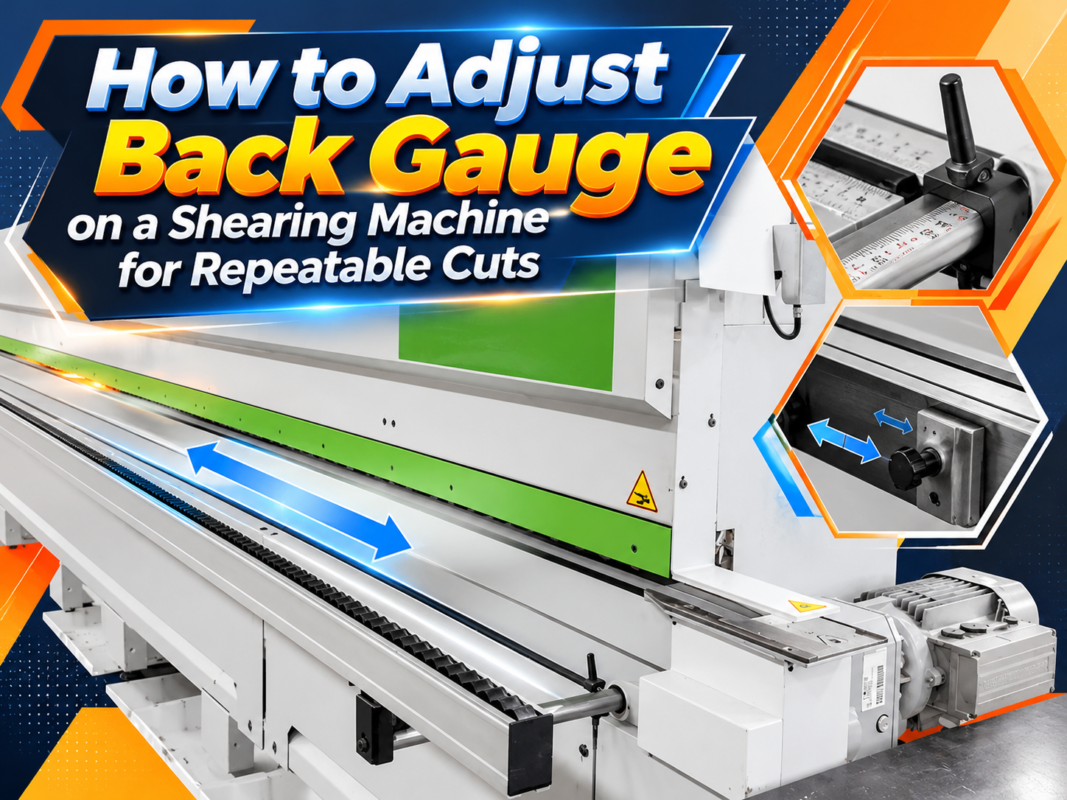
Finally, the Backgauge Range and Accuracy determine the precision of your cut dimensions. A high-quality backgauge, driven by ball screws and guided by linear rails, ensures that the sheet is positioned accurately every time. When reviewing specifications, look for the repeatability tolerance of the backgauge. A machine with a high-precision backgauge reduces material waste and eliminates the need for secondary trimming operations, significantly improving your bottom line.
Calculation Method for Shearing Force
Calculating the required shearing force is a vital step in the procurement process. The force required to shear a metal plate is determined by the formula: F = L × t² × σ / (2 × sin α), where L is the length of the cut, t is the thickness of the plate, σ is the shear strength of the material, and α is the rake angle. Understanding this calculation helps you verify if a machine’s rated capacity aligns with your actual production needs.
Material properties play a massive role in these calculations. Mild steel is the industry standard for rating machines, but if your facility processes high-tensile steel, you must adjust your calculations accordingly. High-tensile materials require higher force and place more stress on the machine’s frame and blades. If you ignore these calculations, you risk overloading the machine, which leads to premature blade wear, hydraulic system strain, and potential structural damage.
Another factor to consider is the Blade Clearance. This is the gap between the upper and lower blades. Proper clearance is essential for achieving a clean cut without burrs. The general rule of thumb is that the clearance should be approximately 5% to 10% of the material thickness. Many modern HARSLE machines feature motorized blade clearance adjustment, which allows the operator to input the material thickness, and the machine automatically sets the optimal gap.
By performing these calculations before you finalize your purchase, you ensure that the machine you select is not just capable of performing the task, but is also operating within its optimal efficiency range. Over-specifying a machine leads to unnecessary capital expenditure, while under-specifying leads to production delays and maintenance headaches. Use these calculations as a sanity check against the manufacturer’s provided data sheets.
Standard Parameter Table for Industrial Shearing
| Parameter | Description | Importance |
|---|---|---|
| Max Cutting Thickness | Max plate thickness (Mild Steel) | Primary capacity indicator |
| Cutting Length | Max width of the sheet | Determines part size limits |
| Rake Angle | Angle of the upper blade | Affects cut quality and distortion |
| Backgauge Range | Travel distance of the stop | Determines precision of cut length |
| Strokes per Minute | Cutting speed | Determines production throughput |
| Motor Power | Hydraulic system capacity | Determines machine longevity |
This table summarizes the essential metrics you will encounter when reviewing technical documentation. Each parameter serves as a gatekeeper for your production capabilities. For instance, if your shop focuses on high-volume production, the Strokes per Minute parameter becomes just as important as the cutting thickness. A machine that can perform more cycles per minute will drastically reduce your lead times and increase your overall shop capacity.
Furthermore, the motor power and hydraulic system design are often overlooked. A robust hydraulic system with high-quality seals and a well-designed cooling system will ensure that the machine maintains its performance over long shifts. When comparing different models, look for the brand of the hydraulic components—reputable manufacturers like HARSLE use globally recognized components to ensure reliability and ease of service.
Always verify the Throat Depth as well. This parameter defines how far the sheet can be inserted into the side of the machine. A deeper throat allows for longer cuts that exceed the nominal cutting length of the machine, providing additional versatility for specialized fabrication projects. While not always used, having this extra capacity can be a lifesaver for unique, one-off jobs that would otherwise require a larger, more expensive machine.
Common Engineering Mistakes When Buying
One of the most common mistakes when buying a shearing machine is ignoring the Material Tensile Strength. Buyers often assume that if a machine is rated for 10mm mild steel, it can handle 10mm of any material. This is a dangerous assumption. Stainless steel, for example, has a much higher tensile strength and work-hardening rate, which can cause the machine to stall or damage the blades if it is not rated for that specific material.
Another frequent error is failing to account for Blade Maintenance Costs. The blades are the most critical consumable part of the machine. When reading specifications, check the material of the blades. High-carbon, high-chrome steel blades are standard for most applications, but if you are cutting abrasive materials, you may need specialized coatings or materials. Ignoring the cost and frequency of blade sharpening or replacement can lead to hidden operational costs that eat into your profit margins.
Many buyers also overlook the Ergonomics and Safety Features. A shearing machine is a powerful piece of equipment, and safety should be non-negotiable. Ensure that the machine includes light curtains, emergency stop buttons, and rear safety fencing. Furthermore, consider the ease of use for the operator. A machine with a user-friendly control interface and a well-designed material support system will result in higher productivity and lower operator fatigue.
Finally, do not underestimate the importance of After-Sales Support and Spare Parts Availability. A machine is only as good as the support behind it. If a critical component fails, you need to know that the manufacturer has a robust supply chain and technical support team. Buying from a reputable manufacturer like HARSLE ensures that you have access to documentation, training, and parts, minimizing downtime and protecting your investment for years to come.
Selection Checklist for Your Next Shearing Machine
- Define Your Material Range: List the types of metals (mild steel, stainless, aluminum) and the maximum thicknesses you will process regularly.
- Determine Production Volume: Will the machine run for 4 hours a day or 24 hours a day? This dictates the duty cycle requirements.
- Check Precision Requirements: What is the tolerance for your finished parts? This will determine if you need a high-end CNC backgauge or a standard manual system.
- Review Power Requirements: Ensure your facility has the electrical capacity to support the machine’s motor requirements.
- Evaluate Space Constraints: Measure your floor space, including the clearance needed for loading and unloading sheets.
- Assess Safety Compliance: Verify that the machine meets local safety standards and includes necessary protective guards.
- Request a Test Cut: Whenever possible, ask the manufacturer to perform a test cut on your specific material to verify the quality and accuracy.
By following this checklist, you can systematically evaluate your options and make an informed decision. Remember that the goal is not just to buy a machine, but to acquire a tool that enhances your fabrication capabilities. Take the time to compare different models, ask questions about the technical specifications, and ensure that the machine you choose aligns with your long-term business goals.
Frequently Asked Questions (FAQ)
Q: How do I know if a shearing machine can cut stainless steel?
A: You must check the machine’s capacity rating for stainless steel. Generally, stainless steel requires about 1.5 times the force of mild steel. If the manufacturer only provides a rating for mild steel, consult their technical team to determine the derated capacity for stainless.
Q: What is the difference between a swing-beam and a guillotine shear?
A: A swing-beam shear uses a pivoting upper blade, which is generally more cost-effective and easier to maintain. A guillotine shear uses a vertical movement, which provides higher precision and less distortion, making it ideal for high-accuracy applications.
Q: How often should I sharpen the blades?
A: The frequency depends on the material type, thickness, and volume of cuts. As a general rule, if you notice burrs on the edge of the cut, it is time to inspect the blade clearance and consider sharpening or replacing the blades.
Q: Can I use a shearing machine for non-metal materials?
A: Most industrial shearing machines are designed specifically for metal. Using them for other materials like wood or plastic can damage the blades and the hydraulic system. Always consult the manufacturer before using the machine for non-standard applications.
Q: Why is the rake angle adjustable on some machines?
A: An adjustable rake angle allows the operator to minimize the distortion of the cut piece. A lower angle is better for thin sheets to prevent twisting, while a higher angle provides the force needed for thicker plates.