
How to Estimate the Real Cost of a Press Brake for Your Factory: A Comprehensive Guide


Price Range Overview: Understanding the Investment Landscape
When you set out to estimate the real cost of a press brake for your factory, it is essential to move beyond the initial sticker price. The market for press brakes is incredibly diverse, ranging from entry-level manual machines to high-end, fully automated robotic bending cells. For small job shops, a basic hydraulic press brake might cost between $20,000 and $50,000, providing reliable service for standard bending tasks. However, as you scale into high-precision manufacturing, these costs can quickly escalate.
Mid-range machines, which are the workhorses of most fabrication facilities, typically fall into the $60,000 to $150,000 bracket. These machines often feature CNC controllers, multi-axis backgauges, and advanced safety systems. Investing in this tier usually balances initial capital expenditure with long-term productivity gains. Understanding where your specific production needs fall on this spectrum is the first step in accurate budgeting.
High-end, specialized press brakes—such as those equipped with automatic tool changers, laser angle measurement systems, and integrated software suites—can easily exceed $250,000 to $500,000. While the upfront cost is significant, these machines are designed for high-volume, high-complexity environments where downtime is the most expensive variable. When you estimate the real cost of a press brake for your factory, you must weigh these price points against your projected throughput and labor costs.
It is also important to consider the difference between new and used equipment. While a used press brake may seem like a bargain, the hidden costs of potential repairs, outdated control systems, and lack of warranty support can quickly negate the savings. HARSLE recommends evaluating the total cost of ownership (TCO) over a five-to-ten-year period rather than focusing solely on the acquisition price.
Main Cost Drivers: What Influences the Price Tag?
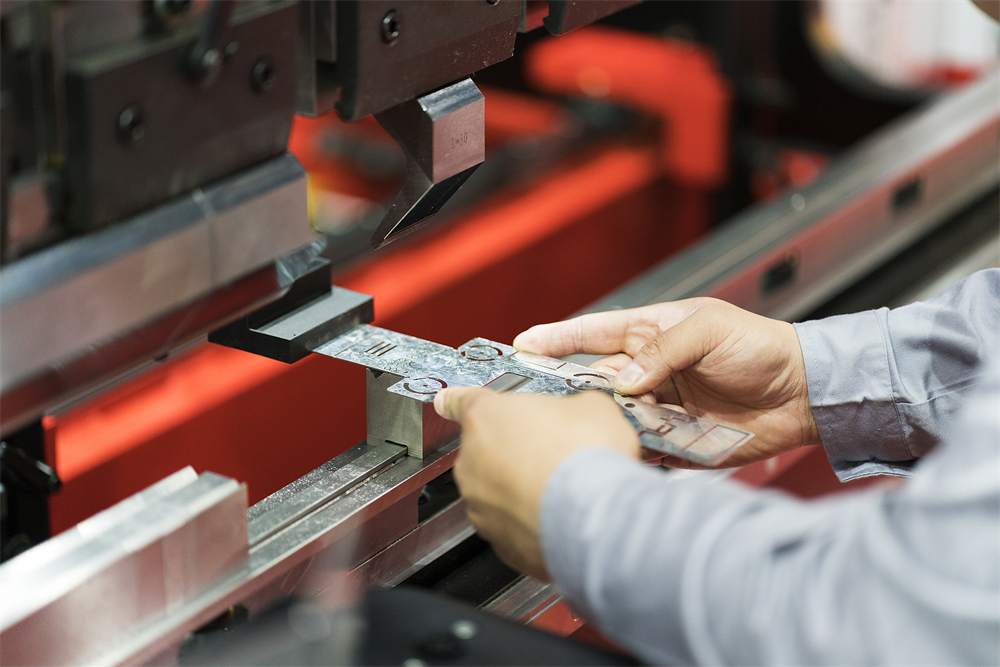
Several technical specifications act as primary cost drivers when purchasing a press brake. The tonnage capacity is perhaps the most significant factor. Higher tonnage requires a more robust frame, larger hydraulic cylinders, and more powerful motors, all of which increase the manufacturing cost. Selecting the right tonnage is a balancing act; undersizing leads to machine failure, while oversizing leads to unnecessary capital expenditure.
The bending length is another critical driver. A machine capable of bending 4-meter sheets requires a much larger bed and ram than a 2-meter machine. This increased size necessitates heavier steel construction to maintain rigidity under load. Rigidity is the hallmark of a quality press brake; without it, you will struggle with inconsistent bend angles across the length of the part, leading to scrap and rework costs.
The number of axes is a major differentiator in pricing. A basic machine might have a Y1/Y2 axis for the ram and an X-axis for the backgauge. As you add axes—such as R-axis (vertical backgauge movement) or Z-axis (finger movement)—the complexity of the CNC controller and the mechanical assembly increases. Each additional axis adds functionality and speed, but also adds to the initial investment cost.
Finally, the brand and origin of the components play a role. Press brakes utilizing premium hydraulic valves, high-precision encoders, and world-class CNC controllers (such as those from Delem or Cybelec) will naturally command a higher price than those using generic, lower-cost alternatives. While it might be tempting to cut costs here, the reliability and availability of spare parts for premium components are vital for long-term factory uptime.
Configuration Impact: Customization and Tooling
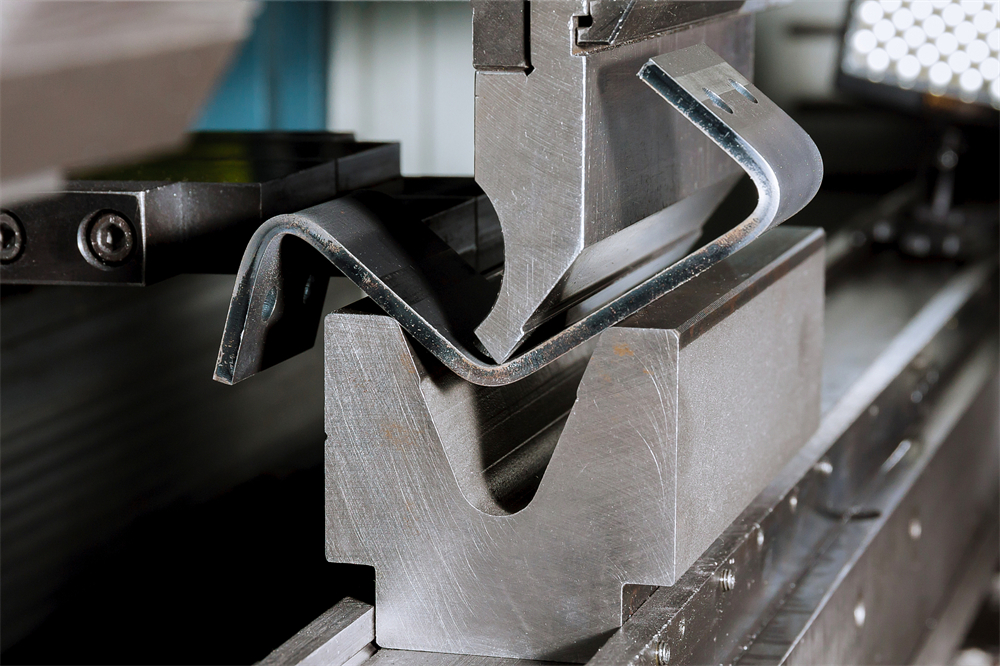
The configuration of your press brake is where the “real” cost often deviates from the base price. Many manufacturers offer a base model, but once you add the necessary features for your specific application, the price can increase by 20% to 40%. For instance, specialized crowning systems—which compensate for bed deflection during bending—are essential for high-precision work but are often an optional upgrade.
Tooling is another frequently overlooked cost. The type of tooling you require, whether it is standard European style, American style, or specialized sectionalized tools, will impact your budget. High-quality, hardened, and ground tooling lasts longer and provides better bend accuracy, reducing the need for frequent replacement. When you estimate the real cost of a press brake for your factory, you should allocate at least 10-15% of the machine’s cost for an initial tooling package.
Safety systems are non-negotiable in modern fabrication. Light curtains, laser safety guards, and physical barriers are essential for protecting your operators and complying with OSHA or CE standards. While these systems add to the upfront cost, they are critical for preventing workplace accidents that could result in massive legal and insurance liabilities. Never compromise on safety to save on the initial purchase price.
Software integration is the final piece of the configuration puzzle. Modern press brakes are often part of a larger digital ecosystem. Offline programming software, which allows your engineers to simulate bends and create programs without stopping the machine, is a powerful productivity tool. While it adds to the upfront cost, the reduction in machine setup time and the increase in material utilization often pay for the software within the first year of operation.
Hidden Costs: Beyond the Invoice
When you estimate the real cost of a press brake for your factory, you must account for the “hidden” expenses that occur after the machine is delivered. Installation and commissioning are the first of these. You will need to prepare the factory floor, which may include pouring a reinforced concrete foundation, ensuring proper electrical power supply, and installing pneumatic lines. These site preparation costs can range from a few thousand dollars to tens of thousands depending on your facility’s current state.
Shipping and logistics are often excluded from the base price. Moving a multi-ton press brake requires specialized rigging, flatbed trucking, and crane services. Depending on the distance from the manufacturer or distributor, these costs can be substantial. Always ask for a “delivered and installed” quote to avoid surprises when the machine arrives at your loading dock.
Training is another critical, yet often underestimated, cost. Your operators need to be proficient in the specific CNC controller, safety protocols, and maintenance procedures of the new machine. If you do not invest in proper training, you will experience a steep learning curve, resulting in lower productivity and a higher risk of machine damage. Factor in the cost of the trainer’s time, as well as the lost production time during the training period.
Maintenance and consumables are the ongoing costs of ownership. Hydraulic oil, filters, seals, and tool wear are inevitable. Furthermore, you should account for the cost of a service contract or the potential cost of emergency repairs. A machine that sits idle for a week because of a broken component is costing you far more than the price of a preventative maintenance visit.
ROI Calculation: Justifying the Investment
To justify the cost of a new press brake, you must calculate the Return on Investment (ROI). Start by identifying the current bottlenecks in your production. Are you losing time on manual setup? Is your scrap rate too high due to inconsistent bending? A new, high-precision press brake can solve these issues, directly impacting your bottom line.
Calculate the savings in labor costs. If a new machine with an automated backgauge and quick-change tooling allows an operator to complete a job in half the time, that is a direct increase in your factory’s capacity. Multiply the time saved by your hourly labor rate to see the annual savings. This is often the most compelling argument for upgrading your equipment.
Consider the improvement in material utilization. Modern press brakes with advanced software can optimize bend sequences to minimize waste. If you are working with expensive materials like stainless steel or aluminum, even a 5% reduction in scrap can result in significant annual savings. When you estimate the real cost of a press brake for your factory, these operational efficiencies must be part of the equation.
Finally, look at the potential for new business. A more capable press brake allows you to take on more complex projects, work with thicker materials, or achieve tighter tolerances that your current equipment cannot handle. This opens up new revenue streams that were previously inaccessible. When calculating ROI, include the projected revenue growth from these new capabilities, not just the cost savings from current operations.
Buying Advice: Making the Right Choice
Before making a final decision, conduct a thorough needs assessment. Do not buy for the “what if” scenarios; buy for the work you are doing today and the work you are reasonably certain you will be doing in the next three years. Over-specifying a machine leads to wasted capital, while under-specifying leads to frustration and the need for an early replacement.
Request demonstrations and, if possible, visit other factories that use the same model. Seeing the machine in a real-world environment is far more valuable than reading a brochure. Ask the operators about their experience with the machine’s reliability, the ease of programming, and the quality of the technical support provided by the manufacturer.
Evaluate the manufacturer’s support network. A press brake is a long-term investment, and you need a partner who will be there for you when you need spare parts or technical assistance. Check the availability of local service technicians, the response time for support tickets, and the ease of ordering replacement parts. A great machine with poor support is a liability.
Finally, consider the financing options. Many manufacturers and distributors offer leasing or installment plans that can help manage cash flow. While financing adds interest costs, it allows you to acquire the equipment you need without depleting your working capital. Compare these options carefully to ensure they align with your factory’s financial strategy.
FAQ: Frequently Asked Questions
- How long does a typical press brake last? With proper maintenance, a high-quality hydraulic press brake can last 15 to 20 years or more.
- What is the most important feature to look for? Accuracy and repeatability are paramount. Look for a machine with a high-quality CNC controller and a rigid frame.
- Should I buy a new or used press brake? For critical production, new is almost always better due to warranties, modern safety features, and the latest technology.
- How often should I perform maintenance? Daily checks are recommended, with professional preventative maintenance performed every 6 to 12 months.
- Can I use my old tooling on a new machine? Often yes, but it depends on the clamping system. Always check compatibility with the manufacturer before purchasing.
- What is the difference between hydraulic and electric press brakes? Hydraulic machines are generally more powerful and cost-effective for heavy-duty work, while electric machines are faster, quieter, and more energy-efficient for lighter, high-precision tasks.












