
Industrial Punching Machine Applications In Automotive, Electrical, And Hardware Manufacturing: A Comprehensive Guide


Technical Overview of Industrial Punching Machines
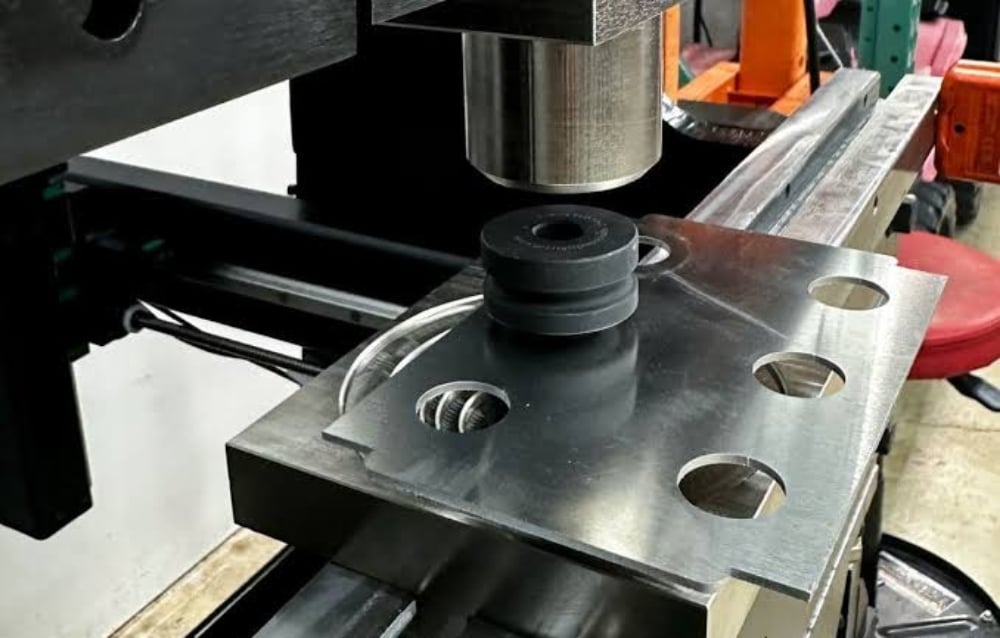
Industrial punching machines represent the backbone of modern metal fabrication, serving as the primary tool for high-speed, high-precision hole punching, blanking, and forming operations. At HARSLE, we engineer these machines to handle diverse material thicknesses and complex geometries, ensuring that manufacturers in the automotive, electrical, and hardware sectors can maintain high throughput without compromising on quality. The fundamental mechanism involves a punch and die set, where the punch is driven through the workpiece into the die, creating a clean, sheared edge.
Modern industrial punching machines have evolved from simple mechanical presses to sophisticated CNC-controlled systems. These systems utilize hydraulic or servo-electric drives to deliver consistent force, allowing for intricate patterns and rapid tool changes. In the context of industrial punching machine applications in automotive, electrical, and hardware manufacturing, the ability to integrate these machines into automated production lines is paramount. By utilizing turret punch presses or single-station hydraulic presses, manufacturers can achieve repeatable accuracy within microns.
The versatility of these machines lies in their tooling flexibility. With the ability to house multiple tools in a turret or utilize quick-change die systems, a single machine can perform a wide array of operations, including louvers, embossments, countersinks, and complex cutouts. This adaptability is essential for the automotive industry, where design iterations are frequent, and for the electrical sector, where enclosure designs must accommodate various cable entry points and component mounting patterns.
Furthermore, the integration of advanced software allows for nesting optimization, which significantly reduces material waste. This is a critical factor in hardware manufacturing, where the cost of raw materials like stainless steel or aluminum can heavily impact profit margins. By maximizing the utilization of each sheet, HARSLE punching machines help manufacturers achieve a more sustainable and cost-effective production cycle.
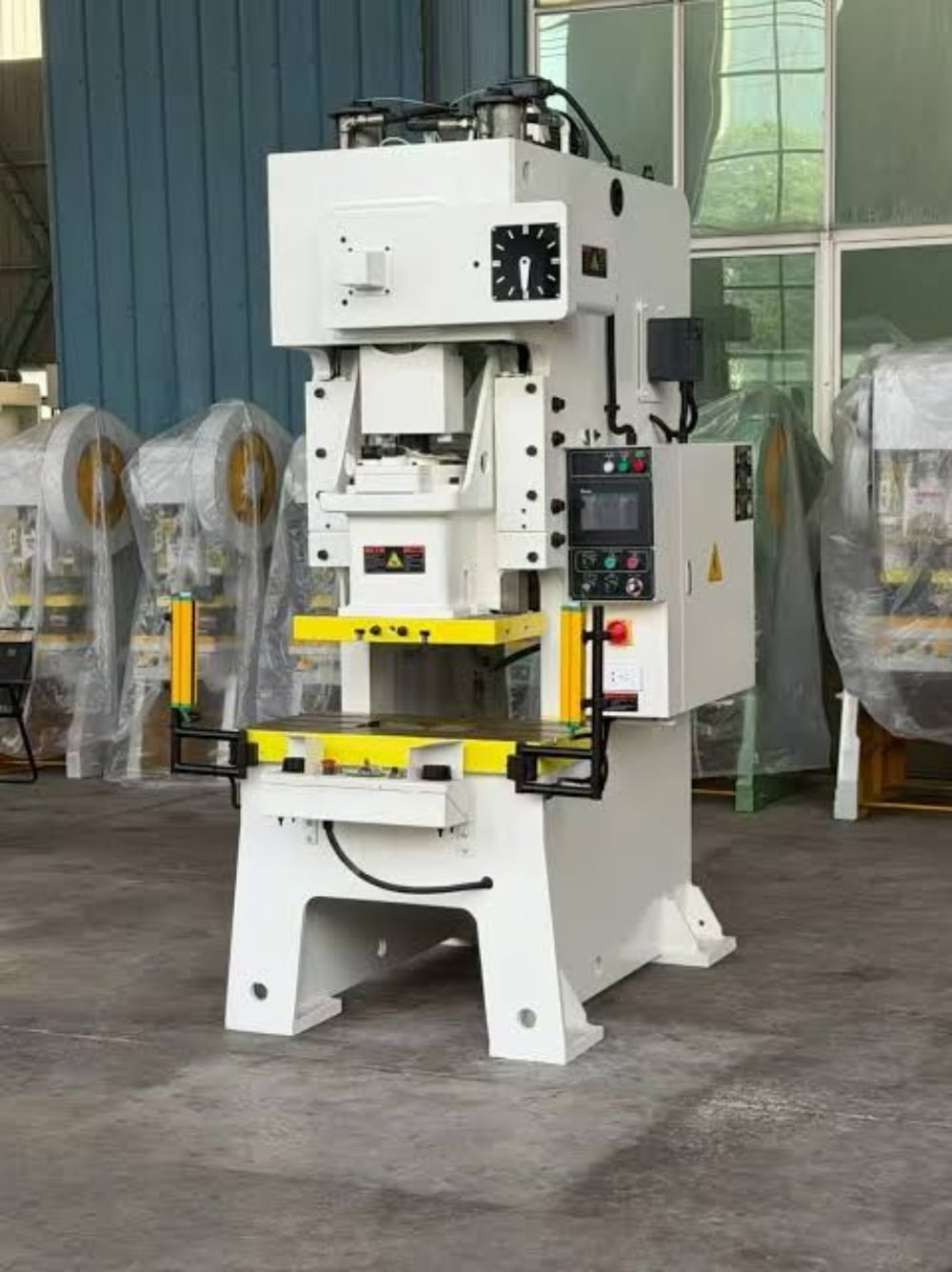
Safety and ergonomics are also central to the technical design of our punching machines. Modern units feature light curtains, emergency stop systems, and noise-reduction enclosures to protect operators while maintaining high operational speeds. As the industry moves toward Industry 4.0, our machines are equipped with IoT connectivity, enabling real-time monitoring of machine health, tool wear, and production metrics, ensuring that downtime is minimized through predictive maintenance.
Core Parameters for Industrial Punching Machines
When evaluating industrial punching machine applications in automotive, electrical, and hardware manufacturing, understanding the core technical parameters is essential for selecting the right equipment. The most critical parameter is the nominal punching force, typically measured in kilonewtons (kN) or tons. This force determines the maximum thickness and tensile strength of the material the machine can process. For automotive chassis components, higher force is required, whereas electrical enclosures often require lighter, faster punching cycles.
Another vital parameter is the throat depth and the working range. The throat depth dictates the maximum distance from the edge of the sheet to the center of the punch, which is crucial for large panels used in electrical cabinets or automotive bodywork. A larger throat depth allows for greater flexibility in part design, enabling the fabrication of larger components without the need for repositioning or secondary operations.
The stroke length and the number of strokes per minute (SPM) define the machine’s productivity. In hardware manufacturing, where small parts are produced in massive volumes, a high SPM is necessary to maintain profitability. Conversely, for automotive prototypes or specialized electrical components, the ability to control the stroke speed and depth is more important to prevent material deformation and ensure high-quality surface finishes.
Tooling capacity and tool change time are also key performance indicators. A turret punch press with a high number of stations reduces the frequency of manual tool changes, thereby increasing the overall equipment effectiveness (OEE). For manufacturers dealing with high-mix, low-volume production, the ability to swap tools quickly is a significant competitive advantage, allowing for rapid transitions between different product lines.
Finally, the positioning accuracy and repeatability are what define the precision of the final product. High-end industrial punching machines utilize ball screw drives or linear motors to ensure that every hole is placed exactly where the CAD design specifies. This is particularly important in the electrical industry, where precise alignment is required for mounting sensitive electronic components and ensuring proper grounding and shielding.
Calculation Method for Punching Force
To ensure the longevity of your HARSLE punching machine and the quality of your parts, it is imperative to calculate the required punching force accurately. The basic formula for calculating the punching force (P) is: P = L × t × τ, where ‘L’ is the perimeter of the shape being punched, ‘t’ is the material thickness, and ‘τ’ is the shear strength of the material. This calculation provides the minimum force required to shear the material cleanly.
When dealing with complex shapes, the perimeter ‘L’ must be calculated carefully. For a circular hole, L = π × diameter. For irregular shapes, the sum of all sides must be calculated. It is also important to account for the material’s shear strength, which varies significantly between mild steel, stainless steel, and aluminum. Using the wrong shear strength value can lead to machine overload or poor edge quality, resulting in burrs and increased tool wear.
In addition to the basic force, one must consider the stripping force, which is the force required to pull the punch out of the material after the hole is created. Generally, the stripping force is estimated to be about 5% to 10% of the total punching force. Failing to account for this can lead to damage to the punch stripper plate and potential mechanical failure of the ram mechanism.
Furthermore, the clearance between the punch and the die plays a significant role in the force required. Proper clearance reduces the punching force and improves the quality of the sheared edge. If the clearance is too small, the force required increases, and the tool life decreases due to excessive friction. If the clearance is too large, the material will bend rather than shear, leading to large burrs and poor dimensional accuracy.
For industrial punching machine applications in automotive, electrical, and hardware manufacturing, we recommend using a safety factor of at least 1.2 to 1.5 when selecting a machine. This ensures that the machine is not operating at its maximum capacity constantly, which extends the lifespan of the hydraulic system and the structural integrity of the frame. Always consult the material supplier’s data sheet for the exact shear strength values before performing these calculations.
Parameter Table for Industrial Punching
| Parameter | Automotive Application | Electrical Application | Hardware Application |
|---|---|---|---|
| Punching Force | 200 – 500 kN | 100 – 300 kN | 50 – 200 kN |
| Sheet Thickness | 1.0 – 6.0 mm | 0.5 – 3.0 mm | 0.5 – 4.0 mm |
| Positioning Accuracy | ±0.1 mm | ±0.05 mm | ±0.08 mm |
| Tooling Stations | 16 – 32 | 24 – 48 | 8 – 24 |
| Max Sheet Size | 3000 x 1500 mm | 2500 x 1250 mm | 2000 x 1000 mm |
Common Engineering Mistakes in Punching Operations
One of the most frequent mistakes in industrial punching machine applications in automotive, electrical, and hardware manufacturing is the neglect of tool maintenance. Dull punches and dies are the leading cause of poor edge quality, increased burrs, and excessive machine load. Operators often wait until the part quality is visibly degraded before sharpening or replacing tools, which can lead to permanent damage to the machine’s ram and guide systems.
Another common error is the improper selection of die clearance for the specific material being processed. Many operators use a standard clearance for all materials, failing to realize that stainless steel requires different clearance settings compared to mild steel or aluminum. This mismatch leads to premature tool wear and excessive force requirements, which can eventually cause structural fatigue in the machine frame.
Ignoring the lubrication requirements is another critical oversight. Proper lubrication not only reduces friction between the punch and the material but also helps in cooling the tool, significantly extending its life. In high-speed production environments, the lack of an automated lubrication system or the use of incorrect lubricants can lead to material galling, where metal particles weld themselves to the punch, causing catastrophic tool failure.
Poor nesting practices also contribute to inefficiency and waste. When parts are placed too close together on a sheet, the heat generated during the punching process can cause the material to warp, leading to dimensional inaccuracies. Furthermore, punching too close to the edge of the sheet can cause the material to bulge, potentially damaging the die or the sheet clamps. Proper nesting software should always be used to ensure optimal spacing and material utilization.
Finally, failing to perform regular machine calibration is a mistake that can lead to long-term quality issues. Over time, the mechanical components of the punching machine can experience minor shifts due to vibration and wear. Regular calibration of the X and Y axes, as well as the turret alignment, is necessary to maintain the precision required for high-tolerance components in the automotive and electrical industries.
Selection Checklist for Industrial Punching Machines
When you are in the market for a new HARSLE punching machine, use this checklist to ensure you are making an informed decision. First, define your material requirements: What is the maximum thickness and type of material you will be processing? This will dictate the required tonnage of the machine. Ensure that the machine’s frame is robust enough to handle the maximum force without deflection.
Second, consider your production volume and automation needs. If you are producing thousands of identical parts, an automated loading and unloading system is a must. If you are a job shop handling small batches, focus on the ease of tool changes and the flexibility of the turret configuration. The ability to integrate with existing ERP systems is also a significant advantage for modern manufacturing facilities.
Third, evaluate the tooling system. Does the machine use standard tooling that is widely available, or does it require proprietary tools? Standard tooling is generally more cost-effective and easier to source. Check the number of stations in the turret and whether the machine supports auto-indexing, which allows for the rotation of tools to punch at any angle, greatly increasing the machine’s versatility.
Fourth, look at the software capabilities. The machine should come with intuitive programming software that supports CAD/CAM integration. This allows for seamless transition from design to production, reducing the time spent on manual programming. Ensure that the software includes features for nesting, tool path optimization, and simulation to prevent errors before they reach the machine floor.
Finally, consider the after-sales support and service. A punching machine is a long-term investment. Ensure that the manufacturer provides comprehensive training for your operators, access to spare parts, and responsive technical support. HARSLE prides itself on providing end-to-end support, ensuring that your investment continues to deliver value for years to come.
FAQ: Industrial Punching Machine Applications
Q: What is the primary difference between a turret punch press and a single-station press?
A: A turret punch press holds multiple tools in a rotating turret, allowing for rapid tool changes and complex operations without manual intervention. A single-station press is simpler and more cost-effective but requires manual tool changes for different operations.
Q: How often should I sharpen my punching tools?
A: The frequency of sharpening depends on the material type, thickness, and production volume. As a rule of thumb, monitor the burr height on your parts. Once the burr exceeds 0.1mm, it is time to sharpen or replace the tool.
Q: Can I use the same punching machine for both stainless steel and aluminum?
A: Yes, but you must adjust the die clearance and punching speed. Stainless steel is harder and requires more force and specific clearance, while aluminum is softer and may require different lubrication to prevent sticking.
Q: What is the role of auto-indexing in a punching machine?
A: Auto-indexing allows the tool to rotate 360 degrees, enabling the machine to punch holes at any angle. This is essential for creating complex shapes and patterns without needing specialized, expensive custom tools.
Q: How does HARSLE ensure the precision of its punching machines?
A: We use high-precision ball screws, rigid frame designs, and advanced CNC control systems. Each machine undergoes rigorous testing and calibration before leaving our factory to ensure it meets international standards for accuracy and repeatability.
Q: Is it possible to retrofit an older punching machine with new CNC controls?
A: While possible, it is often more cost-effective and reliable to invest in a new machine. Modern machines offer better energy efficiency, higher speeds, and integrated safety features that are difficult to replicate with a retrofit.












