
How a Large-Tonnage Press Brake Improved Performance in Thick Plate Bending


Introduction
In the demanding world of heavy metal fabrication, the ability to process thick, high-strength steel plates is a critical competitive advantage. For many workshops, the transition from standard-duty machinery to high-capacity equipment marks a turning point in operational efficiency. When we analyze how a large-tonnage press brake improved performance in thick plate bending, we uncover a narrative of precision, safety, and increased throughput that defines modern industrial success.
HARSLE has observed that as infrastructure projects, shipbuilding, and heavy machinery manufacturing grow in complexity, the demand for thicker material processing has skyrocketed. Standard press brakes often struggle with the extreme forces required to deform plates exceeding 20mm in thickness. This article explores the technical nuances, operational benefits, and strategic advantages of integrating a large-tonnage press brake into your production line.
By upgrading to a high-tonnage system, fabricators are not just increasing their force capacity; they are investing in advanced hydraulic synchronization, structural rigidity, and sophisticated CNC control systems. These features collectively ensure that even the most challenging bending tasks are completed with repeatable accuracy, minimizing waste and reducing the need for secondary finishing processes.
Throughout this guide, we will examine the specific technical parameters that make these machines indispensable. From the physics of bending thick materials to the long-term ROI of heavy-duty equipment, we provide a comprehensive look at why the shift to large-tonnage machinery is the most effective way to scale your fabrication capabilities.
Key Considerations for Thick Plate Bending
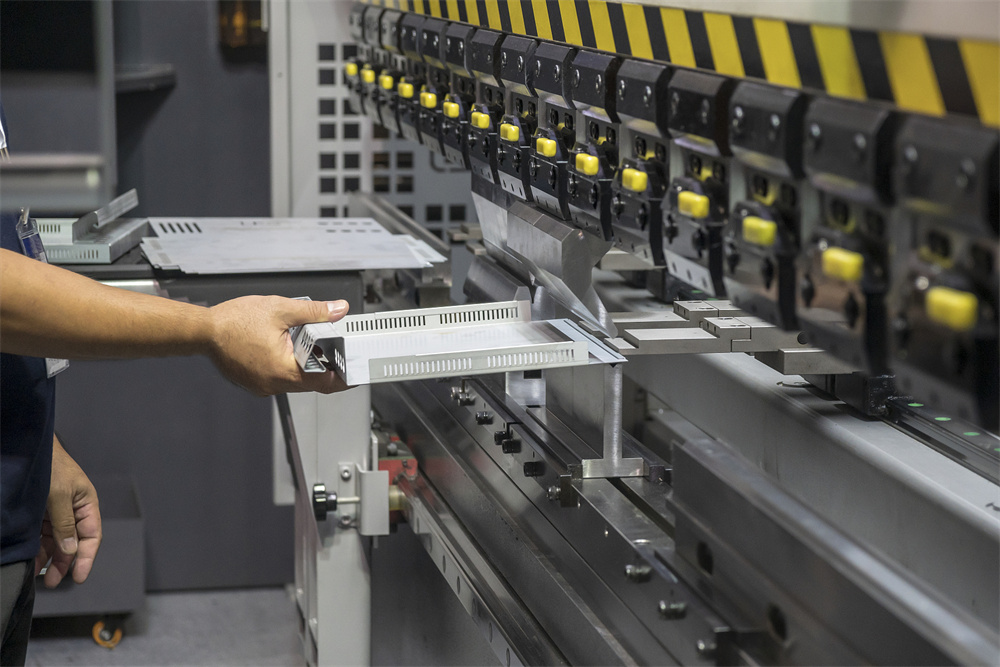
Bending thick plates is fundamentally different from processing thin sheet metal. The primary challenge lies in the sheer force required to overcome the yield strength of the material. When a fabricator asks how a large-tonnage press brake improved performance in thick plate bending, the answer often starts with the machine’s ability to handle extreme pressure without structural deflection.
One of the most critical factors is the V-opening selection. For thick plates, the V-opening must be significantly wider to prevent the material from bottoming out or damaging the tooling. A large-tonnage press brake provides the necessary daylight and stroke length to accommodate these larger dies, which are essential for achieving the correct bend radius without cracking the material surface. Furthermore, the relationship between the V-die width and the plate thickness is governed by strict engineering ratios; failing to adhere to these can lead to excessive tonnage requirements and potential tool failure.
Material springback is another significant hurdle. As plate thickness increases, the internal stresses within the metal become more pronounced. Large-tonnage machines are typically equipped with advanced crowning systems—either mechanical or hydraulic—that compensate for the deflection of the machine bed. This ensures that the bend angle remains consistent across the entire length of the workpiece, regardless of the material thickness. Without these systems, the center of a long, thick plate would inevitably result in a shallower bend angle than the ends, leading to costly rework.
Safety is paramount when dealing with heavy plates. The kinetic energy involved in bending thick steel is immense. Modern large-tonnage press brakes incorporate advanced safety light curtains, laser monitoring systems, and robust hydraulic fail-safes. These features protect the operator while allowing for faster cycle times, as the machine can safely operate at higher speeds during the approach and return phases of the bending cycle. Additionally, the use of heavy-duty sheet followers is often required to support the weight of the plate during the bending process, preventing the material from sagging and ensuring operator safety.
Technical Details of High-Capacity Systems
The technical superiority of a large-tonnage press brake lies in its architecture. Unlike standard machines, these units are engineered with heavy-duty side frames and reinforced beams designed to withstand millions of cycles under maximum load. The hydraulic system is the heart of this performance, utilizing high-flow valves and precision-controlled cylinders to maintain synchronization. In high-tonnage applications, the hydraulic oil temperature management becomes critical; advanced cooling systems are integrated to prevent viscosity changes that could affect ram positioning accuracy.
Synchronization is achieved through high-speed CNC controllers that monitor the position of the ram at the micron level. In thick plate bending, even a slight deviation in ram parallelism can lead to uneven bends or structural failure of the workpiece. By utilizing closed-loop feedback systems, HARSLE press brakes ensure that both sides of the ram move in perfect harmony, even when encountering varying material densities. This synchronization is supported by high-resolution linear encoders that provide real-time data to the CNC, allowing for instantaneous adjustments during the bending stroke.
Tooling integrity is another technical pillar. When bending thick plates, the tooling is subjected to extreme compressive forces. Large-tonnage machines are compatible with specialized, hardened, and ground tooling that can withstand these loads without deformation. The integration of quick-change clamping systems also allows operators to switch between different die sets efficiently, reducing downtime between jobs. Furthermore, the use of induction-hardened tooling surfaces significantly extends the life of the dies, reducing the frequency of maintenance and replacement costs.
Energy efficiency has also seen significant advancements. Modern large-tonnage press brakes often feature variable frequency drives (VFDs) or servo-hydraulic systems. These technologies allow the motor to adjust its speed based on the actual demand of the bending cycle, significantly reducing power consumption compared to older, constant-speed hydraulic systems. This not only lowers operational costs but also extends the lifespan of the hydraulic oil and seals by reducing heat generation and pressure spikes.
Selection Advice for Fabricators
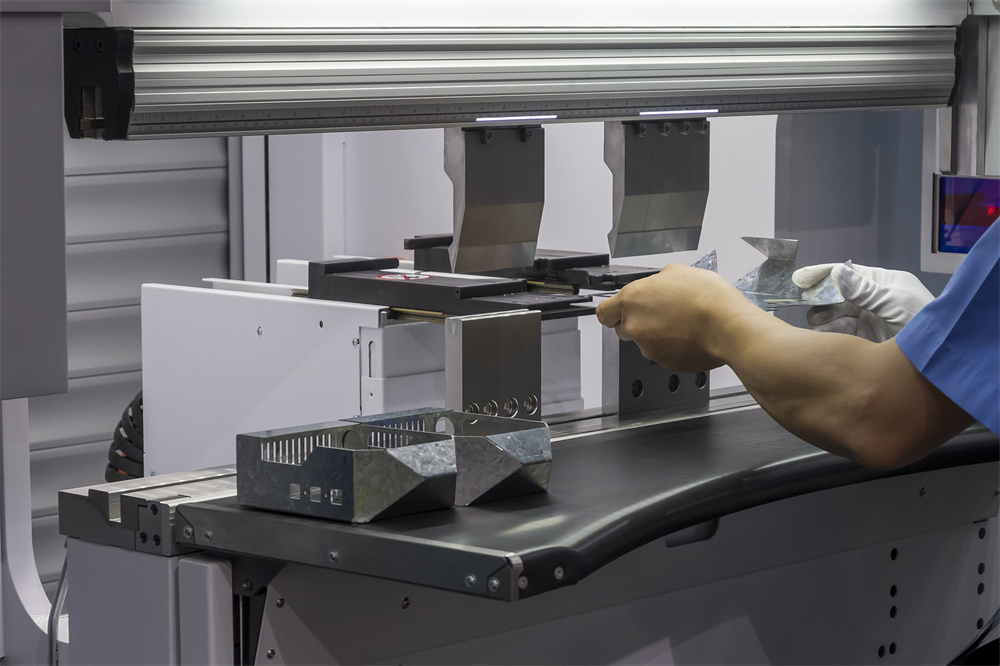
Choosing the right large-tonnage press brake requires a thorough assessment of your current and future production needs. You should start by calculating the maximum tonnage required based on the thickest material you intend to bend. It is always advisable to select a machine with a 15-20% tonnage buffer to ensure the machine is not constantly operating at its absolute limit, which can accelerate wear and tear. Consider the tensile strength of the materials you process; high-strength low-alloy (HSLA) steels require significantly more force than standard mild steel.
Consider the length of the bed. While you may only be bending short, thick parts today, a longer bed provides the flexibility to process larger components or multiple smaller parts simultaneously. However, remember that a longer bed requires a more robust crowning system to maintain accuracy across the entire length. Always prioritize rigidity over length if your primary focus is heavy-duty, short-run precision work. The throat depth is another critical dimension; ensure it is sufficient to accommodate the depth of your largest parts.
Evaluate the CNC controller capabilities. For thick plate bending, the controller should support advanced features like automatic bend sequence calculation, springback compensation, and 3D simulation. These tools allow operators to visualize the bending process before the first piece is even touched, reducing the risk of errors and material waste. A user-friendly interface is also crucial for reducing training time and increasing operator productivity. Look for controllers that offer offline programming capabilities, allowing your engineering team to prepare jobs while the machine is actively running.
Finally, look at the manufacturer’s support and service network. A large-tonnage press brake is a significant capital investment. You need a partner who provides comprehensive training, readily available spare parts, and responsive technical support. HARSLE prides itself on offering end-to-end support, ensuring that your equipment remains operational and productive for years to come. Consider the availability of remote diagnostics, which can significantly reduce downtime by allowing technicians to troubleshoot issues over the internet.
Maintenance and Operational Best Practices
To maximize the performance of a large-tonnage press brake, a rigorous maintenance schedule is essential. Hydraulic systems should be inspected monthly for leaks, and oil quality should be tested annually to ensure it remains free of contaminants. The ram guides and slide surfaces must be lubricated according to the manufacturer’s specifications to prevent friction-related wear. Furthermore, the CNC control system should be backed up regularly to prevent data loss, and software updates should be applied to ensure compatibility with the latest tooling and material databases.
Operators should be trained not only in the operation of the machine but also in the physics of bending. Understanding how to calculate the required tonnage for specific bend angles and material thicknesses is vital for preventing machine overload. Additionally, daily inspections of the tooling for cracks or signs of fatigue are necessary to ensure both product quality and workplace safety. By treating the press brake as a precision instrument rather than just a heavy-duty tool, fabricators can significantly extend the machine’s service life.
FAQ: Understanding Large-Tonnage Press Brakes
What is the main advantage of a large-tonnage press brake for thick plates?
The primary advantage is the ability to apply consistent, high-pressure force across the entire length of the plate, ensuring uniform bend angles and preventing structural deflection of the machine frame. This allows for the processing of materials that would be impossible to bend on standard-duty equipment.
How does a large-tonnage press brake improve performance in thick plate bending regarding accuracy?
By utilizing advanced hydraulic crowning and closed-loop CNC synchronization, these machines compensate for material springback and machine deflection, resulting in precise, repeatable bends that meet tight tolerance requirements. The integration of high-resolution feedback loops ensures that the ram remains perfectly parallel throughout the entire stroke.
Is it worth upgrading to a large-tonnage machine if I only bend thick plates occasionally?
Yes, if your current equipment is struggling or requires multiple passes to achieve a bend. The increased efficiency, reduced setup time, and improved safety profile often lead to a faster return on investment than expected. Furthermore, having the capacity to handle thicker materials opens up new market opportunities for your business.
What maintenance is required for high-tonnage press brakes?
Regular maintenance includes checking hydraulic fluid levels, inspecting seals for leaks, lubricating moving parts, and calibrating the CNC sensors. Periodic structural inspections are also recommended for machines operating at high capacities to ensure the integrity of the frame and beam.
How do I determine the correct tonnage for my specific application?
Tonnage is determined by the material thickness, the length of the bend, the tensile strength of the material, and the width of the V-die opening. Most manufacturers provide tonnage charts, or you can use specialized software to calculate the exact force required for your specific job parameters.
Conclusion
The transition to a high-capacity machine is a strategic move that fundamentally changes how a workshop handles complex fabrication tasks. When we ask how a large-tonnage press brake improved performance in thick plate bending, the evidence is clear: it is about the synergy of raw power, intelligent control, and structural integrity. By investing in the right equipment, fabricators can tackle thicker materials with confidence, improve their product quality, and significantly boost their overall production capacity.
HARSLE remains committed to providing the industry with the most advanced, reliable, and efficient press brake solutions. Whether you are expanding your capabilities or replacing aging equipment, understanding the technical requirements and selection criteria for large-tonnage systems is the first step toward achieving operational excellence. As the industry continues to evolve, having the right tools will ensure that your business remains at the forefront of metal fabrication technology, ready to meet the challenges of tomorrow’s heavy-duty projects.


