
Panel Bender vs Press Brake: Differences, Cost per Part and Which to Choose


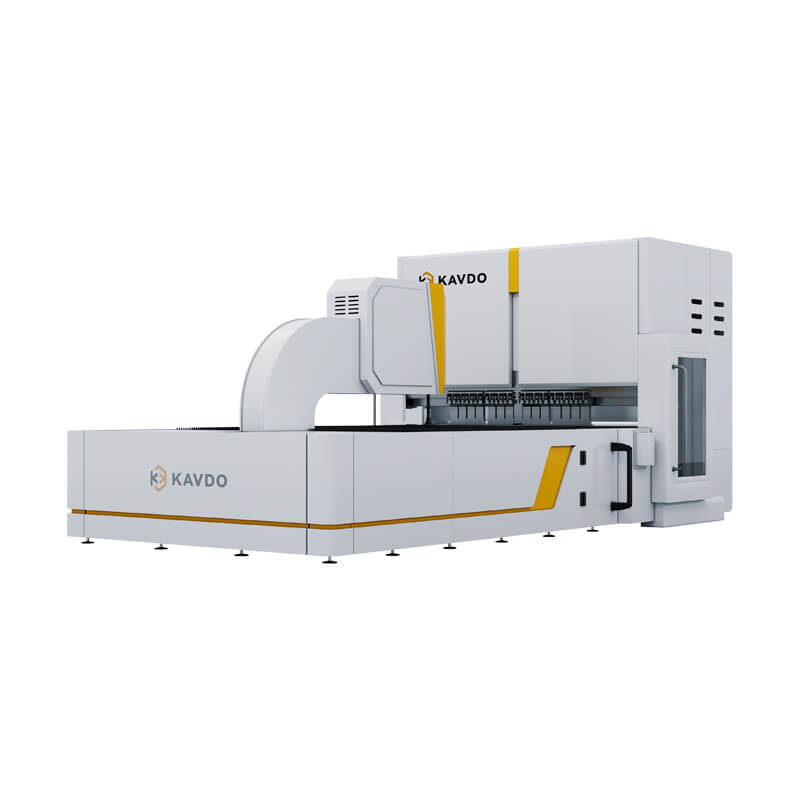
إجابة قصيرة: a panel bender bends a sheet from all four sides automatically, holding it under a blank holder while a universal bending blade forms up and down bends. It needs no tool changes and no skilled operator, and it is typically 3–5 times faster on multi-bend panels. It is limited to thinner sheet (typically up to about 3 mm) and panel-type parts. A مكبس is cheaper and far more flexible: it bends thick plate, narrow and complex parts, and acute angles, but it needs tool setups and skilled operators. Choose a panel bender for high volumes of thin panels, boxes and doors; choose a press brake for mixed work and thicker material. Many shops run both.
Panel Bender vs Press Brake: Comparison Table
| Panel bender | Press brake | |
|---|---|---|
| How it bends | Blank holder clamps the sheet; a bending blade forms the flange up or down | Punch presses the sheet into a V-die |
| Sheet handling | Automatic rotation and positioning | Operator (or robot) turns and positions the part |
| Tool changes | None for most parts (universal blade); automatic length adjustment | Required for different V-openings, punch shapes and lengths |
| Speed on multi-bend panels | Very high (KAVDO: up to 17 bends/min) | Depends on operator; much slower for 4-side panels |
| Thickness range | Thin sheet (KAVDO: 0.4–3.2 mm) | Thin sheet to heavy plate (20 mm and more) |
| Part types | Panels, boxes, doors, cabinet sides, shelves | Almost any profile: brackets, channels, narrow parts, acute angles |
| Operator skill | Low; one person can supervise more than one machine | Medium to high |
| Surface quality | Very good: no dragging over die shoulders | Good; risk of die marks on sensitive surfaces |
| Dimensional accuracy on multi-bend parts | Measures from the sheet edge; no cumulative error from repositioning | Errors can add up over several bends |
| Investment | High | Low to medium |
When a Panel Bender Pays Off
- High volumes of thin panels with bends on several sides: electrical cabinets, HVAC panels, elevator panels, doors, furniture, appliances.
- Labor shortage, or difficulty finding skilled press brake operators.
- Pre-painted, brushed stainless or decorative surfaces that must not be marked.
- Many different panel designs in small batches. With no tool changes, a program change is enough.
When a Press Brake Is the Better Choice
- Sheet thicker than about 3 mm, or plate.
- Narrow parts, brackets, channels, acute angles and special profiles.
- Very varied work with low volumes and limited budget.
- Long parts beyond the panel bender’s length.
Cost per Part: A Simple Comparison
A panel bender costs more to buy than a press brake, but cost per part can be much lower on panel work:
- Labor: KAVDO estimates up to 80% labor reduction compared with manual press brake bending of panels.
- Cycle time: automatic rotation and bending is typically 3–5× faster on 4-side panels.
- Rework: consistent angles and dimensions reduce scrap and assembly problems.
If a press brake cell needs two operators per shift for panel work, a panel bender supervised by one person can pay back quickly. For low volumes or mostly non-panel parts, a CNC press brake is usually the better investment. See the press brake price guide.
Can a Panel Bender Replace a Press Brake?
For panel and box parts, yes. For everything else, no. Most fabricators that buy a panel bender keep at least one press brake for thicker material, narrow parts and special profiles. The panel bender takes the repetitive panel work, which frees skilled press brake operators for complex jobs.
Compare the panel bender and press brake using the same accepted part
Include workpiece handling, tool preparation, return-flange clearance, dimensional checks and accepted output. Record which additional steps each process needs before comparing cost per part.
أسئلة شائعة
What is the difference between a panel bender and a press brake?
A panel bender clamps the sheet and bends it with a moving blade, rotating it automatically to bend all sides. A press brake bends by pressing the sheet into a die, and the operator positions the part for each bend.
What thickness can a panel bender bend?
Panel benders are designed for thin sheet. KAVDO’s automatic panel bender handles 0.4–3.2 mm with a bending length up to 2,500 mm. Stainless steel capacity is lower than mild steel.
Is a panel bender faster than a press brake?
On multi-bend panels, typically 3–5 times faster, because there is no manual handling or tool change between bends.
See the KAVDO Automatic Panel Bender
Learn more about the KAVDO automatic panel bender, read the panel bender buying guide, or compare with our press brakes. Send your panel drawings through the صفحة الاتصال for a cycle-time estimate.
