
Hydraulic Press Price Guide by Tonnage: 10 Ton to 1000 Ton Models


Hydraulic Press Price Guide by Tonnage: 10 Ton to 1000 Ton Models
Investing in a hydraulic press is a significant capital expenditure for any metal fabrication facility. Understanding the market pricing for equipment ranging from 10-ton benchtop units to 1000-ton industrial giants is essential for budget planning and operational efficiency. This Hydraulic Press Price By Tonnage: 10 Ton 1000 Ton Models guide provides a detailed breakdown of what you can expect to pay and why.
The cost of a hydraulic press is rarely a flat fee. It is a complex calculation based on force capacity, bed size, stroke length, control systems, and safety features. Whether you are a small job shop or a large-scale automotive manufacturer, aligning your production requirements with the right tonnage is the first step in ensuring your investment yields a high return.
Price Range Overview
The pricing spectrum for hydraulic presses is vast. Entry-level 10-ton to 50-ton presses, often used for assembly, straightening, or light stamping, typically range from $5,000 to $25,000. These machines are often standardized, meaning they have fewer customization options and shorter lead times, making them accessible for smaller workshops. At this level, you are paying for basic hydraulic power and a sturdy frame, often without the advanced PLC integration found in larger units.
Mid-range presses, spanning 100 tons to 300 tons, are the workhorses of the metal fabrication industry. Prices for these units generally fall between $40,000 and $150,000. At this level, buyers are paying for increased structural rigidity, advanced hydraulic components, and more sophisticated PLC control systems that allow for repeatable, high-precision operations. These machines are frequently used in automotive parts manufacturing, appliance production, and heavy-duty metal forming.
High-capacity presses, ranging from 500 tons to 1000 tons and beyond, are specialized pieces of equipment. These machines can cost anywhere from $250,000 to over $1,000,000. Pricing at this level is heavily influenced by the size of the bolster plate, the speed of the ram, and the integration of automated material handling systems. These are long-term assets designed for decades of continuous operation, often requiring custom engineering to meet specific factory floor layouts and production cycle requirements.
Main Cost Drivers
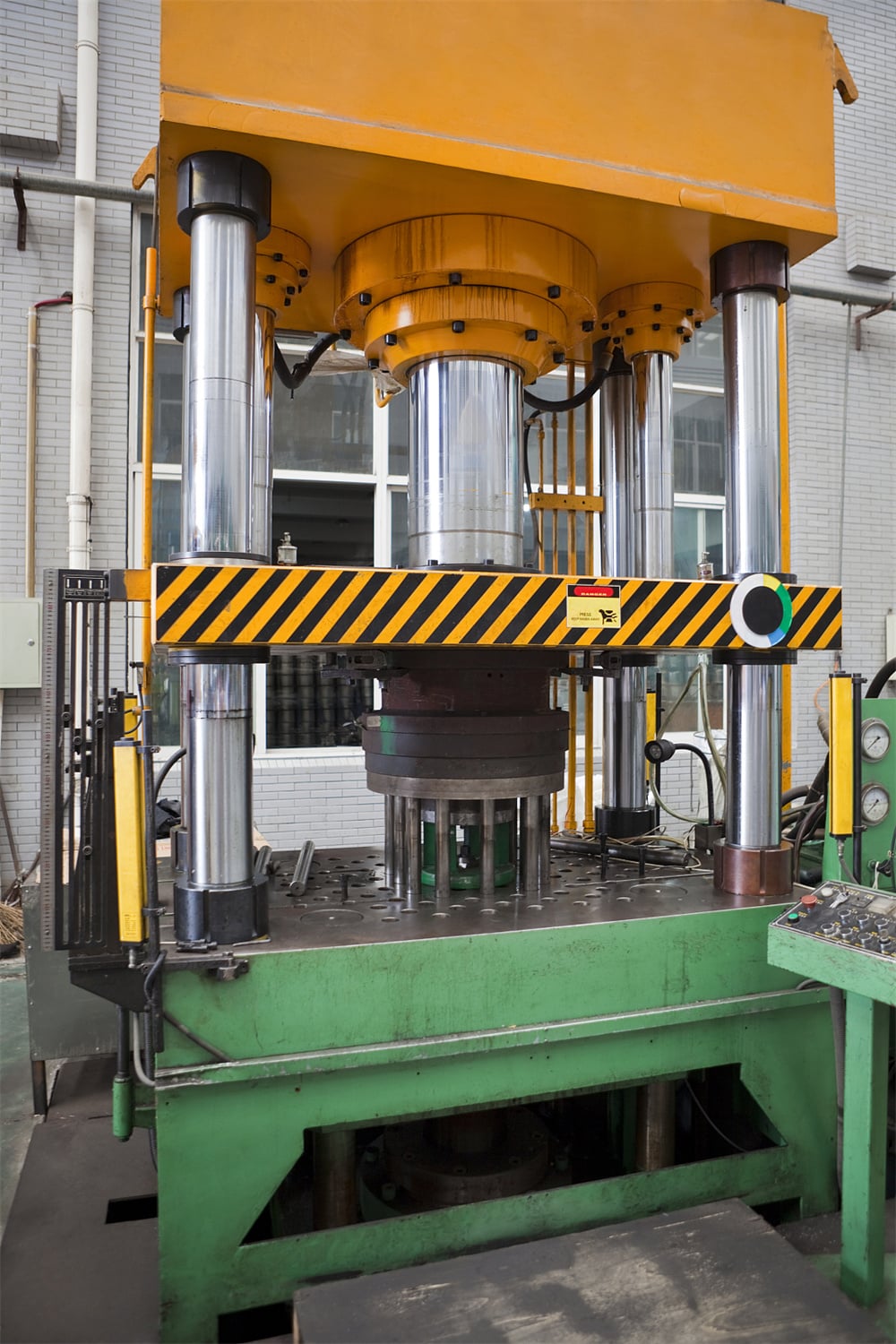
Tonnage is the most obvious cost driver, but it is not the only one. The structural design of the frame—whether it is a C-frame, H-frame, or four-post design—significantly impacts the price. C-frame presses offer better access to the work area but are generally limited in tonnage compared to the more stable and expensive four-post or straight-side designs. The amount of high-grade steel required for the frame directly correlates to the machine’s weight and, consequently, its price.
The hydraulic system components, including pumps, valves, and cylinders, represent a major portion of the cost. High-quality, internationally recognized brands for these components increase the initial purchase price but drastically reduce long-term maintenance costs and downtime. Investing in premium hydraulics ensures consistent pressure delivery and longer seal life. Furthermore, the inclusion of proportional valves allows for precise control over ram speed and pressure, which is essential for complex forming tasks.
Control systems are another major variable. A basic manual press with simple push-button controls is significantly cheaper than a CNC-integrated press with touch-screen interfaces, data logging, and remote diagnostic capabilities. As Industry 4.0 becomes standard, the software and sensor integration required for modern manufacturing add a premium to the total cost. These systems allow for real-time monitoring of pressure curves, which is vital for quality control in high-stakes industries like aerospace or medical device manufacturing.
Configuration Impact
Customization is where the price can fluctuate significantly. A standard 200-ton press might be priced at a base level, but once you add features like heated platens, quick-die change systems, or specialized safety light curtains, the price can increase by 20% to 40%. It is crucial to define your specific application needs before requesting a quote to avoid paying for features you do not need while ensuring you have the ones you do.
Bed size and daylight opening are critical configuration factors. A press with a larger bed requires a larger frame, more steel, and more robust guiding systems to maintain parallelism under load. Similarly, a larger daylight opening requires longer cylinders and more complex guiding, which increases the material and engineering costs associated with the build. If your parts are large but require low tonnage, you may need a custom-engineered press that balances a large bed with a lower-tonnage cylinder, which is often more expensive than a standard high-tonnage, small-bed machine.
Speed and cycle time requirements also dictate the price. High-speed presses require more powerful hydraulic pumps, larger reservoirs, and advanced cooling systems to manage the heat generated by rapid cycling. If your production line requires high-volume output, the cost of the machine will be higher due to the need for these high-performance components. Servo-driven hydraulic systems, while more expensive upfront, provide superior energy efficiency and speed control, often paying for themselves through reduced electricity bills and faster cycle times.
Hidden Costs and Logistics
When budgeting for a hydraulic press, many buyers overlook the “hidden” costs of installation and commissioning. Shipping a 500-ton press is not like shipping a standard pallet; it requires specialized logistics, heavy-duty cranes, and professional rigging services. These costs can easily add 5% to 10% to the total project budget. You must also account for the cost of hydraulic fluid, which for a large press can be hundreds of gallons, and the initial setup of electrical connections.
Foundation requirements are another significant expense. Large-tonnage presses exert immense pressure on the floor. You may need to pour a reinforced concrete pad or install vibration-dampening footings to ensure the machine remains level and stable. Failing to account for these civil engineering requirements can lead to costly delays and structural damage to your facility. Always consult with the manufacturer’s engineering team regarding the specific floor loading requirements before the machine arrives.
Ongoing maintenance and energy consumption are operational costs that must be factored in. Hydraulic oil, filter replacements, and seal kits are recurring expenses. Furthermore, modern energy-efficient servo-hydraulic presses may have a higher upfront cost but offer significant savings in electricity consumption over the life of the machine compared to traditional constant-run hydraulic systems. Consider the cost of training your staff to operate and maintain the machine, as specialized equipment often requires specialized knowledge.
ROI Calculation
Calculating the Return on Investment (ROI) for a hydraulic press involves looking beyond the purchase price. Start by determining the cost per part. A more expensive, faster, and more precise press will produce parts at a lower cost per unit due to reduced scrap rates, faster cycle times, and less manual labor required for secondary operations. If a machine reduces your cycle time by just 5 seconds, the cumulative savings over a million parts can be substantial.
Consider the reduction in downtime. A high-quality press from a reputable manufacturer will have better support, more readily available spare parts, and a longer service life. If a cheaper machine breaks down and halts your production line for a week, the lost revenue will quickly exceed the savings you gained from the lower purchase price. Reliability is a form of insurance for your production schedule.
Finally, factor in the versatility of the machine. A press that can handle multiple types of jobs—such as deep drawing, punching, and forming—allows you to take on a wider variety of contracts. This flexibility increases your shop’s utilization rate, which is a key driver of profitability in the metal fabrication industry. A machine that sits idle is a cost; a machine that can be quickly retooled for different projects is an asset.
Buying Advice
Before purchasing, create a detailed specification sheet. List your maximum tonnage requirements, the dimensions of your largest die, the required stroke length, and your desired cycle time. Providing this information to manufacturers allows them to give you an accurate quote and suggest the most efficient configuration for your needs. Do not guess your tonnage; perform a force calculation based on the material thickness, tensile strength, and the perimeter of the cut or bend.
Always ask about the manufacturer’s support network. Can they provide remote diagnostics? How quickly can they ship critical spare parts? A hydraulic press is a long-term investment, and the relationship with the manufacturer is just as important as the machine itself. Look for companies that offer comprehensive training for your operators, as human error is a leading cause of machine damage and safety incidents.
Do not be afraid to ask for references. Contact other shops that have purchased similar tonnage models from the manufacturer. Ask them about the machine’s reliability, the ease of maintenance, and their overall satisfaction with the support they received. This due diligence is the best way to ensure you are making a sound investment. Additionally, consider the resale value; high-quality, well-maintained presses from reputable brands hold their value significantly better than generic, low-cost alternatives.
FAQ
How often should I change the hydraulic oil?
Generally, hydraulic oil should be changed every 2,000 to 4,000 operating hours, depending on the environment and the intensity of use. Always monitor oil quality through regular analysis to detect contamination or degradation early. Clean oil is the lifeblood of your hydraulic system and prevents premature wear on pumps and valves.
What is the difference between a C-frame and a four-post press?
A C-frame press provides three-sided access, making it ideal for manual loading and unloading of smaller parts. A four-post press provides superior bed parallelism and structural rigidity, making it better for precision stamping, large-die applications, and off-center loading scenarios where frame deflection must be minimized.
Can I upgrade my press later?
Some features, such as light curtains, PLC software updates, or basic automation, can be added later. However, structural components like tonnage capacity or bed size are fixed at the time of manufacture. It is almost always cheaper to buy the correct capacity initially than to try to upgrade it later, as retrofitting a frame is rarely cost-effective.
What safety features are mandatory?
Safety requirements vary by region, but standard features include light curtains, dual-hand controls, emergency stop buttons, and physical guarding. Always ensure your press meets the latest safety standards in your jurisdiction, such as OSHA or CE regulations. Never bypass safety interlocks, as they are designed to protect your most valuable asset: your employees.
How do I determine the correct tonnage for my application?
Tonnage is calculated by multiplying the area of the cut or the length of the bend by the material thickness and the shear strength of the material. It is recommended to add a 20% safety margin to your calculated tonnage to account for material variations and tool wear. Consult with a mechanical engineer or your press manufacturer to verify your calculations before finalizing your order.


