Small Press Brake Machine Price Guide for Startup Metal Workshops

Price Range Overview for Startup Metal Workshops
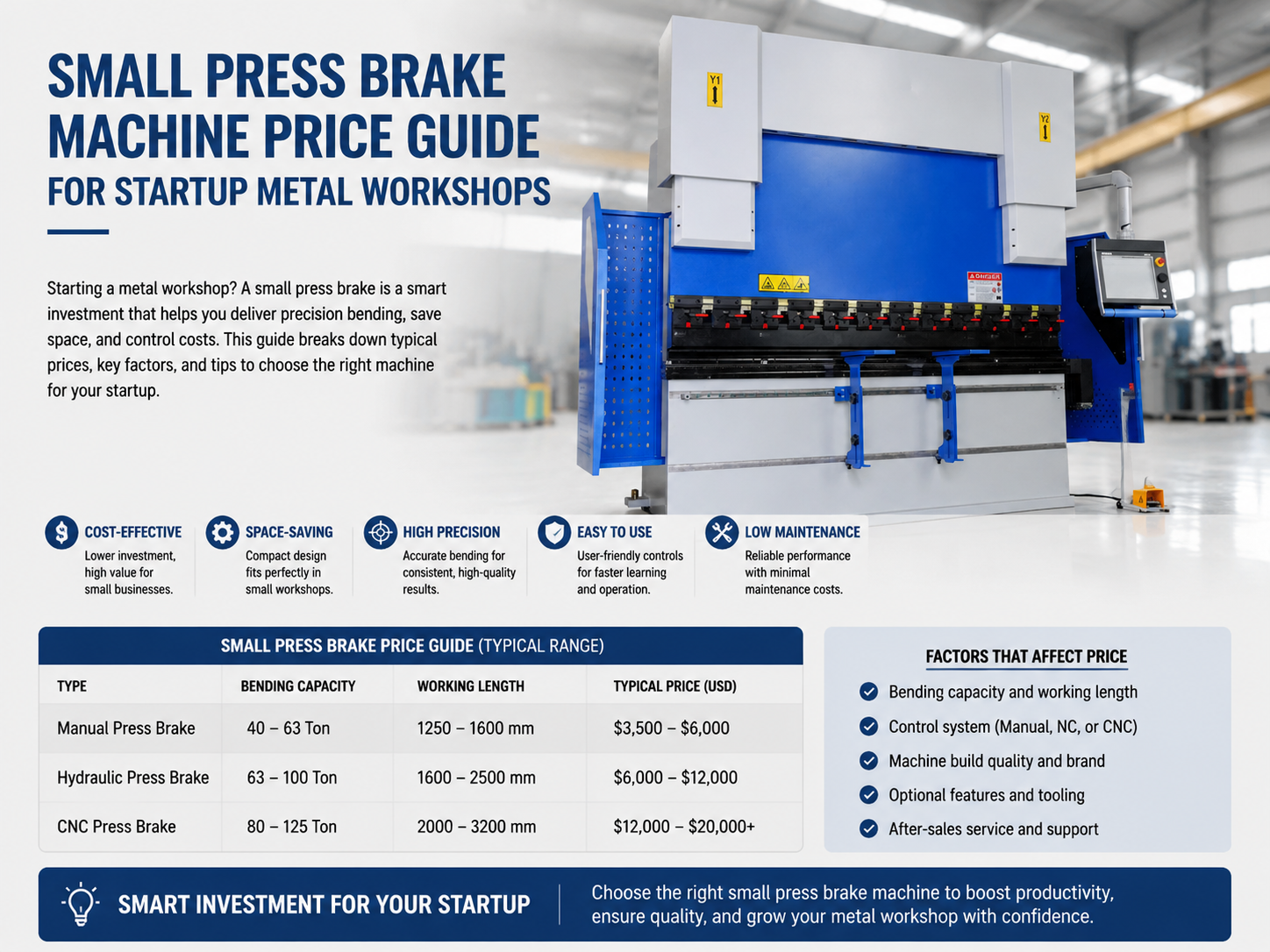
For a startup metal workshop, selecting the right equipment is a balancing act between initial capital expenditure and long-term production capability. A small press brake machine is often the heartbeat of a fabrication shop, yet the price variance can be staggering. Generally, entry-level manual or basic hydraulic press brakes for small workshops range from $8,000 to $20,000. These machines are typically designed for light-gauge materials and shorter bend lengths, making them ideal for prototyping or small-batch production.
As you move into the mid-range category, which includes CNC-controlled hydraulic press brakes, the price typically climbs to between $25,000 and $50,000. These machines offer higher precision, faster cycle times, and the ability to handle more complex geometries. For startups aiming for high-volume production or those working with thicker materials, this investment tier is often the sweet spot, providing a balance of automation and durability.
High-end small press brakes, featuring advanced multi-axis control and integrated safety systems, can exceed $60,000. While this may seem steep for a new business, the reduction in scrap rates and labor costs often justifies the price. It is crucial for workshop owners to evaluate their specific project requirements—such as material thickness, bend length, and required accuracy—before committing to a specific price bracket.
Understanding the market requires looking beyond the sticker price. Many manufacturers offer tiered pricing based on the controller sophistication and the structural rigidity of the frame. A startup should prioritize a machine that offers room for growth; purchasing a machine that is too small for future needs will lead to premature replacement costs, effectively doubling your capital investment in the long run.
Ultimately, the small press brake machine price for startup metal workshops is influenced by the brand’s reputation, the country of origin, and the level of after-sales support provided. HARSLE emphasizes that the cheapest option is rarely the most economical over a five-year period. By analyzing the total cost of ownership, including power consumption and maintenance, startups can make a more informed financial decision.
Main Cost Drivers in Press Brake Acquisition
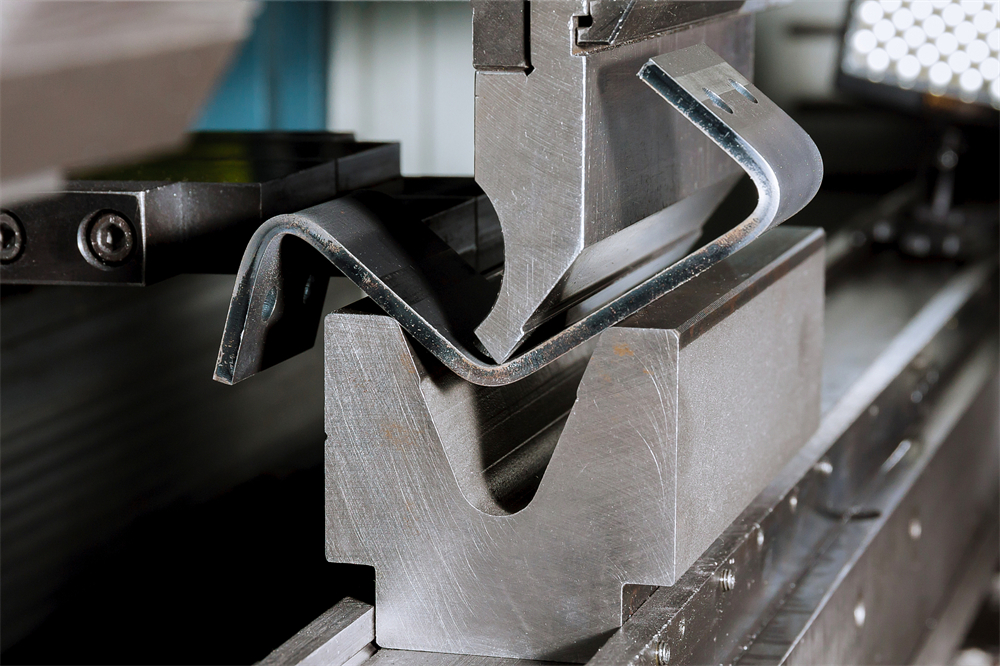
The primary driver of the cost of a press brake is the tonnage capacity. Tonnage refers to the amount of force the machine can exert to bend metal. Higher tonnage machines require more robust steel frames, larger hydraulic cylinders, and more powerful motors, all of which drive up the manufacturing cost. For a startup, it is tempting to buy the highest tonnage possible, but this is often a waste of capital if your typical work involves thin-gauge sheet metal.
Another significant cost factor is the bending length. A machine capable of bending 3-meter sheets will naturally cost more than one limited to 1.5 meters due to the increased material usage in the bed and ram. Startups should analyze their current and projected project sizes. If 90% of your work is under 1 meter, investing in a 3-meter machine is an inefficient use of floor space and budget.
The control system, or CNC unit, is the “brain” of the machine and a major price variable. Basic controllers allow for simple manual backgauge positioning, while advanced CNC controllers can automatically calculate bend sequences, manage multi-axis backgauges, and store thousands of programs. While advanced controllers add to the initial price, they significantly reduce setup time, which is the most expensive part of small-batch fabrication.
Hydraulic components and build quality also play a role. Premium hydraulic valves and pumps ensure consistent pressure, which is vital for maintaining bend angle accuracy across multiple parts. Cheaper components may save money upfront but often lead to inconsistent bends, requiring constant manual adjustments and increasing the likelihood of part rejection.
Finally, the level of automation included in the package—such as automatic crowning systems or laser angle measurement—will push the price upward. While these features are highly desirable for high-precision industries like aerospace or medical device manufacturing, they may be overkill for a general-purpose startup workshop. Balancing these features against your specific output requirements is key to maintaining a healthy cash flow.
Configuration Impact on Performance and Price
The configuration of your press brake dictates how efficiently your workshop operates. A standard 3-axis machine (Y1, Y2, X) is the industry baseline. Adding axes, such as an R-axis (vertical backgauge movement) or Z-axis (finger movement), increases the price but drastically improves the ability to handle complex, multi-bend parts. For a startup, starting with a 3-axis machine is often sufficient, provided the controller is upgradeable.
Tooling is another configuration aspect that impacts the total price. Many manufacturers sell the machine with a basic set of universal tooling. However, specialized tooling for specific radii or complex profiles can add thousands to the final invoice. It is often better to negotiate a comprehensive tooling package at the time of purchase rather than buying individual tools later, as manufacturers often offer bundled discounts.
Safety configurations are non-negotiable but vary in cost. Light curtains, laser safety guards, and physical enclosures are essential for operator protection. While basic safety is included in all reputable machines, advanced laser safety systems that allow for faster ram speeds without compromising operator safety can be a significant add-on. Investing in these systems is not just a cost; it is a way to reduce insurance premiums and prevent costly workplace accidents.
The crowning system is a critical configuration choice. A mechanical or hydraulic crowning system compensates for the deflection of the machine bed during the bending process, ensuring that the bend angle is consistent across the entire length of the part. For startups working with long, thin materials, a high-quality crowning system is essential to avoid “canoe” shaped bends, which are a common source of scrap.
Energy efficiency configurations, such as servo-driven hydraulic systems, are becoming more popular. These systems only consume power when the ram is moving, unlike traditional hydraulic systems that run the pump continuously. While the initial price is higher, the long-term savings on electricity bills can be substantial, especially in regions with high energy costs. This is a configuration choice that pays for itself over time.
Hidden Costs of Press Brake Ownership
When budgeting for a small press brake, many startups focus solely on the purchase price and forget the “hidden” costs of installation and operation. Shipping and rigging are the first of these. Moving a multi-ton machine into your facility requires specialized equipment and professional labor. Depending on your location and the machine’s size, these costs can range from $1,000 to $5,000.
Foundation requirements are often overlooked. A heavy-duty press brake may require a reinforced concrete slab to prevent vibration and ensure level operation. If your workshop floor is not up to spec, you may need to pay for concrete cutting and pouring, which is a significant, unexpected expense. Always check the manufacturer’s foundation requirements before finalizing your purchase.
Training and software are also critical. Even the best machine is useless if your operators don’t know how to program it efficiently. Budget for professional training sessions provided by the manufacturer or a local dealer. Additionally, if you plan to use offline programming software to design parts and simulate bends before they hit the shop floor, you will need to factor in the cost of software licenses and computer hardware.
Maintenance and consumables are ongoing costs. Hydraulic oil, filters, and seals need periodic replacement. Furthermore, tooling will eventually wear out or break. Setting aside a monthly maintenance budget—typically 2-5% of the machine’s value annually—is a best practice for any startup. Ignoring maintenance will lead to downtime, which is the most expensive cost of all for a small business.
Finally, consider the cost of electricity and compressed air. Some machines require high-pressure air for pneumatic clamping or safety systems. If your current compressor is undersized, you may need to upgrade your air supply system. By accounting for these hidden costs early, you can avoid the “sticker shock” that often occurs after the machine has been delivered.
ROI Calculation for Startup Metal Workshops
Calculating the Return on Investment (ROI) for a press brake is essential for justifying the purchase to stakeholders or lenders. The calculation should start with the reduction in labor hours. If a new CNC press brake allows you to complete a job in 2 hours that previously took 6 hours on a manual machine, you are saving 4 hours of labor per job. Multiply this by your hourly shop rate to see the direct impact on your bottom line.
Next, factor in the reduction in scrap rates. Manual bending often leads to trial-and-error, which wastes expensive raw material. A high-precision CNC press brake can produce a perfect part on the first try. Calculate the cost of the material saved per month; for many workshops, this alone can cover the monthly financing payment for the machine.
Consider the increased capacity and capability. With a more capable machine, you can bid on more complex projects that you previously had to turn away. This increases your revenue potential. When calculating ROI, don’t just look at the current workload; look at the new business opportunities that the machine unlocks. This is the “growth factor” of your investment.
Factor in the machine’s depreciation and resale value. Reputable brands like HARSLE hold their value well. If you decide to upgrade to a larger machine in five years, you can likely sell your current machine for a significant portion of its original price. This residual value should be factored into your long-term ROI analysis.
Finally, compare the cost of outsourcing versus in-house production. If you are currently paying a third party to bend your parts, calculate the total annual cost of those services. Often, the monthly payment for a new press brake is lower than the monthly cost of outsourcing, meaning the machine starts paying for itself from day one. This is the most compelling argument for any startup looking to scale.
Buying Advice: Making the Right Choice
The most important piece of advice for a startup is to prioritize after-sales support over the lowest price. A machine that breaks down and sits idle for two weeks because you can’t get parts or service is a liability. Research the manufacturer’s local presence. Do they have technicians in your region? Are spare parts readily available? A slightly more expensive machine from a company with excellent support is always a better investment.
Request a demonstration or visit a facility that uses the machine you are considering. Seeing the machine in action allows you to evaluate its build quality, noise level, and ease of use. Talk to the operators—they are the ones who know the machine’s quirks and reliability. Their feedback is often more valuable than any sales brochure.
Don’t be afraid to negotiate. Many manufacturers are willing to include extra tooling, extended warranties, or free training to close a deal. Be clear about your budget, but be willing to pay for features that provide a clear, measurable benefit to your production speed or accuracy. A “bare-bones” machine might seem cheap, but it can become a bottleneck very quickly.
Check the compatibility of the machine with your existing workflow. Does the controller speak the same language as your design software? Is the power requirement compatible with your workshop’s electrical grid? These technical details are often overlooked but can cause significant headaches during installation. A professional supplier will walk you through these requirements before you sign the contract.
Lastly, look at the long-term scalability. Can the machine be upgraded with additional axes or automation later? A modular design allows you to start small and add features as your business grows. This flexibility is invaluable for a startup, as it allows you to manage your cash flow while still having a path to increase your production capacity as your order book expands.
FAQ: Small Press Brake Machine Price Guide
What is the average price of a small press brake for a startup?
For a startup, you can expect to pay between $8,000 and $50,000 depending on whether you choose a manual, hydraulic, or CNC-controlled model. The price depends heavily on tonnage, bending length, and the sophistication of the controller.
Is it better to buy a used or new press brake?
Used machines are cheaper but carry risks regarding wear and tear, lack of warranty, and outdated technology. For a startup, a new machine with a warranty and manufacturer support is usually the safer bet, as it minimizes downtime and ensures you have the latest safety features.
How much should I budget for annual maintenance?
A good rule of thumb is to set aside 2-5% of the machine’s purchase price annually for routine maintenance, including hydraulic oil changes, filter replacements, and tooling inspections.
What is the most important feature for a startup?
Precision and ease of use are paramount. A user-friendly CNC controller that allows for quick programming is essential for startups that handle a high variety of small-batch jobs, as it minimizes setup time.
Does HARSLE offer financing options?
Yes, many manufacturers and distributors offer financing or leasing options specifically designed for small businesses. This can help preserve your working capital while allowing you to acquire the equipment you need to grow.