
How to Calculate Punching Force for Metal Sheet Processing: A Comprehensive Technical Guide


Technical Overview: Understanding Punching Force
In the world of precision metal fabrication, the ability to accurately calculate the required force for a punching operation is not merely a technical exercise—it is a fundamental requirement for operational safety, machine longevity, and product quality. When we discuss how to calculate punching force for metal sheet processing, we are addressing the physics of shear stress and material resistance. A punching machine must exert enough force to overcome the ultimate shear strength of the material being processed, ensuring a clean cut without damaging the tooling or overloading the hydraulic system.
HARSLE punching machines are engineered to handle a wide spectrum of force requirements, but the operator’s responsibility lies in the pre-production calculation phase. If the force is underestimated, the punch may fail to penetrate the material, leading to “stuck” punches or damaged dies. Conversely, significantly overestimating the force can lead to unnecessary energy consumption and excessive wear on the machine’s structural components. Understanding the relationship between material thickness, perimeter of the cut, and shear strength is the key to optimizing your production line.
The process of punching involves a punch tool forcing its way through a sheet of metal into a die opening. During this action, the material undergoes elastic deformation, followed by plastic deformation, and finally, fracture. The force required to initiate and complete this fracture is what we define as the punching force. By mastering the mathematical approach to this force, fabricators can select the appropriate tonnage for their HARSLE equipment, ensuring that every cycle is efficient and precise.
Furthermore, modern industrial environments demand high throughput and minimal downtime. By integrating accurate force calculations into your workflow, you reduce the risk of mechanical failure and extend the life of your punch and die sets. This guide serves as a comprehensive resource for engineers, shop floor managers, and operators who need to calculate punching force for metal sheet processing with absolute confidence.
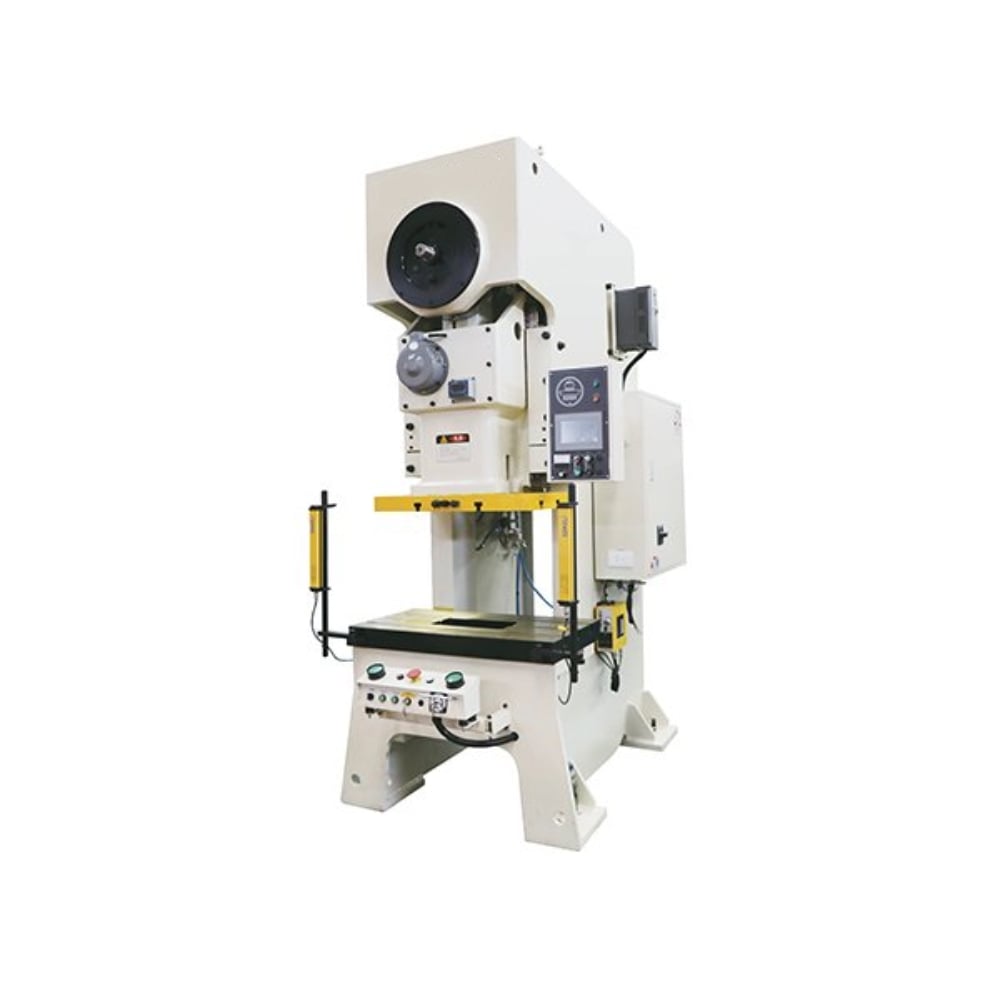
Core Parameters: The Variables of Punching
To calculate punching force for metal sheet processing, one must first identify the three primary variables that dictate the physics of the operation: the perimeter of the shape being punched, the thickness of the material, and the shear strength of the material. Each of these parameters plays a critical role in the final tonnage requirement. Ignoring any one of these factors can lead to significant errors in machine selection and setup.
The perimeter (L) is the total length of the cutting edge. For a simple circular hole, this is the circumference (π × diameter). For complex shapes, it is the sum of all sides of the geometry being punched. It is vital to measure this accurately, as the force is directly proportional to the length of the cut. A larger perimeter means more material is being sheared simultaneously, which requires a higher force output from the hydraulic system.
Material thickness (t) is the second pillar of the calculation. As the thickness increases, the resistance to shear increases linearly. However, it is important to note that the material’s hardness also influences the effective shear strength. When working with high-strength alloys or hardened steels, the shear strength value must be adjusted accordingly. HARSLE recommends always using the specific shear strength data provided by the material supplier rather than generic estimates.
The shear strength (τ) of the material is the final, and perhaps most variable, component. This value represents the stress at which the material will fail under a shearing load. Different metals—such as aluminum, mild steel, and stainless steel—have vastly different shear strengths. Using the wrong shear strength value is a common pitfall that can lead to machine overload. Always consult the material data sheet to ensure your calculations are based on the actual physical properties of the metal being processed.
Finally, the clearance between the punch and the die must be considered. While clearance does not change the theoretical force required to shear the material, it significantly affects the quality of the edge and the force required to strip the punch from the material after the cut. Proper clearance ensures that the fracture lines meet, reducing the total energy required to complete the punching process.
Calculation Method: The Mathematical Approach
The standard formula used to calculate punching force for metal sheet processing is straightforward yet powerful: F = L × t × τ. In this equation, F represents the punching force (in Newtons or Tons), L is the perimeter of the cut (in millimeters), t is the material thickness (in millimeters), and τ is the shear strength of the material (in Megapascals or N/mm²). This formula provides the theoretical force required to shear the material cleanly.
To perform the calculation, first convert all units to a consistent format. If you are working in metric units, the result will be in Newtons. To convert this to metric tons (the standard unit for HARSLE punching machines), you divide the result by 9,800 (or approximately 10,000 for a safe estimation). For example, if you are punching a 20mm diameter hole in 5mm thick mild steel with a shear strength of 350 MPa, the perimeter is 62.8mm. The calculation would be 62.8 × 5 × 350 = 109,900 N, which is approximately 11 tons.
It is crucial to include a safety factor in your final machine selection. HARSLE recommends adding at least 20-30% to your calculated force to account for tool dullness, material variations, and the force required for stripping. A dull punch requires significantly more force than a sharp one, and material thickness can vary slightly across a sheet. By applying a safety margin, you ensure that your machine operates well within its capacity, preventing premature wear and tear.
Additionally, consider the use of shear angles on the punch face. By grinding a shear angle into the punch, you can reduce the instantaneous force required to start the cut. This is particularly useful when working with thick materials or when the required force is close to the machine’s maximum capacity. While this does not change the total energy required to complete the punch, it lowers the peak force, allowing for the use of smaller machines for larger jobs.
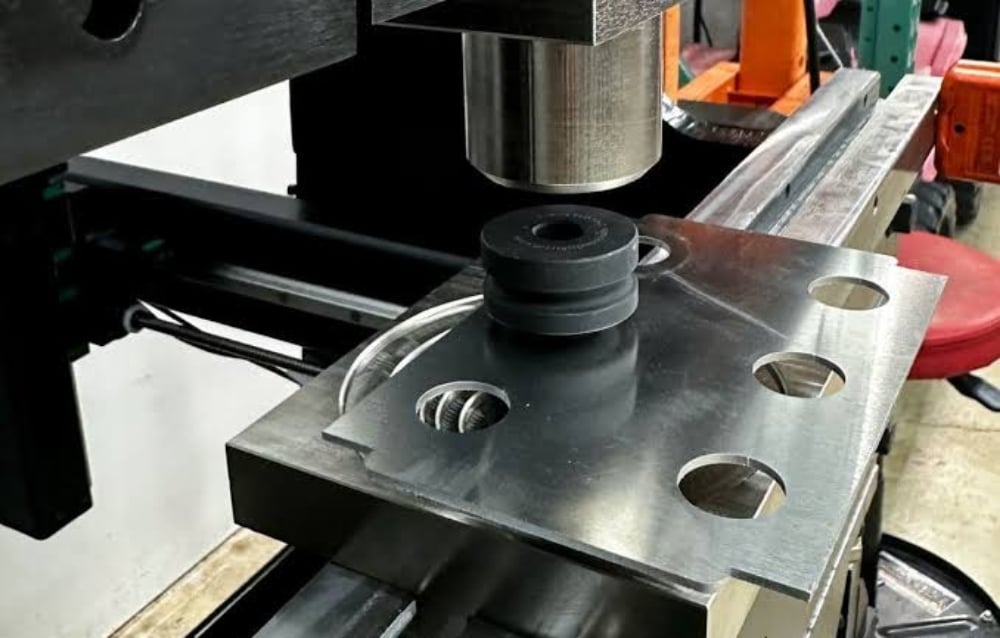
Parameter Table: Reference Values for Common Materials
When you calculate punching force for metal sheet processing, having a reliable reference table for shear strength is essential. Below is a table detailing the approximate shear strength values for common industrial materials. Please note that these values are averages and can vary based on the specific alloy composition and heat treatment state of the material.
| Material Type | Approximate Shear Strength (MPa) |
|---|---|
| Aluminum (1100-H14) | 80 – 100 |
| Mild Steel (Low Carbon) | 300 – 350 |
| Stainless Steel (304) | 450 – 550 |
| Brass (Yellow) | 250 – 300 |
| Copper (Cold Rolled) | 200 – 250 |
This table serves as a baseline for your calculations. When working with specialized alloys, such as high-tensile strength steel or aerospace-grade titanium, you must obtain the exact shear strength from the manufacturer’s certification. Using an incorrect value can lead to significant discrepancies in your force requirements, potentially resulting in machine damage or poor part quality.
Furthermore, consider the impact of temperature on material properties. While most punching operations are performed at room temperature, some specialized processes involve pre-heating the material. If the material is heated, its shear strength will decrease, which may allow for lower punching force. However, this introduces complexity in terms of thermal expansion and tool cooling, and should only be attempted by experienced operators.
Always maintain a log of the materials you process and the force requirements encountered. Over time, this data becomes an invaluable asset for your shop, allowing for faster setup times and more accurate bidding on new projects. By tracking the performance of your HARSLE machinery against these calculated values, you can optimize your production cycles for maximum efficiency.
Common Engineering Mistakes
One of the most frequent mistakes when operators calculate punching force for metal sheet processing is neglecting the force required for stripping. After the punch has passed through the material, the material tends to grip the punch tightly. The force required to pull the punch back out of the material—the stripping force—can be as high as 10-15% of the total punching force. If this is not accounted for, the machine may struggle during the return stroke, leading to hydraulic overheating or mechanical strain.
Another common error is failing to account for tool wear. As a punch becomes dull, the force required to shear the material increases significantly. A dull tool creates a larger burr and requires more pressure to initiate the fracture. Operators often forget to adjust their force calculations or maintenance schedules to compensate for this, leading to a gradual decline in part quality and an increase in machine load. Regular tool sharpening is not just a maintenance task; it is a force management strategy.
Ignoring the clearance between the punch and die is also a major oversight. If the clearance is too small, the punch will experience excessive friction, increasing the required force and causing the tool to overheat. If the clearance is too large, the material will bend rather than shear, resulting in poor edge quality and potential damage to the die. Proper clearance is essential for maintaining the calculated force parameters and ensuring the longevity of your HARSLE punching equipment.
Finally, many operators fail to consider the impact of the punch geometry. A flat-faced punch requires the entire perimeter to be sheared at the exact same moment, resulting in a high peak force. By using a “staggered” or “stepped” punch design, you can distribute the shearing action over a longer period, effectively reducing the peak force required. This simple design change can allow you to process thicker materials on a machine that might otherwise be considered underpowered for the job.
Selection Checklist: Choosing the Right HARSLE Machine
When you are ready to invest in or utilize a HARSLE punching machine, use this checklist to ensure your equipment matches your force requirements. First, determine the maximum thickness and material type you intend to process regularly. This will define your baseline tonnage requirement. Always select a machine with a maximum capacity at least 20% higher than your calculated peak force to ensure a safety buffer.
Second, evaluate the throat depth and stroke length of the machine. These factors determine the size of the sheets you can process and the complexity of the shapes you can punch. A machine with a large throat depth provides more flexibility for large panels, while a long stroke length is necessary for deep-draw or complex forming operations. Ensure that the machine’s physical dimensions align with your typical workpiece sizes.
Third, consider the automation and control features. Modern HARSLE machines come equipped with advanced CNC controllers that can automatically adjust force and speed based on the material and tool parameters. These systems reduce the margin for human error and ensure that every punch is performed with the exact force required. If your production involves high-volume, repetitive tasks, investing in an automated system is highly recommended.
Fourth, assess the tooling compatibility. Ensure that the machine supports the type of tooling you require, whether it is standard round punches, shaped dies, or specialized forming tools. The quality of the tooling is just as important as the machine itself; high-quality, precision-ground tools will perform better and last longer, ultimately reducing your total cost of ownership. HARSLE offers a wide range of compatible tooling designed to maximize the performance of our machines.
Finally, consider the maintenance and support infrastructure. A punching machine is a long-term investment. Choose a partner like HARSLE that provides comprehensive technical support, readily available spare parts, and training for your operators. Regular maintenance, including lubrication and hydraulic system checks, is vital to keeping your machine operating at the calculated force levels throughout its service life.
FAQ: Frequently Asked Questions
Q: How often should I recalculate the punching force?
A: You should recalculate the force whenever you change the material type, thickness, or the geometry of the punch. Even if you are using the same material, if you switch to a different alloy grade, the shear strength may differ, necessitating a new calculation.
Q: Does the speed of the punch affect the required force?
A: In most standard metal fabrication applications, the speed of the punch has a negligible effect on the required force. However, at extremely high speeds, the strain rate sensitivity of the material can slightly increase the required force. For standard HARSLE punching operations, you can rely on the static shear strength values.
Q: What happens if I exceed the machine’s rated tonnage?
A: Exceeding the rated tonnage can lead to immediate mechanical failure, such as frame deformation or hydraulic seal rupture. Even if the machine does not fail immediately, repeated overloading will cause premature wear on the drive system and structural components, significantly shortening the machine’s lifespan.
Q: Can I use a lubricant to reduce the punching force?
A: Yes, using a high-quality lubricant can reduce the friction between the punch and the material, which can slightly lower the stripping force and improve the quality of the cut. While it won’t significantly change the force required to shear the material, it is highly recommended for extending tool life and improving surface finish.
Q: How do I know if my punch is dull?
A: Signs of a dull punch include increased burr height on the underside of the material, a noticeable increase in the noise or vibration during the punching cycle, and the need for more frequent machine adjustments. If you notice these symptoms, it is time to sharpen or replace your tooling.












