
Case Study On Upgrading From Plasma To Laser Cutting For Better Edge Quality And Faster Delivery


Introduction: The Evolution of Metal Fabrication
In the competitive landscape of modern metal fabrication, the choice of cutting technology defines a company’s market position. For decades, plasma cutting served as the workhorse for heavy-duty metal processing. However, as client demands for precision, speed, and aesthetic finish have evolved, many fabricators find themselves at a crossroads. This Case Study On Upgrading From Plasma Laser Cutting Better Edge Quality Faster Delivery explores the transformative journey of a mid-sized fabrication shop that transitioned to HARSLE fiber laser technology.
The transition from plasma to laser is not merely a hardware swap; it is a fundamental shift in operational philosophy. Plasma cutting, while effective for thick plate and rough structural work, often leaves behind a significant heat-affected zone (HAZ) and dross that requires secondary processing. In contrast, fiber laser technology offers a cleaner, faster, and more automated approach. This article details the technical and economic justifications for this upgrade, providing a roadmap for fabricators looking to modernize their production lines.
By analyzing the shift in workflow, we uncover how the precision of a modern Wykrawarka laserowa eliminates bottlenecks. When a shop moves away from the limitations of plasma, they are not just buying a new machine; they are investing in a higher tier of service delivery. This case study highlights the tangible benefits observed in real-world production environments, focusing on the reduction of lead times and the improvement of edge quality that clients now demand as the industry standard.
HARSLE has consistently supported manufacturers in this transition, providing the technical expertise required to integrate advanced laser systems into existing workflows. As we delve into the specifics, we will examine why the upgrade is often the most critical decision a fabrication business can make to ensure long-term viability and profitability in an increasingly automated world.
Key Considerations for the Transition
Before committing to a capital expenditure, fabricators must evaluate their current production mix. The primary driver for this Case Study On Upgrading From Plasma To Laser Cutting For Better Edge Quality And Faster Delivery was the realization that secondary finishing was consuming 30% of the shop’s labor hours. Plasma cutting often leaves a beveled edge or heavy slag, necessitating grinding, sanding, or chemical cleaning before parts can move to welding or assembly.
Another critical consideration is the material thickness range. While plasma excels at cutting very thick plate (above 25mm) at lower costs, the majority of industrial fabrication occurs in the 1mm to 15mm range. Fiber lasers dominate this spectrum, offering superior speed and accuracy. Fabricators must analyze their historical data to determine if their average part thickness aligns with the capabilities of a high-power fiber laser system.
Operational costs also play a significant role. Plasma systems require frequent replacement of consumables such as nozzles, electrodes, and swirl rings. These costs accumulate rapidly, especially in high-volume environments. Fiber lasers, by contrast, have minimal consumable requirements, relying on high-efficiency laser sources that offer thousands of hours of maintenance-free operation. This shift in cost structure is a major factor in the return on investment (ROI) calculations for any business.
Finally, the integration of automation is a key consideration. Modern fiber laser machines can be equipped with automatic pallet changers, loading/unloading systems, and even lights-out manufacturing capabilities. Plasma systems are rarely as conducive to full-scale automation due to the nature of the cutting process and the required maintenance. Upgrading to a laser system allows the shop to move toward a more autonomous, data-driven production model.
Technical Details: Why Laser Outperforms Plasma
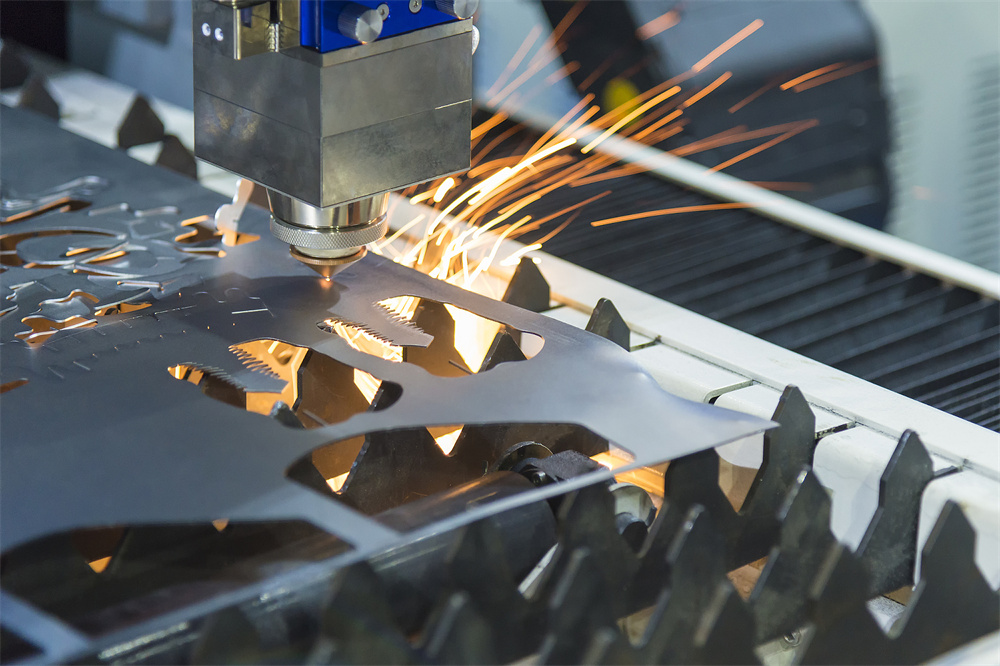
The technical superiority of fiber laser cutting lies in the beam quality and power density. A fiber laser generates a beam that is focused to a tiny spot size, allowing for extremely narrow kerf widths. This precision enables the cutting of intricate geometries, small holes, and tight radii that are simply impossible to achieve with plasma technology. The Wykrawarka laserowa uses a high-intensity light source that melts the material instantly, resulting in a smooth, clean edge that often requires no further processing.
Heat management is another technical advantage. Plasma cutting involves a high-temperature plasma arc that creates a wide heat-affected zone. This heat can cause warping in thinner materials, leading to scrap parts and wasted material. Fiber lasers, due to their speed and concentrated energy, minimize the heat input into the surrounding metal. This results in parts that remain flat and dimensionally accurate, which is essential for precision assembly and robotic welding applications.
The speed of the process is perhaps the most visible technical improvement. In our case study, the fabricator noted that the fiber laser was able to cut 6mm mild steel at speeds three to four times faster than their previous plasma system. This increase in throughput allows the shop to take on more work without increasing their floor space or headcount. The efficiency gains are compounded by the software integration, where nesting algorithms optimize material usage, reducing waste by up to 15%.
Furthermore, the reliability of fiber laser sources has reached a point where downtime is significantly reduced. Unlike plasma systems that require constant calibration of the arc voltage and gas pressure, fiber lasers are highly stable. The digital control systems allow for precise adjustments in real-time, ensuring that every part cut is identical to the first. This consistency is the hallmark of a professional Sprzęt do obróbki metali setup and is vital for maintaining high-quality standards for end-users.
Selection Advice: Choosing the Right Laser System
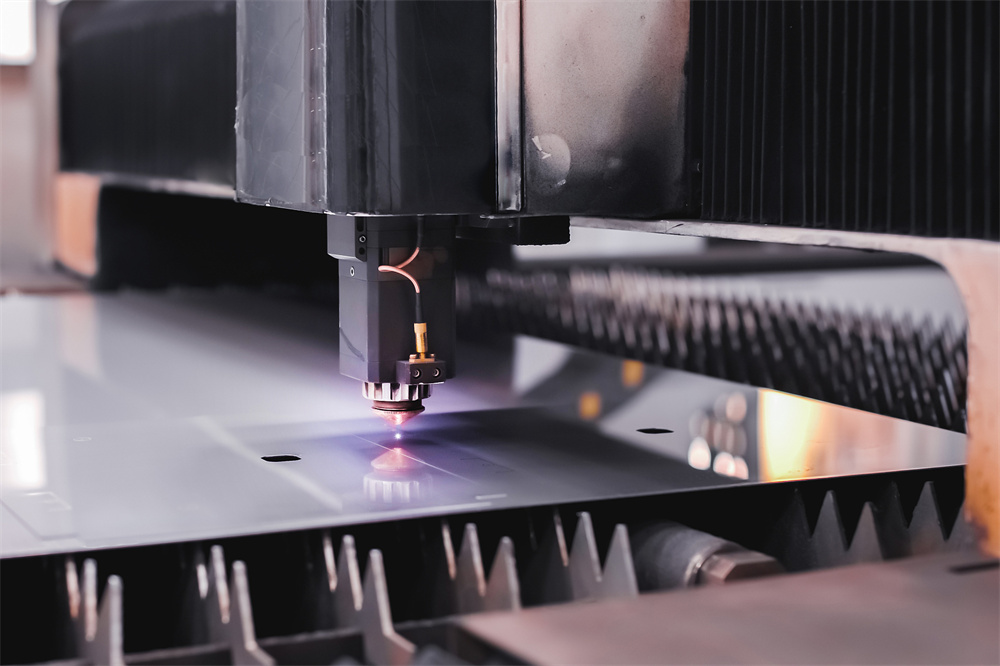
When selecting a Wykrawarka laserowa, the power output is the most critical specification. For most general fabrication shops, a 3kW to 6kW fiber laser provides the best balance between speed, material thickness capacity, and energy consumption. Higher power levels (10kW+) are available for shops specializing in heavy plate, but they come with a higher initial investment and increased utility costs. It is essential to match the machine power to the specific needs of your product portfolio.
The bed size is another factor that dictates the machine’s versatility. Standard 1.5m x 3m (5ft x 10ft) tables are the industry norm, but many fabricators benefit from larger formats or shuttle table systems. A shuttle table allows the operator to load and unload material on one side while the machine is cutting on the other, effectively eliminating downtime between sheets. This feature is a game-changer for shops aiming for faster delivery times.
Software compatibility should never be overlooked. The best laser machine is only as good as the CAM software driving it. Look for systems that offer advanced nesting, common-line cutting, and easy integration with ERP systems. HARSLE provides comprehensive software support, ensuring that the transition from design to finished part is seamless and error-free. The ability to import CAD files directly and generate optimized toolpaths is essential for modern production efficiency.
Finally, consider the manufacturer’s support network. A laser cutting machine is a long-term asset, and you need a partner who can provide training, spare parts, and technical support. Look for companies that offer remote diagnostics and local service technicians. Investing in a machine from a reputable brand like HARSLE ensures that your investment is protected and that your team is fully equipped to maximize the machine’s potential from day one.
FAQ: Common Questions About Upgrading
- Q: Is the electricity cost of a fiber laser higher than plasma?
A: While fiber lasers consume significant power, their efficiency is much higher than plasma systems. Because they cut much faster, the energy cost per part is often lower. - Q: How much training is required for operators?
A: Modern CNC laser systems are user-friendly. Most operators can become proficient in a few days, especially if they have prior experience with CNC machinery. - Q: Can I cut non-ferrous metals with a fiber laser?
A: Yes, fiber lasers are excellent for cutting stainless steel, aluminum, brass, and copper, often with better results than plasma. - Q: What is the typical lifespan of a fiber laser source?
A: High-quality fiber laser sources are designed for 100,000 hours of operation, making them one of the most reliable components in a fabrication shop. - Q: Does laser cutting eliminate the need for secondary finishing?
A: In most cases, yes. The edge quality is high enough that parts can go directly to welding or powder coating, significantly reducing lead times.
Conclusion: The Future of Your Fabrication Shop
The decision to upgrade from plasma to fiber laser cutting is a strategic move that pays dividends in quality, speed, and customer satisfaction. As demonstrated in this Case Study On Upgrading From Plasma Laser Cutting Better Edge Quality Faster Delivery, the shift allows fabricators to move away from labor-intensive processes and toward a high-efficiency, automated future. By investing in a HARSLE Wykrawarka laserowa, you are not just purchasing hardware; you are upgrading your business’s capability to compete in a global market.
The benefits are clear: cleaner edges, faster production, lower consumable costs, and the ability to handle complex designs with ease. While the initial investment is significant, the ROI is realized through reduced labor costs, increased throughput, and the ability to command higher prices for superior quality parts. For any shop looking to scale, the transition to fiber laser technology is the logical next step in their growth journey.
As you evaluate your current equipment, consider the long-term impact of staying with legacy technology versus embracing the precision of fiber lasers. The industry is moving toward higher standards, and those who adapt early will lead the market. HARSLE remains committed to providing the Sprzęt do obróbki metali and support necessary to help your business thrive in this new era of manufacturing excellence.


