
How a Press Brake Helped a Fabricator Handle Complex Multi-Angle Bending Parts: A HARSLE Case Study


Introduction: The Challenge of Modern Metal Fabrication
In the rapidly evolving world of metal fabrication, the demand for intricate, multi-angle components has never been higher. Fabricators are constantly pushed to deliver parts that require multiple bends, varying angles, and tight tolerances, all while maintaining high production speeds. For many shops, the bottleneck often lies in the bending process. When a project requires complex geometries, manual adjustments and outdated machinery can lead to significant scrap rates and extended lead times. This is where the integration of advanced CNC technology changes the game.
We recently worked with a mid-sized fabrication shop that was struggling to keep up with orders for custom architectural panels and complex chassis components. Their existing equipment lacked the precision and automation required for multi-angle bending, leading to inconsistent results and operator fatigue. By upgrading to a high-performance HARSLE hydraulic press brake, they were able to transform their workflow. This article explores how a press brake helped a fabricator handle complex multi-angle bending parts and why modern technology is the key to staying competitive.
The transition from manual or semi-automatic bending to a fully integrated CNC press brake system is more than just a hardware upgrade; it is a shift in operational philosophy. By leveraging advanced software and high-precision hydraulic systems, fabricators can now simulate bends before a single piece of metal is touched. This reduces the trial-and-error phase that often plagues complex projects, allowing shops to handle intricate designs with confidence and repeatability.
Throughout this guide, we will examine the technical requirements for multi-angle bending, the specific features that make a difference in production, and how HARSLE equipment provides the reliability needed for high-stakes manufacturing. Whether you are a shop owner looking to expand your capabilities or an engineer seeking to optimize your production line, understanding the role of the press brake is essential for success in today’s market.

Key Considerations for Complex Bending Projects
When approaching a project that involves complex multi-angle bending, the first consideration is material behavior. Different metals, such as stainless steel, aluminum, and high-strength carbon steel, react differently under pressure. Springback is a significant factor in multi-angle parts; as the metal is bent, it tends to return slightly toward its original shape. A high-quality press brake must have the capability to compensate for this springback automatically, ensuring that every angle is accurate to the degree.
Another critical factor is the sequence of operations. In multi-angle parts, the order in which bends are performed is vital to prevent collisions between the workpiece and the machine frame or tooling. Advanced CNC controllers allow operators to visualize the bending sequence in 3D, identifying potential interference points before the bending begins. This capability is a cornerstone of how a press brake helped a fabricator handle complex multi-angle bending parts, as it eliminates the risk of damaging expensive materials during the setup phase.
Tooling selection is equally important. For complex parts, standard V-dies are often insufficient. Fabricators must consider specialized tooling, such as gooseneck punches or multi-V dies, to accommodate tight bends and complex flange geometries. The ability to quickly change tooling is also a factor in overall efficiency. Quick-change clamping systems reduce downtime, allowing the operator to switch between different bending configurations without losing valuable production time.
Finally, the human element cannot be ignored. Even with advanced automation, the operator’s skill in setting up the machine and monitoring the process is crucial. Training staff to utilize the full potential of the CNC controller—including features like crowning compensation and multi-axis backgauge positioning—is essential. By investing in both the machine and the operator’s expertise, fabricators can achieve a level of consistency that was previously impossible.
Technical Details: How Modern Press Brakes Achieve Precision
The heart of a modern press brake is its hydraulic and control system. HARSLE press brakes utilize high-precision proportional valves that allow for extremely accurate control over the ram’s position and speed. This level of control is necessary for multi-angle bending, where the ram must stop at precise depths to achieve the desired angle. The integration of linear encoders ensures that the ram position is monitored in real-time, providing feedback to the controller to make micro-adjustments during the bending cycle.
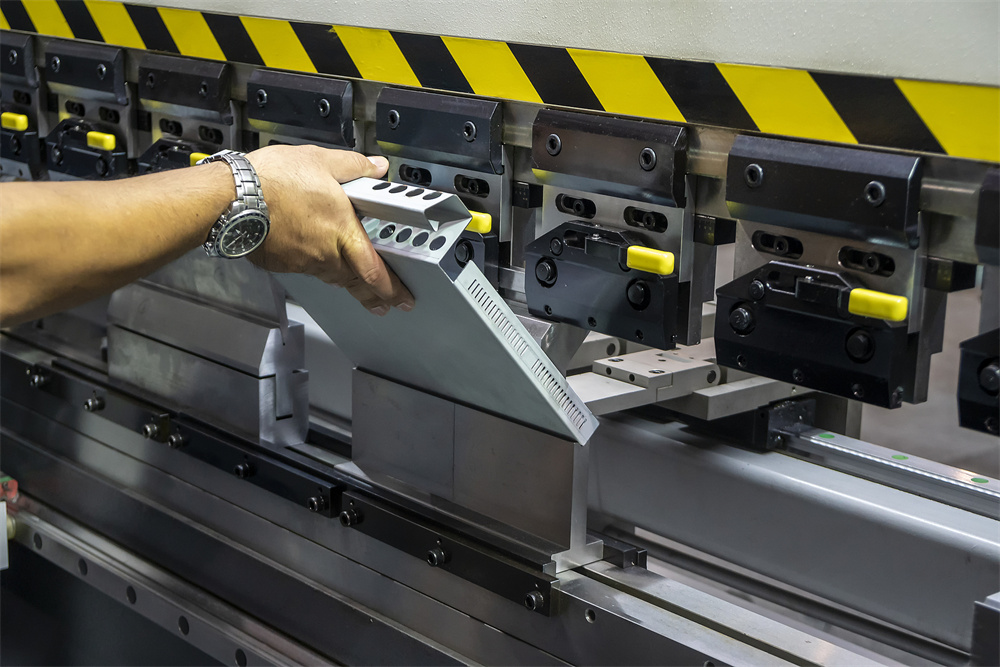
The backgauge system is another critical technical component. For complex parts, a multi-axis backgauge (often 4-axis or 6-axis) allows the machine to position the workpiece precisely for every bend. This is particularly important when the part needs to be rotated or flipped between bends. By automating the backgauge position, the machine ensures that the flange lengths are consistent across the entire production run, regardless of the operator’s manual input.
Crowning systems are also vital for maintaining accuracy across the length of the bend. As the press brake applies force, the machine frame and the bed can deflect slightly. An active hydraulic crowning system compensates for this deflection by adjusting the bed shape to match the punch, ensuring a uniform bend angle from one end of the workpiece to the other. This is a non-negotiable feature for fabricators dealing with long, complex parts that require high aesthetic and structural standards.
Software integration completes the technical picture. Modern CNC controllers, such as those found on HARSLE machines, allow for the import of 3D CAD files directly into the machine’s memory. The software automatically calculates the bend sequence, identifies potential collisions, and suggests the optimal tooling setup. This digital workflow is the primary reason why a press brake helped a fabricator handle complex multi-angle bending parts, as it bridges the gap between design and reality with minimal human error.
Selection Advice: Choosing the Right Equipment for Your Shop
When selecting a press brake for complex multi-angle work, start by evaluating your typical part size and material thickness. It is tempting to buy the largest machine available, but a machine that is too large for your average part can be inefficient and difficult to set up. Focus on the tonnage and bed length that covers 90% of your current and projected work. If you occasionally handle larger parts, consider the flexibility of the machine’s design rather than just raw power.
Look for a machine with a robust, stress-relieved frame. The structural integrity of the press brake is the foundation of its accuracy. A frame that flexes under load will result in inconsistent bends, no matter how advanced the electronics are. HARSLE machines are built with heavy-duty steel frames designed to withstand years of high-pressure operation, ensuring that the precision you have on day one remains consistent for years to come.
Consider the level of automation you need. If you are doing high-volume production, an automated tool changer or a robotic bending cell might be the right investment. However, for job shops that handle a high mix of low-volume parts, a flexible CNC controller with quick-change tooling is often more cost-effective. The goal is to minimize setup time, which is the biggest cost driver in multi-angle fabrication.
Finally, prioritize support and service. A press brake is a long-term investment. Ensure that the manufacturer or supplier offers comprehensive training, readily available spare parts, and responsive technical support. Knowing that you have a partner who can help you troubleshoot complex bending issues is just as important as the machine’s technical specifications. HARSLE prides itself on providing end-to-end support, ensuring that our clients get the most out of their equipment.
FAQ: Common Questions About Multi-Angle Bending
- Q: How does a press brake handle springback in multi-angle parts?
A: Modern press brakes use CNC controllers that store material databases. By inputting the material type and thickness, the machine automatically calculates the necessary over-bend to compensate for springback, ensuring the final angle is correct. - Q: Can I bend complex parts without 3D software?
A: While possible, it is significantly slower and prone to error. Using 3D CAD/CAM software allows you to simulate the bending process, which is essential for complex parts to avoid collisions and ensure the sequence is efficient. - Q: What is the benefit of a multi-axis backgauge?
A: A multi-axis backgauge allows for precise positioning of the workpiece in multiple dimensions. This is critical for parts with complex geometries where the part must be moved or rotated between bends to achieve the desired shape. - Q: How often should I perform maintenance on my press brake?
A: Routine maintenance should be performed according to the manufacturer’s schedule, typically involving hydraulic oil checks, filter replacements, and cleaning of the backgauge rails. Regular maintenance is key to maintaining the precision required for complex bending. - Q: Is it worth upgrading to a CNC press brake for a small shop?
A: Absolutely. The increase in productivity, reduction in scrap, and ability to take on more complex, higher-margin jobs often lead to a rapid return on investment, even for smaller fabrication shops.
Conclusion: Investing in the Future of Fabrication
The story of how a press brake helped a fabricator handle complex multi-angle bending parts is a testament to the power of modern technology in the metal fabrication industry. By moving away from outdated, manual methods and embracing the precision of CNC-controlled hydraulic press brakes, fabricators can unlock new levels of efficiency, quality, and profitability. The ability to handle complex geometries is no longer a niche skill but a standard requirement for shops that want to remain competitive.
As we have explored, the success of these projects relies on a combination of high-quality hardware, intelligent software, and a commitment to proper setup and maintenance. HARSLE is dedicated to providing the tools and support necessary for fabricators to push the boundaries of what is possible. Whether you are bending simple brackets or complex, multi-angle architectural components, the right press brake is the most important asset in your shop.
If you are ready to upgrade your fabrication capabilities, consider the long-term benefits of investing in a HARSLE press brake. Our machines are designed to meet the rigorous demands of modern industry, providing the reliability and precision you need to tackle any project. Contact our team today to learn more about our range of press brakes and how we can help you streamline your production process and achieve superior results in every bend.












