
How to Match Punching Machine Power Requirements to Your Fabrication Job


Technical Overview: Understanding Punching Machine Power
In the precision-driven world of metal fabrication, the ability to match punching machine power requirements to your fabrication job is the difference between a seamless production line and costly equipment failure. A punching machine is not merely a tool; it is a high-force hydraulic or mechanical system designed to shear through metal with extreme accuracy. When we discuss ‘power’ in this context, we are primarily referring to the nominal tonnage capacity of the machine, which dictates the maximum force the ram can exert during the punching cycle.
HARSLE punching machines are engineered to handle a diverse range of materials, from thin-gauge aluminum to thick structural steel plates. However, applying a machine that is underpowered for a specific task leads to excessive strain on the hydraulic pumps, premature wear of the punch and die sets, and potential structural damage to the machine frame. Conversely, selecting an excessively powerful machine for light-duty work results in unnecessary energy consumption and higher capital expenditure.
The fundamental principle of punching power lies in the relationship between the material’s shear strength, the perimeter of the hole being punched, and the thickness of the workpiece. As the material thickness increases, the force required to penetrate it grows exponentially. Understanding these physics is essential for any fabrication shop manager or engineer looking to optimize their workflow and ensure the longevity of their HARSLE equipment.
Furthermore, modern punching technology integrates advanced control systems that monitor force distribution. By understanding how to match punching machine power requirements to your fabrication job, you can leverage these control systems to improve precision. This guide will walk you through the technical parameters, mathematical calculations, and strategic checklists required to make an informed investment in your fabrication capabilities.
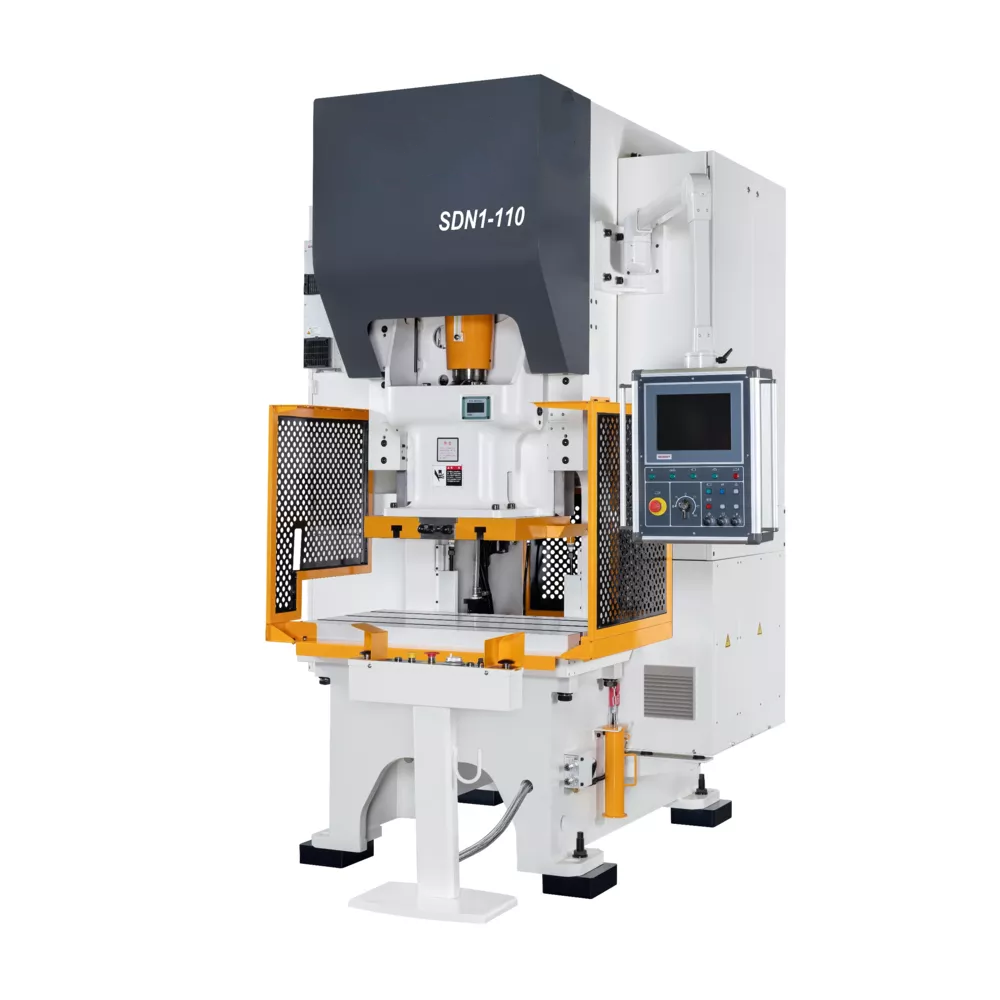
Core Parameters for Punching Force
To accurately determine the power requirements for your fabrication tasks, you must first identify the core parameters that influence the punching process. The most critical factor is the material type. Different metals possess varying shear strengths; for example, low-carbon steel requires significantly less force than high-tensile stainless steel or hardened alloys. Knowing the specific shear strength (measured in N/mm² or PSI) of your material is the starting point for all calculations.
The second parameter is the material thickness. The force required is directly proportional to the thickness of the sheet or plate. A thicker material requires a longer duration of force application and a higher peak tonnage to achieve a clean shear. If the material is too thick for the machine’s capacity, the punch may fail to penetrate fully, leading to ‘slug pulling’ or excessive burr formation, which compromises the quality of the finished part.
The third parameter is the perimeter of the hole or shape being punched. The total force required is a function of the length of the shear line. A circular hole has a perimeter defined by its circumference (π × diameter), while complex shapes require calculating the total length of all edges. The longer the perimeter, the more force is required to overcome the material’s resistance across that entire length simultaneously.
Finally, consider the clearance between the punch and the die. While clearance does not change the theoretical force required to shear the material, improper clearance can significantly increase the friction and stress on the machine. A well-maintained HARSLE punching machine with the correct clearance settings ensures that the power is utilized efficiently, reducing the risk of machine overload and extending the life of your tooling.
Calculation Method: Determining Tonnage
Calculating the required tonnage is a straightforward engineering process that prevents the common pitfall of machine overloading. The basic formula for calculating punching force (P) is: P = L × T × S, where ‘L’ is the perimeter of the hole, ‘T’ is the material thickness, and ‘S’ is the shear strength of the material. It is vital to ensure that all units are consistent—typically using millimeters for dimensions and Newtons per square millimeter (N/mm²) for shear strength.
Let’s break down the calculation with an example. If you are punching a 50mm diameter hole in a 5mm thick mild steel plate with a shear strength of approximately 350 N/mm², the perimeter (L) is 3.14 × 50 = 157mm. The force required would be 157mm × 5mm × 350 N/mm² = 274,750 Newtons. To convert this to metric tons, divide by 9,807 (the force of gravity). In this case, you would need approximately 28 tons of force.
However, you should never operate a machine at its absolute maximum capacity for every cycle. It is standard engineering practice to include a safety factor of at least 20-30%. This accounts for potential dulling of the punch, variations in material hardness, and the need for smooth operation. Therefore, for a 28-ton requirement, you should look for a machine with a capacity of at least 35 to 40 tons to ensure reliability and consistent performance.
Additionally, consider the use of shear angles on the punch face. By grinding a shear angle into the punch, you can reduce the peak force required because the material is sheared progressively rather than all at once. This is an excellent technique for high-tonnage jobs that might otherwise exceed the capacity of your existing machinery. Always consult your HARSLE technical manual when implementing custom tooling modifications to ensure they align with the machine’s structural limits.
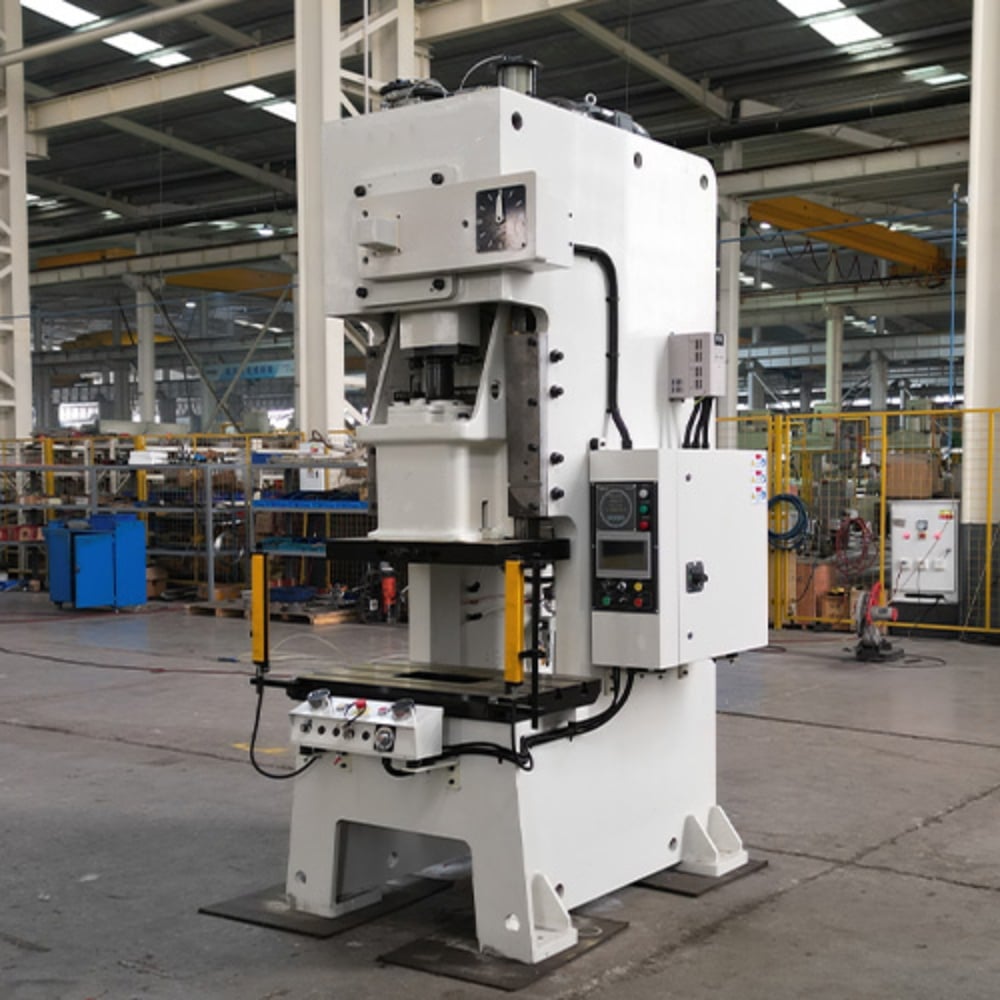
Parameter Table: Material and Force Reference
The following table provides a quick reference for estimating force requirements based on common materials. Please note that these are approximations; always verify the specific shear strength of your material with the supplier’s data sheet before finalizing your machine selection.
| Material Type | Approx. Shear Strength (N/mm²) | Thickness Factor | Recommended Safety Margin |
|---|---|---|---|
| Mild Steel | 350 | 1.0 | 20% |
| Stainless Steel (304) | 550 | 1.2 | 25% |
| Aluminum (5052) | 200 | 0.8 | 15% |
| Copper | 250 | 0.9 | 20% |
| Brass | 300 | 0.9 | 20% |
When using this table, remember that the ‘Thickness Factor’ is a multiplier for the base force calculation. For instance, if you are working with stainless steel, you must account for its higher work-hardening rate and shear strength, which necessitates a higher tonnage capacity compared to mild steel of the same thickness. The safety margin is your buffer against unexpected material inconsistencies or tool wear.
HARSLE machines are designed with these variables in mind. Our hydraulic systems provide consistent pressure throughout the stroke, ensuring that even when working with tougher materials, the machine maintains the necessary force without stalling. Always keep a log of the materials you process most frequently to help your maintenance team calibrate the machine’s pressure settings for optimal efficiency.
Common Engineering Mistakes
One of the most frequent mistakes in metal fabrication is ignoring the impact of tool dullness on power requirements. As a punch and die set begin to wear, the force required to penetrate the material increases significantly. A dull punch creates more friction and requires more tonnage to achieve the same result as a sharp one. Many operators mistakenly assume their machine is losing power when, in reality, they simply need to sharpen or replace their tooling.
Another common error is failing to account for the ‘stripping force.’ After the punch penetrates the material, it must be retracted. The force required to pull the punch out of the material—the stripping force—is often overlooked. While it is generally a fraction of the punching force, it can become significant when working with thick, sticky materials or when using tight-tolerance dies. Ensure your machine has sufficient stripping capacity to prevent the punch from getting stuck.
Overestimating the machine’s duty cycle is another pitfall. Even if a machine has the tonnage to punch a specific hole, it may not be designed to do so continuously at high speeds. If your fabrication job involves high-volume production, you must consider the thermal limits of the hydraulic oil and the wear rate of the mechanical components. HARSLE provides duty cycle ratings for all our machines; exceeding these will lead to overheating and premature component failure.
Finally, neglecting the setup of the die clearance is a critical oversight. If the clearance is too small, the punch will experience excessive side-loading, which can lead to catastrophic tool breakage and damage to the machine’s ram guides. If the clearance is too large, the material will bend into the die rather than shearing cleanly, resulting in poor edge quality and increased force requirements. Always use a feeler gauge to verify clearance before starting a production run.
Selection Checklist: Choosing the Right Machine
When you are ready to invest in a new HARSLE punching machine, use this checklist to ensure you match the power requirements to your specific fabrication job:
- Define your maximum material thickness: Identify the thickest plate you will realistically process in the next 3-5 years.
- Identify the material types: List all materials you will be punching, noting their shear strengths.
- Calculate the maximum perimeter: Determine the largest hole or shape you need to punch.
- Apply the safety factor: Add at least 20% to your calculated tonnage to ensure the machine operates within its comfort zone.
- Evaluate production volume: Determine if you need a high-speed automated system or a robust, manual-load machine.
- Check tool compatibility: Ensure the machine’s tool holder and ram design support the types of punches and dies you intend to use.
- Assess future-proofing: Consider if your business will move toward thicker materials or more complex shapes in the future.
- Consult HARSLE experts: Reach out to our technical support team with your specific requirements for a tailored recommendation.
By following this checklist, you move beyond guesswork and into data-driven decision-making. A machine selected with these criteria in mind will provide years of reliable service, high-quality output, and a superior return on investment. HARSLE is committed to helping you find the perfect balance between power, precision, and cost-effectiveness.
FAQ: Frequently Asked Questions
Q: Can I exceed the rated tonnage of my HARSLE punching machine for a single job?
A: No. Exceeding the rated tonnage can cause permanent damage to the machine frame, hydraulic seals, and ram guides. Always stay within the manufacturer’s specified limits to ensure safety and machine longevity.
Q: How often should I sharpen my punches to maintain efficiency?
A: The frequency depends on the material type and volume. As a rule of thumb, monitor the edge quality of your parts. If you notice increased burrs or a rise in the required punching force, it is time to sharpen your tooling.
Q: Does the speed of the punch affect the power requirement?
A: While the theoretical force remains the same, higher speeds can increase the impact load on the machine. HARSLE machines are designed to handle standard operating speeds, but ensure your hydraulic system is properly maintained to handle the flow requirements at higher speeds.
Q: What is the benefit of using a hydraulic punching machine over a mechanical one?
A: Hydraulic machines offer more control over the stroke, allowing for features like adjustable pressure, dwell time, and safer operation. They are generally more versatile for a wide range of material thicknesses compared to mechanical presses.
Q: How do I know if my clearance is set correctly?
A: A clean, shiny shear band on the edge of the hole is a sign of correct clearance. If the hole has a large ‘breakout’ or ‘roll-over’ area, your clearance is likely incorrect. Refer to your HARSLE manual for specific clearance charts based on material thickness.












