Press Brake Price 2026: Features, Costs, and Buying Tips


Press Brake Price 2026: Features, Costs, and Buying Tips
As we move into 2026, the landscape of metal fabrication is undergoing a significant transformation driven by automation, energy efficiency, and precision requirements. For shop owners and procurement managers, understanding the Press Brake Price 2026: Features, Costs, and Buying Tips is essential for maintaining a competitive edge. Investing in a press brake is a long-term capital expenditure that impacts your production capacity, labor costs, and overall profitability for the next decade.
In this guide, we will break down the current market trends, the technical specifications that drive pricing, and the hidden factors that often catch buyers off guard. Whether you are looking for an entry-level hydraulic machine or a high-end electric servo-driven system, this guide provides the clarity needed to make an informed decision.
Price Range Overview
The cost of a press brake in 2026 varies drastically based on tonnage, bending length, and the level of CNC integration. For small-scale workshops, entry-level hydraulic press brakes with basic NC controllers typically range from $15,000 to $35,000. These machines are robust and reliable for standard bending tasks but lack the high-speed automation found in more advanced models.
Mid-range machines, which represent the bulk of the industrial market, generally fall between $40,000 and $90,000. These units often feature 3-axis to 6-axis backgauges, advanced CNC controllers like Delem or Cybelec, and integrated safety systems. They are designed for high-mix, low-volume production environments where quick setup times are critical.
High-end, fully automated electric press brakes or large-tonnage tandem systems can exceed $150,000 to $300,000. These machines are engineered for high-speed, high-precision aerospace, automotive, or heavy industrial applications. They offer superior energy efficiency, reduced maintenance intervals, and seamless integration with robotic loading and unloading systems.

Main Cost Drivers
The primary driver of the Press Brake Price 2026: Features, Costs, and Buying Tips is the machine’s tonnage and bending length. Tonnage determines the thickness and material type you can bend, while the length dictates the maximum size of the sheet. Increasing these parameters requires a heavier, more rigid frame, which directly increases the manufacturing cost and shipping logistics.
Controller sophistication is another major factor. A basic NC controller handles simple depth and backgauge positioning, while a high-end 3D graphical CNC controller allows for offline programming, collision detection, and automatic bend sequence calculation. The software ecosystem surrounding the machine—such as CAD/CAM integration—adds significant value and cost.
The drive system—hydraulic versus electric—is a critical differentiator in 2026. Hydraulic systems are traditional and cost-effective for heavy-duty bending, but electric servo-driven press brakes are gaining popularity due to their speed, accuracy, and energy savings. While the initial investment for electric machines is higher, the total cost of ownership is often lower over the machine’s lifespan.
Configuration Impact
Customization is where the price can fluctuate significantly. Adding axes to the backgauge (e.g., moving from a 2-axis to a 6-axis system) allows for complex part geometries but increases the complexity of the machine. Each additional axis requires dedicated motors, drives, and software support, which adds to the final price tag.
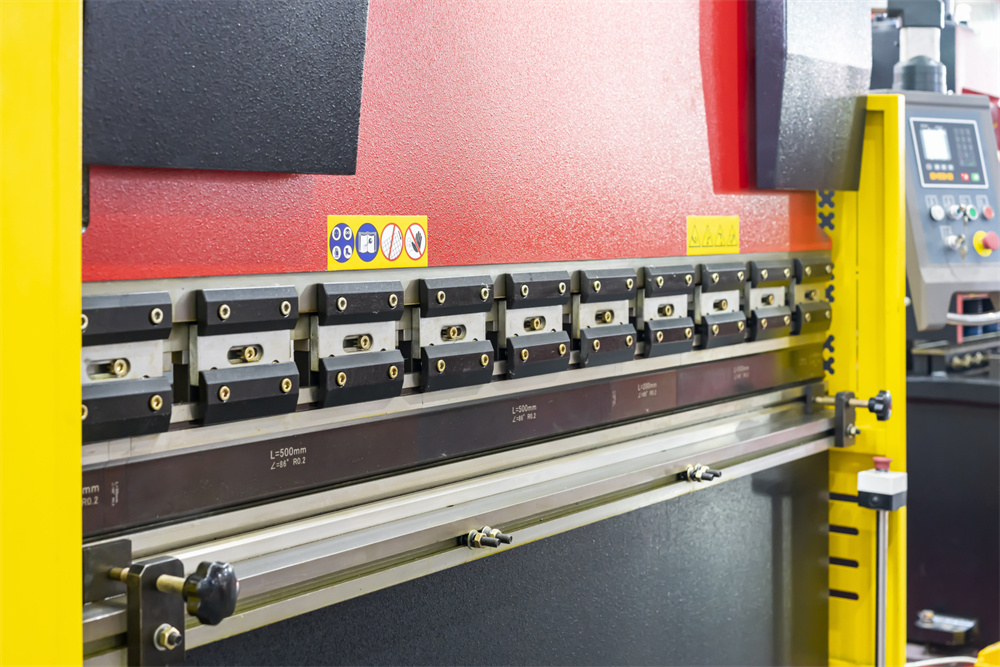
Tooling systems also play a vital role. Hydraulic clamping systems for top and bottom tools significantly reduce setup times compared to manual clamping. In 2026, many shops are opting for quick-change tooling systems to handle frequent job changes. While these systems represent an upfront cost, they drastically improve throughput, which is essential for high-mix production.
Safety features are non-negotiable in modern fabrication. Laser light curtains, safety mats, and integrated camera-based monitoring systems are standard on high-end machines. Investing in these features not only protects your operators but also reduces insurance premiums and potential downtime caused by workplace accidents.
Hidden Costs: Beyond the Sticker Price
When budgeting for a press brake, many buyers focus solely on the machine’s sticker price, ignoring the “hidden” costs that arise during installation and operation. Shipping, rigging, and professional installation are often separate line items that can add thousands of dollars to the total project cost. For international shipments, customs duties and local logistics can add another 5-10% to the total budget.
Foundation requirements are frequently overlooked. High-tonnage machines require a reinforced concrete slab to ensure stability and precision. If your current shop floor does not meet these specifications, the cost of site preparation—including concrete pouring and leveling—can be substantial. Additionally, electrical upgrades to handle the power requirements of a new machine should be factored into your budget, especially if you are transitioning from a smaller shop to a high-output facility.
Maintenance and training are ongoing expenses. You must account for the cost of regular hydraulic oil changes, filter replacements, and software updates. Furthermore, training your operators to use advanced CNC controllers effectively is an investment that pays off in reduced scrap rates and faster production cycles. Neglecting operator training often leads to “hidden” costs in the form of wasted material and machine idle time.
ROI Calculation: Making the Business Case
Calculating the Return on Investment (ROI) for a press brake involves more than just looking at the purchase price. You must consider the increase in production capacity, the reduction in labor hours per part, and the improvement in part quality. A machine that reduces setup time by 50% can pay for itself within a few years through increased throughput.
Consider the energy savings of modern servo-electric machines. By consuming power only when the ram is moving, these machines can reduce electricity costs by up to 40% compared to traditional hydraulic machines that run a pump continuously. Over a 5-year period, these savings can be significant, especially in regions with high energy costs.
Finally, evaluate the impact on scrap rates. A high-precision machine with automatic crowning and angle measurement systems ensures that the first part is a good part. Reducing scrap not only saves material costs but also saves the time and labor associated with re-running failed parts. In 2026, the ability to achieve “first-part-right” production is the most significant factor in maintaining high profit margins.
Buying Advice: Strategic Procurement
Before purchasing, define your current and future production needs. Don’t buy a machine that is too small for your future growth, but avoid over-specifying if you don’t need the extra tonnage. Consult with HARSLE experts to analyze your typical part geometries and material thicknesses to select the right configuration. A common mistake is buying a machine based on current needs without considering the potential for thicker materials or more complex bends in the next three years.
Always request a demonstration or a visit to a facility using the machine you are considering. Seeing the machine in action allows you to evaluate the user interface, the speed of the backgauge, and the overall build quality. Ask about the manufacturer’s support network—availability of spare parts and local service technicians is crucial for minimizing downtime. In 2026, remote diagnostics capabilities are a must-have; ensure your machine can be connected to the manufacturer’s support team for instant troubleshooting.
Lastly, consider the financing options available. Many manufacturers offer leasing programs that allow you to spread the cost of the machine over several years, preserving your cash flow for other operational needs. Review the warranty terms carefully, as a comprehensive warranty can provide peace of mind during the initial years of operation. Look for “all-inclusive” service packages that cover both parts and labor for the first 24 months.
Technical Maintenance Guidance
To ensure your press brake retains its value and performance, a strict maintenance schedule is required. Daily checks should include inspecting the tooling for wear, cleaning the backgauge rails, and checking for hydraulic leaks. Weekly, you should verify the accuracy of the crowning system and ensure all safety sensors are functioning correctly. Monthly, perform a full system diagnostic using the CNC controller’s built-in maintenance software. By adhering to these protocols, you extend the machine’s life and ensure that your 2026 investment remains a high-performing asset for years to come.
FAQ
- What is the average lifespan of a modern press brake? With proper maintenance, a high-quality press brake can last 15 to 20 years or more.
- Are electric press brakes better than hydraulic ones? Electric machines are faster, more accurate, and energy-efficient, but hydraulic machines remain the standard for very high-tonnage applications.
- How often should I calibrate my press brake? Calibration should be performed annually or whenever you notice a decline in bending accuracy.
- Can I use old tooling on a new press brake? While possible with adapters, it is generally recommended to use new, high-precision tooling to match the capabilities of a modern machine.
- What is the most important feature to look for in 2026? The CNC controller’s ability to integrate with your existing CAD/CAM software is arguably the most critical feature for modern efficiency.
- How does automation affect the price? Adding robotic loading/unloading can double the price of a standard press brake, but it often triples the production output, making it a viable investment for high-volume shops.