How Hydraulic System Design Affects Shearing Machine Performance: A Technical Deep Dive


Technical Overview: The Heart of the Shearing Machine
In the realm of metal fabrication, the shearing machine stands as a cornerstone of production efficiency. At the core of every high-performance shear lies the hydraulic system, a complex network of pumps, valves, cylinders, and fluid conduits that translate mechanical energy into precise cutting force. Understanding how hydraulic system design affects shearing machine performance is essential for engineers and shop floor managers who demand consistency, speed, and longevity from their equipment.
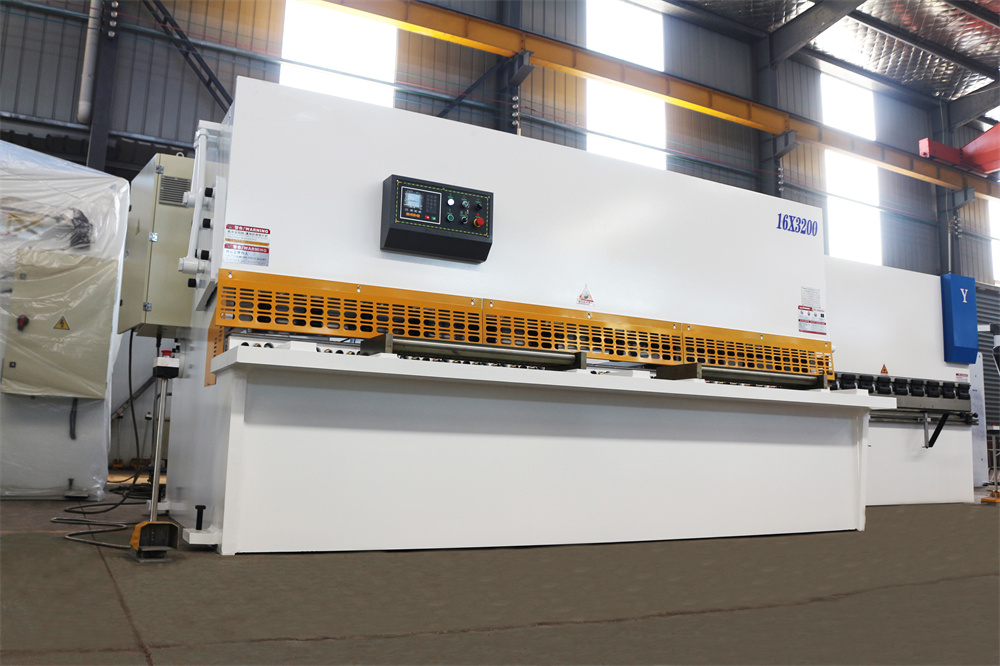
The hydraulic system is responsible for the entire cutting cycle: from the rapid approach of the upper blade to the high-pressure shearing phase and the subsequent return stroke. A well-engineered system ensures that the force is distributed evenly across the blade length, preventing deflection and ensuring a clean, burr-free edge on the workpiece. HARSLE utilizes advanced hydraulic architectures to minimize energy loss and maximize cycle times, ensuring that the machine remains productive under heavy industrial loads.
When we analyze the hydraulic architecture, we look at the integration of the manifold block. Modern shearing machines utilize compact, integrated valve blocks that reduce the length of piping. This design choice is critical because shorter piping reduces pressure drops and minimizes the risk of leaks—a common failure point in older, poorly designed systems. By optimizing the fluid path, the system achieves faster response times, which directly translates to higher strokes per minute (SPM).
Furthermore, the thermal management of the hydraulic fluid is a vital aspect of the design. As the system operates, friction and pressure drops generate heat. If the hydraulic system design is inefficient, the oil temperature rises, leading to a decrease in viscosity. This thinning of the fluid can cause internal leakage within the cylinders and valves, significantly degrading the machine’s shearing accuracy. HARSLE’s design philosophy incorporates high-efficiency cooling systems to maintain optimal operating temperatures, ensuring consistent performance throughout long shifts.

Core Parameters Influencing Shearing Performance
Several core parameters dictate the effectiveness of a hydraulic shearing machine. The first is system pressure, which must be precisely calibrated to the machine’s maximum cutting capacity. If the pressure is too low, the shear will stall or produce jagged edges; if it is too high, it places unnecessary stress on the seals and structural components, leading to premature failure. Balancing this pressure is the primary objective of hydraulic system design.
Flow rate is the second critical parameter. The flow rate determines the speed of the shearing stroke. In high-volume production environments, the ability to cycle the blade quickly is paramount. However, high flow rates must be managed with proportional valves to ensure that the blade movement remains smooth and controlled. Sudden pressure spikes, often called “water hammer” effects, can damage the hydraulic components if the flow is not managed with sophisticated damping circuits.
The synchronization of the cylinders is another vital design element. Most industrial shearing machines utilize two or more hydraulic cylinders to drive the upper blade beam. If the hydraulic system design does not ensure perfect synchronization, the beam will tilt, leading to blade gap misalignment. This misalignment is the leading cause of poor cut quality and blade damage. HARSLE employs closed-loop feedback systems to ensure that the cylinders move in perfect unison, regardless of the load distribution across the blade.
Finally, the filtration system is often overlooked but is arguably the most important parameter for long-term reliability. Hydraulic systems are sensitive to contamination. Even microscopic particles can score the internal surfaces of valves and cylinders. A robust design includes multi-stage filtration that captures contaminants before they can reach sensitive components. By maintaining fluid cleanliness, the machine retains its precision and force-delivery capabilities over many years of service.
Calculation Method for Hydraulic Force
To understand how hydraulic system design affects shearing machine performance, one must look at the fundamental calculations used to size the components. The primary formula for shearing force is F = P × A, where F is the force in Newtons, P is the pressure in Pascals, and A is the effective area of the cylinder piston. However, in a real-world shearing application, we must also account for the shear strength of the material being cut.
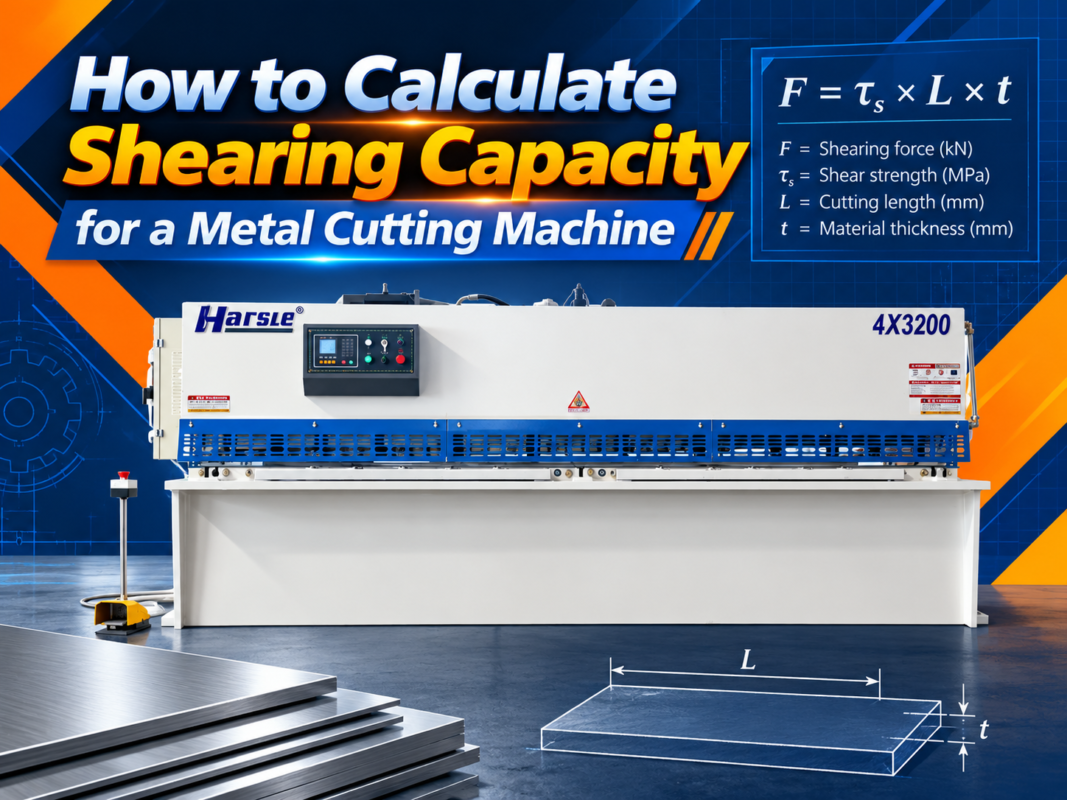
The required shearing force is calculated by multiplying the material’s shear strength by the cross-sectional area of the cut. For a plate of thickness ‘t’ and length ‘L’, the force required is F = L × t × τ, where τ is the shear strength of the material. The hydraulic system must be designed to provide this force with a safety margin, typically 15-20%, to account for blade dullness and variations in material hardness.
Engineers also calculate the required oil flow rate based on the desired cycle time. If the stroke length is ‘S’ and the target time for the stroke is ‘T’, the required flow rate ‘Q’ is calculated as Q = (A × S) / T. This calculation is essential for selecting the correct pump size. If the pump is undersized, the machine will be sluggish; if it is oversized, the system will consume excessive energy and generate unnecessary heat.
Finally, the accumulator sizing is a critical calculation for machines that require rapid bursts of energy. Accumulators store hydraulic energy during the idle phase and release it during the cut. By calculating the energy demand of the shearing stroke, engineers can size the accumulator to reduce the peak load on the pump, allowing for a smaller, more efficient motor while maintaining high-speed performance.
Parameter Table: Hydraulic System Specifications
| Parameter | Typical Range | Impact on Performance |
|---|---|---|
| System Pressure | 16 – 25 MPa | Determines maximum cutting thickness and force. |
| Flow Rate | 40 – 200 L/min | Controls the speed of the shearing cycle (SPM). |
| Filtration Rating | 10 – 25 Microns | Prevents valve clogging and extends component life. |
| Oil Temperature | 30 – 55 °C | Maintains viscosity for consistent pressure control. |
| Cylinder Synchronization | ± 0.05 mm | Ensures blade gap accuracy and cut quality. |
Common Engineering Mistakes in Hydraulic Design
One of the most common mistakes in hydraulic system design is the use of undersized piping. When fluid is forced through pipes that are too narrow, the velocity increases, leading to turbulent flow and significant pressure drops. This not only wastes energy but also creates heat, which degrades the hydraulic oil and damages seals. A professional design always prioritizes laminar flow through appropriately sized conduits.
Another frequent error is the improper placement of pressure relief valves. These valves are the primary safety mechanism of the system. If they are placed too far from the source of the pressure spike, they cannot react quickly enough to prevent damage. HARSLE ensures that relief valves are integrated directly into the manifold block, as close to the cylinders as possible, to provide instantaneous protection against over-pressurization.
Neglecting the aeration of the hydraulic fluid is also a significant oversight. If air enters the system, it becomes compressible, leading to “spongy” blade movement and inconsistent cutting force. This is often caused by poor reservoir design or leaks on the suction side of the pump. A well-designed system includes effective air breathers and ensures that the return lines are submerged below the oil level to prevent foaming.
Finally, failing to account for the duty cycle is a major mistake. A machine designed for intermittent use will fail quickly if placed in a high-production environment. The hydraulic system must be sized for the worst-case scenario—continuous operation at maximum capacity. This includes selecting high-quality seals, robust pumps, and oversized heat exchangers to ensure that the system can handle the thermal load of 24/7 production.
Selection Checklist for Buyers
When evaluating a shearing machine, the hydraulic system should be a primary focus. Use this checklist to ensure you are investing in a high-performance machine:
- Check the Manifold Design: Does the machine use a compact, integrated manifold, or is it a mess of hoses and fittings? Integrated blocks are more reliable.
- Verify Component Brands: Look for reputable hydraulic component manufacturers (e.g., Bosch Rexroth, Yuken). Quality components are the foundation of reliability.
- Assess Cooling Capacity: Does the machine have an active oil cooler? This is essential for machines that will run for more than 4 hours a day.
- Examine the Filtration System: Is the filter easily accessible for maintenance? Are there indicators that show when the filter needs changing?
- Test the Synchronization: Ask for a demonstration of the blade beam movement. It should be smooth and perfectly level throughout the entire stroke.
- Review Maintenance Documentation: A professional manufacturer will provide a clear schedule for hydraulic oil changes and filter replacements.
Frequently Asked Questions (FAQ)
How often should I change the hydraulic oil in my shearing machine?
Generally, hydraulic oil should be changed every 2,000 to 4,000 operating hours, or once a year, whichever comes first. However, if the oil shows signs of contamination or degradation, it should be replaced immediately.
Why does my shearing machine lose pressure during the cut?
Pressure loss is usually caused by internal leakage in the hydraulic cylinders or a faulty relief valve. It could also indicate that the pump is worn and can no longer maintain the required flow rate under load.
Can I use different types of hydraulic oil?
Always follow the manufacturer’s recommendations. Using the wrong viscosity can lead to pump cavitation or sluggish performance. HARSLE recommends specific ISO VG grades based on your local climate and machine specifications.
How does hydraulic system design affect shearing machine performance regarding noise?
A well-designed system uses high-quality, low-noise pumps and vibration-dampening mounts. If your machine is excessively noisy, it may indicate air in the system, pump cavitation, or loose mounting bolts.
Is it necessary to have an accumulator on my shearing machine?
Accumulators are highly recommended for high-speed shearing machines. They provide the necessary surge of power for the cut, allowing the pump to be smaller and more energy-efficient.