New vs Used Punching Machine Price Guide: Which Option Saves More?


Introduction to the Punching Machine Dilemma
In the competitive landscape of metal fabrication, the decision to invest in a punching machine is a pivotal moment for any workshop. Whether you are a startup looking to establish your first production line or an established manufacturer seeking to expand capacity, the question of New Vs Used Punching Machine Price : Which Option Saves More? is always at the forefront. On the surface, the lower sticker price of a used machine is incredibly tempting. However, the long-term financial health of a business depends on more than just the initial capital expenditure. It involves a complex calculation of operational efficiency, maintenance costs, technological longevity, and resale value.
HARSLE, a leader in metal fabrication machinery, understands that every dollar counts. A punching machine is the workhorse of the shop floor, responsible for creating precise holes, louvers, and forms in sheet metal at high speeds. Choosing between a brand-new unit with the latest CNC technology and a pre-owned veteran requires a deep dive into the total cost of ownership (TCO). This guide will break down the pricing structures, hidden risks, and strategic advantages of both options to help you determine which path truly saves more money in the long run.
Price Range Overview: New vs. Used
When evaluating the New Vs Used Punching Machine Price, it is essential to categorize the machines by their capabilities. Punching machines range from simple manual deep-throat presses to sophisticated high-speed CNC turret punch presses. The price gap between new and used equipment varies significantly across these categories.
Manual and Mechanical Punching Machines
For small-scale operations or specialized prototype work, manual or mechanical punching machines are often sufficient. A new manual punching machine might cost anywhere from $3,000 to $12,000 depending on the throat depth and tonnage. In the used market, these machines are incredibly durable and can often be found for $1,500 to $6,000. Because these machines have fewer electronic components, the risk of buying used is lower, making the used option a frequent winner for budget-conscious shops.
CNC Turret Punch Presses
The real debate begins with CNC turret punch presses. A new, entry-level CNC punching machine from a reputable manufacturer like HARSLE typically starts around $45,000 and can go up to $150,000 for mid-range models. High-end, fully automated systems with fiber laser integration or massive tool carousels can exceed $300,000. Conversely, a used CNC turret punch press that is 10 to 15 years old might be listed for $20,000 to $60,000. While the 50-70% discount is attractive, the technology gap between a 2010 model and a 2024 model is vast, affecting everything from hit rates to energy consumption.
Hydraulic vs. Servo-Electric Systems
Modern new machines are increasingly moving toward servo-electric drives, which are more expensive upfront but cheaper to run. A new servo-electric punch press might cost 20% more than a new hydraulic one. Used markets are currently flooded with older hydraulic models. While the used hydraulic machine is cheap to buy, the cost of hydraulic oil, cooling systems, and potential seal leaks adds to the long-term price tag, narrowing the savings gap over time.
Main Cost Drivers in the Punching Machine Market
Understanding what drives the New Vs Used Punching Machine Price is crucial for making an informed comparison. Several factors dictate the market value of these machines, and these factors behave differently in the new and used sectors.
Tonnage and Capacity
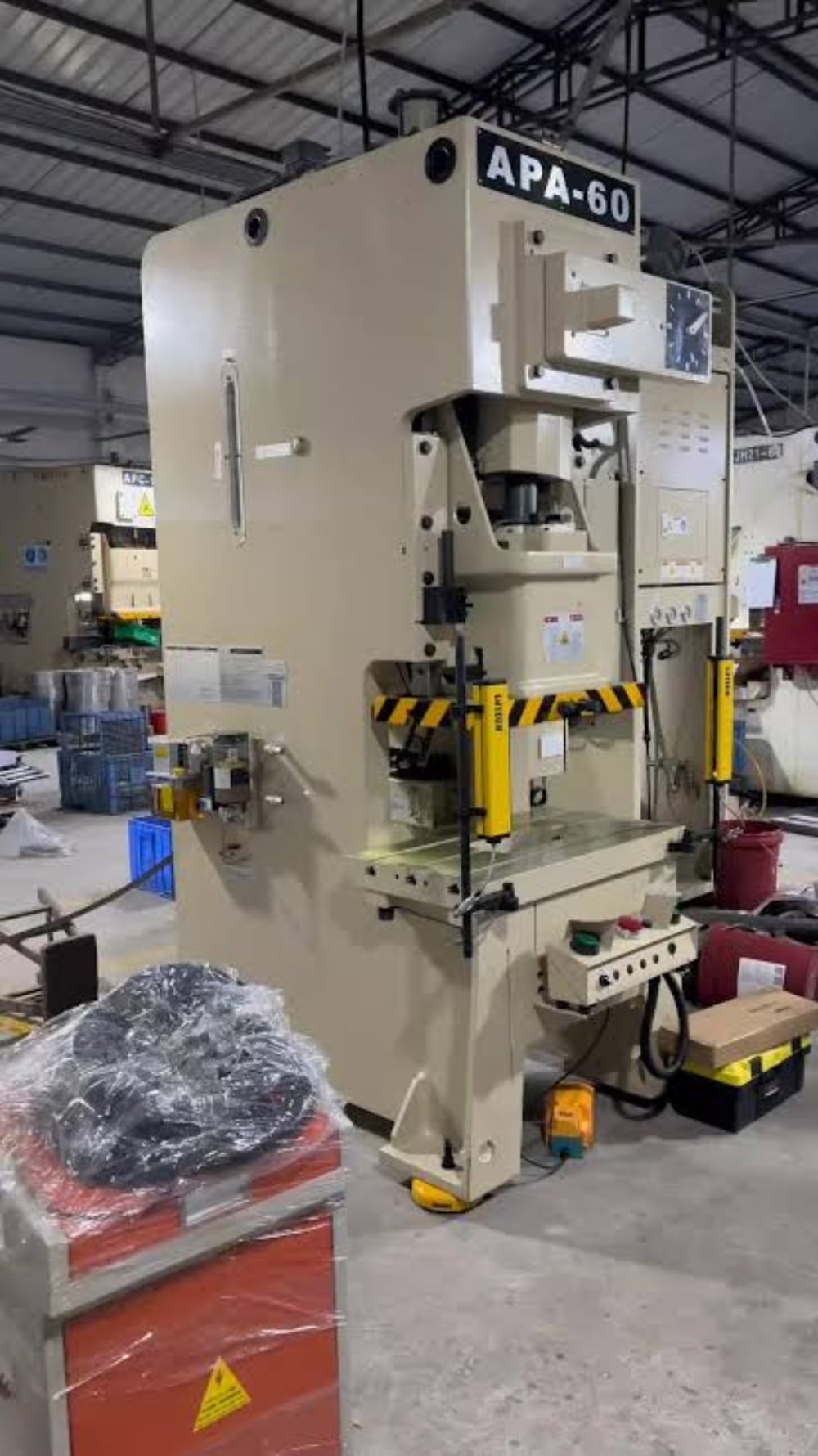
The primary driver of cost is the machine’s capacity, measured in tons. A 30-ton machine is the industry standard for most sheet metal work. Increasing to 50 tons for thicker materials can add 25-40% to the price of a new machine. In the used market, high-tonnage machines often hold their value better because they are built with heavier frames and more robust components, meaning the “savings” on a used 50-ton machine might be less than on a lighter model.
Brand Reputation and Support
Brand plays a massive role in pricing. Premium brands command a higher price because of their precision and the availability of spare parts. When buying new from HARSLE, you are paying for the latest engineering and a manufacturer’s warranty. When buying used, a premium brand might still be more expensive than a new “no-name” machine. This is because the resale value of well-known brands remains high due to the reliability of their mechanical structures.
Age and Technological Obsolescence
For used machines, age is the biggest price depressor. A machine that is over 20 years old may be mechanically sound but electronically obsolete. If the CNC controller fails and the manufacturer no longer supports that specific board, the machine becomes a very expensive paperweight. This risk is a significant factor in why used prices are so much lower; the buyer is essentially taking on the risk of technological failure that the original owner wants to offload.
Configuration Impact on Final Pricing
The base price of a punching machine is rarely the final price. The configuration and optional features can swing the total cost by tens of thousands of dollars.
- Turret Stations: A machine with 12 stations is cheaper than one with 32 or 58 stations. More stations mean less downtime for tool changes. When buying new, you can customize this to your needs. When buying used, you are stuck with the previous owner’s configuration, which might not be optimal for your workflow.
- Auto-Index Stations: These allow tools to rotate 360 degrees, significantly increasing the machine’s versatility. Adding auto-index stations to a new machine is a standard upgrade, but finding a used machine with the exact number of auto-index stations you need can be difficult and may drive up the used price.
- Tooling Packages: New machines often come with a starter set of tooling or discounts on initial tool purchases. Used machines might come with a “bucket of tools,” but these are often worn, chipped, or not the specific sizes you require, necessitating an immediate additional investment of $5,000 to $10,000 in new tooling.
- Software Integration: Modern HARSLE machines come with integrated CAD/CAM software that is user-friendly and compatible with modern file formats. Older used machines may require legacy software that runs on obsolete operating systems like Windows XP, creating a security and compatibility nightmare for your IT department.
The Hidden Costs of Buying Used
The New Vs Used Punching Machine Price comparison is often skewed because buyers forget to account for the “hidden” expenses associated with pre-owned equipment. These costs can quickly erode the initial savings.
Decommissioning, Shipping, and Rigging
When you buy a new machine, the manufacturer often handles or coordinates the logistics. When buying used from an auction or a private seller, you are responsible for hiring specialized riggers to decommission the machine, load it onto a flatbed, and transport it. For a 15-ton turret punch, rigging and shipping can easily cost $5,000 to $15,000 depending on the distance and complexity of the move.
Installation and Calibration
A new machine includes professional installation and calibration by factory-trained technicians. With a used machine, you must pay for these services out of pocket. Furthermore, an older machine may have developed “slop” or misalignment over years of use. Bringing a used machine back to its original tolerances can require expensive replacement of lead screws, bearings, or hydraulic seals.
Training and Documentation
New machines come with comprehensive manuals and operator training sessions. With used equipment, manuals are often missing, and you will need to pay a consultant or the original manufacturer to train your staff. Without proper training, the risk of operator error and machine damage increases exponentially, potentially leading to a catastrophic failure in the first month of operation.
ROI Calculation: New vs. Used
To truly answer Which Option Saves More?, we must look at the Return on Investment (ROI). The formula for ROI is (Net Profit / Cost of Investment) x 100. However, in fabrication, we also look at the Payback Period.
Scenario A: New HARSLE CNC Punching Machine
Investment: $80,000. Maintenance: $1,000/year. Efficiency: 95% uptime. Energy cost: Low (Servo-electric).
Because the machine is fast and reliable, it generates $40,000 in profit per year. The payback period is roughly 2 years. After 2 years, the machine continues to run with minimal costs, and it still has a high resale value.
Scenario B: Used CNC Punching Machine
Investment: $35,000. Maintenance: $8,000/year (repairs + parts). Efficiency: 75% uptime (due to unexpected breakdowns). Energy cost: High (Older hydraulic system).
Due to slower speeds and downtime, it generates $25,000 in profit per year. While the initial cost was lower, the payback period is still about 1.8 years. However, after the payback period, the ongoing maintenance costs remain high, and the resale value is nearly zero. In the long run (5-10 years), the new machine often results in a higher net profit.
Buying Advice: How to Choose
Choosing the right machine depends on your specific business circumstances. Here is a strategic checklist to guide your decision.
When to Buy New
- High Volume Production: If the machine will run 2-3 shifts a day, the reliability and warranty of a new HARSLE machine are indispensable.
- Precision Requirements: For aerospace or medical components, the guaranteed tolerances of a new machine are a must.
- Tax Incentives: Many regions offer tax credits or accelerated depreciation for the purchase of new industrial equipment, which can significantly offset the higher price.
- Long-term Growth: If you plan to keep the machine for 10+ years, the lower operating costs of new technology will eventually pay for the price difference.
When to Buy Used
- Low Volume/Occasional Use: If you only need to punch holes for a few hours a week, a used machine is a much more sensible allocation of capital.
- Tight Initial Capital: For startups with limited credit or cash flow, a used machine allows you to start production and generate the revenue needed to eventually upgrade to new equipment.
- Short-term Projects: If you have a specific contract that lasts only 12-18 months, a used machine can be purchased, used, and then sold for nearly what you paid for it.
Inspection Tips for Used Machines
If you decide to go the used route, never buy sight-unseen. Check the following:
- The Ram and Turret: Look for excessive wear or play. Listen for unusual noises during the punching cycle.
- The Controller: Ensure the screen is clear and all buttons work. Ask for a demonstration of a program upload.
- Hydraulic Leaks: Check the floor and the internal components for signs of oil leaks, which indicate failing seals.
- Maintenance Logs: A well-documented service history is the best indicator of a machine’s remaining lifespan.
Conclusion: The Verdict on Savings
So, in the battle of New Vs Used Punching Machine Price : Which Option Saves More?, the answer is: it depends on your timeline. For immediate cash savings and low-intensity work, a used machine is the winner. However, for any business focused on scaling, high-quality output, and long-term profitability, a new machine from a trusted manufacturer like HARSLE almost always provides better value. The combination of energy efficiency, reduced downtime, modern software, and manufacturer support creates a lower total cost of ownership that far outweighs the initial discount of a used model.
Before making your final decision, consult with a HARSLE expert to get a detailed quote and discuss how a new machine can be tailored to your specific production needs. Investing in the right technology today is the surest way to secure your workshop’s success tomorrow.
Frequently Asked Questions (FAQ)
1. What is the average lifespan of a CNC punching machine?
A well-maintained CNC punching machine can last 20 to 25 years. However, its “productive life”—the period where it is competitive with modern machines—is usually 10 to 12 years. After this point, the cost of maintenance and the slower production speeds often make it less economical than newer alternatives.
2. Can I upgrade the controller on an old used punching machine?
Yes, it is possible to retrofit an old machine with a new CNC controller, but it is expensive. A professional retrofit can cost between $15,000 and $30,000. You must weigh this against the cost of a new machine to see if the investment is justified.
3. Does HARSLE offer financing for new punching machines?
Many manufacturers, including HARSLE partners, offer financing or leasing options. This allows businesses to acquire new technology with a low down payment and manageable monthly installments, often making a new machine more accessible than a used one that requires a full cash payment.
4. How much should I budget for annual maintenance on a new machine?
For a new machine, you should budget approximately 1-2% of the purchase price annually for preventative maintenance, including filters, oil, and minor wear parts. This proactive approach prevents the much higher costs associated with emergency repairs.
5. Is it hard to find parts for older punching machines?
It depends on the brand. Major brands usually support their machines for 15-20 years. However, electronic components (like proprietary circuit boards) are often the first things to become unavailable. Mechanical parts can often be custom-machined if necessary, but this is costly and time-consuming.
6. Which is better for energy savings: Hydraulic or Servo-Electric?
Servo-electric punching machines are significantly more energy-efficient. They only consume significant power during the actual punch stroke, whereas hydraulic systems must keep a pump running constantly to maintain pressure. Switching to servo-electric can save thousands of dollars in electricity costs annually.