How to Choose the Right Press Brake for Your Sheet Metal Shop: A Technical Guide


Technical Overview: The Evolution of Bending Technology
In the modern metal fabrication landscape, the ability to choose the right press brake for your sheet metal shop is often the difference between a profitable operation and one plagued by bottlenecks. A press brake is the heart of the forming department, responsible for transforming flat sheets into complex, three-dimensional components with high precision. Historically, mechanical press brakes dominated the industry, relying on flywheels and clutches. However, the industry has shifted toward hydraulic, electric, and hybrid systems that offer unprecedented control over the bending cycle.
Understanding the technical nuances of these machines is essential. Hydraulic press brakes remain the workhorse of the industry due to their high tonnage capabilities and reliability. Synchronized CNC hydraulic models use linear encoders and proportional valves to ensure the ram stays level within microns. On the other hand, electric press brakes are gaining traction for high-speed, high-precision applications involving thinner gauges, offering energy efficiency and lower maintenance costs since they eliminate hydraulic oil requirements.
When you look to choose a press brake for your sheet metal shop, you must consider the synergy between the machine’s frame, the hydraulic system, and the CNC controller. The rigidity of the frame determines how much deflection occurs under load, while the controller dictates how easily an operator can set up a complex multi-bend sequence. For HARSLE customers, the goal is always to balance initial investment with long-term throughput and accuracy.
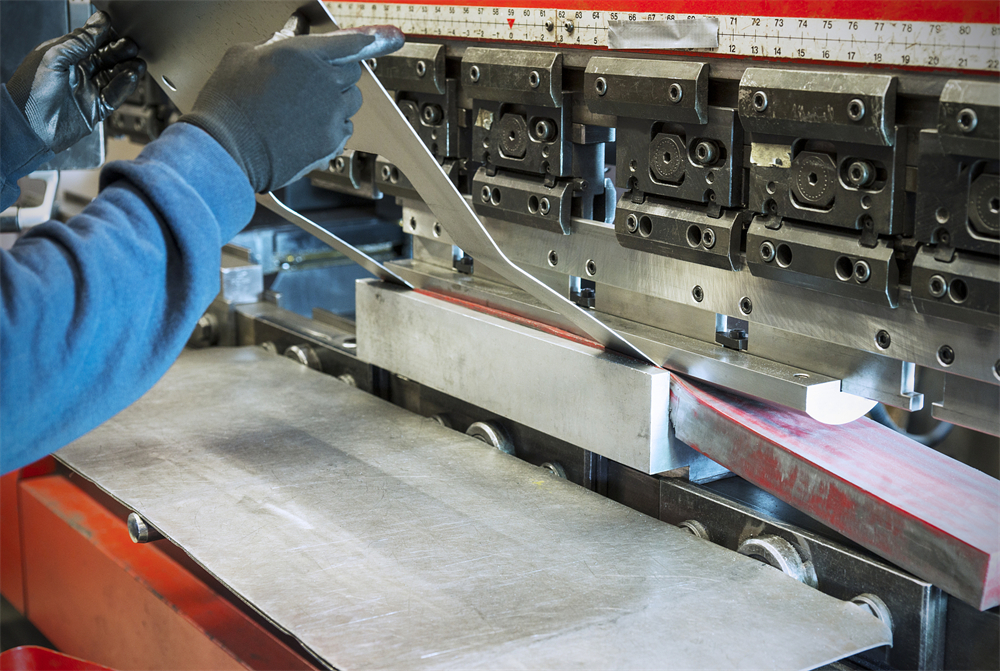
Core Parameters: Defining Your Machine Requirements
To choose the right press brake for your sheet metal shop, you must first define the physical limits of the work you intend to perform. The most critical parameters include Tonnage, Bending Length, Throat Depth, and the Backgauge configuration. Tonnage refers to the maximum pressure the machine can exert. If you underestimate this, you risk damaging the machine or being unable to form your parts. Conversely, over-specifying leads to unnecessary energy consumption and higher costs.
Bending length is equally vital. While it is tempting to buy a machine that matches your longest part, you should also consider the distance between the side frames. If you need to pass a long part through the machine, the ‘distance between housings’ is the dimension that matters most. Throat depth is another often-overlooked parameter; it determines how far a flange can extend into the machine before hitting the frame. For deep box bending or large panels, a deeper throat is indispensable.
The backgauge system is where modern machines truly shine. A basic 2-axis backgauge (X, R) allows for depth and height adjustment. However, for complex parts with tapered flanges or varying bend lines, a 4-axis (X, R, Z1, Z2) or even a 6-axis backgauge is required. These additional axes allow the gauge fingers to move independently, significantly reducing setup time and the need for custom fixtures. When you choose a press brake for your sheet metal shop, evaluate your part complexity to decide if a multi-axis backgauge will provide a sufficient return on investment.
Calculation Method: Determining Required Tonnage
The most scientific part of the selection process is calculating the required bending force. The standard formula for air bending mild steel is: P = (650 x S² x L) / V. In this formula, ‘P’ represents the tonnage (in kilonewtons), ‘S’ is the material thickness (in mm), ‘L’ is the bending length (in meters), and ‘V’ is the V-die opening width. Typically, the V-opening should be 8 times the material thickness for gauges up to 6mm, and 10 to 12 times for thicker plates.
It is crucial to adjust this calculation based on the material type. Stainless steel, for instance, has a much higher tensile strength than mild steel and typically requires about 50% more tonnage. Aluminum, depending on the alloy, may require less. Furthermore, if you plan on ‘bottoming’ or ‘coining’ rather than air bending, your tonnage requirements will skyrocket—often 3 to 5 times higher than air bending. This is a critical factor when you choose a press brake for your sheet metal shop, as it dictates the structural integrity required of the machine.
Another factor in the calculation is the ‘Crowning’ requirement. When a press brake applies pressure, the bed and ram naturally deflect or ‘bow’ in the center. Without compensation, this results in a ‘canoe effect’ where the bend angle is inconsistent across the length of the part. High-end CNC machines feature automatic hydraulic or mechanical crowning systems that counteract this deflection in real-time. If your parts are longer than 2 meters, a crowning system is not an option; it is a necessity for quality control.
Parameter Table: Comparing Press Brake Specifications
The following table provides a general guideline for different classes of press brakes to help you choose the right press brake for your sheet metal shop based on typical application profiles.
| Machine Type | Tonnage Range | Max Thickness (Mild Steel) | Best For | Control System |
|---|---|---|---|---|
| Mini/Electric | 20T – 50T | 0.5mm – 2.0mm | Small electronics, brackets | High-speed CNC |
| Standard Hydraulic | 63T – 160T | 3.0mm – 6.0mm | General job shop work | NC or 3-Axis CNC |
| Heavy Duty CNC | 200T – 600T | 8.0mm – 16.0mm | Construction, heavy plate | Multi-axis CNC w/ Crowning |
| Tandem Systems | 800T+ | 20.0mm+ | Pole manufacturing, ship building | Synchronized Dual CNC |
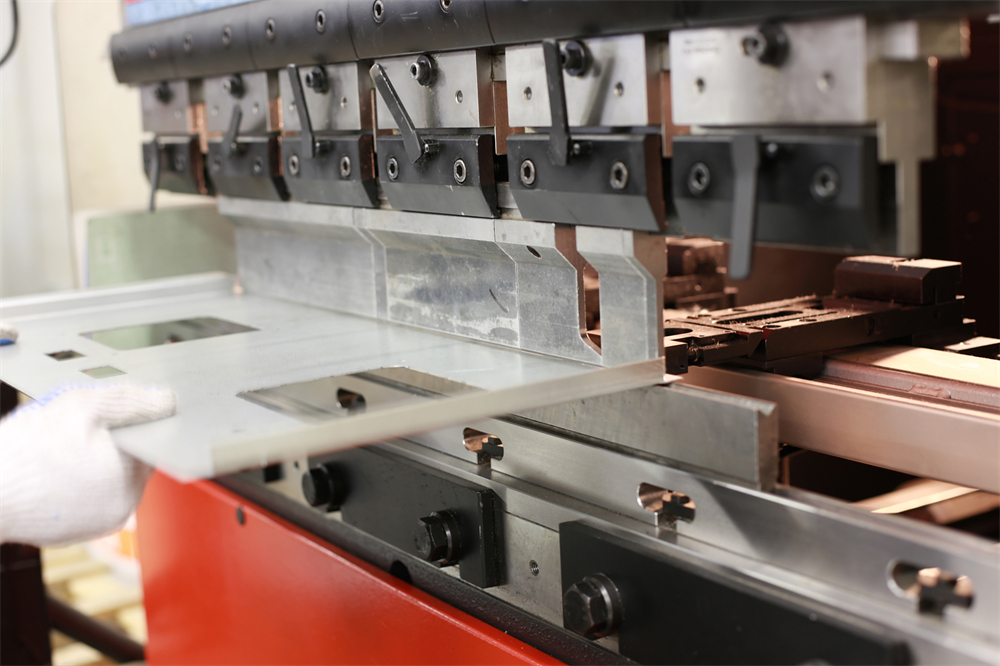
Common Engineering Mistakes in Selection
One of the most frequent mistakes when shop owners choose a press brake for their sheet metal shop is ignoring the ‘Open Height.’ Open height is the distance between the ram and the bed when the machine is fully open. If you plan to use tall tools or perform deep box bending, a standard open height may not be sufficient. Always calculate the height of your punch, the height of your die, and the height of the part itself to ensure you have enough clearance to remove the finished piece.
Another common error is neglecting tooling compatibility. There are several major tooling styles: American, European (Amada/Promecam), and New Standard (Wila/Trumpf). If your shop already has a significant investment in one type of tooling, ensure your new machine is equipped with the correct clamping system. Using adapters is possible but can reduce the available open height and introduce slight inaccuracies. Furthermore, choosing a machine with a manual clamping system when you perform frequent tool changes will lead to massive labor inefficiencies.
Finally, many buyers overlook the importance of the CNC controller’s software. A powerful controller like those from Delem, Cybelec, or ESA can perform 3D simulations, automatically calculate the bend sequence, and detect potential collisions before the first piece of metal is bent. If your operators are spending hours manually calculating backgauge positions, you are losing money. Investing in a high-level controller and offline programming software is often more valuable than adding more tonnage to the machine.
Selection Checklist: How to Choose the Right Press Brake for Your Sheet Metal Shop
- Material Analysis: What is the maximum thickness and tensile strength of the materials you work with? (Always calculate for the toughest material).
- Length Requirements: What is the longest bend you need to make? Does the distance between the side frames accommodate this?
- Accuracy Standards: Do you need +/- 0.5 degrees or +/- 1.0 degrees? This determines if you need a synchronized CNC machine or a simpler NC torsion bar machine.
- Production Volume: For high-volume work, look for high approach and return speeds. For low-volume, complex work, prioritize backgauge axes and software.
- Tooling Strategy: Which tooling system will you use? Do you need hydraulic tool clamping for fast changeovers?
- Crowning System: Is a crowning system included to prevent the ‘canoe effect’ on long parts?
- Safety Features: Does the machine include laser guarding (like DSP or LazerSafe) to protect operators without slowing down production?
- Future Proofing: Will this machine handle the growth you expect in the next 5 years?
Frequently Asked Questions (FAQ)
1. What is the difference between NC and CNC press brakes?
An NC (Numerical Control) press brake typically uses a torsion bar to keep the ram level and is best for simple bends and consistent material. A CNC (Computer Numerical Control) press brake uses independent hydraulic cylinders with linear encoders to provide much higher precision, automatic crowning, and the ability to handle complex, multi-step bending sequences with ease.
2. How often should I change the hydraulic oil?
For most hydraulic press brakes, the oil should be changed every 2,000 to 4,000 hours of operation, or at least once every two years. Regular filtration and monitoring of oil temperature are also critical to prevent valve damage. Electric press brakes avoid this maintenance entirely.
3. Can I bend small parts on a high-tonnage machine?
Yes, but with caution. Bending small parts in the center of a large machine can cause ‘concentrated loading,’ which may permanently deform the ram or bed over time. It is better to use a machine appropriately sized for the part, or ensure you are using high-quality, hardened tooling that can distribute the load.
4. Why is the ‘V’ opening width so important?
The V-opening width determines the bending radius and the required tonnage. A narrower V-opening results in a tighter radius but requires significantly more force and increases the risk of marking the material. Choosing the correct V-opening is the first step in any successful bending setup.
5. Is an electric press brake worth the extra cost?
If your shop focuses on thin-gauge parts (under 4mm) and requires high speed and extreme precision, yes. The savings in energy, oil, and maintenance, combined with faster cycle times, usually offset the higher initial purchase price within a few years.
6. How do I choose between a 2-axis and 4-axis backgauge?
If you mostly bend simple 90-degree flanges on rectangular parts, a 2-axis (X, R) gauge is sufficient. If you deal with complex shapes, multiple bend depths on the same side, or tapered parts, a 4-axis (X, R, Z1, Z2) gauge is necessary to maintain productivity and accuracy.