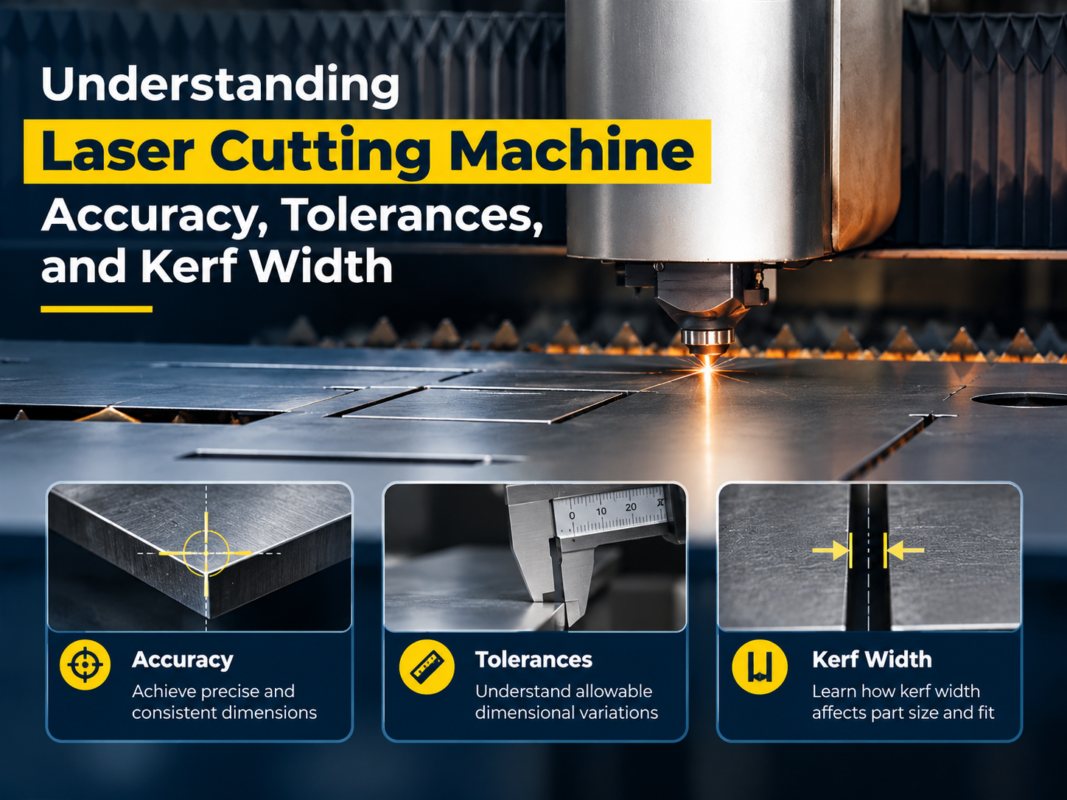
A Complete Guide to Punching Machine Automation in Modern Fabrication Lines


Technical Overview of Punching Machine Automation
In the rapidly evolving landscape of industrial manufacturing, the transition toward A Complete Punching Machine Automation In Modern Fabrication Lines has become a necessity rather than a luxury. Automation in punching involves the integration of advanced CNC (Computer Numerical Control) systems, robotic loading/unloading mechanisms, and intelligent software to streamline the sheet metal perforation process. Unlike traditional manual presses, automated systems utilize high-precision servo motors and hydraulic actuators to execute complex patterns with minimal human intervention.
The core of modern automation lies in the synchronization between the machine’s turret and the material positioning system. Modern fabrication lines utilize sophisticated CAD/CAM software that translates digital designs directly into G-code, which the machine interprets to control the X and Y axes of the worktable. This integration ensures that every punch is placed with sub-millimeter accuracy, significantly reducing scrap rates and improving overall part quality. HARSLE has been at the forefront of this transition, developing machines that bridge the gap between heavy-duty mechanical force and delicate digital control.
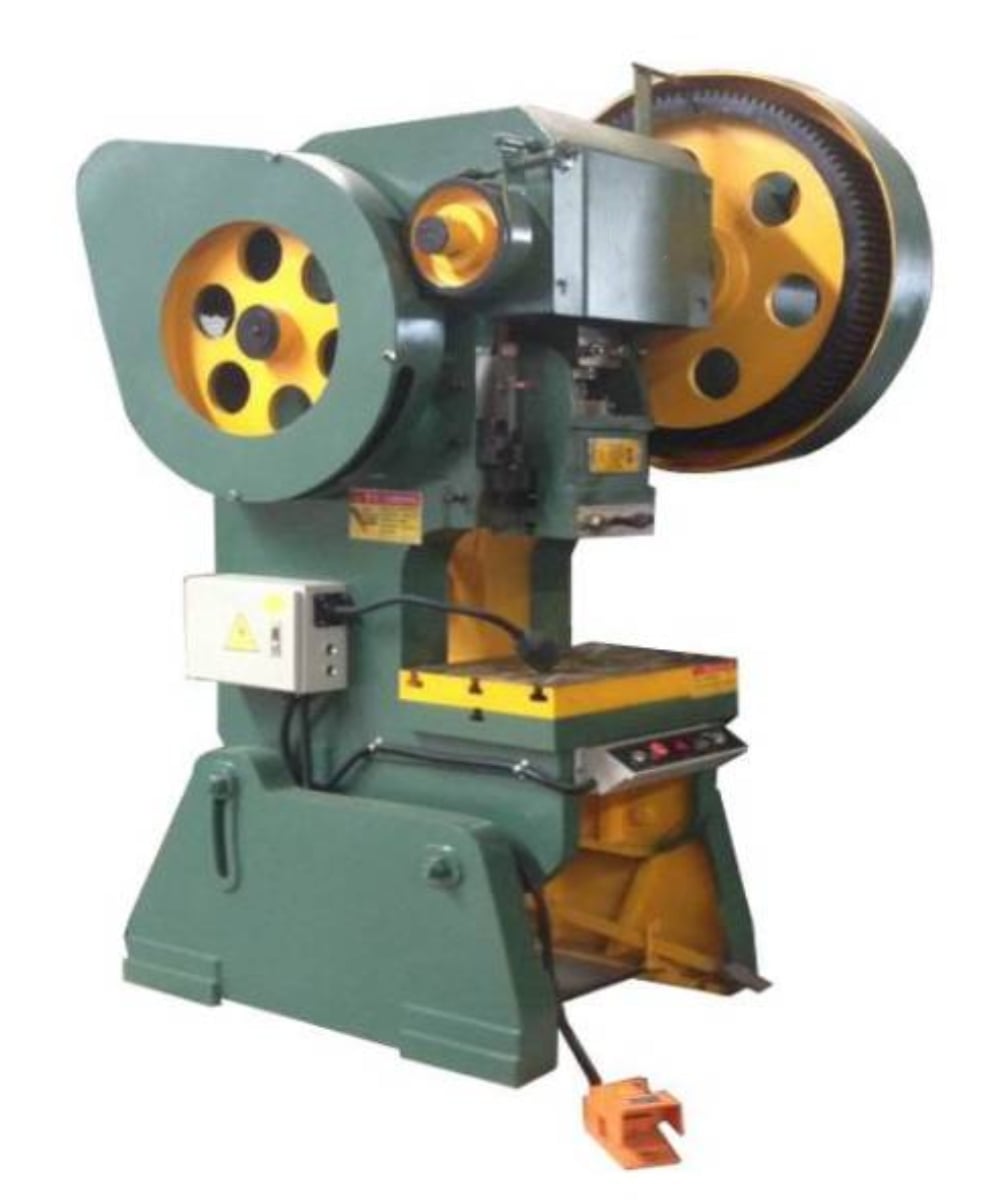
Furthermore, automation extends to the tooling system. Auto-index stations allow tools to rotate 360 degrees, enabling the machine to create complex shapes and angles without requiring a massive library of specialized dies. This flexibility is a cornerstone of A Complete Punching Machine Automation In Modern Fabrication Lines, as it allows manufacturers to switch between different production runs with virtually zero downtime for tool changes. The use of hydraulic cushioning and nitrogen-assisted return strokes also enhances the speed and longevity of the equipment.
Another critical aspect of the technical overview is the implementation of IoT (Internet of Things) and Industry 4.0 standards. Modern automated punching machines are equipped with sensors that monitor temperature, vibration, and hydraulic pressure in real-time. This data is fed back to a central management system, allowing for predictive maintenance. Instead of waiting for a component to fail, the system alerts operators to potential issues, ensuring that the fabrication line remains operational 24/7. This level of connectivity is what defines the modern era of metal fabrication.
Core Parameters of Automated Punching Systems
Understanding the technical specifications is vital when evaluating A Complete Punching Machine Automation In Modern Fabrication Lines. The performance of an automated line is dictated by several key parameters that determine its suitability for specific materials and production volumes. The first and most obvious parameter is the nominal force, or tonnage. Automated machines typically range from 20 to 50 tons, which dictates the maximum thickness and hardness of the material the machine can process.
Throat depth is another essential parameter. It determines the maximum width of the sheet metal that can be processed without flipping the sheet. In an automated environment, a larger throat depth (often exceeding 1250mm or 1500mm) allows for the processing of large panels used in telecommunications cabinets or elevator doors. When combined with an automatic repositioning function, the machine can handle sheets that are significantly longer than the physical travel of the X-axis.
Stroke rate and positioning speed are the primary drivers of throughput. Modern automated systems can achieve hit rates of over 600 to 1000 hits per minute (HPM) for marking and 300 to 500 HPM for standard punching. The positioning speed of the X and Y axes, often reaching 80-120 meters per minute, ensures that the time between hits is minimized. These speeds are made possible by high-torque AC servo motors and precision ball screws that provide both rapid movement and high-resolution positioning.
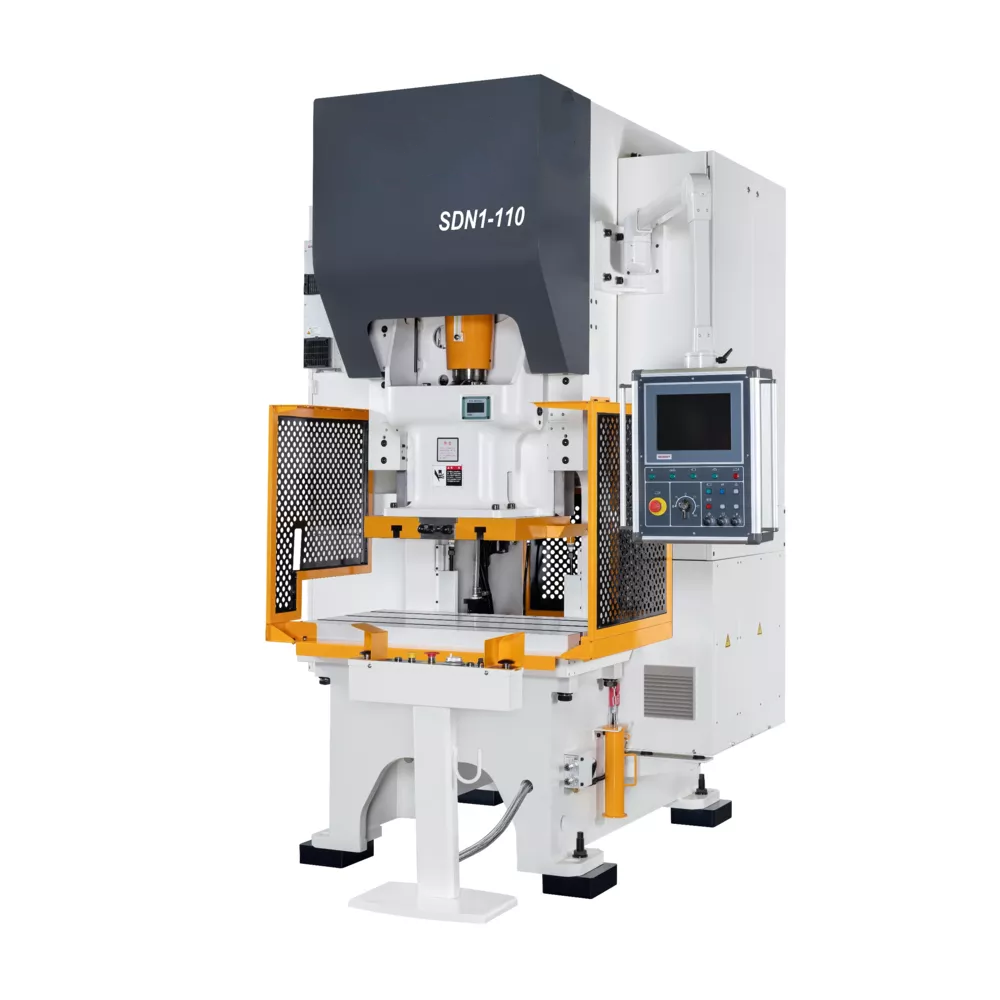
Turret capacity and configuration also play a major role. A standard automated turret might hold between 24 and 36 stations, including several auto-index stations. The configuration of these stations (A, B, C, and D sizes) determines the variety of hole sizes and shapes that can be punched in a single program. In a fully automated line, the turret is often paired with an automatic tool changer (ATC) or a large-capacity tool magazine to further extend the machine’s versatility without manual intervention.
Calculation Method for Punching Force and Cycle Time
To successfully implement A Complete Punching Machine Automation In Modern Fabrication Lines, engineers must accurately calculate the required punching force to avoid overloading the machine and damaging the tooling. The basic formula for calculating punching force (P) is:
P = L × t × τ
Where:
– P is the punching force (in Newtons or Tons).
– L is the perimeter of the hole (in mm). For a round hole, L = π × d.
– t is the material thickness (in mm).
– τ is the shear strength of the material (in N/mm² or MPa).
For example, if you are punching a 50mm diameter hole in 3mm thick stainless steel (with a shear strength of approximately 500 MPa), the calculation would be: P = (3.14 × 50) × 3 × 500 = 235,500 N, which is approximately 24 tons. It is standard practice to add a 20% safety margin to this figure to account for tool wear and material variations, meaning a 30-ton machine would be the appropriate choice for this application.
Cycle time calculation is equally important for production planning. The total time for a single part (T) can be estimated using the formula:
T = (N / HPM) + (D / V) + T_load
Where:
– N is the number of hits.
– HPM is the hits per minute.
– D is the total travel distance of the sheet.
– V is the average positioning speed.
– T_load is the time taken by the automated loading/unloading system.
By optimizing the tool path in the CAM software, manufacturers can minimize ‘D’ and maximize the efficiency of the automated line.
Parameter Table for Automated Punching Machines
The following table outlines the typical specifications for a mid-to-high range automated CNC turret punch press, such as those offered by HARSLE, designed for modern fabrication lines.
| Parameter Description | Unit | Standard Specification | High-Performance Spec |
|---|---|---|---|
| Nominal Force (Tonnage) | kN / Tons | 300 kN / 30 Tons | 500 kN / 50 Tons |
| Max. Sheet Thickness | mm | 6.35 mm | 8.0 – 10.0 mm |
| Throat Depth | mm | 1250 mm | 1500 mm |
| Positioning Accuracy | mm | ± 0.1 mm | ± 0.05 mm |
| Max. Hit Rate (Marking) | HPM | 600 HPM | 1200 HPM |
| Turret Stations | Qty | 24 Stations | 36 – 48 Stations |
| X/Y Axis Speed | m/min | 80 m/min | 120 m/min |
| Control System | Type | Fanuc / Siemens | Custom High-Speed CNC |
Common Engineering Mistakes in Punching Automation
Even with A Complete Punching Machine Automation In Modern Fabrication Lines, engineering errors can lead to significant downtime. One of the most common mistakes is improper die clearance selection. Die clearance is the gap between the punch and the die, usually expressed as a percentage of the material thickness (typically 15-20%). If the clearance is too small, it increases the force required and accelerates tool wear; if it is too large, it results in excessive burrs on the workpiece. Automated systems often run at high speeds, which compounds the heat generated by incorrect clearances, leading to tool galling.
Another frequent oversight is neglecting the “slug pulling” phenomenon. In high-speed automated punching, the scrap metal (slug) can sometimes stick to the punch and be lifted back onto the sheet surface. This can cause severe damage to the next part or even the machine’s turret. Engineering solutions include using slug-retention dies or vacuum-assisted slug removal systems. Failing to integrate these features into an automated line can result in high reject rates and frequent manual interventions, defeating the purpose of automation.
Poor material handling integration is a third common mistake. While the punching machine itself might be fast, the overall throughput is often bottlenecked by the loading and unloading system. If the robotic arm or vacuum lifter cannot keep pace with the machine’s cycle time, the machine sits idle. Engineers must ensure that the “takt time” of the material handling system is synchronized with the machine’s fastest program. Additionally, failing to account for sheet flatness can lead to sensor errors and machine crashes in automated lines.
Finally, many manufacturers underestimate the importance of software optimization. Using generic nesting software that doesn’t account for the specific turret layout or the machine’s repositioning capabilities can lead to inefficient tool paths. This results in unnecessary sheet movement and increased wear on the servo motors. A truly automated line requires specialized CAM software that optimizes every movement for speed and tool longevity.
Selection Checklist for Automated Punching Equipment
Choosing the right equipment for A Complete Punching Machine Automation In Modern Fabrication Lines requires a systematic approach. Use the following checklist to ensure all critical factors are considered:
- Material Compatibility: Does the machine’s tonnage and tooling support the thickest and hardest materials in your production catalog?
- Production Volume: Does the hit rate and positioning speed meet your daily output requirements? Consider future growth as well.
- Automation Level: Do you need a standalone machine with a simple loader, or a fully integrated FMS (Flexible Manufacturing System) with automated storage and retrieval?
- Software Integration: Does the machine’s controller easily interface with your existing ERP and CAD/CAM software?
- Tooling Versatility: How many auto-index stations are included? Can the turret be easily reconfigured for different jobs?
- Footprint and Layout: Does the automated line fit within your facility’s floor plan, including the necessary safety zones for robotic movement?
- Maintenance and Support: Does the manufacturer (like HARSLE) provide robust local support, remote diagnostics, and readily available spare parts?
- Total Cost of Ownership (TCO): Beyond the initial purchase price, consider energy consumption, tooling costs, and the expected lifespan of the machine.
Frequently Asked Questions (FAQ)
1. What is the main advantage of automation in punching?
The primary advantage is the significant increase in productivity and consistency. Automation allows for continuous operation, reduces human error, and enables the production of complex parts that would be difficult or impossible to manufacture manually. It also improves safety by removing operators from the immediate vicinity of the punching head.
2. Can older punching machines be retrofitted for automation?
While some basic retrofitting is possible (such as adding a simple loading table), achieving A Complete Punching Machine Automation In Modern Fabrication Lines usually requires a machine designed with CNC integration and high-speed communication protocols from the ground up. Retrofitting older mechanical presses is often not cost-effective compared to purchasing a modern CNC turret punch press.
3. How does auto-indexing work?
Auto-indexing allows the punch and die to be rotated to any angle under CNC control. This is achieved through a set of worm gears or direct-drive motors within the turret stations. It allows a single tool (like a rectangular punch) to create shapes at various angles, reducing the total number of tools required in the turret.
4. What maintenance is required for an automated punching line?
Regular maintenance includes lubricating the turret and guide rails, checking hydraulic fluid levels and filters, inspecting electrical connections, and sharpening tools. In an automated line, it is also crucial to calibrate the sensors and check the alignment of the loading/unloading robots periodically.
5. How do I calculate the ROI for an automated punching machine?
To calculate ROI, compare the total cost of the machine (including installation and training) against the savings in labor costs, reduced scrap, increased throughput, and the ability to take on more complex projects. Most high-volume fabrication shops see a return on investment within 18 to 36 months.