
How Press Brakes Improve Precision In Aerospace Sheet Metal Parts: A Comprehensive Guide


Introduction to Precision in Aerospace Manufacturing
In the aerospace industry, the margin for error is virtually non-existent. Every component, from the smallest bracket to the largest fuselage panel, must adhere to incredibly tight tolerances to ensure safety, aerodynamic efficiency, and structural integrity. This is where the role of advanced fabrication machinery becomes critical. Specifically, understanding how press brakes improve precision in aerospace sheet metal parts is essential for manufacturers looking to compete in this high-stakes sector. Modern CNC press brakes have evolved from simple bending tools into highly sophisticated, computer-controlled systems capable of repeating complex bends with micron-level accuracy.
The aerospace sector demands materials that are lightweight yet exceptionally strong, such as titanium alloys and high-grade aluminum. These materials present unique challenges during the bending process, including significant springback and sensitivity to surface damage. To overcome these hurdles, aerospace manufacturers rely on high-end press brakes equipped with real-time compensation systems and precision backgauging. This article explores the technical nuances of how these machines achieve such high levels of precision and why they are indispensable in modern aerospace production lines.
Application Scenarios for Aerospace Sheet Metal Parts
Aerospace sheet metal fabrication covers a wide array of components, each with its own set of precision requirements. One of the primary application scenarios is the production of structural ribs and stringers. These parts form the skeleton of the aircraft and must be bent to exact angles to ensure they fit perfectly within the curved skin of the fuselage. Any deviation in the bend angle can lead to structural weaknesses or assembly difficulties that increase production costs and lead times.
Another critical application is in the manufacturing of engine components and heat shields. These parts often utilize exotic alloys like Inconel or stainless steel, which require high tonnage and precise control to shape without cracking. Press brakes used in these scenarios must offer exceptional rigidity and fine-tuned pressure control. Furthermore, interior components such as seat frames, galley structures, and ducting also rely on press brakes. While these may not be flight-critical structural parts, they still require high precision to ensure modular assembly and weight optimization, which are key drivers in modern aircraft design.
Finally, the defense sector of aerospace utilizes press brakes for armored plating and specialized electronic enclosures. These parts often involve complex multi-bend sequences that would be impossible to achieve consistently with manual equipment. The integration of 3D CAD data directly into the press brake’s controller allows for the seamless transition from design to finished part, ensuring that even the most intricate geometries are executed with absolute fidelity to the original engineering specifications.
Material and Process Requirements in Aerospace Bending
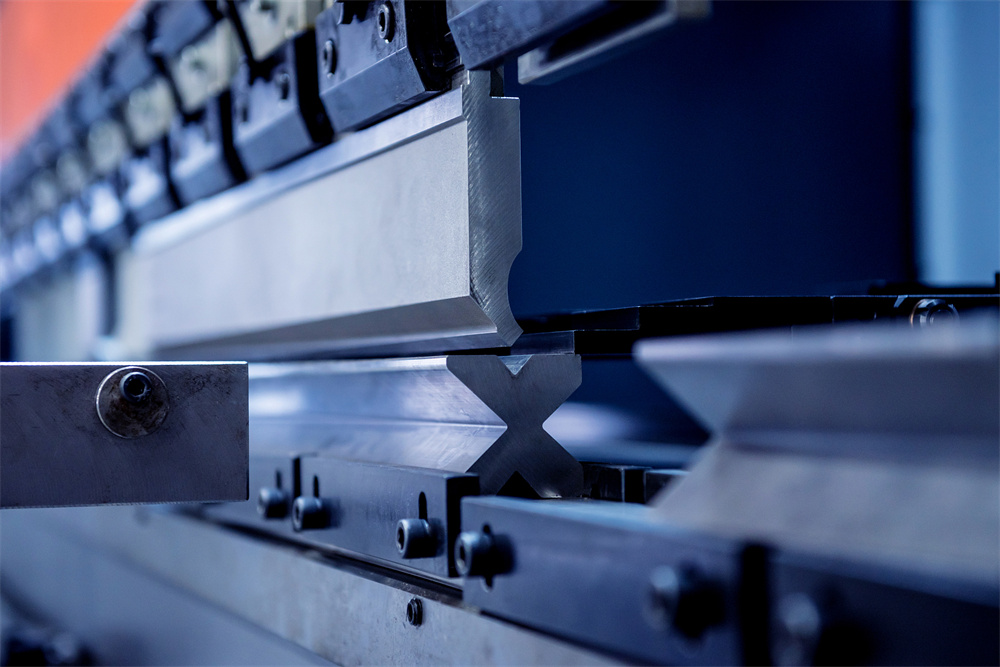
The materials used in aerospace are chosen for their specific mechanical properties, but these same properties make them difficult to form. Aluminum 7075, for instance, is widely used for its high strength, but it is much more brittle than standard 5052 aluminum. Bending such materials requires a deep understanding of the minimum bend radius to prevent micro-cracking. A precision press brake allows operators to control the descent of the ram with extreme accuracy, ensuring that the material is formed at the correct speed and pressure to maintain its structural integrity.
Titanium is another staple of the aerospace industry, valued for its corrosion resistance and strength-to-weight ratio. However, titanium exhibits significant springback—the tendency of the metal to return toward its original shape after the bending force is removed. To address this, press brakes improve precision in aerospace sheet metal parts by utilizing advanced angle-tracking systems. These systems measure the angle in real-time during the bend and automatically over-bend the part by the exact amount needed to compensate for springback, resulting in a perfect final angle every time.
Process requirements also include strict documentation and traceability. In aerospace, every part must be accounted for, and the parameters used to create it must often be recorded. Modern CNC controllers can store the specific programs, pressure settings, and tool configurations used for each batch. This ensures that if a part needs to be remanufactured years later, the exact same conditions can be replicated, guaranteeing consistency across the entire lifecycle of an aircraft model.
Recommended Machine Configuration for Aerospace Precision
To achieve the levels of accuracy required, a standard press brake is often insufficient. Aerospace manufacturers should look for machines with a “WE67K” or similar high-precision CNC synchronization designation. The following configurations are highly recommended:
- Multi-Axis Backgauges: A 4-axis (X, R, Z1, Z2) or 6-axis (X1, X2, R1, R2, Z1, Z2) backgauge system is essential. This allows for the positioning of complex, non-parallel parts, ensuring that every bend line is perfectly aligned with the tooling.
- CNC Crowning Systems: Long parts can cause the press brake bed to deflect slightly in the center. An automatic CNC-controlled crowning system compensates for this deflection by adjusting the lower table, ensuring a consistent bend angle across the entire length of the workpiece.
- High-Resolution Encoders: The use of linear encoders on the Y1 and Y2 axes allows the controller to monitor the position of the ram to within 0.001mm. This level of control is vital for maintaining parallelism and depth accuracy.
- Laser Angle Measurement: Integrated laser systems like the Data-M or similar technologies provide real-time feedback. They scan the part during the bending process and communicate with the CNC to adjust the stroke depth instantly.
Furthermore, the frame of the machine must be heavy-duty and stress-relieved. Any flex in the machine frame during a high-tonnage bend will translate into inaccuracies in the part. HARSLE’s high-end models utilize finite element analysis (FEA) in their design phase to ensure maximum rigidity, which is a cornerstone of how their press brakes improve precision in aerospace sheet metal parts.
Workflow: From CAD Design to Finished Aerospace Part
The workflow for producing an aerospace part begins long before the metal touches the machine. It starts with a 3D CAD model. Modern press brake software can import these models and automatically calculate the flat pattern, taking into account the specific K-factor of the material. This ensures that the initial blank size is correct, which is the first step in achieving precision.
Once the program is generated, the software simulates the bending sequence. This is crucial for aerospace parts that often have complex flanges that could collide with the machine or the tooling. By simulating the process, engineers can identify potential issues and optimize the sequence for efficiency and accuracy. The finalized program is then transferred to the press brake via a network or USB, eliminating manual data entry errors.
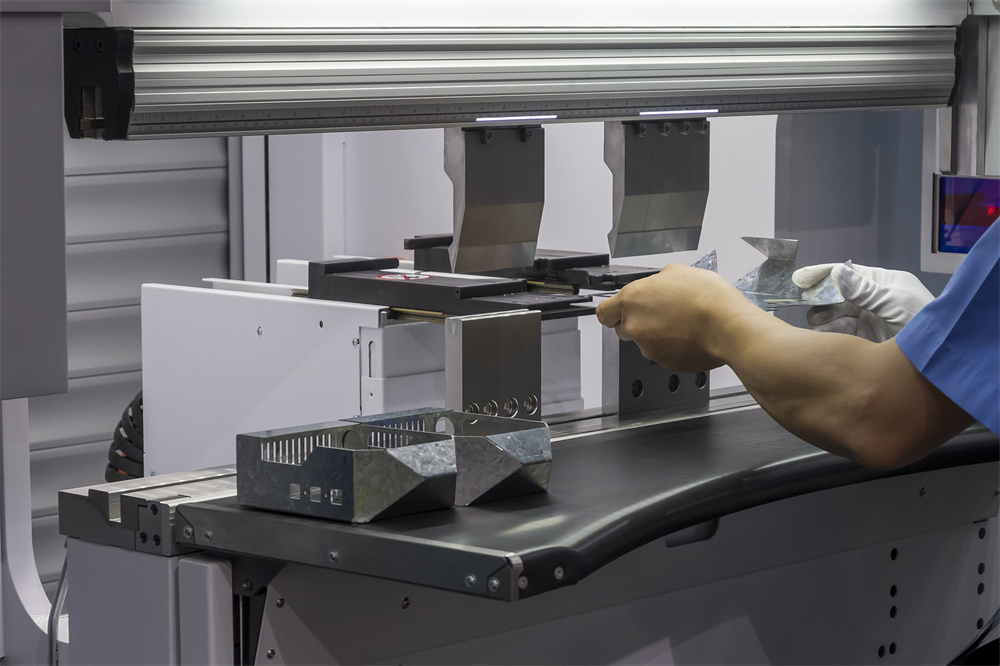
During the actual production, the operator follows the step-by-step instructions displayed on the CNC screen. The backgauge moves into position automatically for each bend. If the machine is equipped with an angle measurement system, the first part of the batch is often used to calibrate the springback settings. Once calibrated, the machine can run the rest of the batch with minimal intervention, maintaining high precision throughout the run. Finally, the parts undergo a quality control check, often using CMM (Coordinate Measuring Machines) to verify that the press brake has met the required tolerances.
Productivity and Quality Benefits
The primary benefit of using high-precision press brakes is the drastic reduction in scrap rates. In aerospace, where raw materials like titanium can be incredibly expensive, wasting a single blank due to an incorrect bend is a significant financial loss. By ensuring the bend is right the first time, press brakes improve precision in aerospace sheet metal parts and directly impact the bottom line. Additionally, the speed of modern CNC systems reduces cycle times, allowing manufacturers to meet tight delivery schedules without sacrificing quality.
Repeatability is another major advantage. In aerospace, consistency is as important as accuracy. A fleet of aircraft requires identical replacement parts for maintenance and repair. CNC press brakes ensure that a part produced today is identical to one produced six months ago. This repeatability simplifies the assembly process, as downstream workers don’t have to “force” parts to fit, which in turn improves the overall structural health of the aircraft.
Furthermore, the integration of ergonomic features and safety systems, such as laser curtains, allows operators to work faster and with more confidence. When an operator knows the machine will handle the complex calculations and safety monitoring, they can focus on material handling and flow, leading to a more productive shop floor. The data collected by the machine can also be used for predictive maintenance, ensuring that the press brake remains in peak condition and avoids unplanned downtime.
Case Example: Precision Bracket Production for Commercial Jets
Consider a manufacturer tasked with producing a series of aluminum 2024-T3 support brackets for a commercial jet’s wing assembly. These brackets require five distinct bends, two of which are at non-90-degree angles, with a tolerance of +/- 0.25 degrees. Using a traditional manual press brake, the scrap rate for such a part could be as high as 15% due to the difficulty of manual positioning and the unpredictable springback of the 2024 alloy.
By switching to a HARSLE CNC Press Brake with a 6-axis backgauge and laser angle compensation, the manufacturer was able to reduce the scrap rate to less than 1%. The CNC controller calculated the exact bend allowance, and the laser system adjusted for the specific grain direction of each sheet of aluminum. The result was a perfectly formed bracket in a single setup, reducing the total production time per part by 40%. This case illustrates perfectly how press brakes improve precision in aerospace sheet metal parts while simultaneously boosting profitability.
Frequently Asked Questions (FAQ)
1. Why is springback such a challenge in aerospace bending?
Aerospace materials like titanium and high-strength aluminum have high yield strengths. When the bending force is released, the internal elastic stresses cause the material to partially return to its original shape. Precision press brakes use CNC-controlled compensation to over-bend the material, neutralizing this effect.
2. How does a CNC crowning system improve part accuracy?
When a press brake applies tonnage, the ram and the bed can bow slightly. This causes the bend angle to be wider in the middle than at the ends. A crowning system applies a counter-force to the bed, keeping it perfectly parallel to the ram and ensuring a uniform bend angle across the entire part.
3. Can I use standard tooling for aerospace parts?
While standard tooling can be used, it is often recommended to use precision-ground, hardened tooling with specific radii. Aerospace specs often dictate a minimum bend radius to prevent material fatigue, and using the correct, high-quality tool is essential to meet these standards.
4. What role does software play in improving precision?
Software allows for offline programming and 3D simulation. It calculates the exact flat pattern and identifies potential collisions before the metal is even cut. This ensures that the physical bending process is optimized for the highest possible accuracy.
5. Is a hydraulic or electric press brake better for aerospace?
Both have their merits. Hydraulic press brakes offer higher tonnage for thick or tough materials like Inconel. Electric press brakes offer faster cycle times and slightly higher precision for thinner, complex parts. Many aerospace shops use a mix of both depending on their specific part portfolio.
Conclusion and Call to Action
The evolution of metal fabrication technology has made it possible to meet the increasingly stringent demands of the aerospace industry. By understanding how press brakes improve precision in aerospace sheet metal parts, manufacturers can make informed decisions about their equipment investments. From advanced CNC controllers and multi-axis backgauges to real-time angle measurement and crowning systems, every feature of a modern press brake is designed to ensure that the final part is perfect, every time.
At HARSLE, we specialize in providing high-performance industrial machinery tailored to the needs of precision-driven industries. Our range of CNC press brakes is engineered to deliver the accuracy, reliability, and efficiency required for aerospace manufacturing. Whether you are looking to upgrade your current capabilities or establish a new production line, our team of experts is here to help you find the perfect solution. Contact HARSLE today to learn more about our technology and how we can help you achieve new heights in manufacturing precision.


