
Press Brake Use Cases in Agricultural Machinery Fabrication: A Comprehensive Guide


Introduction to Press Brake Use Cases in Agricultural Machinery Fabrication
The agricultural machinery industry is undergoing a significant transformation, driven by the need for higher efficiency, larger scale, and more durable equipment. At the heart of this manufacturing revolution is the CNC press brake. From the massive frames of combine harvesters to the intricate components of precision seeders, the ability to bend heavy-duty metal with high precision is paramount. This article explores the diverse Press Brake Use Cases In Agricultural Machinery Fabrication, detailing how modern hydraulic and electric press brakes from HARSLE are empowering manufacturers to meet the rigorous demands of modern farming.
Detailed Application Scenarios in the Agricultural Sector
Agricultural machinery is characterized by its size and the harsh environments in which it operates. This requires structural components that are both lightweight for fuel efficiency and incredibly strong to withstand mechanical stress. Press brakes play a critical role in several key areas:
1. Chassis and Frame Construction
The chassis is the backbone of any tractor, trailer, or harvester. These components often require long, continuous bends in high-strength steel. A CNC press brake ensures that the structural integrity of the frame is maintained by providing consistent bend angles across lengths that can exceed 4 to 6 meters. Using a press brake for these parts reduces the need for welding, which in turn minimizes heat-affected zones and potential points of structural failure.
2. Harvesting and Tillage Equipment
Components such as plowshares, harrow discs, and harvester headers involve complex geometries. For instance, the curved surfaces of a moldboard plow are often formed using multi-step bending processes on a press brake. Precision is vital here; even a slight deviation in the bend angle can affect the soil-turning efficiency of the plow or the grain-gathering capability of a harvester header.
3. Storage and Handling Solutions
Grain bins, silos, and transport augers rely heavily on sheet metal fabrication. The panels for large silos must be bent to specific radii to ensure a perfect fit during assembly. Furthermore, the support brackets and reinforcement ribs used in these storage systems are typically produced on press brakes to ensure they can handle the immense weight of stored crops.
4. Livestock Management Systems
Feeding troughs, gates, and stalls in modern livestock facilities are often made from galvanized or stainless steel to prevent corrosion. Press brakes allow for the creation of smooth, rounded edges on these components, which is essential for animal safety and ease of cleaning. The repeatability of CNC bending ensures that modular components fit together perfectly on-site.
Material and Process Requirements
Fabricating agricultural machinery isn’t just about bending metal; it’s about handling specific materials that can survive the elements. The materials used in this industry present unique challenges for press brake operators.
- High-Strength Low-Alloy (HSLA) Steel: Used for frames and structural supports, HSLA steel requires higher tonnage due to its increased yield strength. Operators must account for significant springback when programming the CNC controller.
- Wear-Resistant Steel (e.g., Hardox): Parts that come into direct contact with soil or stone, like bucket edges or liners, use wear-resistant steel. These materials are notoriously difficult to bend and require specialized heavy-duty tooling and high-tonnage machines.
- Galvanized and Stainless Steel: Used for chemical tanks (sprayers) and livestock equipment. These materials require non-marring tools or protective films to prevent damage to the protective zinc or chromium oxide layers during the bending process.
- Large Dimensions: Agricultural parts are often oversized. This necessitates machines with large throat depths and long bed lengths, often requiring tandem press brake configurations where two machines work in sync to bend a single long workpiece.
Recommended Machine Configuration for Agricultural Fabrication
To handle the diverse Press Brake Use Cases In Agricultural Machinery Fabrication, a machine must be versatile, powerful, and precise. HARSLE recommends the following configurations for manufacturers in this sector:
1. CNC System (Delem DA-66T or DA-69T)
A high-end CNC system is non-negotiable. These controllers allow for 3D visualization, automatic bend sequence calculation, and collision detection. For agricultural parts with complex folds, the ability to simulate the bend before the first piece of metal is touched saves significant time and material waste.
2. Hydraulic Crowning System
When bending long parts like trailer side panels, the machine’s bed can deflect slightly in the center, leading to inconsistent angles (the “canoe effect”). A CNC-controlled hydraulic crowning system compensates for this deflection in real-time, ensuring a perfectly straight bend across the entire length of the workpiece.
3. Multi-Axis Backgauge
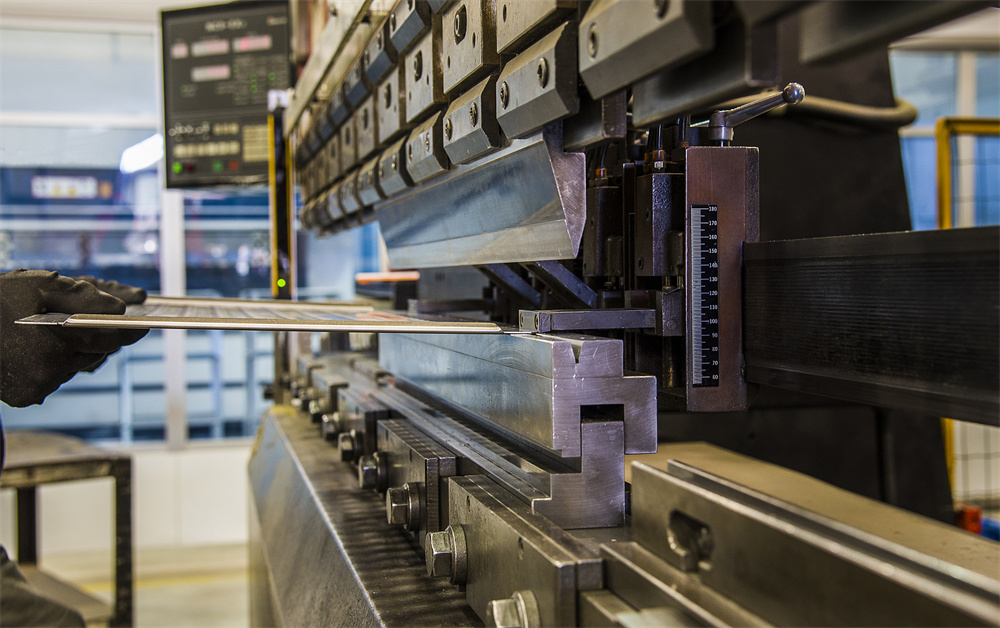
Agricultural parts often have asymmetrical shapes. A 4-axis (X, R, Z1, Z2) or 6-axis backgauge allows the operator to position complex parts accurately, reducing setup time and increasing the safety of the operation.
4. Heavy-Duty Tooling
Given the use of high-tensile steels, the tooling must be hardened and designed for high loads. Large V-openings are often required to handle thick plates (10mm to 20mm+) commonly found in heavy farm machinery.
The Workflow: From Design to Finished Agricultural Component
The process of fabricating a component for a tractor or harvester follows a structured workflow to ensure quality and efficiency:
- CAD/CAM Design: Engineers design the part in 3D software, accounting for the K-factor and bend allowance specific to the material being used (e.g., S355 steel).
- File Import: The DXF or STEP file is imported directly into the HARSLE CNC controller. The software automatically suggests the best bending sequence and tool selection.
- Material Preparation: Plates are typically laser or plasma cut to size. For agricultural use, edge quality is important to prevent cracking during the bending process.
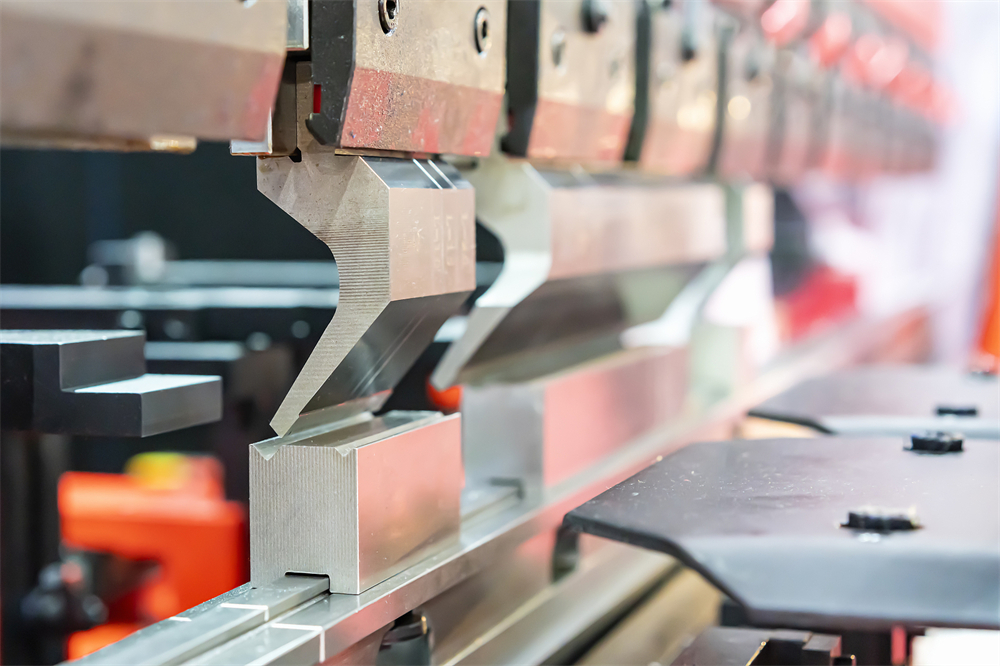
- Machine Setup: The operator installs the required punches and dies. On modern HARSLE machines, hydraulic tool clamping systems make this process fast and ergonomic.
- Execution: The CNC backgauge moves into position, and the operator performs the bends. For large parts, sheet followers (front supports) may be used to assist the operator and prevent material “back-bending” due to weight.
- Quality Control: The first part is measured using digital protractors or integrated laser angle measurement systems to ensure it meets the tight tolerances required for assembly.
Productivity Benefits of Using CNC Press Brakes
Implementing advanced press brake technology in agricultural manufacturing offers several transformative benefits:
- Reduced Lead Times: CNC automation significantly cuts down on setup and cycle times, allowing manufacturers to respond faster to seasonal demands.
- Material Savings: High precision means fewer scrapped parts. In an industry where raw material costs for high-strength steel are high, this directly impacts the bottom line.
- Improved Structural Integrity: By replacing multiple welded joints with single, complex bends, the resulting machinery is stronger and less prone to fatigue.
- Labor Efficiency: Modern CNC interfaces are intuitive, reducing the reliance on highly specialized manual operators and allowing for faster training of new staff.
- Consistency: Whether it is the first part or the thousandth, the CNC system ensures every component is identical, which is crucial for the mass production of farm implements.
Case Example: Seeder Frame Production
A leading manufacturer of precision air seeders struggled with the manual bending of 6-meter-long frame rails. Using older mechanical brakes, they faced a 15% scrap rate due to angle inconsistencies and required three operators to handle the heavy plates. After upgrading to a HARSLE WE67K-400T/6000 CNC Press Brake with a Delem DA-66T controller and hydraulic crowning, the results were immediate.
The scrap rate dropped to under 1%, and the crowning system ensured that every rail was perfectly straight, eliminating the need for secondary straightening processes. Furthermore, the addition of pneumatic sheet followers allowed a single operator to manage the bending process safely, reallocating the other two workers to the assembly line and increasing overall factory throughput by 30%.
Frequently Asked Questions (FAQ)
What is the best tonnage for agricultural machinery fabrication?
This depends on the material thickness and length. For most agricultural applications involving 6mm to 12mm steel, a machine in the 200T to 400T range is common. However, for heavy chassis work, 500T to 1000T machines or tandem setups may be required.
Can a press brake handle Hardox or other wear-resistant steels?
Yes, but it requires a machine with sufficient tonnage and specialized tooling. You must use a larger V-die opening (typically 10-12 times the material thickness) to reduce the required force and prevent tool breakage.
How does CNC crowning help in making farm equipment?
Farm equipment often uses long parts. Without crowning, the middle of a long bend will be wider than the ends. CNC crowning automatically adjusts the machine’s bed to ensure the angle is uniform from one end to the other, which is vital for parts that must be bolted or welded together later.
Is it better to use a hydraulic or electric press brake for this industry?
While electric brakes are fast and precise for small parts, the agricultural industry typically requires the high tonnage and long stroke lengths that only hydraulic press brakes can provide efficiently.
How do I maintain a press brake in a dusty agricultural factory environment?
Regularly cleaning the guide rails, changing the hydraulic oil filters, and ensuring the cooling system is free of debris are essential. HARSLE machines are designed with robust components to withstand industrial environments, but routine maintenance is key to longevity.
Conclusion and Call to Action
The Press Brake Use Cases In Agricultural Machinery Fabrication are vast and vital for the production of modern, durable, and efficient farming equipment. By investing in high-quality CNC press brakes, manufacturers can ensure they stay competitive in a demanding global market. HARSLE provides a range of heavy-duty, high-precision solutions tailored specifically for the needs of the agricultural sector.
Are you looking to upgrade your fabrication capabilities? Contact HARSLE today to speak with our technical experts about the perfect press brake configuration for your agricultural machinery production needs. Let us help you bend the future of farming.


