
Comprehensive Guide to Press Brake Applications for Kitchen Equipment and Stainless Steel Products


Introduction to Press Brake Applications in the Kitchenware Industry
The manufacturing of kitchen equipment and stainless steel products represents one of the most demanding sectors in the metal fabrication industry. From commercial-grade refrigerators and industrial ovens to residential sinks and ventilation hoods, the precision required is absolute. At the heart of this production line is the CNC press brake, a machine that transforms flat sheets of stainless steel into complex, functional, and aesthetically pleasing components. HARSLE, a leader in metal fabrication machinery, provides specialized solutions tailored to meet the unique challenges of this industry.
Stainless steel is the material of choice for kitchen environments due to its corrosion resistance, durability, and hygienic properties. However, bending stainless steel is significantly more challenging than bending mild steel. It requires higher pressure, exhibits greater springback, and demands a flawless surface finish. This article explores the intricate details of Press Brake Applications Kitchen Equipment Stainless Steel Products, providing a roadmap for manufacturers to optimize their production workflows and achieve superior results.
Application Scenarios: Where Precision Meets Utility
In the realm of commercial kitchen fabrication, the variety of components requiring precision bending is vast. One of the primary application scenarios is the production of large-scale ventilation hoods. These structures often involve long, continuous bends and complex angles to ensure efficient airflow and structural integrity. A high-tonnage CNC press brake with a long bed is essential for creating these hoods from single sheets of stainless steel, minimizing the need for extensive welding and grinding.
Another critical scenario is the manufacturing of commercial refrigeration units and cold storage cabinets. These products require tight tolerances to ensure that doors seal perfectly and internal shelving fits securely. The use of a multi-axis CNC backgauge allows for the rapid positioning of parts, enabling the creation of intricate internal flanges and supports. Furthermore, the production of stainless steel worktables and prep stations involves multiple 90-degree bends and hemmed edges to eliminate sharp corners, enhancing safety in busy kitchen environments.
Residential kitchen appliances also rely heavily on press brake technology. High-end ovens, dishwashers, and microwave casings are often made from brushed or mirrored stainless steel. In these cases, the aesthetic quality of the bend is just as important as its structural accuracy. Any marking or scratching during the bending process can lead to costly scrap. Specialized tooling and precision-controlled hydraulic systems are employed to ensure that every bend is clean and consistent across thousands of units.
Material and Process Requirements for Stainless Steel
Stainless steel, particularly grades 304 and 316, is the standard for kitchen equipment. These materials have a higher tensile strength and work-hardening rate compared to carbon steel. Consequently, the press brake must be capable of delivering higher bending forces. For instance, bending a 2mm thick stainless steel sheet typically requires about 50-60% more tonnage than bending the same thickness of mild steel. Manufacturers must calculate their tonnage requirements carefully to avoid overloading the machine.
Springback is another significant factor when dealing with Press Brake Applications Kitchen Equipment Stainless Steel Products. Stainless steel tends to return toward its original shape after the bending force is released. Advanced CNC controllers, such as those found on HARSLE machines, include sophisticated springback compensation algorithms. By inputting the material type and thickness, the controller automatically adjusts the punch depth to over-bend the part by the precise amount needed to achieve the final desired angle.
Surface protection is paramount in the kitchenware industry. Most stainless steel sheets used for appliances come with a protective PVC coating. The bending process must not rupture this coating or leave die marks on the metal surface. This is achieved through the use of large-radius dies, synthetic bending tapes, or specialized urethane inserts. Maintaining the integrity of the surface finish is not just about aesthetics; it is also a hygiene requirement, as scratches can harbor bacteria in food-prep environments.
Recommended Machine Configuration for Kitchen Equipment
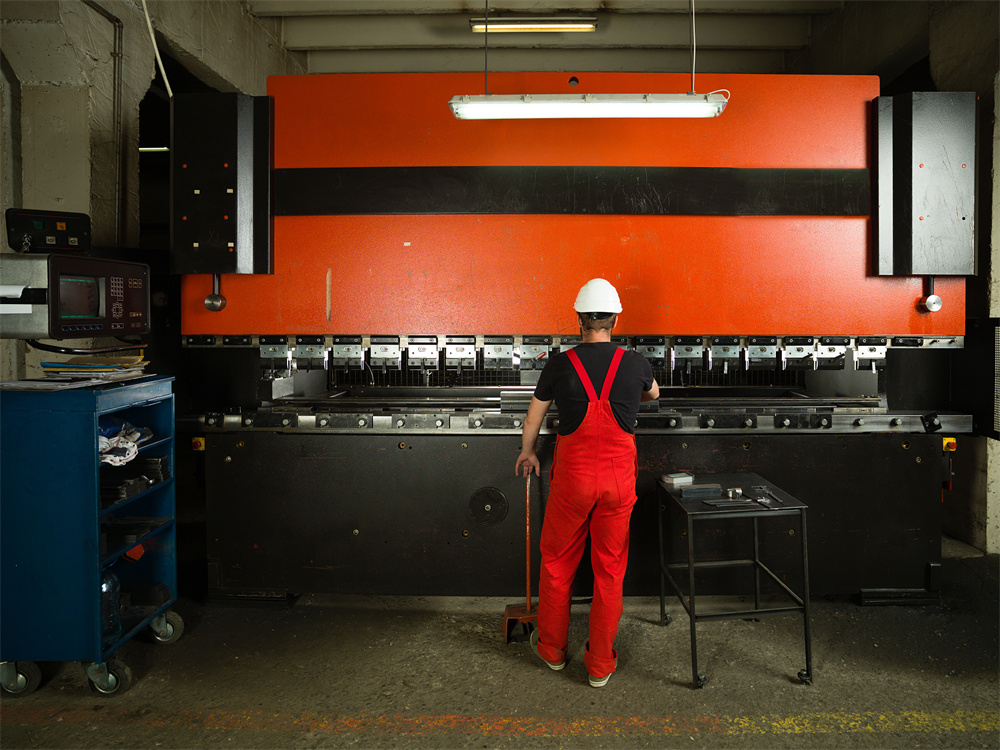
To achieve the best results in kitchen equipment manufacturing, HARSLE recommends a specific set of machine configurations. A high-precision CNC Synchronized Press Brake (such as the WE67K series) is the gold standard. These machines feature dual hydraulic cylinders controlled by proportional valves and linear encoders, ensuring that the ram remains perfectly level even during off-center loading. This synchronization is vital for maintaining angle consistency across long workpieces like 3-meter kitchen counters.
The backgauge system should ideally have at least 4 to 6 axes (X, R, Z1, Z2, and potentially X1, X2). This flexibility allows for the easy positioning of asymmetrical parts and complex shapes common in custom kitchen designs. Furthermore, a CNC-controlled crowning system is indispensable. As the machine bends, the bed and ram naturally deflect. A crowning system compensates for this deflection by slightly bowing the bed upward, ensuring that the bend angle is uniform from one end of the sheet to the other.
Tooling selection is equally critical. For kitchen products, we recommend high-quality, hardened, and ground precision tooling. Goose-neck punches are frequently used to provide clearance for deep return bends, such as those found in sink basins or cabinet frames. Additionally, quick-change clamping systems allow operators to switch between different tool sets in minutes, which is essential for shops that handle a high variety of small-batch orders.
The Workflow: From Design to Finished Product
The workflow for manufacturing stainless steel kitchen products begins in the design office. Engineers use CAD/CAM software to create 3D models of the components. This software can simulate the bending process, identifying potential collisions and calculating the exact flat pattern dimensions. The resulting DXF or STEP files are then imported directly into the HARSLE CNC controller, reducing manual data entry and the risk of human error.
Once the program is loaded, the operator prepares the material. For stainless steel, this often involves checking the grain direction, as bending against the grain can sometimes lead to cracking in lower-quality alloys. The operator then sets up the tooling as specified by the CNC program. Modern HARSLE machines feature a visual tool-loading guide on the screen, showing exactly where each tool segment should be placed along the bed.
The actual bending sequence is then executed. The CNC controller guides the operator through each step, moving the backgauge to the correct position for each bend. In high-volume environments, robotic integration can be used to automate the loading and unloading of parts. After the final bend, the part is inspected using digital protractors or laser angle-measuring systems to ensure it meets the strict tolerances required for kitchen assembly. Any deviations are fed back into the controller for immediate correction of the next part.
Productivity Benefits of Advanced Press Brakes
Investing in a high-end CNC press brake for Press Brake Applications Kitchen Equipment Stainless Steel Products yields significant productivity gains. The most immediate benefit is the reduction in setup time. Traditional manual press brakes require extensive trial-and-error to get the first good part. With CNC technology and precision tooling, the “first part, right part” philosophy becomes a reality, drastically reducing material waste—a crucial factor when working with expensive stainless steel.
Furthermore, the speed of modern hydraulic systems allows for faster cycle times. HARSLE machines utilize high-speed approach and return phases, with a controlled, slower bending speed to ensure accuracy. This combination maximizes throughput without compromising quality. The integration of CNC crowning and automatic angle measurement also eliminates the need for manual shimming and secondary adjustments, which are time-consuming and labor-intensive.
Labor savings are another key advantage. A highly automated CNC press brake is easier to operate, meaning that even less-experienced operators can produce high-quality parts with minimal training. This helps manufacturers mitigate the challenges of a skilled labor shortage. Additionally, the ability to perform complex bends in a single setup reduces the need for secondary operations like welding or additional forming steps, streamlining the entire production line.
Case Example: Commercial Sink Fabrication
A leading manufacturer of commercial restaurant equipment recently upgraded their facility with a HARSLE 160T/3200mm CNC Synchronized Press Brake. Their primary challenge was the production of large, integrated sink units that required deep-box bending and precise sloping for drainage. Previously, they used manual machines, which resulted in a 15% scrap rate due to inconsistent angles and surface scratching.
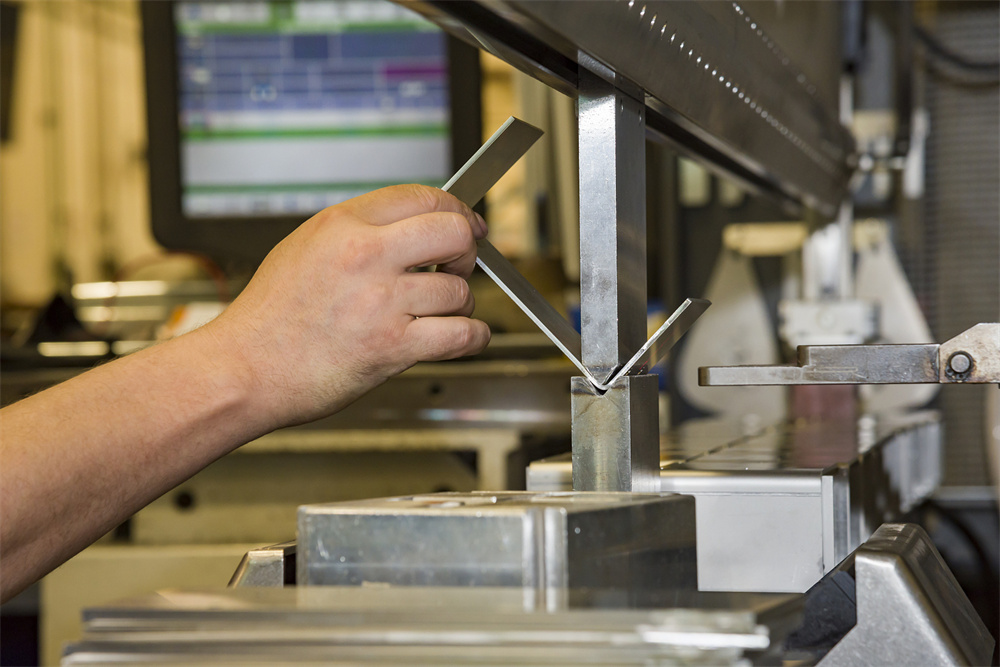
After implementing the HARSLE CNC solution, the manufacturer utilized a specialized goose-neck punch and a multi-V die with nylon inserts to protect the stainless steel finish. The CNC controller’s ability to handle 3D file imports allowed them to program complex sequences in a fraction of the time. The result was a reduction in scrap to less than 1% and a 40% increase in overall production speed. The consistency of the bends also made the subsequent robotic welding process much smoother, as the fit-up of the parts was now perfect every time.
Frequently Asked Questions (FAQ)
1. What is the best grade of stainless steel for kitchen equipment?
Grade 304 is the most common due to its excellent balance of corrosion resistance and formability. For highly corrosive environments, such as those involving heavy salt or acidic cleaners, Grade 316 is preferred, though it is more expensive and slightly harder to bend.
2. How do I prevent die marks on polished stainless steel?
To prevent marking, you can use several methods: 1) Use dies with a larger shoulder radius. 2) Apply specialized bending tape (cloth or plastic) over the die. 3) Use urethane die inserts. 4) Ensure the tooling is clean and free of debris from previous mild steel jobs.
3. Why is CNC crowning important for kitchen counters?
Kitchen counters are often long (2-4 meters). Without crowning, the center of the machine will deflect more than the ends, resulting in a “canoe” effect where the angle in the middle is wider than at the ends. CNC crowning compensates for this automatically.
4. Can I bend stainless steel on a machine used for mild steel?
Yes, but you must be aware of the tonnage. Stainless steel requires roughly 50% more force. You must also thoroughly clean the dies to prevent carbon contamination, which can cause the stainless steel to rust later (tea staining).
5. What backgauge configuration is best for kitchen hoods?
A 4-axis backgauge (X, R, Z1, Z2) is usually sufficient for most hoods. However, if the hood has tapered sides or complex non-parallel bends, a 6-axis backgauge provides the necessary flexibility to support the part accurately.
Conclusion and Call to Action
The manufacturing of kitchen equipment and stainless steel products demands a perfect synergy between machine capability and process expertise. By understanding the specific requirements of stainless steel—from tonnage and springback to surface protection—manufacturers can leverage HARSLE’s advanced press brake technology to stay competitive in a demanding market. High-precision CNC controls, robust hydraulic systems, and versatile tooling options are the cornerstones of a successful fabrication strategy.
Are you looking to elevate your kitchen equipment production? HARSLE offers a wide range of CNC press brakes specifically designed for the challenges of stainless steel fabrication. Our team of experts is ready to help you select the perfect machine configuration to meet your specific needs. Contact HARSLE today for a consultation and discover how our innovative solutions can drive your business forward. Visit our website to explore our full catalog of metal fabrication machinery and take the first step toward unmatched precision and productivity.

