How Press Brakes Support Prototyping and Small-Batch Metal Production


Introduction to Agile Metal Fabrication
In the modern manufacturing landscape, the ability to pivot quickly between different designs is a competitive necessity. The shift from mass production to high-mix, low-volume (HMLV) manufacturing has placed a significant spotlight on the versatility of sheet metal forming equipment. Specifically, Press Brakes Support Prototyping Small-Batch Metal Production by offering the flexibility required to handle diverse geometries without the prohibitive costs of dedicated hard tooling. For companies like HARSLE, providing machinery that minimizes setup time while maximizing precision is the cornerstone of supporting innovation in R&D and custom fabrication shops.
Prototyping requires a machine that can adapt to frequent changes in material type, thickness, and bend angles. Unlike traditional stamping presses that require expensive dies for every unique part, a CNC press brake utilizes universal tooling and programmable logic to achieve complex shapes. This article explores the technical nuances of how these machines facilitate rapid development cycles and efficient small-run manufacturing, ensuring that every ‘first part’ is a ‘good part.’
Application Scenarios for Prototyping and Small-Batch Production
The demand for prototyping and small-batch production spans across numerous high-tech and specialized industries. In the aerospace sector, for instance, engineers often require a handful of specialized brackets or heat shields for testing. These parts must meet exacting tolerances, yet the volume does not justify the investment in mass-production molds. Here, a high-precision CNC press brake becomes the primary tool for turning a CAD model into a physical component within hours.
Similarly, the medical device industry relies heavily on small-batch production. Surgical instruments and diagnostic equipment housings often feature intricate bends and must be made from biocompatible materials like stainless steel. Because these designs undergo frequent iterations based on clinical feedback, the flexibility of a press brake allows manufacturers to update the bending program and produce a new batch without significant downtime. This agility is critical for bringing life-saving technologies to market faster.
In the automotive aftermarket and custom vehicle restoration niche, press brakes are indispensable. Fabricators often need to create one-off body panels or structural reinforcements. The ability to simulate the bend sequence on a CNC controller ensures that expensive materials are not wasted on trial-and-error. By utilizing Press Brakes Support Prototyping Small-Batch Metal Production, these shops can maintain high quality while keeping overhead costs manageable for custom projects.
Material and Process Requirements
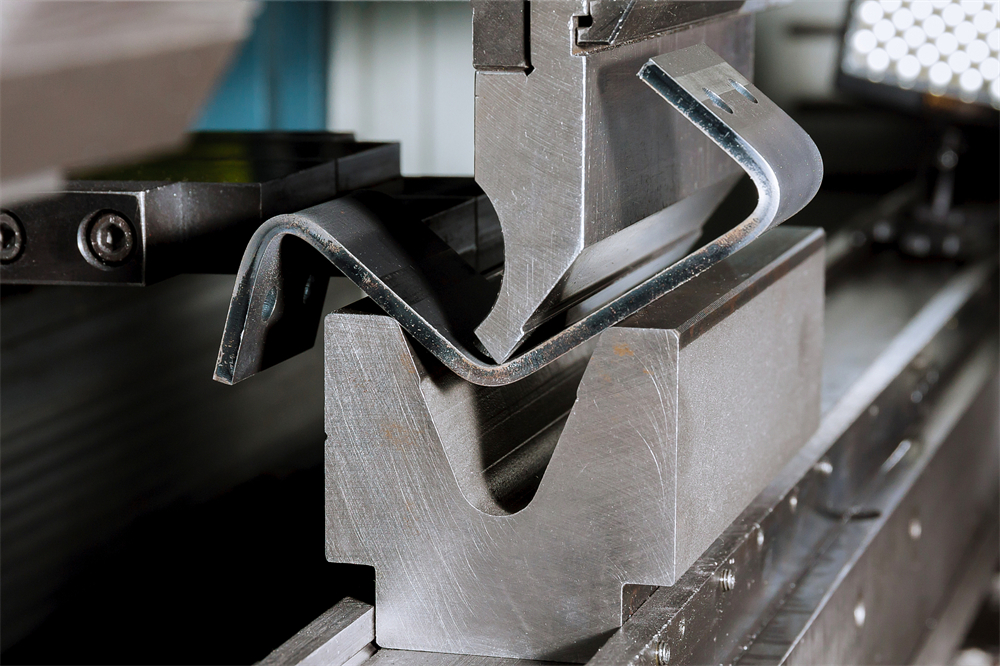
When dealing with prototyping, the variety of materials encountered is vast. A single shop might work with 5052 aluminum in the morning and 304 stainless steel in the afternoon. Each material reacts differently to the bending process, particularly regarding springback—the tendency of the metal to return to its original shape after the pressure is released. Advanced press brakes address this through sophisticated material databases and real-time angle measurement systems.
Process requirements for small batches often emphasize ‘First-Part-Right’ capability. In mass production, you can afford to scrap the first five pieces to dial in the machine. In a batch of ten, scrapping five pieces is a financial disaster. Therefore, the process must include accurate K-factor calculations, precise tonnage control, and a deep understanding of the material’s grain direction. Modern CNC systems allow operators to input these variables, and the machine automatically adjusts the depth of the punch to compensate for material thickness variations.
Furthermore, complex geometries often require multi-stage bending. This involves setting up multiple tool sets across the length of the bed. For prototyping, the ability to perform ‘one-hit’ setups—where the operator can complete all bends on a part without changing tools—is a massive productivity booster. This requires a machine with a large open height and a versatile backgauge system that can move in multiple axes (X, R, Z1, Z2) to support the part at various angles.
Recommended Machine Configuration for Small-Batch Success
To effectively support prototyping, a press brake must be equipped with specific features that prioritize setup speed and accuracy. HARSLE recommends the following configurations for shops focusing on HMLV production:
- High-End CNC Controller: Systems like the Delem DA-66T or DA-69T offer 3D visualization. This allows the operator to see the part being bent in real-time on the screen, preventing collisions and ensuring the correct orientation of the workpiece.
- Multi-Axis Backgauge: A 4-axis (X, R, Z1, Z2) or 6-axis (X1, X2, R1, R2, Z1, Z2) backgauge is essential. This allows for the bending of asymmetrical parts and complex shapes that would be impossible to gauge on a standard 2-axis system.
- Hydraulic or Mechanical Crowning: To ensure a consistent angle across the entire length of the bend, a crowning system compensates for the deflection of the machine’s bed and ram. This is vital for long, thin parts common in prototyping.
- Quick-Change Tooling: Using a Wila-style or specialized hydraulic clamping system reduces tool changeover time from 30 minutes to less than 5 minutes. In a prototyping environment where tools change several times a day, this feature pays for itself rapidly.
- Laser Angle Measurement: Systems that measure the angle during the bending process and provide real-time feedback to the CNC controller ensure that the final angle is perfect, regardless of material variations.
Optimized Workflow for Prototyping
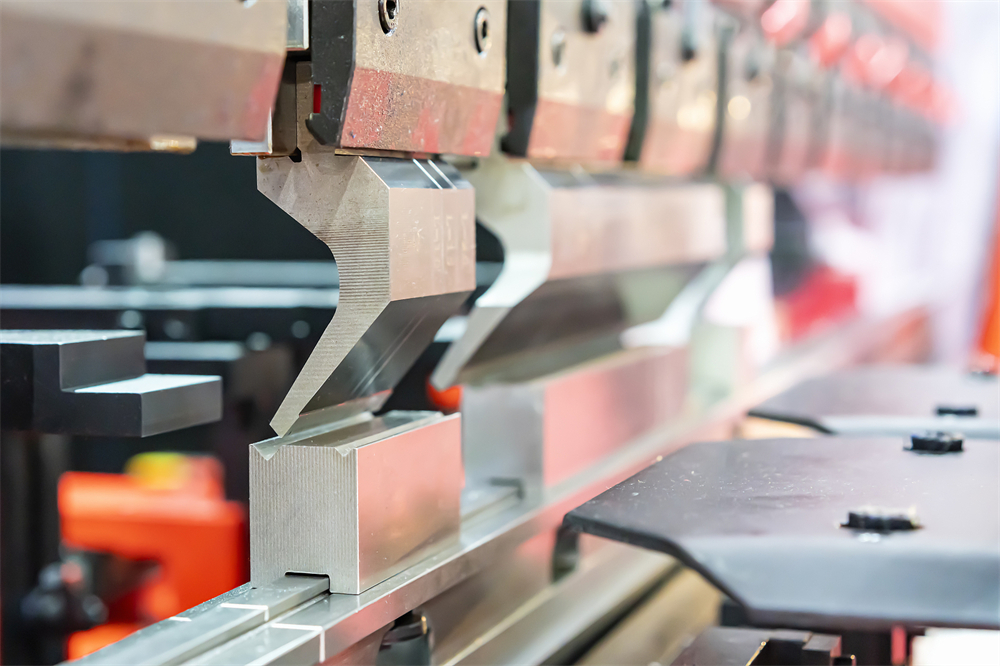
The workflow for a small-batch project differs significantly from a high-volume run. It begins with the Design and Offline Programming phase. Instead of programming at the machine, engineers use offline software to import CAD files, select the appropriate tooling, and simulate the entire bending sequence. This identifies potential collisions before the first piece of metal is even loaded onto the machine.
Once the program is transferred to the press brake, the Setup and Tooling phase begins. Thanks to the 3D interface, the operator knows exactly where to place each die and punch. If the machine is equipped with an LED tool indicator system, the controller will literally light up the sections of the bed where tools should be installed. This eliminates guesswork and reduces the risk of human error.
The Test Bend and Validation phase follows. Even with advanced simulation, a test bend on a scrap piece of the same material is often performed to verify the springback settings. With modern Press Brakes Support Prototyping Small-Batch Metal Production, the laser measurement system can often skip this step by adjusting the stroke on the fly during the first actual part production. Finally, the Production and Inspection phase occurs, where the small batch is completed with consistent quality, and each part is verified against the digital twin in the controller.
Productivity Benefits of Modern Press Brakes
Investing in a high-spec press brake for small-batch work yields several key productivity benefits. First and foremost is the Reduction in Lead Times. By eliminating the need for custom tooling and streamlining the setup process, a shop can go from a customer’s drawing to a finished part in a fraction of the time required by traditional methods. This speed allows companies to win more bids and satisfy urgent client needs.
Second is Cost-Effectiveness. While the initial investment in a CNC press brake is higher than a manual one, the cost per part for small batches is significantly lower. The reduction in scrap, the elimination of expensive jigs, and the lower labor cost per setup contribute to a much healthier bottom line. Furthermore, the ability to handle complex parts in-house prevents the need for outsourcing, keeping more profit within the organization.
Third is Enhanced Flexibility. A shop equipped with a versatile HARSLE press brake can handle a wider variety of jobs. Whether it is a thick plate for heavy machinery or a delicate thin-gauge electronic chassis, the same machine can be reconfigured in minutes. This versatility is the ultimate insurance policy against market fluctuations, as the shop can serve multiple industries simultaneously.
Case Example: Custom Electronics Enclosures
A mid-sized fabrication shop recently upgraded to a HARSLE WE67K series CNC press brake to handle an influx of orders for custom server rack enclosures. These orders typically ranged from 5 to 20 units, each with unique ventilation patterns and mounting bracket configurations. Previously, using an older manual machine, the shop struggled with consistency, often scrapping 20% of the material during setup.
After implementing the new CNC system with offline programming, the shop saw an immediate 60% reduction in setup time. The operator could load the program, install the recommended universal tooling, and produce the first enclosure with 100% accuracy. The 4-axis backgauge allowed for the complex internal flanges to be bent in a single handling, reducing the total cycle time per part. As a result, the shop was able to double its monthly output of custom enclosures without hiring additional staff, proving that the right Press Brakes Support Prototyping Small-Batch Metal Production effectively.
Frequently Asked Questions (FAQ)
1. Why is CNC better than manual for small batches?
CNC systems store programs and tool configurations, allowing for near-instant recall of previous jobs. Manual machines require manual measurement and trial-and-error for every new setup, which is too slow and wasteful for small-batch production.
2. Can I use the same tools for different materials?
Generally, yes. Universal V-dies and standard punches can handle a range of materials. However, the CNC controller must be adjusted for the specific tensile strength and springback characteristics of each material to maintain accuracy.
3. How does offline programming help?
Offline programming allows the machine to keep running production while the next job is being prepared on a computer. It also provides collision detection, ensuring that the part won’t hit the machine frame or tooling during the bend sequence.
4. What is the most important feature for prototyping?
While many features are important, a multi-axis backgauge (at least 4 axes) is often cited as the most critical for prototyping because it allows for the positioning of complex, non-rectangular parts.
5. Is a press brake suitable for very thick materials in small batches?
Yes, as long as the machine has the required tonnage. CNC press brakes are excellent for heavy-duty prototyping in industries like construction and shipbuilding where thick plates are common.
Conclusion and Call to Action
The role of the press brake has evolved from a simple bending tool to a sophisticated center of manufacturing agility. By integrating advanced CNC controls, precision backgauges, and quick-change tooling, Press Brakes Support Prototyping Small-Batch Metal Production with unprecedented efficiency. For manufacturers looking to stay ahead in a fast-paced market, upgrading to a modern press brake is not just an equipment purchase—it is a strategic investment in flexibility and precision.
At HARSLE, we specialize in providing high-performance metal fabrication solutions tailored to your specific production needs. Whether you are a startup focusing on innovative prototypes or an established firm looking to optimize your small-batch workflows, our team is here to help. Contact HARSLE today to discover our range of CNC press brakes and take the first step toward transforming your production capabilities.