
Comprehensive Hydraulic Press Maintenance Schedule for Manufacturing Plants: A HARSLE Guide


Introduction to Hydraulic Press Maintenance in Modern Manufacturing
In the high-stakes environment of modern manufacturing, the hydraulic press stands as a cornerstone of production. Whether it is used for deep drawing, stamping, forging, or assembly, the reliability of this machinery directly dictates the throughput and profitability of a facility. However, the sheer power and complexity of these machines mean that neglect can lead to catastrophic failures, expensive downtime, and safety hazards. Implementing a robust Hydraulic Press Maintenance Schedule for Manufacturing Plants is not merely a recommendation; it is a fundamental operational necessity. At HARSLE, we understand that a well-maintained machine is the difference between a seamless production line and a logistical nightmare.
A comprehensive maintenance strategy transitions a plant from reactive ‘firefighting’ to proactive asset management. Reactive maintenance—fixing things only when they break—is estimated to cost three to four times more than preventative maintenance. These costs manifest in expedited shipping for replacement parts, overtime labor, and, most significantly, the lost opportunity cost of idle production. By following a structured schedule, manufacturing plants can extend the lifespan of their hydraulic presses by decades, ensuring that the initial capital investment continues to yield returns long after the machine has been commissioned.
This guide provides an exhaustive breakdown of the maintenance requirements for hydraulic presses. We will explore the nuances of hydraulic fluid chemistry, the mechanical integrity of the frame, the precision of electrical control systems, and the critical nature of lubrication. By the end of this article, plant managers and maintenance engineers will have a blueprint for maintaining peak performance and ensuring the safety of their operators.
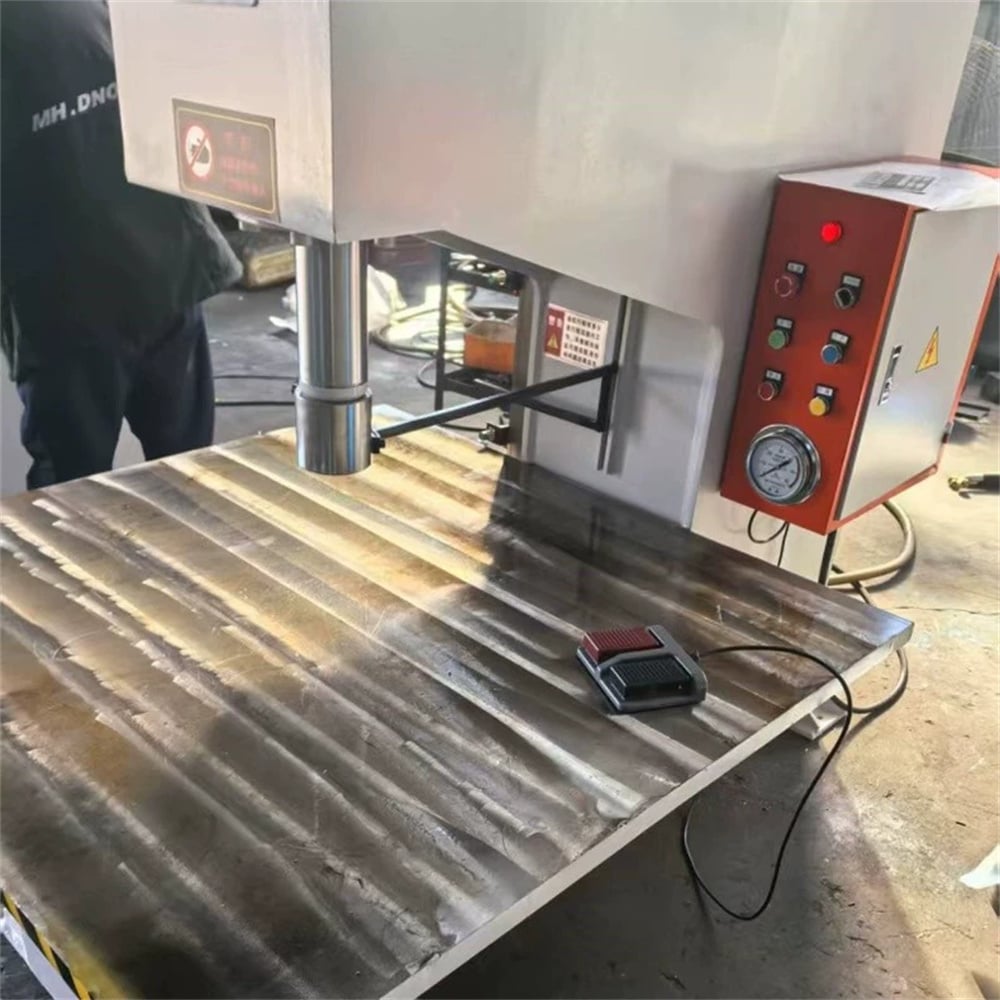
The Critical Importance of a Maintenance Schedule
The primary goal of a Hydraulic Press Maintenance Schedule for Manufacturing Plants is to prevent the degradation of components before they lead to system failure. Hydraulic systems are particularly sensitive to contamination and heat. Even microscopic particles, invisible to the naked eye, can act as abrasives, wearing down valve seats, seals, and pump vanes. A scheduled maintenance program ensures that filters are replaced and oil is analyzed before these contaminants can cause permanent damage.
Safety is another paramount concern. A hydraulic press operates under immense pressure, often exceeding several thousand PSI. A ruptured hose or a failing safety interlock can result in severe injury or death. Regular inspections of high-pressure lines and electrical safety circuits are essential to maintain a safe working environment. Furthermore, consistent maintenance ensures that the press operates within its designed tolerances. Over time, vibration and thermal expansion can cause components to shift. Without regular calibration and adjustment, the quality of the finished parts will suffer, leading to increased scrap rates and customer dissatisfaction.
Finally, documentation plays a vital role in industrial compliance and resale value. A manufacturing plant that maintains detailed logs of every inspection, oil change, and repair demonstrates a commitment to quality standards such as ISO 9001. Should the plant decide to upgrade its machinery, a press with a documented maintenance history will command a significantly higher resale price on the secondary market. In essence, maintenance is an investment in the machine’s future value.
Daily Inspection: The First Line of Defense
The daily inspection is perhaps the most critical component of any Hydraulic Press Maintenance Schedule for Manufacturing Plants. It should be performed at the start of every shift by the operator or a designated maintenance technician. This ‘walk-around’ inspection is designed to catch obvious issues before they escalate during production hours. The first step is a visual check for oil leaks. Hydraulic fluid on the floor or dripping from the ram is a clear indicator of a failing seal or a loose fitting. Even a small leak can lead to a significant loss of fluid over time and creates a slip hazard.
Next, the operator must check the oil level in the reservoir. Operating a hydraulic press with low oil levels can lead to pump cavitation—a phenomenon where air bubbles form and collapse within the fluid, causing physical damage to the pump’s internal components. The oil should be at the correct level and appear clear; cloudy or milky oil indicates water contamination, while dark, burnt-smelling oil suggests overheating. Additionally, the temperature of the oil should be monitored. Most systems are designed to operate between 110°F and 130°F (43°C to 54°C). If the oil exceeds 150°F, the viscosity drops, leading to increased wear and seal degradation.
Safety devices must also be tested daily. This includes light curtains, emergency stop buttons, and two-hand tie-down controls. If any safety feature fails to stop the machine instantly, the press must be locked out and tagged out until repairs are made. Finally, the operator should listen for unusual noises. A high-pitched whine often indicates pump issues, while a banging sound might suggest loose mechanical components or air trapped in the cylinders. Early detection of these auditory signals can save thousands of dollars in repair costs.
Hydraulic System Checks: Fluid and Filtration
The hydraulic system is the heart of the press, and the hydraulic fluid is its lifeblood. In a Hydraulic Press Maintenance Schedule for Manufacturing Plants, fluid management is a top priority. Over time, hydraulic oil undergoes chemical changes due to oxidation and thermal stress. This leads to the formation of sludge and varnish, which can clog small orifices in proportional valves and servos. Regular oil analysis is recommended every six months. This laboratory test checks for the presence of metals (indicating wear), water, and the overall Acid Number (AN) of the fluid.
Filtration is the primary defense against contamination. Most modern presses feature a kidney-loop filtration system or return-line filters. These filters should be equipped with visual or electrical indicators that signal when they are bypassed. However, relying solely on indicators is risky; filters should be changed on a set schedule, typically every 1,000 to 2,000 operating hours, or sooner if the environment is particularly dusty. When changing filters, it is also an opportune time to clean the air breather on the reservoir. A clogged breather can create a vacuum in the tank, hindering pump suction and leading to cavitation.
Cylinders and hoses require specific attention. The ram (piston rod) should be inspected for scratches, pitting, or signs of uneven wear. A damaged ram will quickly destroy the rod seals, leading to external leaks. Hoses should be checked for bulging, cracking, or abrasion. In a manufacturing plant, hoses are often subjected to external heat or mechanical rubbing. Any hose showing signs of the wire reinforcement layer must be replaced immediately. It is also wise to implement a ‘hose life’ policy, replacing high-pressure hoses every few years regardless of their outward appearance to prevent sudden bursts.
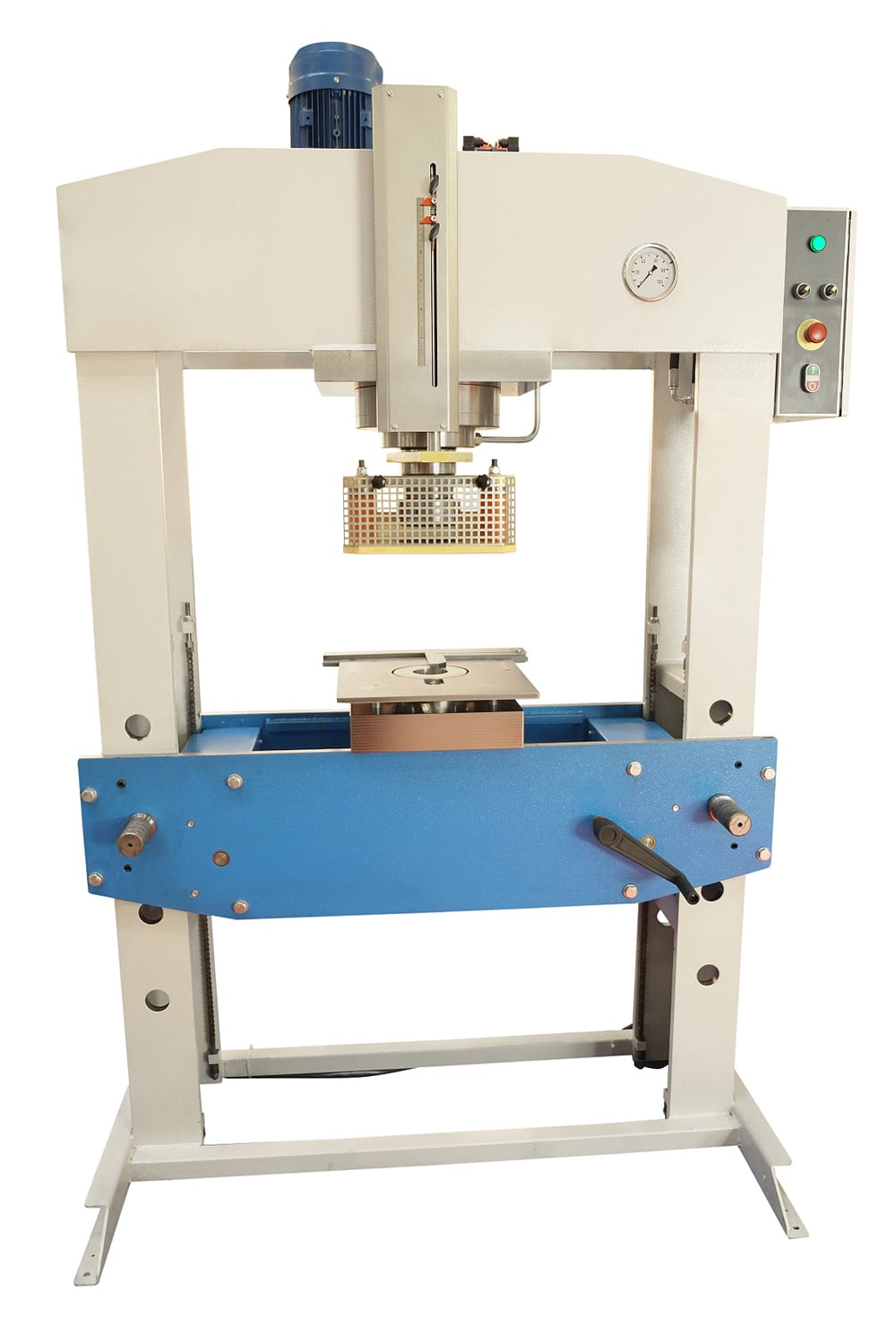
Electrical and Control System Maintenance
While the hydraulic system provides the muscle, the electrical system provides the brain. Modern HARSLE presses utilize sophisticated PLCs (Programmable Logic Controllers) and HMI (Human Machine Interface) screens to manage complex cycles. Maintenance of these systems starts with the electrical cabinet. Over time, the vibrations of the shop floor can loosen terminal connections. Loose wires cause intermittent faults, overheating, and potential electrical fires. Once a year, a technician should tighten all terminal screws and inspect wires for brittle insulation.
Heat is the enemy of electronics. Most electrical cabinets are equipped with cooling fans or heat exchangers. The filters on these cooling units must be cleaned or replaced monthly to prevent the PLC and motor drives from overheating. Dust accumulation on circuit boards can also cause short circuits, especially if the dust is conductive (e.g., metal grindings). Using dry, low-pressure compressed air to blow out the cabinet is a standard maintenance task. However, care must be taken not to static-discharge onto sensitive components.
Sensors and limit switches are the primary feedback mechanism for the press. If a limit switch is caked with grease or slightly out of alignment, the press may not complete its cycle or, worse, may over-travel and cause mechanical damage. Part of the Hydraulic Press Maintenance Schedule for Manufacturing Plants involves cleaning these sensors and verifying their mounting brackets are secure. For presses using linear transducers for position control, ensure the rod is clean and the electrical shielding is intact to prevent signal interference.
Mechanical Integrity and Gib Adjustments
The mechanical frame of a hydraulic press is designed to withstand millions of cycles, but it is not immune to wear. The most critical mechanical adjustment is the ‘gib’ clearance. Gibs are the guide rails that ensure the ram moves perfectly vertically. If the gibs are too loose, the ram can tilt or ‘cock’ under load. This misalignment causes uneven pressure on the workpiece, accelerates tool wear, and puts lateral stress on the hydraulic cylinders. Conversely, if gibs are too tight, they create excessive friction and heat, potentially seizing the ram.
Checking gib clearance should be done quarterly using a feeler gauge. The manufacturer’s specifications (often found in the HARSLE manual) will dictate the exact tolerance, usually measured in thousandths of an inch. If adjustments are needed, they must be done carefully to ensure the ram remains square to the bolster plate. While checking the gibs, the technician should also inspect the bolster plate and the ram face for burrs or indentations. A flat, clean mounting surface is essential for proper die seating and part accuracy.
Furthermore, the foundation bolts and frame tie-rods should be inspected. The immense forces generated by the press can cause the machine to shift slightly on its foundation over years of use. Ensuring the press remains level is vital for the longevity of the internal components. If a press is out of level, the oil in the reservoir may not sit correctly, and the mechanical stresses on the frame will be asymmetrical, leading to fatigue cracks in the long run.
Lubrication Plan: Reducing Friction and Wear
A rigorous lubrication plan is the backbone of the Hydraulic Press Maintenance Schedule for Manufacturing Plants. Without proper lubrication, metal-on-metal contact will rapidly destroy bushings, bearings, and guide ways. There are generally two types of lubrication systems in a press: manual and automatic. Automatic systems are preferred as they deliver small, consistent amounts of lubricant while the machine is in motion, ensuring a constant protective film.
For the lubrication plan to be effective, the correct type of lubricant must be used. Using a general-purpose grease where a high-pressure EP (Extreme Pressure) grease is required can lead to premature failure. The maintenance schedule should specify the lubricant type for each point: the ram guides, the main motor bearings, and any linkage pins. If the press has an automatic lubrication system, the reservoir must be topped up regularly, and the distribution lines must be checked for blockages. A crushed lube line is a common issue that can go unnoticed until a bearing seizes.
In addition to grease, some components may require oil-mist lubrication or periodic oiling. The frequency of lubrication depends on the duty cycle of the machine. A press running three shifts a day, six days a week, will require much more frequent lubrication than a machine used for occasional prototyping. A good rule of thumb is to inspect all lubrication points weekly to ensure that a fresh film of grease is visible at the edges of the bushings or guides, indicating that the old, contaminated grease is being pushed out.
Troubleshooting Signals: What Your Press is Telling You
Experienced maintenance technicians often develop a ‘sixth sense’ for machinery, but anyone can learn to recognize the warning signs of a failing hydraulic press. One of the most common signals is a change in cycle time. If the press is taking longer to reach full pressure or the ram is returning slower than usual, it often points to an internal leak in the cylinder or a pump that is losing efficiency. This ‘sluggishness’ is a precursor to total failure and should be investigated immediately.
Vibration is another key indicator. While some vibration is normal during a high-tonnage breakthrough, excessive or new vibrations suggest mechanical looseness or hydraulic shock. Hydraulic shock occurs when fluid flow is stopped or redirected too abruptly, creating pressure spikes that can fatigue welds and blow seals. This can often be fixed by adjusting the ramp-down speeds in the PLC or checking the nitrogen pre-charge in the accumulators. If your press uses accumulators, checking their pressure should be a monthly task, as they are vital for absorbing shocks and providing auxiliary power.
Heat is perhaps the most objective signal. Using an infrared thermometer, a technician can scan the hydraulic system. A valve that is significantly hotter than the surrounding manifold is likely leaking internally, as the energy of the pressurized fluid is being converted into heat as it forces its way past a seal. Similarly, a hot spot on a motor housing suggests a failing bearing or an electrical overload. By catching these thermal anomalies early, manufacturing plants can schedule repairs during planned downtime rather than reacting to a mid-shift breakdown.
Comprehensive Maintenance Schedule Table
The following table summarizes the essential tasks for a Hydraulic Press Maintenance Schedule for Manufacturing Plants. This table should be adapted based on the specific model of the HARSLE press and the intensity of the production environment.
| Frequency | Component | Action Required |
|---|---|---|
| Daily | Safety Systems | Test light curtains, E-stops, and interlocks. |
| Daily | Hydraulic Fluid | Check level and temperature; inspect for leaks. |
| Daily | General | Listen for unusual noises and observe cycle consistency. |
| Weekly | Filters | Check filter indicators; clean reservoir air breather. |
| Weekly | Lubrication | Check auto-lube levels; manually grease secondary points. |
| Weekly | Mechanical | Wipe down ram; inspect for scoring or debris. |
| Monthly | Electrical | Clean cabinet filters; inspect external sensors/cables. |
| Monthly | Accumulators | Check nitrogen pre-charge pressure (if applicable). |
| Monthly | Cooling System | Inspect heat exchanger and clean cooling fins. |
| Quarterly | Gibs/Guides | Check clearances with feeler gauges; adjust if necessary. |
| Quarterly | Hardware | Tighten foundation bolts and critical structural fasteners. |
| Semi-Annually | Oil Analysis | Send fluid sample to lab for contamination/viscosity test. |
| Semi-Annually | Hoses/Piping | Inspect all high-pressure lines for wear or aging. |
| Annually | Full Calibration | Verify pressure gauge accuracy and ram parallelism. |
| Annually | Electrical Cabinet | Tighten all terminals; blow out dust; check relay health. |
| Annually | Hydraulic Tank | Drain, clean tank interior, and replace fluid (if analysis fails). |
Frequently Asked Questions (FAQ)
1. How often should I change the hydraulic oil in my press?
There is no one-size-fits-all answer, but generally, oil should be changed every 2,000 to 4,000 hours of operation. However, the best practice is to rely on oil analysis. If the analysis shows the oil is still within ISO cleanliness standards and the additive package is intact, you can extend its life. Conversely, if the oil is oxidized or contaminated, it must be changed immediately regardless of the hours.
2. Why is my hydraulic press making a loud banging noise?
A banging noise is usually caused by hydraulic shock or air trapped in the system. Check for loose mounting bolts first. If the noise persists, it may be ‘decompression shock,’ which happens when the pressure is released too quickly. Adjusting the decompression valves or PLC settings can often resolve this. Air in the system can be bled out by cycling the ram through its full stroke several times without a load.
3. Can I use any type of hydraulic fluid?
No. You must use the fluid weight and type specified by HARSLE. Most presses use an anti-wear (AW) hydraulic oil, typically ISO VG 32, 46, or 68. Using the wrong viscosity can lead to pump damage (if too thick) or excessive internal leakage and heat (if too thin). Always check the manual before topping up.
4. What are the signs of a failing hydraulic pump?
The most common signs include a high-pitched whining noise (aeration or cavitation), increased cycle times, and the inability of the press to reach its maximum rated tonnage. If the pump housing is too hot to touch, it is a sign of internal wear and excessive friction.
5. How do I know if my gibs need adjustment?
If you notice that your dies are wearing unevenly or the ram seems to ‘shudder’ during the stroke, your gibs likely need adjustment. You can also perform a ‘squareness’ test by placing a dial indicator on the ram and moving it against a precision square on the bolster plate. Any deviation beyond the manufacturer’s spec indicates the need for adjustment.
Conclusion: The Path to Operational Excellence
Maintaining a hydraulic press is a continuous commitment that pays dividends in the form of reliability, safety, and precision. By following this Hydraulic Press Maintenance Schedule for Manufacturing Plants, facilities can transform their maintenance department from a cost center into a value-driver. A well-maintained HARSLE press is a powerful tool capable of producing high-quality components for decades. It requires a disciplined approach, starting with daily operator checks and culminating in annual professional audits.
Remember that maintenance is not just about fixing what is broken; it is about understanding the machine’s health and intervening before a failure occurs. In the competitive landscape of metal fabrication, the ability to guarantee uptime is a significant competitive advantage. We encourage all plant managers to post this schedule near their machinery and ensure that every team member understands their role in the machine’s longevity. For further technical support or specific maintenance parts for your HARSLE equipment, always consult with authorized service professionals to ensure the continued integrity of your industrial machinery.


