
Hydraulic Press Won’t Start: Electrical and Mechanical Troubleshooting


Introduction to Hydraulic Press Troubleshooting
In the high-stakes world of metal fabrication, a non-responsive hydraulic press is more than just a minor inconvenience; it is a significant bottleneck that can halt entire production lines. When a hydraulic press won’t start, the cause can range from a simple tripped breaker to complex internal mechanical failures. Understanding the nuances of Hydraulic Press Won’t Start: Electrical Mechanical Troubleshooting is essential for maintenance teams and machine operators alike to minimize downtime and ensure the longevity of the equipment.
HARSLE, a leader in the manufacturing of high-quality metal fabrication machinery, recognizes that even the most robust machines require systematic maintenance and occasional troubleshooting. Whether you are operating a C-frame press, an H-frame press, or a specialized deep drawing machine, the fundamental principles of operation remain consistent. A failure to start usually indicates a break in the sequence of operations required to energize the motor or engage the hydraulic pump.
This comprehensive guide is designed to walk you through the diagnostic process, separating the issues into electrical and mechanical categories. By following a structured approach, you can identify the root cause of the problem safely and efficiently. We will explore the common culprits, from faulty limit switches to hydraulic cavitation, providing you with the technical depth needed to get your machinery back in operation.
Key Considerations Before You Begin
Before diving into the technical details of Hydraulic Press Won’t Start: Electrical Mechanical Troubleshooting, safety must be the absolute priority. Industrial hydraulic presses exert immense force and utilize high-voltage electricity. Never attempt to troubleshoot a machine without following proper Lockout/Tagout (LOTO) procedures to ensure the machine cannot be accidentally energized while you are working on it.
Secondly, consider the environment in which the machine operates. Extreme temperatures, high humidity, or excessive dust can all contribute to component failure. For instance, cold hydraulic oil may be too viscous for the pump to move initially, or dust buildup in an electrical cabinet can cause overheating and short circuits. Always consult the specific operator’s manual provided by the manufacturer, as different models may have unique safety interlocks or startup sequences.
Initial checks should always include the simplest possibilities. Is the main power disconnect in the ‘ON’ position? Are all emergency stop buttons released? It is surprisingly common for a machine to be deemed ‘broken’ simply because an E-stop was engaged during a shift change and not reset. Furthermore, check the control panel for any error codes or warning lights. Modern HARSLE machines often feature PLC diagnostics that can point you directly to the source of the fault, saving hours of manual testing.
Electrical Troubleshooting: The Control Circuit
When a hydraulic press fails to start, the electrical system is the most frequent offender. The electrical system is responsible for interpreting operator commands and providing the necessary power to the hydraulic pump motor. Troubleshooting should follow the flow of electricity from the source to the motor.
1. Power Supply and Fuses
Start at the main electrical cabinet. Use a multimeter to verify that the incoming voltage matches the machine’s requirements (e.g., 220V, 380V, or 480V). Check for blown fuses or tripped circuit breakers. A blown fuse is often a symptom of a deeper issue, such as a short circuit or a motor drawing excessive current. If a fuse blows immediately after replacement, do not continue to replace it; instead, investigate the downstream components for a ground fault.
2. Emergency Stop and Safety Interlocks
Hydraulic presses are equipped with multiple safety devices, including E-stops, light curtains, and interlocked safety gates. These devices are typically wired in a ‘normally closed’ series circuit. If any one of these devices is triggered or fails, the circuit opens, and the motor starter will not engage. Check the continuity of the safety string. If you find an open circuit, inspect the individual switches for mechanical damage or misalignment. Light curtains, in particular, can be sensitive to dust or misalignment, preventing the press from initiating its cycle.
3. Motor Starter and Contactors
The motor starter is a heavy-duty relay that switches the high-voltage power to the pump motor. If you hear a ‘clicking’ sound when you press the start button but the motor doesn’t turn, the contactor may have burnt contacts or a faulty coil. Conversely, if there is no sound at all, the control voltage (usually 24V DC or 110V AC) may not be reaching the contactor coil. Test the coil voltage and inspect the contacts for signs of pitting or welding.
4. PLC and Control Logic
In modern metal fabrication equipment, a Programmable Logic Controller (PLC) manages the machine’s operations. If the PLC does not receive the ‘ready’ signal from all sensors (such as oil level, temperature, and ram position), it will not allow the motor to start. Look at the LED indicators on the PLC modules. An ‘Input’ LED should light up when a button is pressed or a sensor is triggered. If the input is received but the ‘Output’ to the motor starter does not activate, there may be a logic error or an internal fault within the PLC.
Mechanical and Hydraulic System Diagnostics
If the electrical system is functioning correctly and the motor is humming or running, but the press still won’t perform its stroke, the issue lies within the mechanical or hydraulic systems. This phase of Hydraulic Press Won’t Start: Electrical Mechanical Troubleshooting requires an understanding of fluid power principles.
1. Hydraulic Fluid Levels and Quality
The most basic mechanical check is the oil level in the reservoir. If the oil is too low, the pump may draw in air (aeration), preventing it from building pressure. Additionally, check the condition of the oil. If it appears milky, it is contaminated with water; if it smells burnt, it has overheated. Contaminated oil can cause valves to stick and pumps to fail prematurely. Ensure the oil viscosity is appropriate for the ambient operating temperature.
2. Pump Priming and Suction Issues
A hydraulic pump must be ‘primed’ with oil to function. If the machine has been sitting idle for a long time, or if the suction filters are clogged, the pump may lose its prime. A clogged suction strainer is a common reason for a pump failing to move oil. Listen for a high-pitched whining sound, which indicates cavitation—a condition where the pump is starved of oil, leading to rapid internal damage. Cleaning or replacing filters is a critical maintenance step that is often overlooked.
3. Solenoid Valve Malfunctions
Solenoid valves direct the flow of oil to the cylinders. If a valve spool is stuck due to debris or a weak return spring, the oil may simply bypass the cylinder and return to the tank. You can often manually override these valves using a small pin or button on the valve body to see if the ram moves. If the ram moves during a manual override but not during normal operation, the problem is likely electrical (the solenoid coil is not receiving power).
4. Pressure Relief Valve Settings
The pressure relief valve is a safety component that limits the maximum pressure in the system. If this valve is stuck open or set too low, the hydraulic fluid will take the path of least resistance and flow back to the reservoir instead of moving the ram. Using a pressure gauge, check the system pressure during a start attempt. If the pressure remains near zero despite the pump running, the relief valve is a primary suspect.
Technical Details: Understanding the Interaction
The interaction between electrical signals and hydraulic force is what makes a press functional. For example, a ‘Pressure Switch’ is an electro-mechanical device that monitors hydraulic pressure and sends an electrical signal back to the PLC. If this switch fails, the PLC might think the system has already reached its maximum pressure and refuse to start the cycle. This illustrates why Hydraulic Press Won’t Start: Electrical Mechanical Troubleshooting must be viewed as a holistic process.
Another technical aspect to consider is the ‘Directional Control Valve’ (DCV). In many HARSLE presses, these are high-precision components. Even a microscopic piece of metal shaving can jam the spool. Regular oil analysis and high-quality filtration (usually 10 microns or less) are necessary to prevent these mechanical failures. When troubleshooting, always check the ‘state’ of the machine. Is the ram at the top of its stroke? If the ‘Up’ limit switch is triggered, the machine will not move up further, which might be interpreted by an inexperienced operator as the machine not starting.
| Component | Common Failure Mode | Diagnostic Action |
|---|---|---|
| Main Motor | Overload Trip | Reset thermal relay and check for phase loss. |
| Hydraulic Pump | Cavitation / Wear | Check suction line for leaks and clean filters. |
| Limit Switch | Misalignment / Broken | Verify physical contact and electrical continuity. |
| Solenoid Coil | Burnout | Check resistance with an ohmmeter. |
| Oil Filter | Clogging | Replace filter element and check oil clarity. |
Selection Advice: Choosing a Reliable Hydraulic Press
When purchasing a new hydraulic press, reliability and ease of troubleshooting should be top priorities. A machine that is difficult to diagnose will cost more in the long run due to extended downtime. Here are some factors to consider when selecting equipment from manufacturers like HARSLE:
- Component Quality: Ensure the press uses internationally recognized brands for electrical and hydraulic components (e.g., Schneider electrics, Rexroth valves). This ensures that replacement parts are easily available and documentation is standardized.
- Diagnostic Features: Look for machines with integrated HMI (Human Machine Interface) screens that provide real-time error logging. A machine that tells you “Fault: Emergency Stop 2 Engaged” is much faster to fix than one that simply doesn’t move.
- Accessibility: A well-designed press has an organized electrical cabinet and easily accessible hydraulic manifolds. If a technician has to disassemble half the machine just to check a filter, maintenance will likely be neglected.
- Manufacturer Support: Choose a manufacturer that provides comprehensive wiring diagrams, hydraulic schematics, and responsive technical support. HARSLE provides detailed manuals and support to help customers navigate Hydraulic Press Won’t Start: Electrical Mechanical Troubleshooting.
- Safety Standards: Ensure the machine complies with CE or OSHA standards. High-quality safety systems are not only safer for operators but are often more reliable and easier to troubleshoot than ‘add-on’ safety features.
Frequently Asked Questions (FAQ)
Why is my hydraulic press motor humming but not turning?
This usually indicates a ‘single-phasing’ condition where one of the three phases of power is missing, or the motor is mechanically stalled. Check the incoming voltage on all three phases and ensure the hydraulic pump is not seized. Also, check the motor capacitor if it is a single-phase motor.
How often should I change the hydraulic oil to prevent startup issues?
Generally, hydraulic oil should be changed every 2,000 to 4,000 hours of operation, or at least once a year. However, you should perform regular oil analysis to check for oxidation and contamination. Clean oil is the best defense against valve and pump failure.
The press starts but moves very slowly. Is this an electrical or mechanical issue?
This is typically a mechanical/hydraulic issue. It could be caused by a partially clogged filter, a pump that is wearing out, or a bypass in a control valve. It could also be that the oil is too cold and thick; many presses require a warm-up period to reach operating temperature.
Can a faulty foot pedal prevent the press from starting?
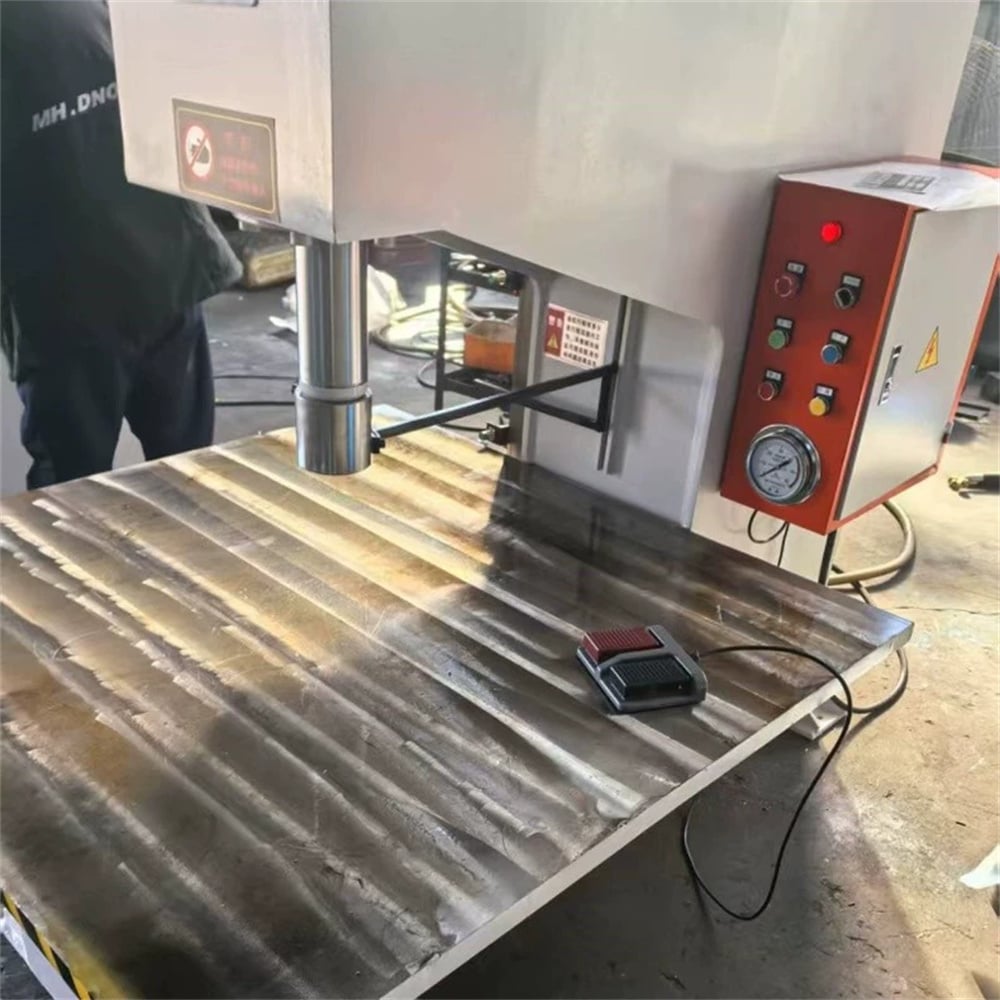
Yes. The foot pedal is a primary input device. If the internal switch in the pedal fails or the cable is damaged, the PLC will never receive the ‘start’ command. Test the pedal for continuity when pressed.
What should I do if the PLC ‘Error’ light is on?
An error light on the PLC usually indicates an internal hardware failure or a major logic conflict. Try cycling the main power to reset the controller. If the light persists, you may need to connect a laptop with the PLC software to read the specific error code.
Conclusion
Mastering Hydraulic Press Won’t Start: Electrical Mechanical Troubleshooting is a vital skill for anyone involved in industrial metal fabrication. By understanding the symbiotic relationship between the electrical control system and the hydraulic power unit, you can systematically eliminate variables until the root cause is found. Most issues can be traced back to simple maintenance oversights, such as dirty filters, loose wires, or un-reset safety devices.
Investing in high-quality machinery from reputable brands like HARSLE significantly reduces the frequency of these issues. HARSLE machines are engineered for durability and feature intuitive control systems that simplify the diagnostic process. However, no machine is immune to wear and tear. Implementing a rigorous preventative maintenance program—including regular oil checks, electrical inspections, and component lubrication—is the most effective way to ensure your hydraulic press starts every time you need it.
Remember, when in doubt, always refer to your technical documentation or contact a professional service technician. Proper troubleshooting not only saves time but also prevents the accidental damage that can occur when ‘guessing’ at a solution. With the right knowledge and a methodical approach, you can keep your production floor running smoothly and efficiently.


