
Case Study: Improving Hole Accuracy in High-Volume Parts with an Automatic Punching Machine


Introduction: The Challenge of Precision in High-Volume Metal Fabrication
In the competitive landscape of modern metal fabrication, the demand for high-volume production often clashes with the stringent requirements for precision and accuracy. For manufacturers producing components for the automotive, aerospace, and electronics industries, even a fraction of a millimeter in hole deviation can lead to assembly failures, increased scrap rates, and significant financial losses. This case study examines how the implementation of an advanced automatic punching machine transformed the production line of a leading industrial supplier, specifically focusing on the critical metric of hole accuracy.
The subject of this study is a manufacturer specializing in perforated panels and structural brackets. Previously, the facility relied on semi-automatic mechanical presses and manual layout techniques. While these methods were sufficient for low-volume, low-tolerance work, the transition to high-volume contracts exposed significant weaknesses. Inconsistent positioning, tool wear that went unnoticed, and the inherent variability of manual material handling resulted in a reject rate of nearly 8%. The objective was clear: find a solution that could maintain micron-level accuracy across thousands of cycles without sacrificing throughput.
Enter the HARSLE automatic punching machine. By integrating CNC (Computer Numerical Control) technology with high-speed hydraulic or servo-driven actuators, these machines offer a level of repeatability that manual processes simply cannot match. This article will detail the technical transition, the key considerations during the upgrade, and the measurable improvements in hole accuracy and production efficiency that followed the installation of the new equipment.
Key Considerations for High-Volume Hole Accuracy
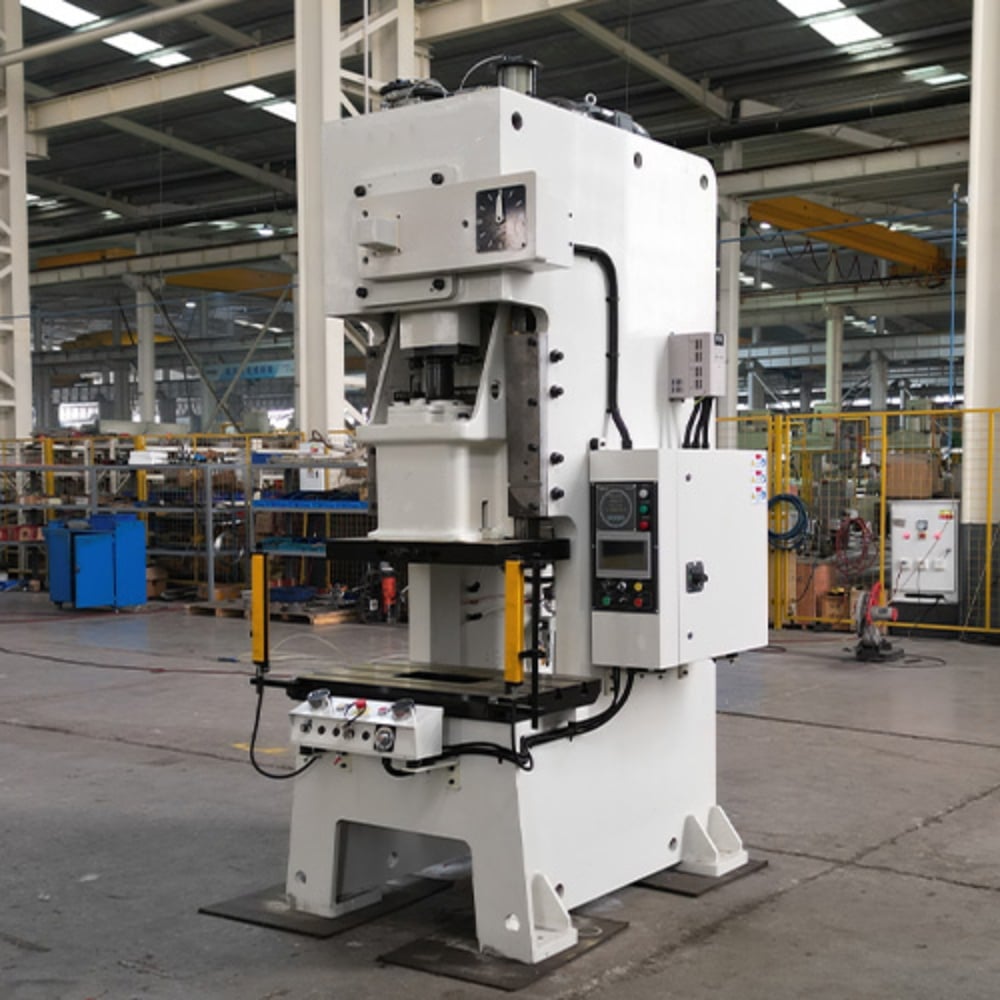
When aiming to improve hole accuracy in a high-volume environment, several factors must be addressed simultaneously. It is not merely about the speed of the punch; it is about the stability of the entire system. The first consideration is the rigidity of the machine frame. Under high-tonnage loads, a machine frame that lacks sufficient structural integrity will experience ‘deflection’ or ‘yaw.’ This slight bending of the frame causes the punch and die to misalign, leading to burrs, accelerated tool wear, and, most importantly, inaccurate hole placement.
Another critical factor is the material feeding system. In high-volume production, the material must move rapidly between punch cycles. If the feeding mechanism—whether it be a servo-driven feeder or a pneumatic gripper—slips even slightly, the cumulative error across a large sheet can be devastating. The integration of high-resolution encoders and closed-loop feedback systems is essential to ensure that the material is exactly where it needs to be before the punch descends.
Tooling quality and maintenance also play a pivotal role. In this case study, the transition to an automatic punching machine allowed for the use of high-performance tool steels and specialized coatings. Because the automatic machine controls the stroke depth and speed with extreme precision, the tools are subjected to less shock and vibration compared to manual presses. This consistency extends the life of the punch and die, maintaining the sharp edges required for clean, accurate holes over tens of thousands of hits.
Finally, the software interface and CNC programming cannot be overlooked. The ability to import CAD files directly into the machine’s controller eliminates human error in coordinate entry. Advanced nesting software also optimizes the layout of holes to minimize material travel, which not only speeds up the process but also reduces the potential for thermal expansion or material warping during long production runs. These considerations formed the foundation of the upgrade strategy for our subject manufacturer.
Technical Details of the Automatic Punching Solution
The solution implemented was a HARSLE high-speed CNC automatic punching machine equipped with a multi-station turret. This configuration allows the machine to switch between different hole sizes and shapes without manual intervention, which is vital for complex parts. The core of the machine’s accuracy lies in its servo-hydraulic system. Unlike traditional mechanical flywheels, the servo-hydraulic drive allows for full control over the punch position throughout the entire stroke. This means the machine can ‘hover’ just above the material and strike with a controlled velocity, reducing the impact noise and vibration that often lead to accuracy drift.
The machine features a heavy-duty O-frame design, which is heat-treated to relieve internal stresses. This ensures that the machine remains geometrically stable even after years of high-volume operation. The worktable utilizes a combination of brush and ball designs to support the sheet metal, preventing scratches while allowing for smooth, high-speed movement. The X and Y axes are driven by high-precision ball screws and linear guides, providing a positioning accuracy of ±0.1mm and a repeatability of ±0.05mm.
One of the standout technical features is the ‘Auto-Index’ station. In high-volume parts that require holes at various angles, the auto-index feature allows the tool itself to rotate 360 degrees. This eliminates the need for multiple tools for different angles, reducing the turret’s weight and increasing the overall speed of the operation. Furthermore, the machine is equipped with an automatic lubrication system that ensures all moving parts, including the punch guide, are consistently oiled, reducing friction-induced heat which can cause material expansion and subsequent accuracy issues.
| Feature | Technical Specification | Impact on Accuracy |
|---|---|---|
| Drive System | Servo-Hydraulic / Full CNC | Precise stroke control; reduced vibration. |
| Positioning Accuracy | ±0.1 mm | Ensures holes meet strict tolerance limits. |
| Frame Type | Closed O-Frame (Stress Relieved) | Eliminates frame deflection under load. |
| Tooling Change | Automatic Turret (12-32 Stations) | Reduces manual handling and setup errors. |
In addition to the hardware, the integration of a sophisticated sensor array provides real-time monitoring. These sensors detect sheet slippage, tool breakage, or material thickness variations. If the system detects a deviation that exceeds the programmed tolerance, it automatically pauses the operation, preventing the production of a large batch of defective parts. This ‘fail-safe’ mechanism is a cornerstone of high-volume quality assurance.
Selection Advice: Choosing the Right Automatic Punching Machine
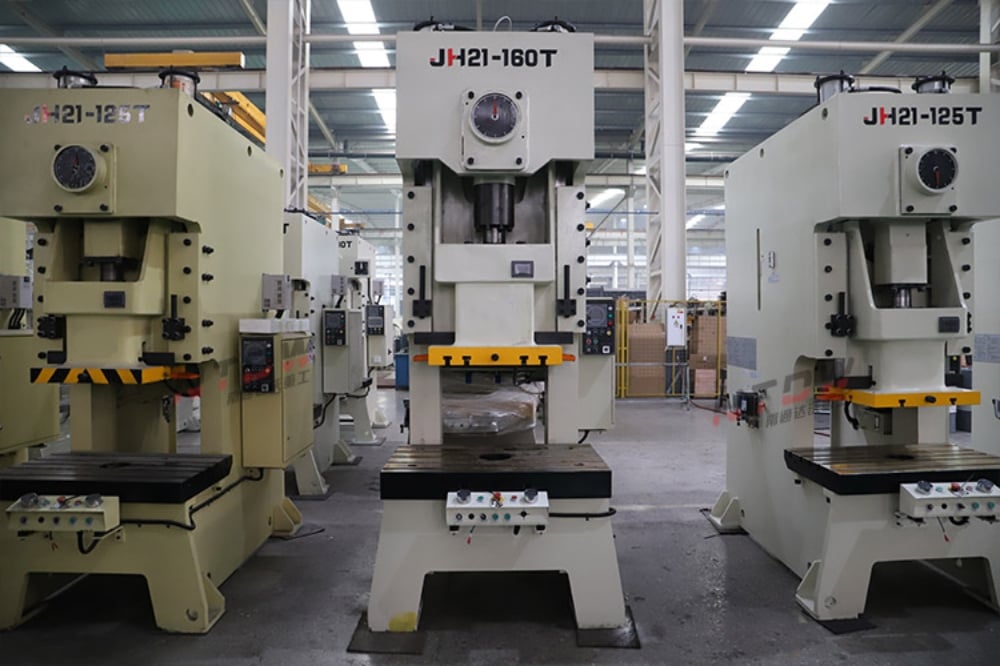
Selecting the right automatic punching machine for high-volume parts requires a deep understanding of your specific production needs. The first step is to calculate the required tonnage. Tonnage is determined by the material type, thickness, and the total perimeter of the holes being punched. It is always advisable to select a machine with a capacity 20-30% higher than your maximum requirement to ensure the machine isn’t constantly running at its limit, which can lead to premature wear and loss of accuracy.
Secondly, consider the bed size and the maximum sheet weight. For high-volume work, larger bed sizes allow you to process bigger sheets or multiple smaller parts in a single nest, reducing the frequency of material loading and unloading. However, larger sheets require more robust clamping systems and more powerful servo motors to maintain high-speed positioning without losing accuracy. Ensure the machine you choose has a ‘re-positioning’ feature if you plan to work with sheets longer than the physical travel of the X-axis.
The turret configuration is another vital choice. A larger number of stations in the turret means you can keep more tools loaded simultaneously, reducing setup time between different jobs. For high-volume parts with varied hole geometries, look for machines that offer multiple ‘Auto-Index’ stations. This flexibility is a significant force multiplier in a production environment. Additionally, evaluate the software compatibility. The machine should ideally integrate seamlessly with your existing CAD/CAM workflow to ensure a smooth transition from design to finished part.
Finally, do not overlook the importance of after-sales support and maintenance. An automatic punching machine is a significant investment, and in a high-volume environment, downtime is incredibly costly. Choose a manufacturer like HARSLE that provides comprehensive training, readily available spare parts, and remote diagnostic capabilities. A well-maintained machine will maintain its accuracy for decades, whereas a neglected one will quickly become a liability.
Buyer’s Checklist for Automatic Punching Machines:
- Accuracy Specs: Verify both positioning accuracy and repeatability.
- Control System: Ensure the CNC is user-friendly and supports standard G-code or CAD imports.
- Speed: Check the hits-per-minute (HPM) for both 25mm centers and nibbling.
- Safety Features: Look for light curtains, emergency stops, and sensor-based error detection.
- Expandability: Can the machine be integrated with automatic loaders or unloaders in the future?
Frequently Asked Questions (FAQ)
1. How does an automatic punching machine improve hole accuracy compared to manual methods?
Automatic punching machines utilize CNC systems and high-precision servo motors to control the movement of the material and the punch. This eliminates human error in measurement and positioning. Furthermore, the rigid frame and controlled hydraulic stroke ensure that the punch enters the die perfectly every time, maintaining consistent tolerances across thousands of parts.
2. What is the typical tolerance for a CNC automatic punching machine?
Most high-quality CNC punching machines, such as those from HARSLE, offer a positioning accuracy of approximately ±0.1mm and a repeatability of ±0.05mm. This is significantly tighter than manual or semi-automatic methods, which can vary by 0.5mm or more depending on the operator’s skill and fatigue levels.
3. Can these machines handle different material thicknesses?
Yes, automatic punching machines are highly versatile. By changing the punch and die set and adjusting the stroke parameters in the CNC controller, they can handle materials ranging from thin foils to heavy plates (typically up to 6mm or 8mm depending on the machine’s tonnage). The automatic system ensures the correct pressure is applied for each thickness.
4. How often does the tooling need to be replaced in high-volume production?
Tool life depends on the material being punched (e.g., stainless steel wears tools faster than aluminum) and the quality of the tooling. However, because automatic machines provide a stable and perpendicular strike, tool life is generally much longer than in manual presses. Regular sharpening and proper lubrication can extend tool life to hundreds of thousands of hits.
5. Is it difficult to program an automatic punching machine?
Modern CNC punching machines feature intuitive graphical interfaces. Most operators can be trained to import CAD files and set up nesting patterns within a few days. Advanced software also automates the selection of tools and the optimization of the punching sequence, making the process very straightforward.
6. What maintenance is required to keep the machine accurate?
Key maintenance tasks include regular lubrication of the linear guides and ball screws, checking the hydraulic oil levels and filters, and inspecting the turret alignment. Keeping the machine clean of metal dust and slugs is also crucial to prevent interference with the sensors and moving parts.
Conclusion: The ROI of Precision
The transition to an automatic punching machine is a defining moment for any metal fabrication business aiming for high-volume success. As demonstrated in this case study, the primary benefit is the dramatic improvement in hole accuracy. By reducing the reject rate from 8% to less than 0.5%, the manufacturer not only saved on material costs but also significantly improved their reputation for quality among their Tier-1 clients. The precision of the HARSLE machine ensured that every part was ‘bolt-ready,’ eliminating the need for secondary reaming or manual adjustments during assembly.
Beyond accuracy, the increase in throughput was equally impressive. The ability to run the machine unattended during breaks and the reduction in setup times allowed the facility to double its daily output without increasing its labor force. This combination of high precision and high speed provides a rapid return on investment (ROI), often paying for the machine within the first 18 to 24 months of operation through scrap reduction and labor savings alone.
In conclusion, for manufacturers facing the challenges of high-volume production, the question is no longer whether they can afford to automate, but whether they can afford not to. The consistency, reliability, and micron-level accuracy of an automatic punching machine are the keys to staying competitive in an increasingly demanding global market. By investing in the right technology and following a rigorous maintenance and selection process, fabricators can ensure their production lines are equipped for the future of industrial manufacturing.


