
Case Study: Solving Thick Plate Punching Challenges with a Heavy-Duty Punching Machine


Introduction to Thick Plate Punching Challenges
In the modern industrial landscape, the demand for heavy-duty structural components has never been higher. From shipbuilding and bridge construction to the manufacturing of heavy earthmoving equipment, the ability to process thick metal plates with precision and speed is a critical competitive advantage. However, punching holes in thick plates—typically defined as materials exceeding 12mm to 25mm in thickness—presents a unique set of engineering hurdles that standard machinery simply cannot overcome. This Case Study: Solving Thick Plate Punching Challenges A Heavy-Duty Punching Machine examines how advanced hydraulic and mechanical engineering can transform a bottleneck into a streamlined production process.
The primary difficulty in thick plate punching lies in the sheer amount of force required to shear through the material. Unlike thin sheet metal, which behaves predictably under moderate pressure, thick plates exert massive counter-forces on the machine frame, the tooling, and the hydraulic system. Without the right equipment, manufacturers face frequent tool breakage, excessive machine vibration, poor hole quality, and significant downtime. HARSLE has spent years refining heavy-duty punching solutions to address these specific pain points, ensuring that high-tonnage operations remain both safe and efficient.
In this article, we will delve into a real-world scenario where a structural steel fabricator transitioned from traditional drilling methods to a high-capacity punching system. We will explore the technical nuances of the machinery involved, the critical considerations for selecting such equipment, and the long-term benefits of investing in a heavy-duty punching machine designed for the rigors of thick plate fabrication.
Key Considerations for Heavy-Duty Punching
When dealing with thick plates, the physics of metal deformation changes. It is not merely about “pushing” a punch through a die; it is about managing energy, heat, and material flow. The first major consideration is Tonnage and Force Distribution. A machine must not only provide the peak force required to break the material’s shear strength but must also maintain that force throughout the stroke. For thick plates, the “snap-through” effect—the sudden release of energy when the material finally yields—can be destructive to the machine’s internal components if not properly dampened.
Another vital factor is Die Clearance. In thin materials, clearance is a small percentage of the thickness. In thick plates, the clearance must be calculated with extreme precision to prevent “slug pulling” or excessive burr formation. If the clearance is too tight, the force required increases exponentially, leading to rapid tool wear. If it is too loose, the hole becomes tapered and structurally unsound. A heavy-duty punching machine must allow for quick and accurate die changes to accommodate different material grades and thicknesses.
Thermal Management also plays a significant role. Punching thick plates generates a tremendous amount of heat due to friction. This heat can cause the punch to expand, leading to galling or even welding itself to the workpiece. Advanced heavy-duty machines incorporate specialized lubrication systems and cooling cycles to ensure that the tooling remains within optimal temperature ranges, even during high-volume production runs.
Finally, Frame Rigidity is the backbone of any successful thick plate operation. Standard C-frame machines may experience “yawing” or deflection when subjected to 100+ tons of pressure. For thick plates, H-frame or bridge-style frames are often preferred because they distribute the load symmetrically, ensuring that the punch and die remain perfectly aligned. This alignment is crucial for maintaining hole concentricity and preventing side-loading on the ram.
Technical Details of Heavy-Duty Punching Systems
The engineering behind a heavy-duty punching machine is a testament to industrial innovation. At the heart of these machines is the hydraulic power unit (HPU). Unlike light-duty presses, heavy-duty systems utilize high-pressure variable displacement pumps that can modulate flow based on the resistance encountered. This ensures that the machine provides maximum torque at the moment of impact while conserving energy during the return stroke.
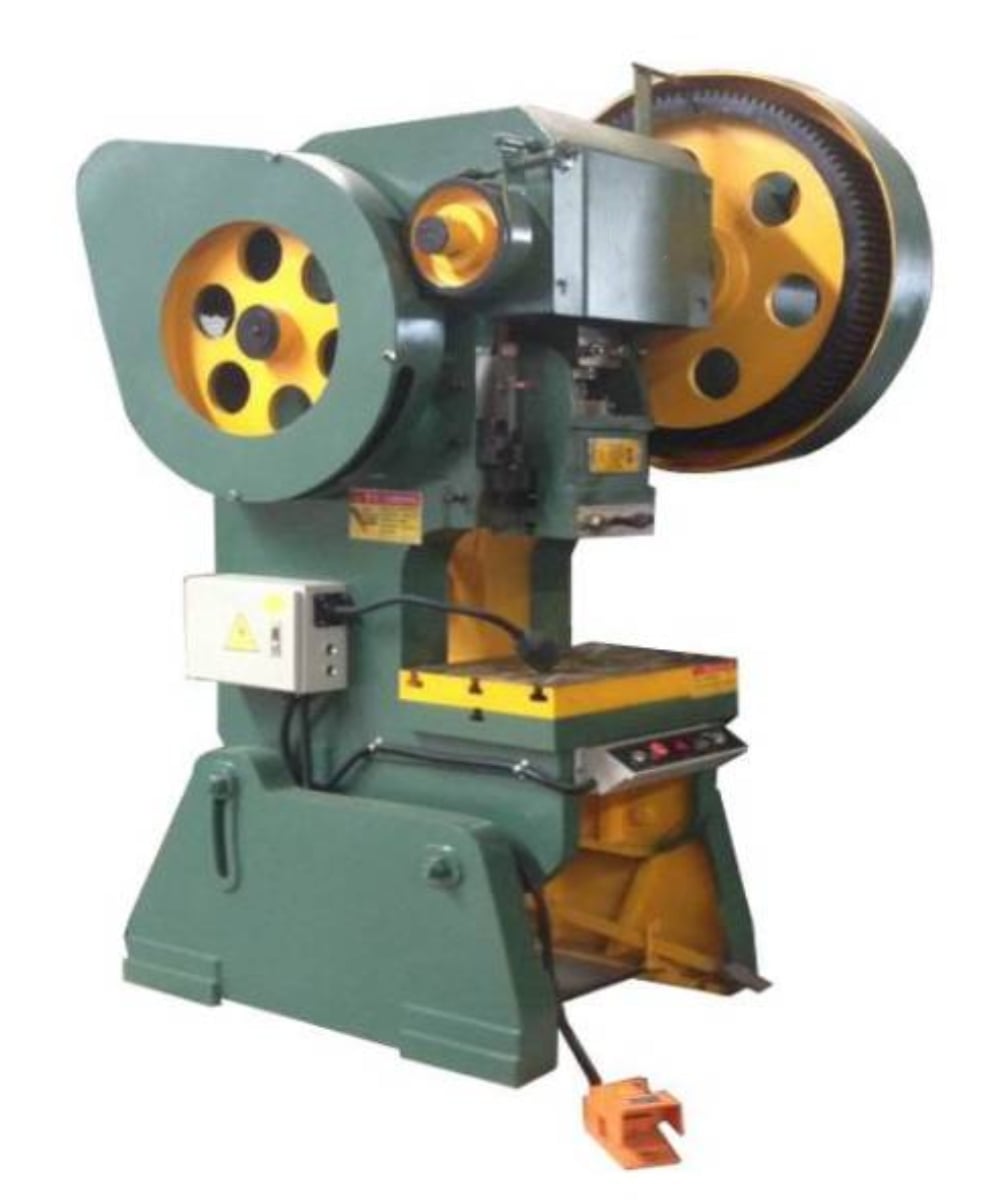
The control system is another technical marvel. Modern CNC (Computer Numerical Control) systems for punching machines allow for multi-stage punching cycles. For instance, the machine can be programmed to approach the plate at high speed, slow down just before contact to minimize shock, and then apply full force for the shear. This “soft-touch” technology significantly extends the life of the tooling and reduces the noise levels in the factory environment.
Comparison of Punching vs. Drilling for Thick Plates
| Feature | Heavy-Duty Punching | Traditional Drilling | |
|---|---|---|---|
| Processing Speed | Very High (Seconds per hole) | Moderate to Low (Minutes per hole) | |
| Tooling Cost | Moderate (Replaceable punches/dies) | High (Consumable drill bits) | |
| Material Waste | Minimal (Solid slugs) | High (Metal shavings/chips) | |
| Heat Generation | Localized and Managed | High (Requires constant coolant) | |
| Automation Potential | High (CNC Integration) | Moderate |
As shown in the table above, the transition to punching offers a dramatic increase in throughput. In our case study, the client was able to reduce their hole-making time by nearly 70% by switching from a radial drill press to a HARSLE 150-ton hydraulic punching machine. This efficiency gain allowed them to take on larger contracts with tighter deadlines, effectively paying for the machine within the first year of operation.
Selection Advice: Choosing the Right Machine
Selecting a heavy-duty punching machine is a significant capital investment, and making the wrong choice can lead to years of operational frustration. The first step in the selection process is a thorough Material Audit. You must define the maximum thickness and the highest tensile strength of the materials you intend to process. Punching stainless steel requires significantly more tonnage than mild steel of the same thickness. Always choose a machine with a rated capacity at least 20% higher than your calculated maximum requirement to provide a safety buffer.
Next, consider the Throat Depth and Table Size. If you are processing large structural beams or wide plates, you need a machine that can reach the center of the workpiece without constant repositioning. Some heavy-duty machines come with automated feeding systems or X-Y positioning tables, which are essential for high-precision layouts where manual marking is too slow or prone to error.
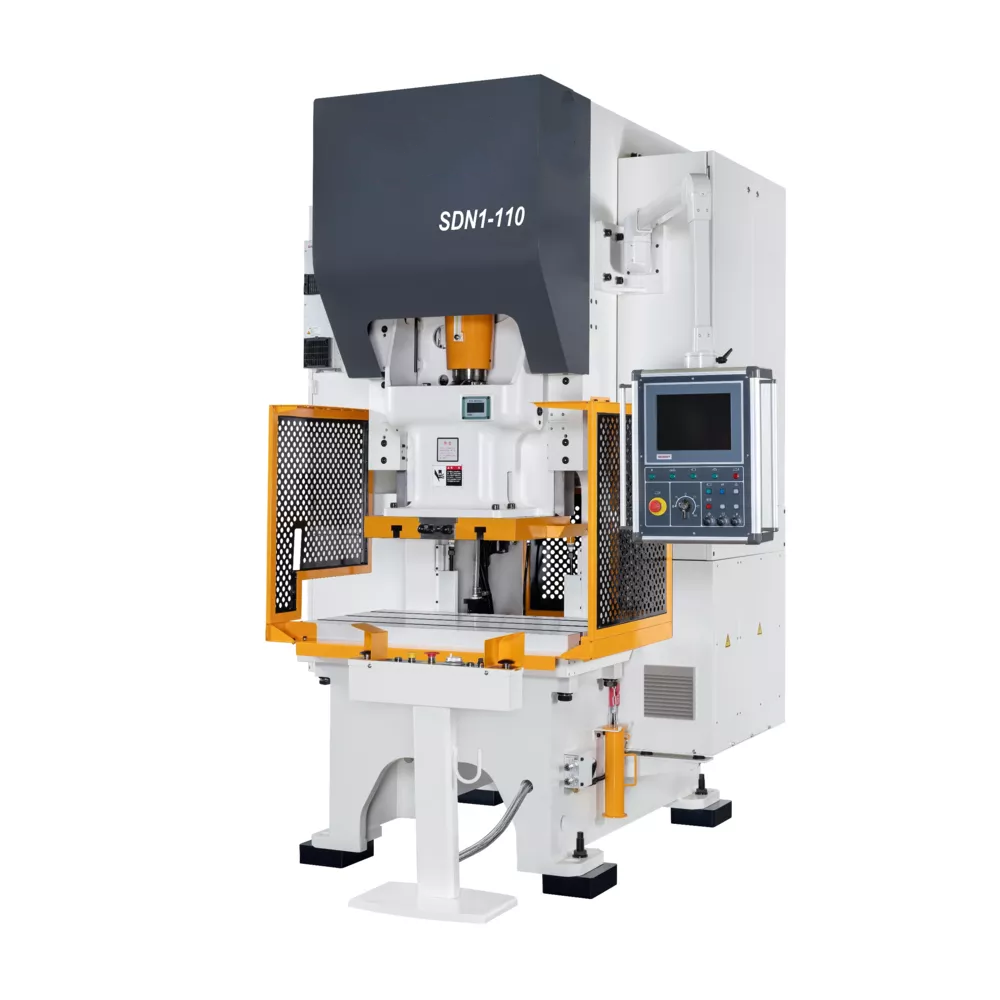
Don’t overlook the Tooling Compatibility. A good machine should support standard tooling sizes that are easily available from multiple vendors. However, for thick plate punching, you may also need the ability to use specialized “heavy-series” tooling that features reinforced shanks and specialized coatings like TiAlN (Titanium Aluminum Nitride) to resist heat and abrasion. Ensure the machine’s tool holder is robust enough to handle these heavy-duty accessories.
Finally, evaluate the After-Sales Support and Maintenance. Heavy-duty machines operate under extreme stress. Components like seals, valves, and guide rails will eventually require service. Choosing a manufacturer like HARSLE ensures that you have access to expert technicians and a steady supply of spare parts. A machine is only an asset if it is running; downtime on a primary production line can cost thousands of dollars per hour.
Case Study: Solving Thick Plate Punching Challenges A Heavy-Duty Punching Machine
Let’s look at the specific details of our case study. The client, a manufacturer of heavy-duty trailer frames, was struggling with 20mm thick high-strength steel plates. Their existing mechanical presses were failing due to frame fatigue, and their drilling department was a constant bottleneck. The challenge was to find a solution that could punch 22mm diameter holes through 20mm plate consistently, with a tolerance of +/- 0.5mm.
HARSLE recommended a custom-configured 200-ton hydraulic punching machine with a reinforced H-frame design. To solve the “snap-through” vibration issue, the machine was equipped with hydraulic shock absorbers that dissipated the energy at the moment of breakthrough. Furthermore, a specialized PLC-controlled lubrication system was installed to spray a fine mist of oil onto the punch tip before every stroke.
The results were immediate. The client reported that tool life increased from 200 holes per sharpen to over 1,200 holes. The noise level in the shop dropped by 15 decibels due to the controlled hydraulic stroke compared to the violent impact of the old mechanical press. Most importantly, the structural integrity of the holes met all safety standards for the trailer frames, eliminating the need for secondary reaming or deburring operations. This Case Study: Solving Thick Plate Punching Challenges A Heavy-Duty Punching Machine proves that with the right technology, even the toughest materials can be processed efficiently.
Frequently Asked Questions (FAQ)
1. What is the maximum thickness a heavy-duty punching machine can handle?
While it depends on the tonnage, most industrial heavy-duty punching machines can handle mild steel up to 25mm or even 30mm. However, as thickness increases, the diameter of the hole must generally be equal to or greater than the thickness of the plate to prevent punch breakage.
2. How do I calculate the tonnage required for a specific hole?
The formula is: Tonnage = (Perimeter of the hole x Thickness x Shear Strength of material) / 2000 (for US tons). For example, a 20mm round hole in 20mm mild steel (shear strength approx. 35kg/mm²) requires roughly 44 metric tons. However, factors like die clearance and sharp tooling can influence this number.
3. Why is die clearance so important for thick plates?
In thick plates, improper clearance leads to excessive secondary shear, which creates a “double-break” in the hole wall. This weakens the structural integrity of the hole and puts unnecessary strain on the machine. Correct clearance (usually 10-15% of material thickness for heavy plate) ensures a clean shear and a smooth fracture.
4. Can I punch hardened or high-tensile steel?
Yes, but it requires significantly more tonnage and specialized tooling. Materials like Hardox or AR400 are very abrasive and tough. You must use punches made from high-speed steel (HSS) with specialized coatings and ensure the machine has a very rigid frame to prevent deflection.
5. How often should I maintain my heavy-duty punching machine?
Daily checks should include lubrication levels and tool sharpness. Monthly maintenance should involve inspecting hydraulic filters, checking bolt tightness on the frame, and ensuring the cooling system is functioning. A full professional service is recommended annually to check hydraulic pressures and seal integrity.
Conclusion
Solving the challenges of thick plate punching requires more than just raw power; it requires a sophisticated blend of rigid structural design, precise hydraulic control, and high-quality tooling. As we have seen in this Case Study: Solving Thick Plate Punching Challenges A Heavy-Duty Punching Machine, the transition from outdated methods to a purpose-built heavy-duty system can revolutionize a production line. By reducing cycle times, extending tool life, and improving worker safety, these machines provide a rapid return on investment for any serious metal fabrication business.
HARSLE remains at the forefront of this technology, providing the industry with reliable, high-performance machinery that stands up to the toughest tasks. Whether you are punching structural steel for a skyscraper or heavy plates for industrial machinery, choosing the right heavy-duty punching machine is the first step toward operational excellence. Invest in quality, prioritize precision, and let HARSLE help you overcome your most difficult fabrication challenges.


