
How a Manufacturer Increased Consistency in Metal Parts with a CNC Punching Press


Introduction: The Quest for Precision in Modern Fabrication
In the competitive landscape of metal fabrication, the margin for error is shrinking daily. For many years, traditional mechanical punching methods served the industry well, but as client demands for tighter tolerances and complex geometries increased, the limitations of manual or semi-automatic processes became glaringly apparent. This article explores a transformative journey: how a manufacturer increased consistency in metal parts a CNC punching press, moving from a high-scrap environment to a streamlined, high-precision production line.
Consistency in metal parts is not merely about aesthetics; it is a fundamental requirement for downstream processes such as robotic welding, automated assembly, and high-tolerance finishing. When parts vary by even a fraction of a millimeter, the entire supply chain can grind to a halt. By integrating advanced CNC (Computer Numerical Control) technology, manufacturers are finding that they can achieve a level of repeatability that was previously impossible. This shift represents a move toward Industry 4.0, where data-driven machinery dictates the quality of the output.
HARSLE has been at the forefront of this technological shift, providing robust CNC punching solutions that empower manufacturers to overcome the hurdles of human error and mechanical fatigue. In this detailed guide, we will break down the technical reasons why a CNC punching press is the ultimate tool for consistency, the key considerations for implementation, and how to select the right equipment for your specific industrial needs.
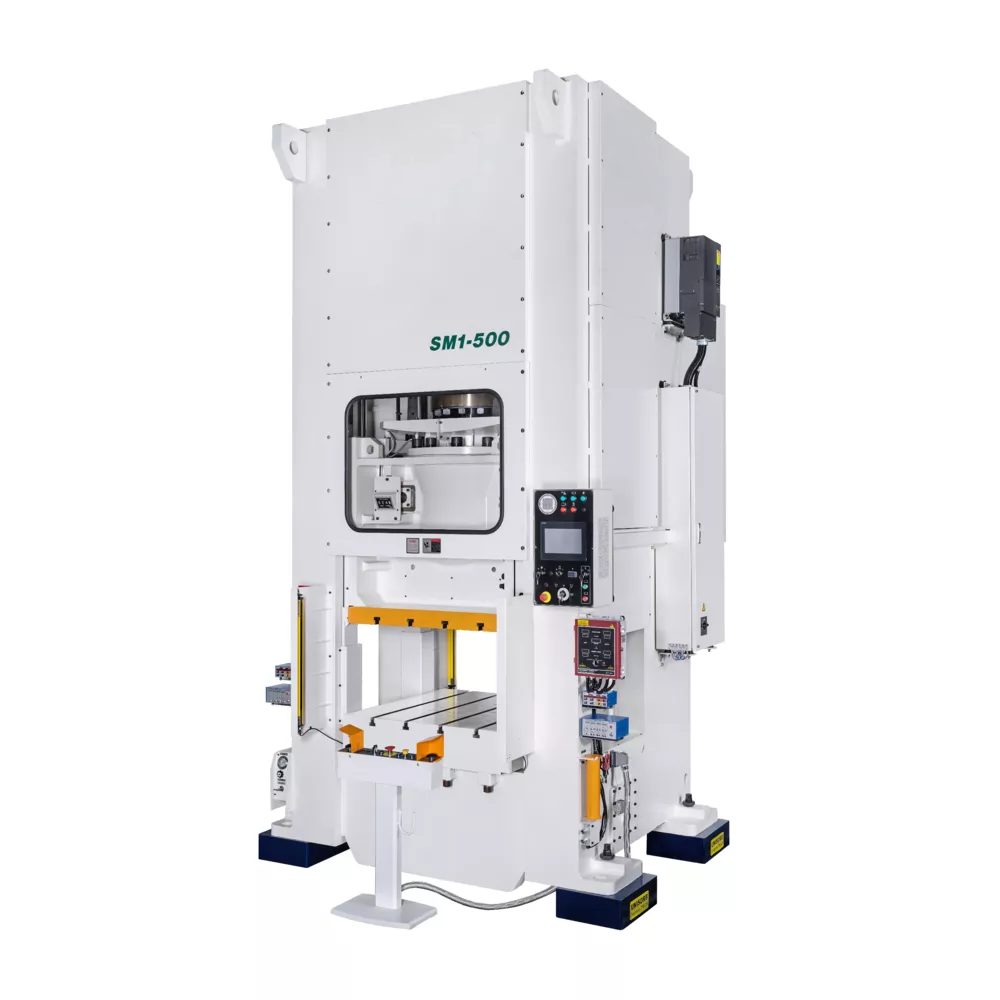
Key Considerations: Why Consistency Matters in Metal Fabrication
Before diving into the mechanics, it is essential to understand the “cost of inconsistency.” For the manufacturer in our case study, inconsistency manifested as high reject rates, frequent tool breakage, and significant downtime during assembly. When parts are inconsistent, the assembly team must spend time “fitting” parts together, which adds labor costs and reduces overall throughput. By ensuring that every part is a perfect replica of the digital design, a manufacturer increased consistency in metal parts a CNC punching press and simultaneously slashed their operational overhead.
The Impact of Human Error
In manual punching operations, the operator is responsible for positioning the sheet, selecting the tool, and timing the stroke. Even the most skilled operator will experience fatigue over an eight-hour shift. Small deviations in sheet placement lead to hole patterns that are slightly off-center. Over thousands of parts, these small errors accumulate into significant financial losses. CNC punching removes the human element from the positioning and execution phases, ensuring that the first part of the day is identical to the last.
Material Utilization and Nesting
Consistency also extends to how material is used. Advanced CNC punching presses utilize sophisticated nesting software. This software calculates the most efficient way to place parts on a sheet of metal to minimize waste. Because the CNC machine can move the sheet with micron-level precision, parts can be nested much closer together than would be safe with manual methods. This consistency in material usage directly impacts the bottom line by reducing raw material costs.
Downstream Process Compatibility
Modern manufacturing often involves automated secondary processes. For example, if a part is destined for a robotic welding cell, the weld points must be in the exact same location every time. If the punching process is inconsistent, the robot will miss the seam, leading to weak joints or failed inspections. By stabilizing the punching phase, the manufacturer ensures that all subsequent stages of production run smoothly without the need for constant recalibration.
Technical Details: The Mechanics of Precision
How exactly does a CNC punching press achieve such high levels of consistency? It comes down to the integration of high-speed servo motors, precision ball screws, and advanced control systems. Unlike mechanical presses that rely on a flywheel and clutch, a modern CNC turret punch press uses either a full electric servo drive or a high-performance hydraulic system controlled by a CNC unit.
The Role of the CNC Controller
The brain of the machine is the CNC controller (often from reputable brands like Fanuc or Siemens). This unit processes G-code instructions at lightning speed. It coordinates the movement of the X and Y axes (the sheet movement) with the T axis (the turret rotation) and the C axis (the tool rotation or auto-index). This synchronization ensures that the tool hits the exact coordinate with the exact force required every single time.
Auto-Index Stations and Tooling
One of the most significant features that helped a manufacturer increased consistency in metal parts a CNC punching press is the auto-index station. In a standard turret, tools are fixed at specific angles. An auto-index station allows the tool to rotate 360 degrees. This means a single rectangular tool can punch at any angle, reducing the number of tool hits required and ensuring that complex contours are smooth and consistent. High-quality tooling, made from premium tool steel, also plays a role by maintaining its edge over hundreds of thousands of hits, preventing burrs and deformations.
| Feature | Mechanical Punching | CNC Punching Press |
|---|---|---|
| Positioning Accuracy | +/- 0.5mm (Manual) | +/- 0.1mm or better |
| Stroke Control | Fixed stroke length | Programmable depth and speed |
| Tooling Capacity | Single tool per setup | 12 to 58+ stations in a turret |
| Complex Geometries | Very difficult/Impossible | Easily handled via software |
| Setup Time | High (Manual tool change) | Low (Automatic tool selection) |
Hydraulic vs. Servo-Electric Systems
The choice between hydraulic and servo-electric drives also impacts consistency. Hydraulic systems offer immense power and are ideal for thicker materials, while servo-electric systems offer unparalleled speed and energy efficiency for thinner gauges. Both systems in a CNC environment provide “closed-loop” feedback, meaning the machine constantly monitors its own position and adjusts in real-time to maintain accuracy.
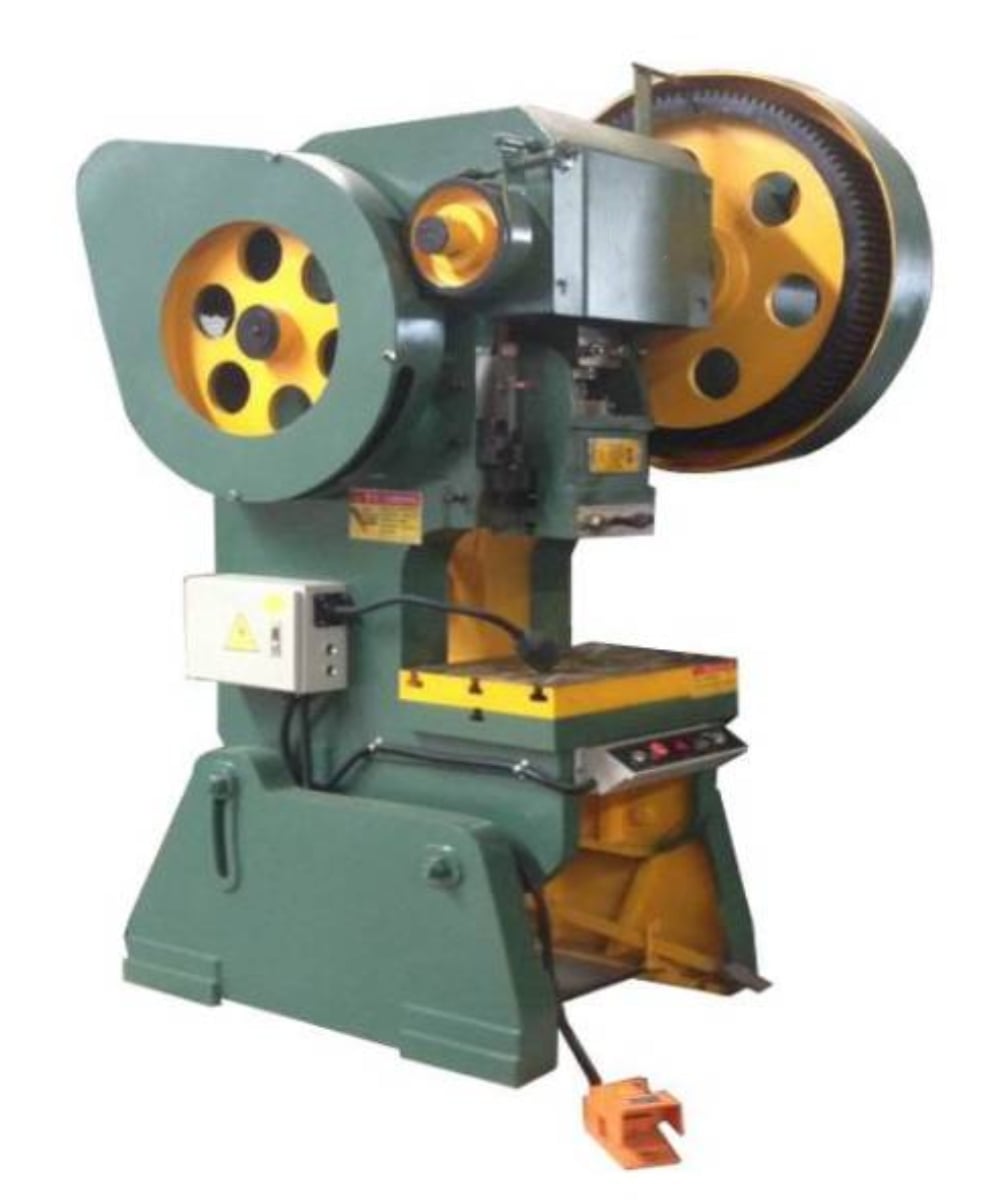
Selection Advice: Choosing the Right CNC Punching Press
Selecting the right machine is critical to achieving the results seen in our case study. Not all CNC punching presses are created equal, and the “best” machine depends entirely on your production volume, material type, and part complexity. When a manufacturer increased consistency in metal parts a CNC punching press, they followed a rigorous selection process that prioritized long-term reliability over the lowest initial price.
1. Tonnage and Material Capacity
The first step is determining the maximum thickness and type of material you will be punching. A 30-ton press is standard for most sheet metal work (up to 6mm carbon steel), but if you are working with thicker plates or harder alloys like stainless steel, a 50-ton press may be necessary. Overloading a machine leads to frame deflection, which is the enemy of consistency.
2. Turret Configuration and Station Count
The number of stations in your turret determines how many different tools you can have ready at once. If your parts require many different hole sizes or shapes, a larger turret (e.g., 32 or 58 stations) will reduce the need for manual tool changes between jobs. Look for a mix of small, medium, and large stations, and ensure at least two are “auto-index” stations for maximum flexibility.
3. Table Type: Brush vs. Ball
For manufacturers working with polished materials (like stainless steel or aluminum), a brush table is essential. It prevents scratching and marring of the sheet surface as it moves at high speeds. A ball table is more durable for heavy-duty plates but can leave marks on sensitive surfaces. Consistency in surface quality is just as important as dimensional accuracy.
4. Software Integration
The hardware is only as good as the software driving it. Ensure the machine comes with or is compatible with industry-standard CAD/CAM software. Features like automatic nesting, common-line cutting, and 3D simulation are vital. Simulation allows you to catch potential collisions or errors in the virtual world before they result in a ruined sheet of metal on the shop floor.
5. Frame Design: O-Frame vs. C-Frame
The structural integrity of the machine frame is paramount. An “O-frame” (or closed-bridge frame) generally offers superior rigidity compared to a “C-frame.” This rigidity prevents the frame from “yawning” or flexing during high-tonnage hits, which is a primary cause of misalignment and tool wear. For maximum consistency, the O-frame is the industry gold standard.
The Implementation Process: A Step-by-Step Guide
Transitioning to a CNC punching press requires more than just plugging in the machine. To ensure a manufacturer increased consistency in metal parts a CNC punching press successfully, they followed a structured implementation plan:
- Site Preparation: Ensuring a level, reinforced concrete floor to prevent vibrations that could affect accuracy.
- Operator Training: Moving staff from manual operations to CNC programming and maintenance. Understanding the software is the most critical hurdle.
- Tooling Audit: Investing in high-quality, precision-ground tools that match the machine’s capabilities.
- Pilot Run: Running a small batch of complex parts and measuring them against the digital model using CMM (Coordinate Measuring Machine) equipment to verify consistency.
- Maintenance Schedule: Establishing a strict daily, weekly, and monthly maintenance routine to ensure the machine stays within factory tolerances.
FAQ: Common Questions About CNC Punching Consistency
How does a CNC punching press improve part accuracy compared to a laser cutter?
While laser cutters are excellent for complex outlines, CNC punching presses are often more consistent for repetitive hole patterns and forming operations (like louvers, ribs, or countersinks). Punching is a mechanical process with physical stops, which can sometimes offer better repeatability for specific features than a thermal cutting process.
What is the typical lifespan of a CNC punching press?
With proper maintenance, a high-quality CNC punching press from a manufacturer like HARSLE can last 15-20 years in a high-production environment. The key to longevity is regular lubrication of the turret and ball screws, and ensuring the hydraulic oil is kept clean and cool.
Can a CNC punching press handle small production runs?
Yes. In fact, the ease of programming and quick tool setup makes it ideal for “High-Mix, Low-Volume” (HMLV) manufacturing. Once a program is created, it can be recalled in seconds, ensuring that a part made today is identical to one made six months ago.
Does the material type affect consistency?
Yes. Different materials have different “spring-back” characteristics. However, a CNC punching press allows the operator to program specific stroke depths to compensate for material properties, ensuring consistent results across different batches of steel, aluminum, or brass.
Conclusion: The Future of Your Fabrication Shop
The story of how a manufacturer increased consistency in metal parts a CNC punching press is a blueprint for any fabrication business looking to scale. By moving away from the unpredictability of manual processes and embracing the precision of CNC technology, companies can reduce waste, improve customer satisfaction, and open the door to more complex and lucrative contracts.
Investing in a CNC punching press is not just an equipment upgrade; it is a commitment to quality. As we have seen, the combination of rigid frame design, advanced control systems, and versatile tooling allows for a level of part-to-part consistency that is simply unattainable by other means. Whether you are producing simple brackets or complex electronic enclosures, the CNC punching press stands as the backbone of a modern, efficient, and highly consistent production line.
At HARSLE, we are dedicated to helping manufacturers achieve these goals. Our range of CNC turret punch presses is engineered for durability and precision, ensuring that your investment pays dividends for years to come. By prioritizing consistency today, you are building the foundation for a more profitable and competitive tomorrow.


