
Case Study: A Better Solution for Mass Production of Metal Brackets with a Punch Press


Introduction to Mass Production of Metal Brackets
In the modern manufacturing landscape, the demand for metal brackets spans across nearly every industrial sector, including automotive, aerospace, construction, and consumer electronics. These components, while often small, are critical for structural integrity and assembly. However, as demand scales, traditional fabrication methods often fall short in terms of speed, consistency, and cost-effectiveness. This article explores a comprehensive Case Study: A Better Solution Mass Production Of Metal Brackets A Punch Press, detailing how advanced machinery transforms production efficiency.
For many years, smaller workshops relied on manual drilling, sawing, or low-speed hydraulic presses to create brackets. While these methods are suitable for prototyping or low-volume batches, they introduce significant human error and high labor costs when thousands of units are required daily. The transition to a high-speed, automated punch press represents a pivotal shift for manufacturers looking to maintain a competitive edge. By utilizing the mechanical force and precision of a punch press, companies can achieve tolerances and production rates that were previously unthinkable.
HARSLE has been at the forefront of providing these solutions, integrating modern CNC technology with robust mechanical engineering. In this case study, we examine the specific technical requirements, the selection process for the right equipment, and the tangible benefits of adopting a punch press for bracket manufacturing. Whether you are producing simple L-brackets or complex multi-bend reinforced supports, the punch press offers a versatile and scalable platform.
Key Considerations for Metal Bracket Fabrication
When embarking on a mass production project, several factors must be evaluated to ensure the chosen solution is truly “better.” The first consideration is material compatibility. Brackets are commonly made from galvanized steel, stainless steel, or aluminum. Each material has different shear strengths and spring-back characteristics, which dictate the tonnage required from the punch press. A machine that is underpowered will suffer from excessive wear, while an overpowered machine may lead to unnecessary energy consumption and higher capital expenditure.
Production volume is the second critical factor. For a Case Study: A Better Solution Mass Production Of Metal Brackets A Punch Press, we define mass production as anything exceeding 10,000 units per month. At this scale, the speed of the stroke (measured in strokes per minute or SPM) becomes the primary driver of profitability. A high-speed punch press can operate at 60 to 100 SPM, significantly outperforming manual alternatives. Furthermore, the integration of an automatic feeder system allows the machine to run continuously with minimal operator intervention.
Precision and repeatability are also paramount. In industries like automotive manufacturing, a deviation of even half a millimeter can result in assembly line failures. Punch presses equipped with precision-ground die sets and CNC-controlled back gauges ensure that every bracket produced is identical to the first. This level of consistency reduces scrap rates and eliminates the need for secondary quality control inspections, further lowering the total cost per part.
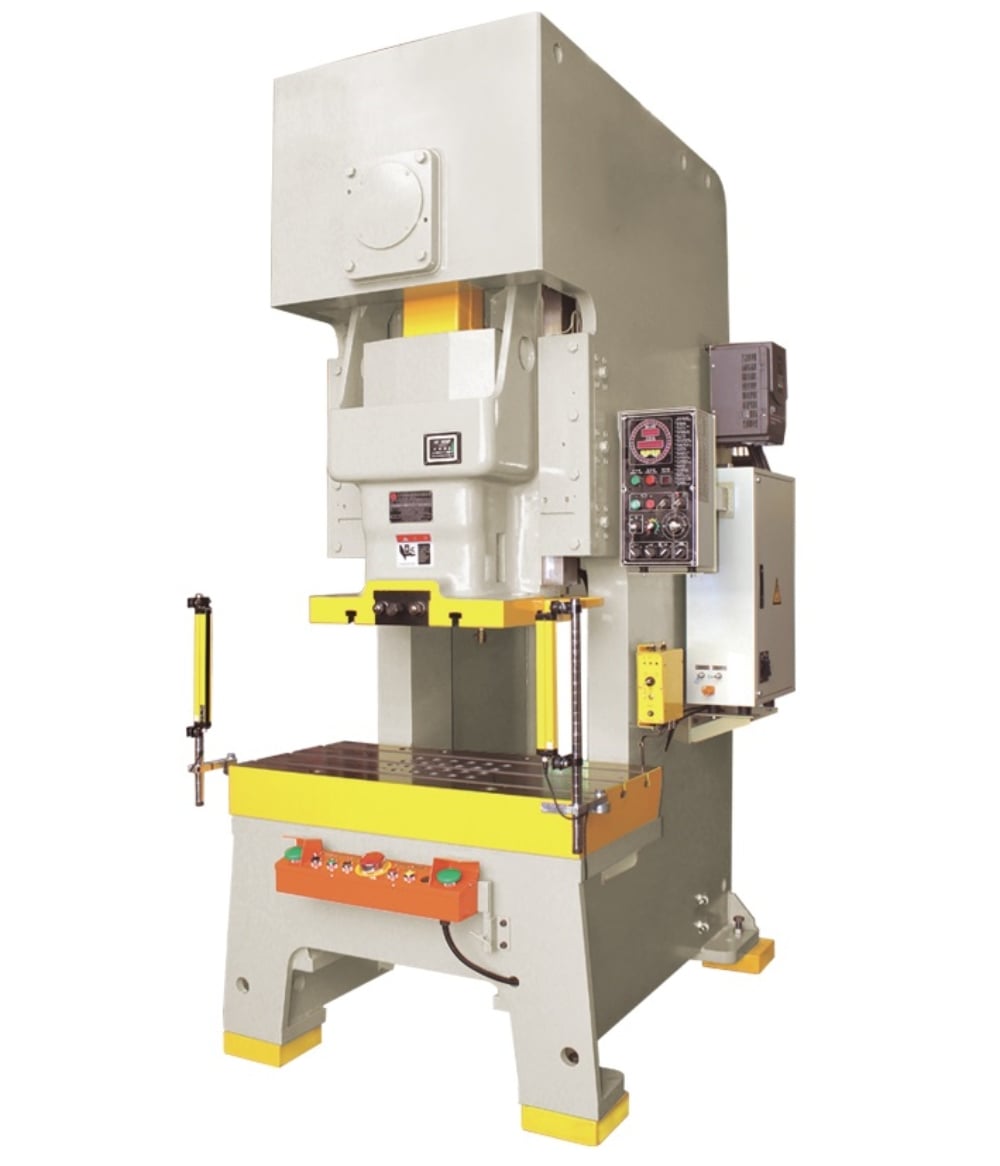
Finally, safety and ergonomics cannot be overlooked. Modern punch presses are designed with light curtains, dual-hand control buttons, and enclosed working areas to protect operators. In a mass production environment, where repetitive tasks can lead to fatigue and accidents, these safety features are essential for maintaining a stable workforce and complying with international labor standards.
Technical Details of the Punch Press Solution
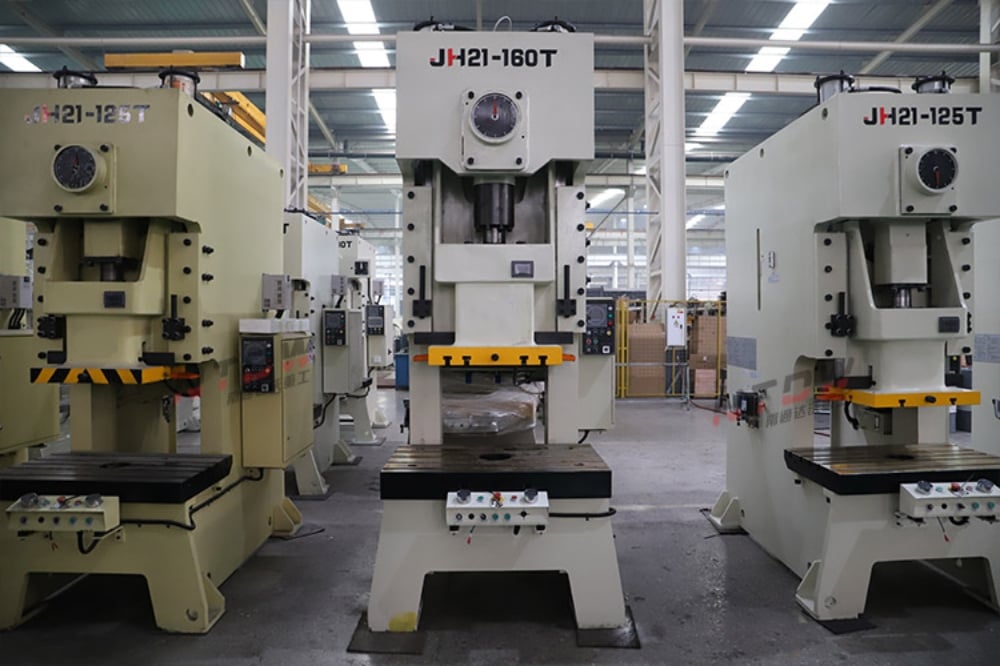
The core of the Case Study: A Better Solution Mass Production Of Metal Brackets A Punch Press lies in the mechanical specifications of the machine. A standard C-frame or H-frame punch press utilizes a flywheel to store energy, which is then released through a crankshaft to drive the ram downward. This mechanical advantage allows for the generation of massive force—often ranging from 25 to 400 tons—concentrated on a small surface area to shear through metal with ease.
One of the most significant technical advancements in this field is the use of progressive dies. Unlike single-stage dies that perform one operation at a time, a progressive die performs multiple operations—such as punching, notched cutting, and bending—at different stations within the same tool. As the metal strip moves through the press, a finished bracket is ejected with every stroke. This eliminates the need for multiple machines and reduces the footprint of the production line.
| Feature | Manual Pressing | Automated Punch Press |
|---|---|---|
| Strokes Per Minute | 5 – 10 SPM | 60 – 120 SPM |
| Accuracy | +/- 0.5mm | +/- 0.05mm |
| Labor Requirement | High (1 operator per machine) | Low (1 operator per 3 machines) |
| Material Waste | Moderate | Minimal (Optimized nesting) |
| Tooling Life | Short | Long (Hardened tool steel) |
The control system also plays a vital role. Modern HARSLE punch presses feature PLC (Programmable Logic Controller) systems that monitor the machine’s health in real-time. These systems can detect misfeeds, tool breakage, or lubrication failures, automatically halting the machine to prevent damage. This “smart” manufacturing approach is what makes the punch press a superior solution for long-term industrial applications.
Selection Advice for Your Production Line
Choosing the right punch press requires a deep understanding of your specific product requirements. The first step is to calculate the required tonnage. This is done by multiplying the length of the cut (perimeter of the bracket holes and edges) by the material thickness and the shear strength of the metal. It is always advisable to select a machine with a capacity 20-30% higher than the calculated requirement to ensure longevity and handle variations in material hardness.
Next, consider the frame style. C-frame (or Gap-frame) presses offer excellent accessibility from three sides, making them ideal for smaller brackets and manual feeding if necessary. However, for extremely high-precision work or very high tonnage, an H-frame (or Straight-side) press is preferred. The H-frame design minimizes “angular deflection,” which is the slight bending of the frame under load, ensuring that the punch and die remain perfectly aligned over millions of cycles.
Automation accessories are the next priority. To truly achieve a “better solution,” you should invest in an NC (Numerical Control) servo feeder. These devices pull the raw metal coil into the press with extreme accuracy. When paired with a decoiler and a straightener, you create a fully automated production cell. This setup allows you to load a 2-ton coil of steel and let the machine produce thousands of brackets while the operator focuses on other high-value tasks.
Lastly, evaluate the after-sales support and availability of spare parts. A punch press is a long-term investment, often lasting 20 years or more. Choosing a reputable manufacturer like HARSLE ensures that you have access to technical expertise, replacement seals, and updated control software. Always ask for a demonstration or a sample run using your specific die sets before finalizing the purchase.
Frequently Asked Questions (FAQ)
What is the main advantage of a punch press over a laser cutter for brackets?
While laser cutters offer high flexibility for complex shapes, a punch press is significantly faster for mass production. Once the die is created, a punch press can produce a bracket in a fraction of a second, whereas a laser must trace the entire perimeter. For high volumes, the cost per part is much lower with a punch press.
How often does the tooling need to be sharpened?
Tooling life depends on the material being punched. For mild steel, a high-quality D2 or M2 steel die can typically perform 50,000 to 100,000 hits before requiring a light grind (sharpening). Regular lubrication and proper alignment can extend this interval significantly.
Can a punch press handle different thicknesses of metal?
Yes, but it requires changing the die clearance. The gap between the punch and the die must be approximately 10% of the material thickness for a clean shear. Using the wrong clearance can result in excessive burrs or damage to the machine.
Is it difficult to switch between different bracket designs?
With modern quick-change die systems, switching between different bracket designs can take as little as 15 to 30 minutes. This makes the punch press viable even for “mid-volume” production where multiple different parts are needed throughout the week.
What safety certifications should I look for?
Ensure the machine complies with CE standards (for Europe) or OSHA/ANSI standards (for the US). Key features include emergency stop buttons, safety interlocks on guards, and hydraulic overload protection.
Conclusion: The Future of Bracket Manufacturing
As we have seen in this Case Study: A Better Solution Mass Production Of Metal Brackets A Punch Press, the move toward automated punching is not just an upgrade—it is a necessity for survival in a competitive global market. The combination of high-speed mechanical force, progressive die technology, and CNC-controlled feeding systems creates a production environment that is fast, precise, and incredibly cost-effective.
By focusing on the key considerations of material, volume, and precision, and by following expert selection advice, manufacturers can significantly reduce their overhead while increasing their output quality. The punch press remains the workhorse of the metal fabrication industry, providing a reliable and scalable solution for the millions of brackets required by modern infrastructure every day.
HARSLE continues to innovate in this space, offering machines that are not only powerful but also intelligent and user-friendly. If you are looking to optimize your production line, the transition to a dedicated punch press system is the most logical and rewarding step forward. Investing in quality machinery today ensures a more profitable and efficient manufacturing tomorrow.


