
Hydraulic Press Brake vs Mechanical Press Brake: Pros, Cons, and Applications


Comparison Summary: The Evolution of Metal Bending
In the world of metal fabrication, the press brake stands as a cornerstone of production. Whether you are forming simple brackets or complex aerospace components, the choice between a hydraulic press brake and a mechanical press brake can significantly impact your shop’s efficiency, precision, and safety. Historically, the mechanical press brake was the industry standard, dominating the mid-20th century with its high speed and rhythmic operation. However, as technology advanced, the hydraulic press brake emerged, offering unparalleled control and versatility. Today, the debate of Hydraulic Press Brake Vs Mechanical Press Brake: Pros, Cons, Applications remains a vital topic for business owners looking to optimize their capital investment.
The fundamental difference between these two machines lies in how they deliver force to the workpiece. Mechanical press brakes rely on a flywheel, crankshaft, and clutch system to drive the ram. This results in a fixed stroke and a specific energy profile that peaks at the bottom of the cycle. Conversely, hydraulic press brakes use fluid power and cylinders to move the ram, allowing for full tonnage throughout the entire stroke and the ability to stop or reverse the ram at any point. This distinction is not merely technical; it dictates the types of materials you can bend, the safety protocols required, and the level of operator skill needed to produce quality parts.
As we delve into this comparison, it is important to recognize that neither machine is universally “better.” Instead, the choice depends on your specific production requirements. High-volume, repetitive tasks with thin-gauge materials might still find a home on a mechanical machine, while high-precision, varied-run jobs almost always demand the finesse of a modern hydraulic system. In the following sections, we will break down the mechanics, advantages, and limitations of each to help you make an informed decision for your facility.
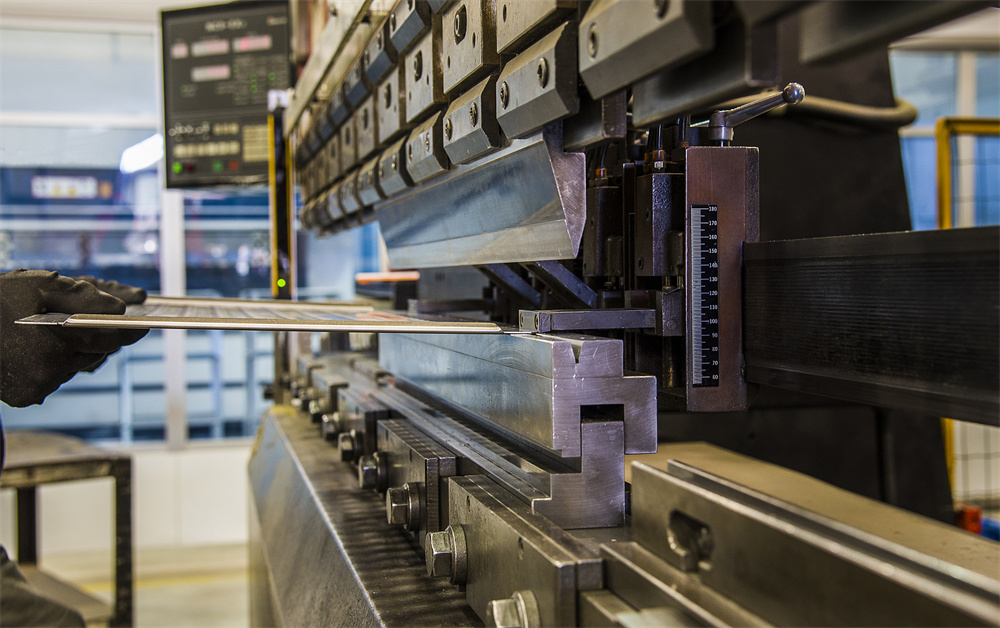
Hydraulic Press Brake Overview: Precision and Control
The hydraulic press brake has become the most popular choice in modern fabrication shops, and for good reason. These machines utilize two or more hydraulic cylinders to move the upper ram. By controlling the flow of oil into these cylinders via sophisticated proportional valves, the machine can achieve incredible accuracy. One of the primary advantages of a hydraulic system is its flexibility. Unlike mechanical versions, a hydraulic press brake allows the operator to adjust the stroke length, the speed of the ram, and the pressure applied. This means you can perform “air bending” with extreme precision, as the ram can be programmed to stop at a precise depth every time.
Safety is another area where hydraulic machines shine. Because the ram is driven by fluid pressure, it can be stopped instantly if a safety light curtain is tripped or if the operator releases the foot pedal. Furthermore, hydraulic machines are equipped with overload protection. If the machine encounters a resistance greater than its rated capacity, the hydraulic relief valves will open, preventing catastrophic damage to the frame or the tooling. This “forgiving” nature makes them ideal for shops that work with a variety of material thicknesses where the risk of an accidental over-tonnage situation is higher.
From a technical standpoint, modern hydraulic press brakes are often integrated with advanced CNC (Computer Numerical Control) systems. These systems can manage multiple axes, including the backgauge, ram tilt, and crowning systems. Crowning is particularly important in hydraulic machines; because the cylinders are located at the ends of the ram, the center of the ram can deflect slightly under load. Modern hydraulic brakes use either hydraulic or mechanical crowning systems to compensate for this deflection, ensuring a consistent bend angle across the entire length of the workpiece. This level of automation reduces setup times and allows even less experienced operators to produce high-quality parts.
However, hydraulic machines are not without their drawbacks. They are generally slower in terms of cycle time compared to mechanical brakes. The process of moving fluid, building pressure, and then decompressing takes more time than the mechanical rotation of a flywheel. Additionally, hydraulic systems are susceptible to oil leaks and require regular maintenance of filters and fluid levels. Temperature fluctuations can also affect the viscosity of the hydraulic oil, which may lead to slight variations in performance until the machine reaches its optimal operating temperature.
Mechanical Press Brake Overview: Speed and Momentum
Mechanical press brakes are the “old guard” of the fabrication world. They operate on a relatively simple principle: an electric motor spins a heavy flywheel, which stores kinetic energy. When the operator engages the clutch, this energy is transferred through a crankshaft or eccentric gear to move the ram up and down. The most defining characteristic of a mechanical press brake is its stroke. Because it is driven by a crankshaft, the ram must complete a full cycle (down and back up) once engaged. The tonnage of a mechanical press brake is not constant; it increases as the ram reaches the bottom of its stroke, known as “Bottom Dead Center” (BDC).
The primary advantage of a mechanical press brake is speed. For high-speed, high-volume production of simple parts, a mechanical machine can often outpace a hydraulic one. The mechanical linkage provides a very fast approach and return speed. Furthermore, because the energy is stored in a flywheel, these machines can deliver a massive “punch” at the bottom of the stroke, which is excellent for coining or bottoming operations where the material is squeezed between the die and the punch to set the angle. In these specific applications, the mechanical machine’s repeatability at the bottom of the stroke is exceptionally high.
Despite their speed, mechanical press brakes have significant limitations in a modern manufacturing environment. The most pressing issue is safety. Because the ram is driven by a flywheel, it cannot be easily stopped once the cycle has passed a certain point. If an operator’s hand enters the work zone during the downstroke, the machine’s momentum makes an emergency stop nearly impossible. This has led to very strict guarding requirements and, in many regions, a decline in the use of mechanical brakes for manual feeding operations. Additionally, mechanical brakes are prone to “jamming” if the material is too thick or if the stroke is set incorrectly. If the ram gets stuck at Bottom Dead Center, it can be extremely difficult and dangerous to release.
Maintenance for mechanical machines focuses on the clutch and brake systems. These components undergo significant wear and tear and require regular adjustment to ensure the machine stops correctly at the top of the stroke. While they don’t have the oil leak issues of hydraulic machines, the mechanical linkages, bushings, and gears require consistent lubrication. Furthermore, mechanical press brakes are significantly louder than their hydraulic counterparts, contributing to a more taxing work environment. They also lack the sophisticated CNC integration found in hydraulic models, making them less suitable for complex, multi-bend parts that require frequent setup changes.
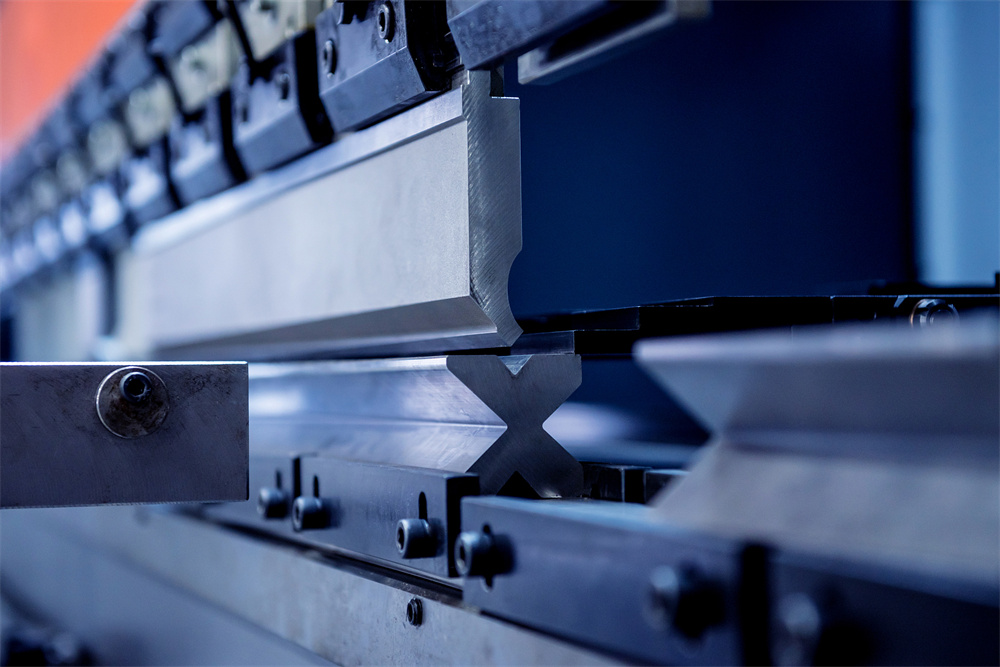
Specification Comparison Table
To better understand the trade-offs, let’s look at a direct comparison of the technical specifications and operational characteristics of both machine types.
| Feature | Hydraulic Press Brake | Mechanical Press Brake |
|---|---|---|
| Drive System | Hydraulic Cylinders & Pumps | Flywheel, Clutch, & Crankshaft |
| Stroke Control | Fully Adjustable & Programmable | Fixed Stroke Length |
| Tonnage Delivery | Constant throughout the stroke | Increases toward the bottom |
| Speed | Moderate (Variable) | High (Fixed) |
| Safety | High (Instant stop/reverse) | Lower (Difficult to stop mid-cycle) |
| Overload Protection | Built-in (Hydraulic relief) | None (Risk of frame damage) |
| Accuracy | Very High (CNC controlled) | High (Only at bottom dead center) |
| Setup Time | Fast (Digital presets) | Slow (Manual adjustments) |
| Noise Level | Quiet | Loud |
Best-fit Applications: Choosing the Right Tool for the Job
When considering Hydraulic Press Brake Vs Mechanical Press Brake: Pros, Cons, Applications, the “Applications” part is where the decision usually becomes clear. Hydraulic press brakes are the versatile workhorses of the modern shop. They are best suited for precision fabrication, small to medium batch sizes, and complex parts. If your work involves air bending, where the angle is determined by how far the punch enters the die, a hydraulic CNC press brake is essential. This is common in industries like electronics, medical equipment, and custom cabinetry where accuracy and the ability to handle different materials (aluminum, stainless steel, mild steel) are paramount.
Hydraulic machines are also the go-to for heavy-duty plate bending. Because they provide full tonnage throughout the stroke, they can handle thick materials that require a long, slow, and powerful press. This makes them ideal for structural steel fabrication, shipbuilding, and heavy machinery manufacturing. The ability to tilt the ram also allows for the creation of tapered parts, which is nearly impossible on a standard mechanical machine.
Mechanical press brakes, on the other hand, find their niche in high-volume, dedicated production lines. If you are manufacturing thousands of identical, simple brackets from thin-gauge material, the speed of a mechanical brake is hard to beat. They are often used in “bottoming” operations where the accuracy of the bend is ensured by the tooling rather than the machine’s stroke control. Industries such as automotive stamping or appliance manufacturing, where parts are fed automatically and the machine runs continuously, still utilize mechanical drive principles, though often in the form of specialized stamping presses rather than general-purpose press brakes.
Another application for mechanical brakes is in shops with very limited budgets who are performing basic work. Used mechanical press brakes are often significantly cheaper than hydraulic ones. However, this initial saving must be weighed against the increased risk of operator injury and the higher cost of specialized safety equipment required to bring an old mechanical machine up to modern standards. For most general fabrication businesses today, the versatility of the hydraulic system far outweighs the niche speed advantage of the mechanical system.
Cost and Maintenance Comparison
The financial implications of choosing between hydraulic and mechanical press brakes extend far beyond the initial purchase price. A hydraulic press brake typically has a higher upfront cost, especially when equipped with modern CNC controllers and multi-axis backgauges. However, the return on investment (ROI) is often faster due to reduced setup times and lower scrap rates. In terms of energy consumption, modern hydraulic machines are quite efficient. Many HARSLE hydraulic models feature inverter-driven motors that only run when the machine is actually bending, saving significant electricity compared to a mechanical machine where the flywheel must spin constantly.
Maintenance for hydraulic machines is centered on the fluid system. You must perform regular oil changes, monitor for leaks, and replace filters. If a valve or a seal fails, the repair can be technical but is usually localized. The biggest long-term cost for a hydraulic machine is often the replacement of the hydraulic pump or the refurbishment of the cylinders after a decade or more of heavy use. However, because these machines have overload protection, they rarely suffer from catastrophic frame failure, which preserves their resale value.
Mechanical press brakes have a different maintenance profile. The clutch and brake linings are wear items that must be replaced periodically. If the machine is not properly maintained, the clutch can slip, or the brake can fail to stop the ram at the top of the stroke, leading to a “double hit” which is extremely dangerous. The mechanical linkages and bearings also require constant lubrication. Perhaps the most significant cost risk with a mechanical machine is a “jam.” If the machine is overloaded and stalls at the bottom of the stroke, the forces involved can actually stretch the side frames or crack the crankshaft. Repairing such damage is often more expensive than the machine is worth.
From an operational cost perspective, the hydraulic machine is generally more expensive to maintain in terms of consumables (oil), but the mechanical machine carries higher risks of expensive mechanical failures and higher labor costs due to slower setup times. For a shop looking for long-term stability and lower operational risk, the hydraulic press brake is almost always the more cost-effective solution over a 10-year period.
Recommendation: Which Should You Buy?
After analyzing the Hydraulic Press Brake Vs Mechanical Press Brake: Pros, Cons, Applications, the recommendation for 95% of modern fabrication businesses is to invest in a Hydraulic Press Brake. The combination of safety, precision, and versatility makes it the superior choice for the diverse demands of today’s market. Whether you are a small job shop or a large-scale manufacturer, the ability to program complex sequences and the peace of mind provided by hydraulic overload protection are invaluable assets.
You should choose a Hydraulic Press Brake if:
- You require high precision and repeatable bend angles.
- You work with a variety of material types and thicknesses.
- Operator safety is a top priority in your facility.
- You need to perform air bending or create complex, multi-bend parts.
- You want to minimize setup times with CNC technology.
You might consider a Mechanical Press Brake only if:
- You have a very high-volume, dedicated production run of simple parts.
- You are performing specialized coining or bottoming operations where speed is the only factor.
- You have a highly controlled, automated feeding environment that mitigates safety risks.
- You are on an extremely tight budget and only need to perform basic, non-precision bending.
At HARSLE, we specialize in high-performance hydraulic press brakes that incorporate the latest in CNC technology and safety features. Our machines are designed to provide the flexibility of hydraulic power with the efficiency required for modern production schedules. By choosing a HARSLE hydraulic press brake, you are investing in a machine that will grow with your business and adapt to the ever-changing demands of the metal fabrication industry.
Frequently Asked Questions (FAQ)
1. Can a hydraulic press brake be as fast as a mechanical one?
While traditional hydraulic machines are slower, modern “High-Speed” hydraulic press brakes use advanced valves and hybrid drive systems to close the gap. However, for pure cycle-per-minute speed in a continuous run, a mechanical brake still holds a slight edge.
2. Is it true that mechanical press brakes are more accurate?
Mechanical press brakes are very accurate at “Bottom Dead Center” because the stroke is physically limited by the crankshaft. However, they lack the flexibility to adjust for material springback or thickness variations, which makes hydraulic CNC machines more accurate for a wider range of real-world tasks.
3. What is the biggest safety risk with a mechanical press brake?
The biggest risk is the inability to stop the ram mid-stroke. Once the cycle starts, the momentum of the flywheel carries it through. This makes point-of-operation injuries much more likely compared to hydraulic machines which can stop or reverse instantly.
4. How often does the oil need to be changed in a hydraulic press brake?
Generally, hydraulic oil should be checked every six months and replaced every 2,000 to 4,000 hours of operation, depending on the environment and the quality of the oil used. Regular filtration can extend this life.
5. Can I retrofit an old mechanical press brake with CNC?
While possible to add a CNC backgauge to a mechanical brake, you cannot easily add CNC control to the ram itself because the stroke is fixed. To get the full benefits of CNC bending, a hydraulic system is required.












