Press Brake Tooling Comparison: V Die vs U Die for Sheet Metal Bending


Comparison Summary: Understanding Press Brake Tooling Dynamics
In the realm of modern metal fabrication, the efficiency and precision of a hydraulic press brake are largely determined by the tooling utilized. The Press Brake Tooling Comparison: V Die Vs U Die Sheet Metal Bending is a critical topic for fabricators looking to optimize their production lines. While the press brake provides the force and control, the dies—specifically the female lower dies—dictate the final geometry, surface quality, and dimensional accuracy of the workpiece. Choosing between a V die and a U die is not merely a matter of preference but a technical decision based on material thickness, required bend radius, and the specific application of the finished part.
V dies are the industry standard for the vast majority of bending operations. Their design allows for versatile air bending, bottoming, and coining. By contrast, U dies (often referred to as radius dies) are specialized tools designed to create smooth, large-radius bends that a standard V die cannot achieve without leaving multi-break marks or requiring incremental step-bending. HARSLE, a leader in industrial machinery, emphasizes that understanding the mechanical interaction between the punch, the sheet metal, and the die cavity is essential for reducing scrap rates and improving throughput.
This comparison explores the technical nuances of both die types. We will examine how the opening width of a V die affects tonnage requirements and how the fixed radius of a U die ensures consistency in heavy-duty applications. Whether you are working with thin-gauge stainless steel or thick carbon steel plates, the choice between these two tooling geometries will define your shop’s capabilities. This guide serves as a comprehensive resource for engineers, machine operators, and procurement specialists in the metalworking industry.
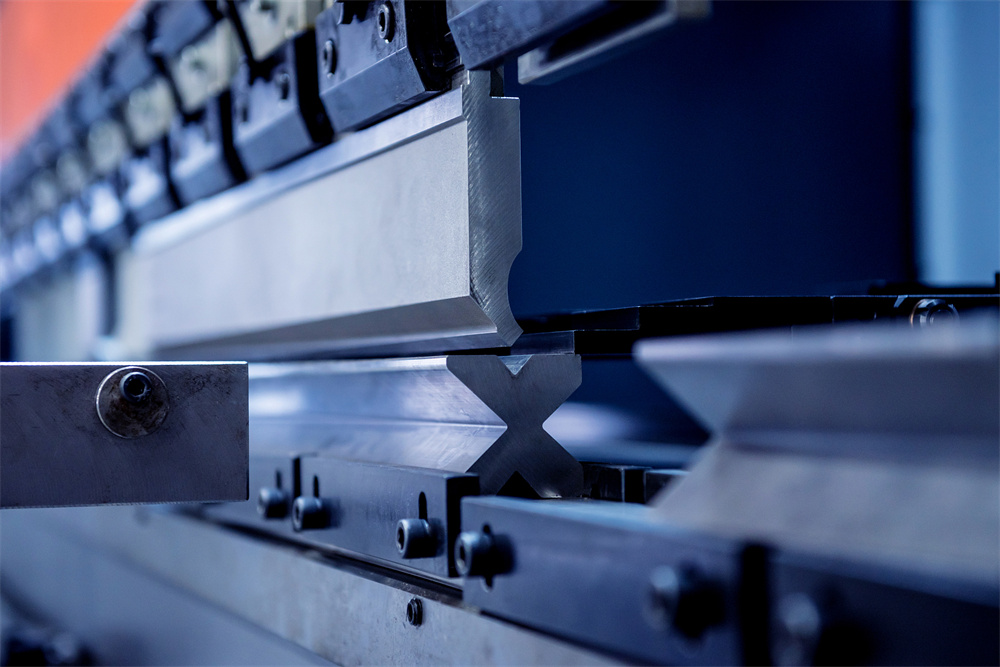
V Die Overview: The Versatile Workhorse of Fabrication
The V die is characterized by its V-shaped groove, typically featuring an included angle of 88, 90, or 30 degrees. It is the most common tool found in fabrication shops worldwide due to its adaptability. In a Press Brake Tooling Comparison: V Die Vs U Die Sheet Metal Bending context, the V die’s primary advantage is its ability to perform “air bending.” In air bending, the material only touches the two top edges of the die and the tip of the punch. This allows a single V die to produce a variety of angles by simply adjusting the depth of the punch stroke.
V dies are categorized by their opening width (V-width). A general rule of thumb in the industry is that the V-opening should be approximately 8 times the material thickness (8T) for mild steel. For thinner materials, a smaller V-opening provides tighter radii, while larger openings are required for thicker plates to manage the immense tonnage required. HARSLE V dies are often precision-ground and hardened to withstand the high localized pressures exerted during the bending process, ensuring long-term durability and repeatable accuracy.
Another significant aspect of V dies is their role in “bottoming” and “coining.” Bottoming involves pressing the material into the bottom of the V-groove to achieve a precise angle with minimal springback. Coining goes a step further, using extreme pressure to actually deform the metal at the bend point, eliminating springback entirely. While these methods require more tonnage than air bending, the V die’s geometry is perfectly suited for these high-precision tasks, making it indispensable for electronics enclosures, automotive brackets, and general cabinetry.
Furthermore, V dies are available in multi-V configurations, where a single block of steel features multiple V-openings of different sizes on each side. This allows operators to flip the die to accommodate different material thicknesses without needing to swap out the entire tool set. This versatility reduces setup times and increases the overall efficiency of the HARSLE press brake, particularly in job-shop environments where production runs are diverse and frequent tool changes are common.
U Die Overview: Specialized Solutions for Large Radii
While the V die excels at sharp and standard bends, the U die is the go-to solution for large-radius bending. A U die features a semi-circular or U-shaped cavity. In the Press Brake Tooling Comparison: V Die Vs U Die Sheet Metal Bending, the U die is often selected when the design specifications call for a bend radius that is significantly larger than the material thickness. Unlike the V die, which relies on the relationship between the punch tip and the die edges, the U die often works in tandem with a matching radius punch to “form” the metal into a specific shape.
U dies are particularly useful in preventing “multi-breakage” or “facet marks.” When attempting to create a large radius using a wide V die, the material may not follow a smooth curve, instead forming a series of small, visible kinks. The U die eliminates this issue by providing continuous support to the material throughout the bend cycle. This is critical for aesthetic components, such as architectural cladding, rounded furniture elements, and decorative automotive parts where surface finish is paramount.
Technically, U dies require careful tonnage calculation. Because the contact area between the material and the die is larger than in a V die, the friction and resistance can be higher. HARSLE U dies are designed with optimized entry radii to allow the material to flow smoothly into the cavity, reducing the risk of surface scratching or galling. This is especially important when working with sensitive materials like polished stainless steel or aluminum, where even minor tool marks can result in rejected parts.
Moreover, U dies are frequently used in heavy-duty applications, such as the production of large pipes, poles, or structural channels. In these scenarios, the U die provides the structural rigidity necessary to handle thick plates. While they are less versatile than V dies—since a U die is typically designed for one specific radius—their ability to produce perfectly smooth, large-diameter bends makes them a vital asset for specialized fabrication projects that demand high geometric fidelity.
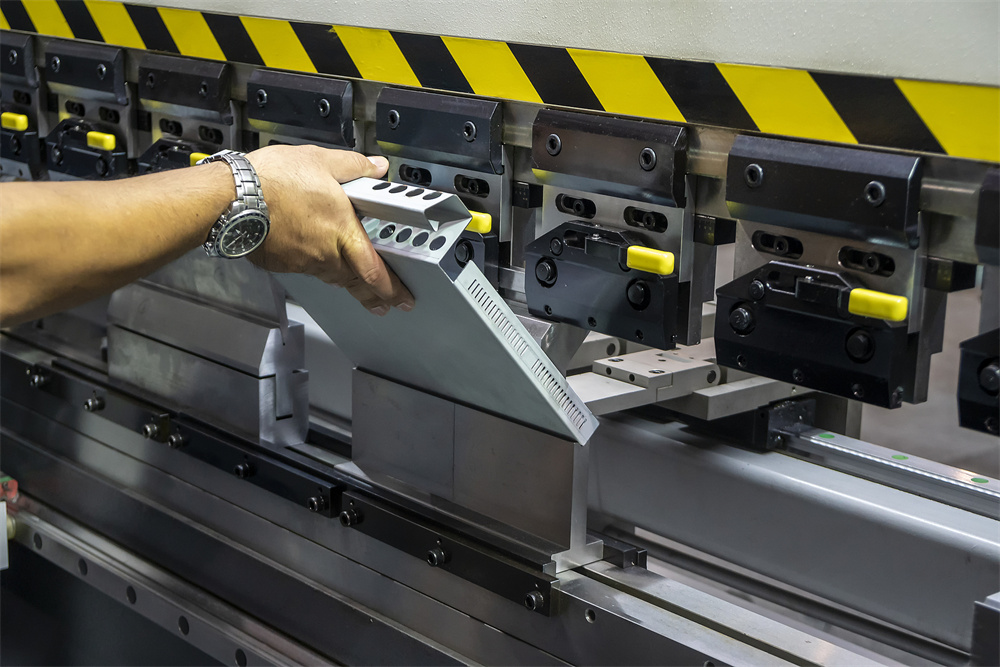
Specification Comparison Table
To better understand the Press Brake Tooling Comparison: V Die Vs U Die Sheet Metal Bending, the following table outlines the key technical differences between these two tooling types.
| Feature | V Die Tooling | U Die Tooling |
|---|---|---|
| Primary Bending Method | Air Bending, Bottoming, Coining | Radius Forming, Bottoming |
| Angular Versatility | High (One die can produce many angles) | Low (Fixed to specific radius/shape) |
| Common Radius Range | Small to Medium (0.5mm – 10mm) | Large (10mm – 100mm+) |
| Surface Marking Risk | Moderate (Die shoulder marks) | Low (Smooth contact surface) |
| Tonnage Requirement | Standard (Calculated by V-width) | Higher (Due to increased contact area) |
| Material Thickness | 0.5mm to 25mm+ | Typically 2mm to 20mm |
| Setup Complexity | Low (Standard alignment) | Moderate (Requires precise punch matching) |
Best-fit Applications for V and U Dies
Choosing the right tool depends heavily on the end-use of the product. In the Press Brake Tooling Comparison: V Die Vs U Die Sheet Metal Bending, V dies are the undisputed kings of general fabrication. They are used to create brackets, boxes, frames, and enclosures for the electronics, HVAC, and telecommunications industries. Because V dies allow for air bending, they are ideal for projects where multiple different angles are required on the same part, as the CNC controller on a HARSLE press brake can adjust the stroke depth for each bend without a tool change.
V dies are also preferred for high-strength low-alloy (HSLA) steels. When bending high-tensile materials, the ability to use a wider V-opening helps distribute the load and prevents the material from cracking. This makes V dies essential in the manufacturing of heavy machinery components, crane arms, and transport trailers. The flexibility to switch between acute angles and 90-degree bends makes the V die the most cost-effective choice for shops with a wide variety of clients.
U dies, conversely, find their niche in specialized sectors. The aerospace industry often requires large, smooth radii for fuselage components and wing ribs to minimize stress concentrations. Similarly, the food and pharmaceutical industries prefer U-bend geometries because they lack the sharp corners where bacteria can accumulate, making them easier to clean and sanitize. U dies are also used extensively in the production of lighting poles, traffic signal arms, and large-diameter piping where a consistent circular profile is required.
Another unique application for U dies is in the creation of “offset” or “joggle” bends. While specialized offset tools exist, a U-shaped cavity can sometimes be used to create two bends simultaneously in a single stroke, provided the geometry allows. This can significantly reduce production time for specific profiles. However, for most standard sheet metal work, the U die remains a secondary tool, brought out when the specific radius requirements exceed the capabilities of a standard V die setup.
Cost and Maintenance Comparison
From a financial perspective, V dies generally offer a better return on investment for the average shop. Because they are mass-produced in standard lengths and configurations, the initial purchase price is lower than that of custom U dies. Furthermore, a single V die can handle a range of material thicknesses and angles, reducing the total number of tools a shop needs to purchase. Maintenance for V dies involves regular cleaning of the V-groove to remove mill scale and checking the entry radii for wear. If the shoulders of the V die become worn, they can often be re-ground by a professional tooling service to restore accuracy.
U dies, particularly those designed for large radii, can be more expensive. They often require more material to manufacture and may need to be custom-engineered to match a specific punch radius. In terms of maintenance, U dies are sensitive to surface damage. Any scratches or gouges in the U-cavity will be transferred directly to the workpiece, which is problematic for aesthetic parts. Operators must ensure that the material is clean and that the die is lubricated to prevent galling, especially when working with aluminum or stainless steel.
Longevity is a key factor in the Press Brake Tooling Comparison: V Die Vs U Die Sheet Metal Bending. V dies, when used within their tonnage limits, can last for decades. However, using a V die with an opening that is too small for the material thickness can lead to “die bursting,” a dangerous failure where the tool splits under pressure. U dies are generally robust due to their thicker cross-sections, but they are more susceptible to losing their precise radius over time if used with abrasive materials. HARSLE recommends a strict maintenance schedule, including ultrasonic cleaning and periodic dimensional inspections, for all high-precision tooling.
Storage is another consideration. V dies are often compact and can be stored in standard tool racks. Large U dies can be heavy and cumbersome, requiring specialized lifting equipment and dedicated storage space. For a shop looking to minimize overhead, the versatility and ease of storage of V dies make them the preferred choice, while U dies are viewed as a necessary investment for high-value, specialized contracts.
Recommendation: How to Choose the Right Tooling
When deciding between V and U dies for your HARSLE press brake, the first step is to analyze your most frequent job types. If your work involves a variety of angles, thin to medium gauges, and standard 90-degree bends, a comprehensive set of V dies is the best investment. Focus on acquiring a range of V-widths (e.g., 6mm, 8mm, 12mm, 16mm, 25mm) to cover the majority of your bending needs. V dies provide the flexibility required to stay competitive in a fast-paced fabrication market.
However, if you are moving into niche markets like architectural metalwork, large-scale ducting, or specialized transport components, you should consider adding U dies to your inventory. The key indicator that you need a U die is when your customers start specifying “minimum inside radii” that are 3 to 5 times the material thickness. Attempting these bends with a V die will often result in poor quality and inconsistent results. In these cases, the U die is not just an option; it is a requirement for quality assurance.
Always consult the tonnage chart provided by HARSLE before selecting a die. Ensure that your press brake has the capacity to handle the increased tonnage often required by U dies or narrow V dies. Additionally, consider the material type; softer materials like aluminum may benefit from the smooth support of a U die, while high-strength steels require the robust, concentrated force of a V die. By balancing versatility, cost, and specific project requirements, you can build a tooling library that maximizes the potential of your industrial machinery.
FAQ: Press Brake Tooling Comparison
1. Can I use a V die to create a large radius bend?
Yes, you can use a technique called “step bending” or “bump bending.” This involves making a series of small, incremental bends using a V die and a standard punch to approximate a large radius. However, this is time-consuming and often leaves visible lines on the material. A U die is much faster and produces a smoother finish.
2. Why does my V die leave marks on the metal?
Marking occurs where the material slides over the shoulders of the V die. To reduce this, you can use “no-mark” tooling inserts, urethane die pads, or increase the entry radius of the V die. U dies generally produce fewer marks because the contact pressure is distributed over a larger area.
3. How do I calculate the tonnage for a U die?
Tonnage for U dies is more complex than V dies because it depends on the friction and the specific radius. Generally, it requires 20-50% more tonnage than a V die for the same material thickness. Always refer to the manufacturer’s specifications or use a dedicated bending calculator for safety.
4. Are U dies compatible with all HARSLE press brakes?
Most HARSLE press brakes use standard European or American style clamping systems. As long as the U die’s tang (the part that fits into the holder) matches your machine’s clamping system, it will be compatible. Always check the maximum open height of your machine to ensure the U die and punch fit comfortably.
5. What is the most common V die angle?
The 88-degree V die is the most common for air bending. It allows for the material to be bent to 90 degrees while accounting for the natural springback of the metal. 90-degree dies are typically used for bottoming operations where the material is pressed fully into the die.