
Energy Efficiency Comparison Of Modern Shearing Machines Smart Workshops

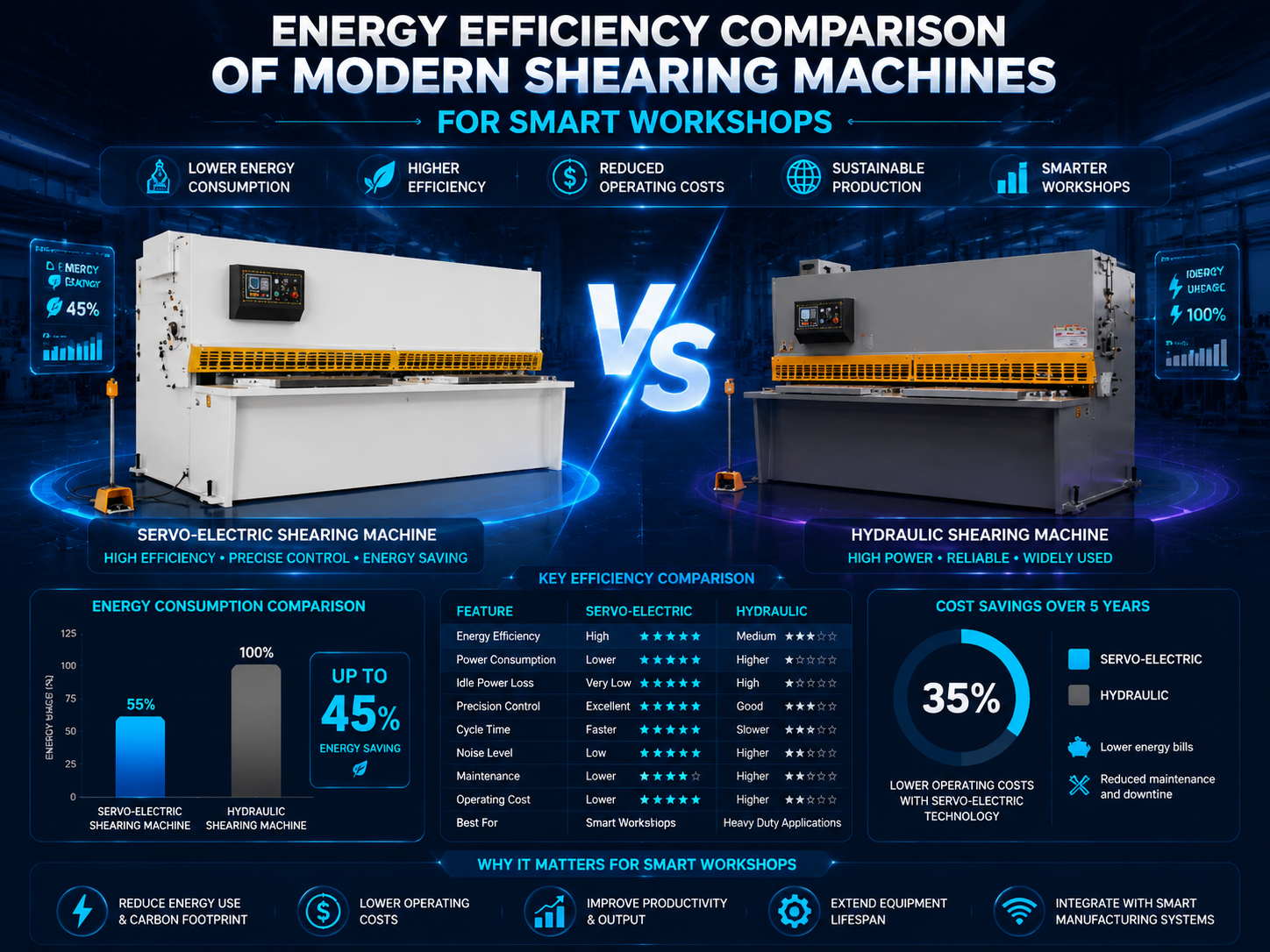
Comparison Summary: The Evolution of Energy Efficiency in Metal Shearing
In the rapidly evolving landscape of industrial manufacturing, the transition toward “Smart Workshops” has placed a significant emphasis on sustainability and operational cost reduction. The Energy Efficiency Comparison Of Modern Shearing Machines Smart Workshops is no longer just a technical curiosity; it is a critical business strategy. As electricity costs rise and global carbon footprint regulations tighten, metal fabrication facilities are scrutinizing their heavy machinery—specifically shearing machines—to identify where energy is being wasted and where it can be reclaimed.
Modern shearing machines generally fall into two primary categories regarding their power consumption profiles: traditional hydraulic systems and the newer generation of servo-hybrid or fully electric systems. Traditional hydraulic shearing machines have long been the workhorse of the industry due to their immense power and reliability. However, they are often criticized for their constant energy draw, as the hydraulic pump typically runs continuously regardless of whether the machine is actively cutting or in an idle state. This leads to significant energy loss through heat generation and mechanical friction.
Conversely, the advent of smart technology has introduced shearing machines equipped with Variable Frequency Drives (VFD) and servo-motor-driven pumps. These systems operate on a “power-on-demand” principle, where the motor only consumes significant energy during the actual shearing stroke. In a smart workshop environment, these machines are often integrated with IoT (Internet of Things) sensors that monitor real-time energy consumption, allowing floor managers to optimize production schedules based on peak energy rates and machine efficiency data. This comparison aims to dissect the nuances between these technologies to help manufacturers make informed procurement decisions.
Ultimately, the choice between a high-efficiency hydraulic system and a cutting-edge servo-hybrid system depends on the specific production volume, material thickness, and the overarching digital infrastructure of the workshop. While the initial capital expenditure for high-efficiency machines may be higher, the long-term savings in utility bills and reduced maintenance of cooling systems often provide a compelling Return on Investment (ROI) for modern enterprises.
Machine A Overview: Traditional and Advanced Hydraulic Shearing Machines
Hydraulic shearing machines, such as the HARSLE QC11K and QC12Y series, represent the backbone of heavy-duty metal fabrication. These machines utilize hydraulic cylinders to move the upper blade, providing the necessary force to shear through thick plates of mild steel, stainless steel, and aluminum. In terms of energy efficiency, traditional hydraulic shears have historically been viewed as less efficient because the main motor remains active to maintain pressure in the system, even when the machine is not performing a cut.
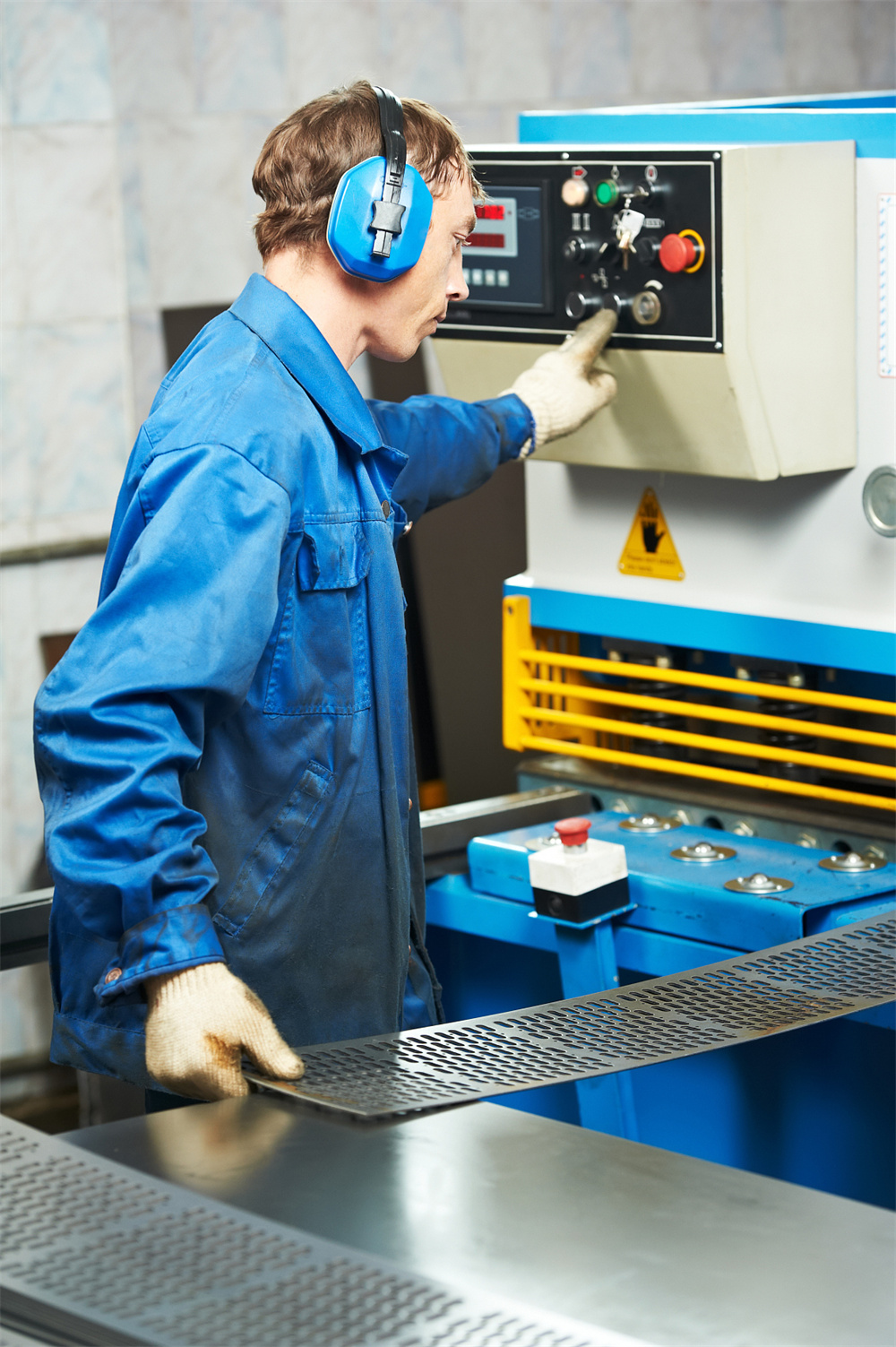
However, modern iterations of hydraulic shearing machines have integrated several energy-saving features. For instance, the implementation of high-efficiency valves and optimized hydraulic circuits reduces internal friction and pressure drops. Furthermore, many high-end hydraulic shears now feature “standby modes” or automated shut-off timers that power down the main motor during prolonged periods of inactivity. While these improvements are significant, the core limitation remains the inherent energy loss associated with fluid dynamics and the heat generated by pressurized oil.
In a smart workshop, a modern hydraulic shear is often equipped with digital pressure sensors and flow meters. These components feed data back to a central CNC controller, which can adjust the pump output to match the specific thickness of the material being cut. By not over-pressurizing the system for thinner sheets, the machine can save a measurable percentage of energy compared to older, manual hydraulic models. Despite these advancements, the hydraulic fluid itself requires cooling, which adds another layer of energy consumption via fans or heat exchangers.
The primary advantage of the hydraulic system remains its cost-to-power ratio. For workshops that primarily handle very thick materials (e.g., 20mm and above), the sheer force required is often most economically delivered via hydraulics. The energy efficiency comparison here focuses on how well the machine manages its idle time and how precisely it modulates its power output during the stroke. For many mid-sized shops, a well-maintained, modern hydraulic shear with a VFD-controlled motor offers a balanced middle ground between performance and energy conservation.
Machine B Overview: Servo-Hybrid and Electric Shearing Technology
The pinnacle of the Energy Efficiency Comparison Of Modern Shearing Machines Smart Workshops is found in servo-hybrid and fully electric shearing machines. These machines represent a paradigm shift in how force is applied to metal. Instead of a continuously running hydraulic pump, these systems use high-torque servo motors to drive the shearing mechanism directly or through a highly efficient, closed-loop hydraulic system. The most striking feature of this technology is that it consumes virtually zero energy when the machine is in standby mode.
Servo-hybrid shearing machines combine the best of both worlds: the high force of hydraulics with the precision and efficiency of electronics. In these systems, a servo motor drives a small, dedicated pump for each cylinder. This eliminates the need for large oil reservoirs and complex valve blocks that cause energy-sapping friction. Because the servo motor only rotates when the blade needs to move, the energy savings can reach up to 50% or even 70% compared to traditional hydraulic machines, especially in environments with intermittent cutting cycles.

In the context of a smart workshop, Machine B is a native participant in the digital ecosystem. The servo drives provide instantaneous feedback on torque, speed, and energy consumption. This data can be exported to ERP (Enterprise Resource Planning) systems to calculate the exact cost per cut. Additionally, the lack of a large hydraulic system means there is significantly less heat generated. This not only saves energy on the machine itself but also reduces the load on the workshop’s air conditioning and ventilation systems, leading to secondary energy savings across the entire facility.
Furthermore, servo-driven machines offer superior precision. The ability to control the blade’s position to within microns ensures that every cut is perfect, reducing material waste. In a smart workshop, reducing scrap is considered a form of energy efficiency, as the energy required to produce and recycle that wasted material is effectively saved. While the initial investment for a servo-hybrid shearing machine is higher, the combination of lower utility bills, reduced oil maintenance, and higher throughput makes it the preferred choice for forward-thinking manufacturers.
Specification Comparison Table
To better understand the Energy Efficiency Comparison Of Modern Shearing Machines Smart Workshops, the following table highlights the key technical differences between a standard modern hydraulic shear and a high-efficiency servo-hybrid shear of similar capacity (e.g., 6mm x 3200mm).
| Feature | Modern Hydraulic Shear (Standard) | Servo-Hybrid Shearing Machine |
|---|---|---|
| Drive System | AC Motor + Constant Displacement Pump | Servo Motor + Bi-directional Pump |
| Idle Power Consumption | High (Motor runs at 100% speed) | Near Zero (Motor is stationary) |
| Energy Savings (Avg) | Baseline (0%) | 40% – 65% |
| Oil Volume Required | Large (e.g., 200-400 Liters) | Minimal (e.g., 20-50 Liters) |
| Heat Generation | Significant (Requires active cooling) | Very Low (Passive cooling often sufficient) |
| Noise Level (dB) | 75 – 85 dB | 60 – 70 dB |
| Smart Integration | Basic (Digital Readout/CNC) | Advanced (IoT, Real-time Energy Monitoring) |
| Maintenance Needs | Frequent oil changes & filter checks | Low maintenance; long-life components |
Best-fit Applications for Each Technology
Choosing the right machine involves matching the technology to the specific needs of the production line. For heavy industrial applications where the machine is cutting thick steel plates (16mm to 40mm) for hours on end, the traditional hydraulic shearing machine remains a formidable contender. In these scenarios, the motor is almost always under load, meaning the “idle time” efficiency of a servo system is less of a factor. For shipyards, heavy machinery manufacturers, and structural steel fabricators, a high-quality hydraulic shear like the HARSLE QC11K offers the necessary durability and raw power.
On the other hand, the servo-hybrid shearing machine is the ideal fit for precision sheet metal shops, electronics enclosures manufacturers, and automotive component suppliers. These environments often involve cutting thinner materials (0.5mm to 6mm) with frequent pauses for material handling, measurement, and setup. In these “stop-and-go” workflows, the energy-saving capabilities of the servo motor are maximized. Furthermore, the quieter operation of servo machines creates a better working environment in high-density urban workshops or facilities where noise pollution is a concern.
Smart workshops that utilize AGVs (Automated Guided Vehicles) and robotic loading systems also benefit more from Machine B. The precise electronic control of the shearing cycle allows for perfect synchronization with robotic arms. Because the servo system can provide exact data on the completion of a stroke, the robot can move in to retrieve the part with zero delay, maximizing the overall equipment effectiveness (OEE) of the entire cell. In this context, energy efficiency is part of a larger “process efficiency” that defines the modern smart factory.
Finally, for workshops looking to achieve “Green Building” certifications or those operating in regions with strict energy quotas, the servo-hybrid machine is often the only viable choice. The ability to document and prove lower energy consumption per part is a significant advantage when bidding for contracts from environmentally conscious OEMs. Therefore, while hydraulic machines serve the heavy-duty sector, servo-hybrid machines are the future of high-speed, high-precision, and high-efficiency sheet metal fabrication.
Cost and Maintenance Comparison: Long-term ROI
When conducting an Energy Efficiency Comparison Of Modern Shearing Machines Smart Workshops, one must look beyond the sticker price. The Total Cost of Ownership (TCO) includes the purchase price, energy costs, maintenance expenses, and the cost of downtime. Hydraulic machines generally have a lower initial purchase price, making them attractive for startups or shops with limited capital. However, the maintenance of a hydraulic system involves regular oil changes, seal replacements, and monitoring for leaks. Over a 10-year lifespan, these costs, combined with higher electricity bills, can exceed the initial savings.
Servo-hybrid machines, while more expensive upfront, offer a much steeper ROI curve. The reduction in electricity usage is the most immediate saving. In a two-shift operation, a servo-hybrid shear can save thousands of dollars annually in power costs alone. Furthermore, because the system uses significantly less oil and operates at lower temperatures, the hydraulic components (valves, seals, and pumps) last much longer. There is also no need for expensive oil cooling units, which are a common failure point in traditional machines.
Maintenance in a smart workshop is also more proactive with servo-driven machines. The CNC system can track the number of strokes and the load on the motor, providing “predictive maintenance” alerts before a component fails. This reduces unplanned downtime, which is often the most significant hidden cost in manufacturing. For a hydraulic machine, maintenance is often reactive—fixing a leak after it happens—which can lead to messy workshop floors and safety hazards.
Another financial consideration is the resale value. As the industry moves toward green manufacturing, older, energy-inefficient hydraulic machines are depreciating faster. A modern, energy-efficient servo-hybrid machine is likely to retain a higher percentage of its value on the secondary market, as it will still meet the energy standards of the future. For a business looking to build a sustainable and profitable workshop, the higher initial investment in energy-efficient technology is almost always the more financially sound decision in the long run.
Recommendation: Selecting the Right Shearing Machine
Based on our comprehensive Energy Efficiency Comparison Of Modern Shearing Machines Smart Workshops, our recommendation depends on your specific operational profile. If your workshop is a high-volume, precision-oriented facility that values data integration and sustainability, the Servo-Hybrid Shearing Machine is the clear winner. Its ability to drastically reduce energy consumption during idle times and its integration with smart factory protocols make it an essential tool for the modern era. It is particularly recommended for those working with stainless steel and thin-to-medium gauge mild steel where precision is paramount.
However, if your primary operations involve heavy-duty plate shearing (above 16mm) and your budget is a primary constraint, a Modern Hydraulic Shearing Machine with VFD Technology is a highly capable alternative. Ensure that the machine you choose features a high-efficiency motor and a modern CNC controller that can optimize the cutting stroke. HARSLE offers various configurations that can bridge the gap between traditional power and modern efficiency, ensuring that even a hydraulic solution contributes to a more sustainable workshop.
Before making a purchase, we recommend conducting an energy audit of your current shearing process. Measure the idle time versus the active cutting time. If your machines spend more than 30% of their time idling, the switch to a servo-hybrid system will likely pay for itself much faster than you anticipate. Additionally, consider the future of your workshop; if you plan to implement IoT monitoring or robotic automation within the next five years, investing in a smart-ready, energy-efficient machine now will save you from costly retrofits or replacements later.
Frequently Asked Questions (FAQ)
1. How much energy can I actually save with a servo-hybrid shearing machine?
On average, a servo-hybrid shearing machine can save between 40% and 70% of energy compared to a traditional hydraulic machine. The exact savings depend on your duty cycle; the more the machine idles between cuts, the higher the savings will be, as the servo motor consumes almost no power when not in motion.
2. Are servo-hybrid machines as powerful as hydraulic ones?
Yes. Servo-hybrid machines still use hydraulic cylinders to generate the shearing force, but the pressure is generated by a servo-driven pump rather than a constant-speed AC motor. This allows them to provide the same high tonnage as traditional machines while offering much better control over the stroke.
3. Does a smart workshop require special software to monitor energy efficiency?
While most modern CNC controllers (like those from Delem or Cybelec) have built-in energy monitoring features, to fully integrate into a smart workshop, you may want to use an IIoT (Industrial Internet of Things) platform. This allows you to aggregate data from multiple machines and view energy trends on a central dashboard.
4. Is the maintenance for servo-hybrid machines more complicated?
Actually, it is often simpler. Because the system is more efficient and generates less heat, the oil stays clean longer, and seals are subjected to less thermal stress. While the electronic components require a clean environment, the overall mechanical maintenance is reduced compared to traditional large-scale hydraulic systems.
5. Can I retrofit my old hydraulic shear to be more energy-efficient?
To some extent, yes. You can add a Variable Frequency Drive (VFD) to the main motor to reduce its speed during idle periods. However, a retrofit will never be as efficient as a purpose-built servo-hybrid machine, which is designed from the ground up with optimized hydraulic circuits and integrated smart controls.
6. What is the impact of energy-efficient machines on blade life?
Energy-efficient machines, particularly servo-driven ones, often provide smoother and more controlled blade movement. This reduces the shock and vibration during the cut, which can lead to a longer lifespan for the shearing blades and more consistent cut quality over time.












