How to Reduce Springback in Press Brake Sheet Metal Bending: A Comprehensive Technical Guide


Technical Overview: The Physics of Springback in Metal Bending
In the world of precision metal fabrication, springback is perhaps the most persistent challenge faced by operators and engineers alike. To effectively reduce springback in press brake sheet metal bending, one must first understand the underlying physics. When a piece of sheet metal is bent using a press brake, the material undergoes two distinct types of deformation: elastic and plastic. Plastic deformation is permanent, giving the metal its new shape, while elastic deformation is temporary. As soon as the bending force is released, the elastic component of the strain attempts to recover, causing the metal to ‘spring back’ toward its original flat state.
This phenomenon is not merely a nuisance; it is a fundamental property of matter. Every metal has a specific yield strength and modulus of elasticity. The ratio between these two properties largely determines the magnitude of the springback. For instance, high-strength materials like stainless steel or T1 steel exhibit significantly more springback than soft aluminum or mild steel. The challenge for a HARSLE press brake operator is to predict this recovery accurately and compensate for it during the initial stroke of the ram.
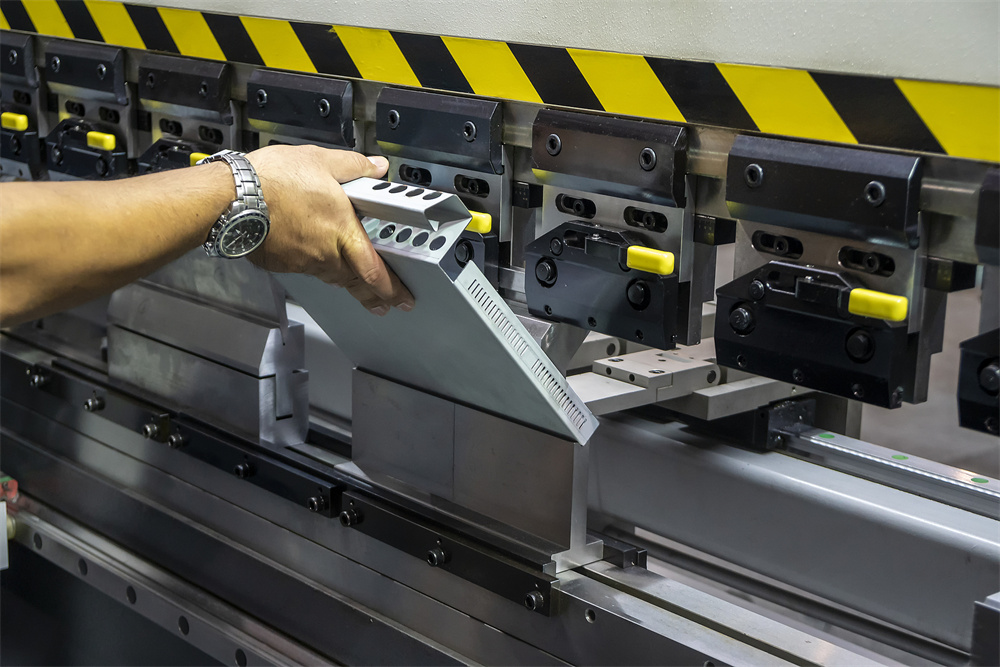
The neutral axis of the sheet metal also plays a critical role. During a bend, the inner surface of the metal is compressed, while the outer surface is stretched. Somewhere between these two layers lies the neutral axis, which experiences no change in length. As the bend radius increases relative to the material thickness, the volume of material undergoing elastic deformation increases, leading to a more pronounced springback effect. Understanding this relationship is the first step toward achieving high-precision results in any industrial setting.
Furthermore, the method of bending—whether air bending, bottoming, or coining—drastically alters how springback manifests. Air bending, the most common method in modern CNC fabrication, relies heavily on the machine’s ability to overbend the material to a specific calculated angle. Because the material does not fully contact the die walls, the internal stresses are not fully neutralized, making springback compensation a mandatory part of the programming process.
Core Parameters Influencing Springback
To successfully reduce springback in press brake sheet metal bending, operators must control several core parameters. The first and most influential is the material’s yield strength. A higher yield strength means the material can withstand more stress before it begins to deform permanently. Consequently, it also stores more elastic energy, which is released as springback once the pressure is removed. When switching between batches of material, even if they are the same grade, slight variations in yield strength can lead to inconsistent bending results.
The second parameter is the bending radius (R). There is a direct correlation between the ratio of the bend radius to the material thickness (R/t) and the amount of springback. A larger radius results in a larger zone of elastic deformation. In practical terms, if you are using a large radius punch to create a soft curve, you will encounter significantly more springback than if you were using a sharp punch to create a tight corner. This is why selecting the correct tooling is paramount for precision work.
The V-die opening width is another critical factor. A wider V-die reduces the force required to bend the metal but increases the radius of the bend, thereby increasing springback. Conversely, a narrower V-die provides more control over the radius but requires significantly higher tonnage and increases the risk of marking the material. Finding the ‘sweet spot’—typically 8 times the material thickness for mild steel—is essential for balancing machine longevity with part accuracy.
Finally, the bending angle itself dictates the degree of recovery. A 90-degree bend will exhibit a different absolute value of springback compared to a 30-degree or 135-degree bend. As the angle becomes more acute, the stresses within the material become more complex. Modern HARSLE CNC controllers account for these variables by using sophisticated algorithms, but the operator must still input accurate data regarding material thickness and type to ensure the machine performs correctly.
Calculation Method for Springback Compensation
Calculating springback is both a science and an art. The most basic formula used by engineers involves the Springback Factor (K). The relationship is defined as follows: K = αf / αi, where αf is the final angle after springback and αi is the initial angle under pressure. However, for practical shop-floor applications, we often look at the change in angle (Δα). A common simplified formula for estimating the springback angle is:
Δα = (3 * R * σy) / (E * t)
Where:
– R is the bend radius
– σy is the yield strength of the material
– E is the Modulus of Elasticity (Young’s Modulus)
– t is the material thickness
While this formula provides a theoretical baseline, real-world variables such as grain direction and work hardening often require empirical testing. In a professional HARSLE setup, the CNC controller typically handles these calculations. The operator performs a ‘test bend,’ measures the resulting angle, and inputs the deviation into the controller. The machine then automatically adjusts the depth of the ram (the Y-axis) to overbend the part by the exact amount needed to land at the target angle after recovery.
Another advanced method involves the use of angle-sensing systems. These laser-based or mechanical sensors measure the angle in real-time during the bending process. As the ram descends, the sensor detects the exact moment the desired angle is reached, accounts for the predicted springback, and instructs the ram to push slightly further. This closed-loop system is the most effective way to reduce springback in press brake sheet metal bending across varying material batches.
Parameter Table: Estimated Springback by Material Type
The following table provides a general guideline for springback degrees when performing a 90-degree air bend with a standard R=t ratio. Note that these values are estimates and should be verified with test bends.
| Material Type | Yield Strength (MPa) | Thickness (mm) | Estimated Springback (Degrees) |
|---|---|---|---|
| Mild Steel (A36) | 250 | 2.0 | 0.5° – 1.5° |
| Stainless Steel (304) | 215 | 2.0 | 2.0° – 3.0° |
| Aluminum (6061-T6) | 275 | 2.0 | 1.5° – 2.5° |
| High Strength Steel | 700+ | 2.0 | 5.0° – 10.0° |
| Copper (Soft) | 70 | 2.0 | 0.0° – 0.5° |
Common Engineering Mistakes in Springback Management
One of the most frequent mistakes in metal fabrication is ignoring the grain direction of the sheet metal. Sheet metal is rolled at the mill, which creates a longitudinal grain structure. Bending ‘with the grain’ (parallel to the rolling direction) results in less resistance but significantly more springback and a higher risk of cracking. Bending ‘across the grain’ (perpendicular to the rolling direction) is generally preferred for consistency and strength, though it requires more force. Failing to orient parts consistently on the sheet will lead to a batch of parts with varying angles, even if the press brake settings remain identical.
Another common error is the improper selection of V-die width. Some operators attempt to use a single V-die for a wide range of thicknesses to save setup time. However, if the V-die is too wide for the material, the resulting large radius will cause excessive springback that may exceed the machine’s compensation limits. Conversely, a V-die that is too narrow can cause ‘coining’ at the bottom of the stroke, which might eliminate springback but puts immense strain on the HARSLE press brake’s hydraulic system and tooling.
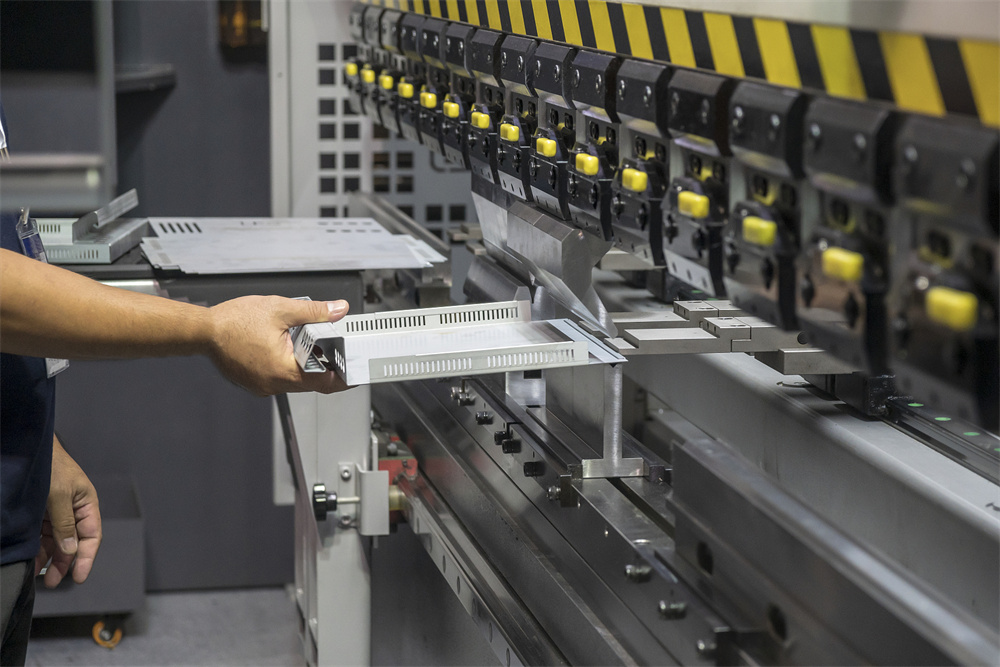
Neglecting machine deflection, also known as ‘crowning,’ is a third major pitfall. When a long piece of metal is bent, the bed and the ram of the press brake naturally deflect or bow in the center due to the immense pressure. This results in a ‘canoe effect’ where the angle in the middle of the part is wider than the angles at the ends. To reduce springback in press brake sheet metal bending effectively across the entire length of the part, a crowning system (either hydraulic or mechanical) must be used to compensate for this deflection.
Finally, many engineers fail to account for the ‘dwell time’ at the bottom of the stroke. Allowing the ram to hold the pressure for a fraction of a second (dwell) can help the metal molecules settle into their new positions, slightly reducing the elastic recovery. While it doesn’t eliminate springback, it improves repeatability, especially in thicker materials or high-yield alloys.
Selection Checklist: Minimizing Springback with the Right Equipment
When purchasing or setting up a HARSLE press brake to handle high-precision jobs, use this checklist to ensure you are equipped to handle springback effectively:
- CNC Controller Capabilities: Does the controller have a built-in material library and automatic springback calculation?
- Crowning System: Is the machine equipped with an automatic CNC crowning system to ensure angle consistency across long bends?
- Tooling Quality: Are you using precision-ground, hardened tooling? Worn tooling introduces variables that make springback unpredictable.
- Angle Measurement Systems: For high-tolerance work, consider adding laser angle-tracking systems that adjust the stroke in real-time.
- Material Consistency: Ensure your material supplier provides consistent gauge and yield strength. Request mill certificates for critical jobs.
- Frame Rigidity: Ensure the press brake frame is designed for minimal deflection under full load.
- Hydraulic Stability: Check that the hydraulic system maintains consistent pressure and temperature, as oil viscosity can affect ram repeatability.
FAQ: Frequently Asked Questions About Springback
1. Can springback be completely eliminated?
In air bending, springback cannot be completely eliminated because it is a physical property of the metal. However, it can be perfectly compensated for by overbending. The only way to truly ‘eliminate’ it is through coining, where the metal is compressed between the punch and die with enough force to flow the material, but this requires massive tonnage and specialized tooling.
2. Why does my stainless steel part have more springback than mild steel?
Stainless steel has a higher yield strength and work-hardens much faster than mild steel. This means it stores more elastic energy during the bend, which is released as springback. Typically, stainless steel requires twice the overbending compensation compared to mild steel.
3. How does thickness variation affect springback?
Even a minor variation in material thickness (e.g., +/- 0.1mm) can significantly change the springback angle. Because the press brake calculates the depth of the punch based on the assumed thickness, a thicker piece will be bent further than intended, while a thinner piece will not be bent enough. Using a HARSLE machine with a thickness detection probe can solve this issue.
4. Does the temperature of the metal affect springback?
Yes, though usually only in extreme cases. Metals generally become more ductile as temperature increases, which can slightly reduce yield strength and springback. In a standard shop environment, the variation is usually negligible, but for high-precision aerospace components, environmental control is often maintained.
5. What is the best way to handle springback for very large radii?
Large radius bends are the most difficult to control. The best approach is to use a ‘bump bending’ technique, where a series of small air bends are made in succession to create the large curve. This allows for incremental adjustments and reduces the massive elastic recovery associated with a single large-radius punch.
6. How often should I calibrate my HARSLE press brake to maintain accuracy?
For high-precision operations, a daily check of the backgauge and a weekly verification of the ram’s Y-axis repeatability are recommended. If you notice consistent deviations in your springback compensation, it may be time to recalibrate the machine’s reference points or check for wear in the tooling.