Troubleshooting Press Brake Sheet Slippage During Bending Operations: A Comprehensive Guide


Introduction to Press Brake Sheet Slippage
In the world of precision metal fabrication, accuracy is the cornerstone of quality. One of the most frustrating challenges faced by operators is the phenomenon of sheet slippage during the bending process. Troubleshooting Press Brake Sheet Slippage During Bending Operations is not merely about fixing a minor annoyance; it is about ensuring structural integrity, reducing material waste, and maintaining the high standards required in industries ranging from aerospace to automotive manufacturing. When a workpiece shifts even a fraction of a millimeter during the stroke, the resulting flange length will be incorrect, the angle will be inconsistent, and the entire part may need to be scrapped.
Sheet slippage occurs when the friction between the workpiece and the tooling is insufficient to overcome the forces generated during the bending cycle. This can happen at various stages: during the initial pinch, as the punch enters the V-die, or during the final stages of the bend. Understanding the root causes requires a deep dive into the physics of the bend, the condition of the machinery, and the properties of the material being processed. HARSLE, as a leader in metal fabrication technology, emphasizes that a well-maintained machine combined with expert operator knowledge is the best defense against these inaccuracies.
This guide is designed to provide a comprehensive roadmap for identifying the variables that lead to slippage. We will explore everything from surface contaminants on the metal to the mechanical calibration of the backgauge and the hydraulic pressure settings of the press brake itself. By the end of this article, you will have a technical framework to diagnose and resolve slippage issues, ensuring that every bend is as precise as the first.
Key Considerations for Preventing Sheet Slippage
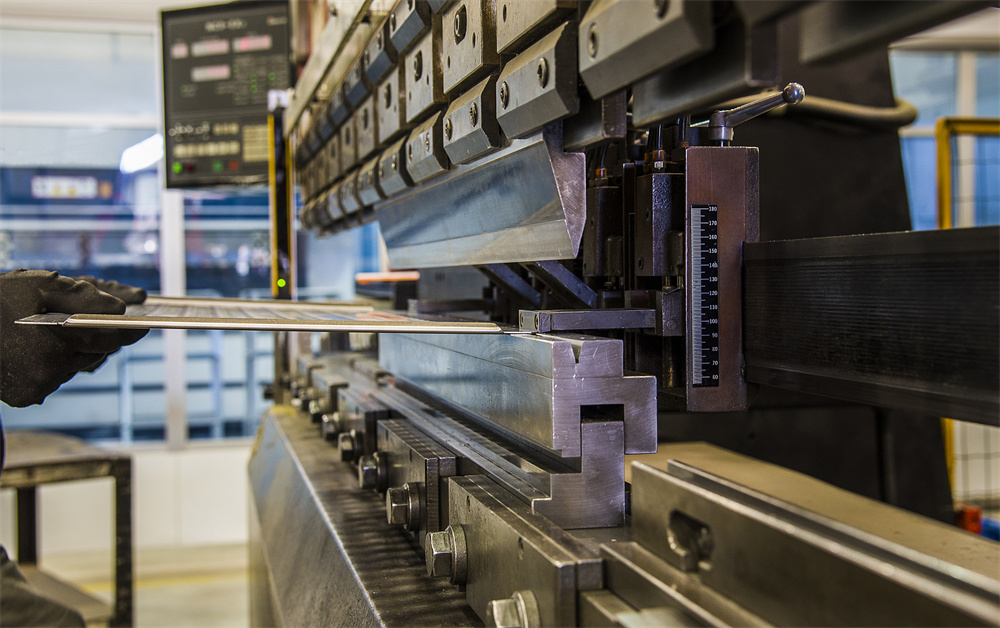
Before diving into the mechanical adjustments, it is essential to consider the environmental and material factors that contribute to sheet movement. The interaction between the metal sheet and the die shoulders is the primary point of control. If this interaction is compromised, slippage is inevitable. Operators must first look at the material surface. Is the metal covered in mill scale, protective plastic film, or heavy lubricants? While lubricants are often necessary to prevent die marking, an excess of oil can act as a lubricant where friction is actually needed—at the contact points of the V-die.
Another critical consideration is the geometry of the part itself. Small parts with narrow flanges are notoriously difficult to hold in place because there is less surface area for the die to grip. In these cases, the backgauge must do more than just act as a stop; it must provide stable support throughout the cycle. Furthermore, the condition of the tooling cannot be overlooked. Worn die shoulders lose their sharp radius, effectively increasing the ‘sliding’ zone and making it easier for the sheet to shift under pressure.
Finally, the clamping force and the speed of the approach play significant roles. If the punch descends too rapidly or with uneven pressure, it can ‘kick’ the sheet before the full bending force is applied. Modern CNC press brakes, such as those manufactured by HARSLE, offer programmable speeds that allow for a ‘soft’ touch-down, which significantly reduces the risk of initial displacement. Balancing these factors requires a holistic view of the fabrication environment.
Technical Details: The Mechanics of Slippage
Friction Coefficients and Material Interaction
The physics of bending relies on the friction coefficient between the workpiece and the die. Different materials exhibit different behaviors. For instance, stainless steel has a higher tendency to gall and slide compared to cold-rolled steel. When Troubleshooting Press Brake Sheet Slippage During Bending Operations, one must calculate if the horizontal component of the bending force exceeds the frictional resistance. If the V-die is too wide for the material thickness, the sheet may not ‘seat’ properly, leading to a lateral shift as the punch descends.
The Role of V-Die Selection
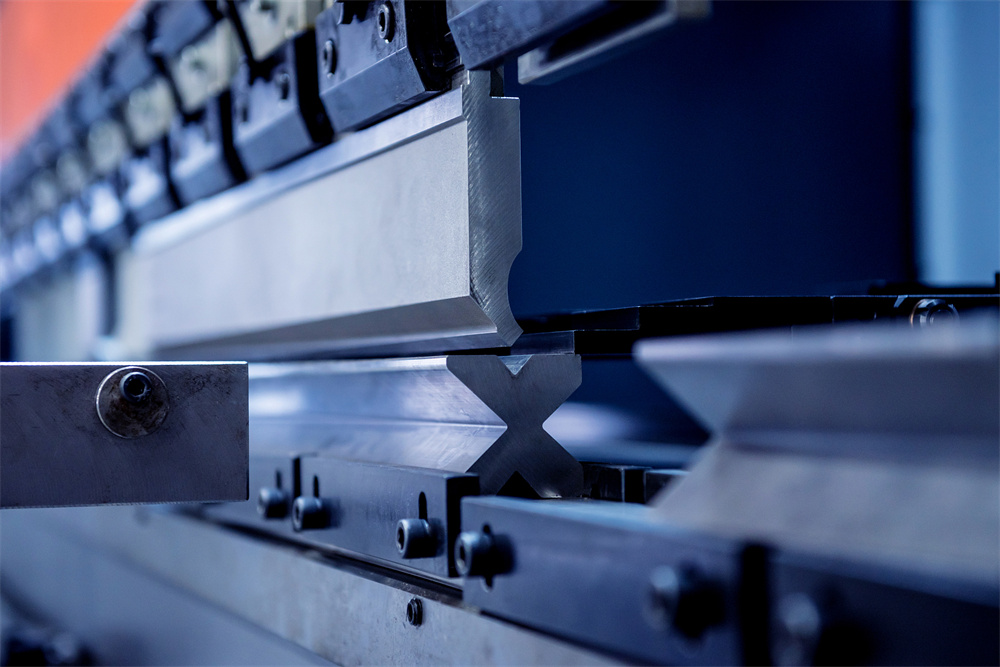
The standard rule of thumb is to use a V-opening that is 8 times the material thickness (8T). However, when dealing with slippage, this ratio might need adjustment. A narrower V-die increases the concentrated pressure on the die shoulders, which can help ‘bite’ into the material and hold it in place. Conversely, if the V-die is too narrow, you risk cracking the material or exceeding the machine’s tonnage capacity. Technical precision in die selection is paramount; using hardened and ground tooling ensures that the contact points remain consistent over thousands of cycles.
Backgauge Alignment and Support
The backgauge is often the unsung hero of sheet stability. If the backgauge fingers are not perfectly parallel to the bending line, the sheet will be pushed at an angle, causing it to slide as it tries to square itself against the punch. Furthermore, for large sheets, the weight of the material hanging off the back or front can create a lever effect, pulling the sheet out of the die. Utilizing sheet supports or ‘followers’ that move with the material during the bend can eliminate this gravitational pull, which is a common cause of slippage in heavy-duty applications.
Hydraulic Pressure and Crowning Systems
Inconsistent hydraulic pressure can lead to uneven clamping. If the pressure is not distributed evenly across the length of the beam, one end of the sheet may be held firmly while the other is free to move. This is where CNC crowning systems become vital. A crowning system compensates for the natural deflection of the machine bed, ensuring that the pressure is uniform from left to right. Without proper crowning, the center of the sheet may slip because the gap between the punch and die is slightly wider in the middle than at the ends.
Selection Advice: Choosing the Right Equipment and Tooling
When investing in new machinery or upgrading your current setup to minimize slippage, several factors should guide your decision. First and foremost is the control system. A high-end CNC system allows for fine-tuning of the ‘pinch point’—the moment the punch first touches the material. Being able to program a pause or a slow-down at this exact moment is the most effective way to prevent the sheet from jumping. HARSLE’s advanced CNC press brakes provide this level of granular control, making them ideal for high-precision tasks.
Tooling selection is equally critical. For applications prone to slippage, consider using ‘high-friction’ dies or dies with specialized coatings. Some manufacturers offer dies with a serrated or textured shoulder to increase grip, though these should be used with caution as they can mark the material. If aesthetics are important, synthetic inserts or specialized tapes can be applied to the die shoulders to provide grip without scratching. Always ensure your tooling is rated for the tonnage you are applying; deformed tooling is a leading cause of unpredictable sheet movement.
Additionally, consider the machine’s frame rigidity. A ‘C-frame’ press brake may experience more throat expansion under high loads than a closed-frame or heavy-duty H-frame design. This expansion can subtly change the alignment of the punch and die during the stroke, leading to slippage. For heavy plate bending, a machine with a robust, low-deflection frame is a necessity. Look for features like laser angle measurement systems, which can detect slippage in real-time and allow the machine to adjust the stroke mid-bend to compensate for any movement.
Step-by-Step Troubleshooting Checklist
- Inspect the Material: Clean the sheet of any excess oils, dust, or mill scale. If the material is laser-cut, check for burrs on the edges that might interfere with the backgauge or the die seating.
- Verify Tooling Condition: Use a profile gauge to check for wear on the V-die shoulders. If the radius is uneven or flattened, replace or regrind the tools.
- Check Backgauge Calibration: Ensure the backgauge is square to the ram. Use a dial indicator to verify that the fingers move accurately to the programmed positions.
- Adjust Approach Speed: Slow down the ‘speed change point’ in your CNC program. Ensure the punch makes contact with the material at a low velocity to prevent impact-related shifting.
- Evaluate Tonnage and Crowning: Ensure the calculated tonnage is appropriate for the material and V-die. Check that the crowning system is active and correctly calibrated for the length of the part.
- Monitor Environmental Factors: In cold shops, hydraulic oil viscosity can change, leading to sluggish or jerky ram movements. Ensure the machine has reached operating temperature before starting precision runs.
Frequently Asked Questions (FAQ)
Why does my sheet slip only on one side of the press brake?
This is usually a sign of misalignment or uneven wear. Check if the ram is level and if the crowning system is applying equal pressure across the bed. It could also indicate that one of the backgauge fingers is slightly out of position, causing the sheet to sit crookedly before the bend begins.
Can I use magnets to stop sheet slippage?
While magnetic supports can help hold a sheet against the backgauge, they are rarely strong enough to prevent slippage during the actual bending stroke. The forces involved in deformation are significantly higher than what standard magnets can counteract. They are better used as positioning aids rather than clamping devices.
Does the thickness of the material affect slippage?
Yes, thinner materials are often more prone to slippage because they have less structural rigidity and can ‘bow’ or ‘oil-can’ before the punch fully engages them. Thicker materials require more force, and if the friction at the die shoulders isn’t sufficient to hold that force, the entire plate can shift violently.
How often should I lubricate my dies to prevent slippage?
Actually, to prevent slippage, you should minimize lubrication on the contact points of the die shoulders. While you want the material to flow into the die, too much lubrication reduces the necessary friction. Use a dry film lubricant or specialized bending tape if you need to protect the surface without making it too ‘slick’.
What is the ‘Pinch Point’ and why is it important?
The pinch point is the vertical position where the punch first makes contact with the material and begins to apply pressure. Setting this correctly in your CNC controller allows the machine to transition from high-speed approach to slow-speed bending, which is the most critical moment for preventing sheet displacement.
Will a larger V-die reduce slippage?
Generally, no. A larger V-die reduces the required tonnage but also reduces the concentrated pressure on the die shoulders. This can actually make slippage more likely because the material is not ‘gripped’ as tightly. Stick to the recommended 8T ratio unless specific geometry requires otherwise.
Conclusion: Achieving Stability in Metal Bending
Troubleshooting Press Brake Sheet Slippage During Bending Operations is an essential skill for any high-volume or high-precision fabrication shop. By systematically addressing material conditions, tooling integrity, and machine calibration, operators can eliminate the variables that lead to costly errors. The key lies in the balance between friction and force; ensuring that the workpiece is held securely from the moment of contact until the completion of the bend.
Investing in high-quality machinery from manufacturers like HARSLE provides the technological foundation needed to overcome these challenges. With features like precision CNC crowning, programmable speeds, and robust backgauge systems, the risk of slippage is significantly mitigated. However, technology is only half the battle. Regular maintenance, proper operator training, and a keen eye for detail remain the most effective tools in any fabricator’s arsenal. By following the technical advice and troubleshooting steps outlined in this guide, you can ensure that your press brake operations remain efficient, accurate, and profitable for years to come.