Press Brake Troubleshooting Guide: Why Your Bends Are Inconsistent and How to Fix Them


Introduction to Press Brake Precision and Troubleshooting
In the world of precision metal fabrication, consistency is the benchmark of quality. When a press brake begins to produce inconsistent bends, it doesn’t just result in wasted material; it disrupts the entire production workflow, leads to missed deadlines, and increases operational costs. For operators and shop managers using high-performance machinery like HARSLE equipment, understanding the root causes of these inconsistencies is vital for maintaining a competitive edge. This Press Brake Troubleshooting : Bends Are Inconsistent Fix Them guide is designed to help you diagnose and resolve the most common issues that plague the bending process.
Inconsistency in bending can manifest in several ways: varying angles across the length of a single piece, differences between parts in the same batch, or flange lengths that don’t meet specifications. Often, the problem isn’t a single catastrophic failure but a combination of minor variables that have drifted out of tolerance. Whether you are working with a manual hydraulic press or a sophisticated multi-axis CNC system, the principles of physics and mechanical alignment remain the same. By systematically addressing material variables, tooling conditions, and machine calibration, you can restore your equipment to its peak performance.
HARSLE has spent decades refining the technology behind metal deformation. We understand that a press brake is a symphony of hydraulic pressure, mechanical rigidity, and electronic control. When one element is out of sync, the final product suffers. This guide will walk you through the technical nuances of press brake operation, providing actionable steps to identify why your bends are inconsistent and, more importantly, how to fix them effectively.
Key Considerations: Why Bends Lose Consistency
Material Variations and Grain Direction
One of the most overlooked factors in Press Brake Troubleshooting : Bends Are Inconsistent Fix Them is the raw material itself. Sheet metal is not a perfectly uniform medium. Variations in thickness, even within the same batch, can significantly impact the final bend angle. For instance, a difference of just 0.1mm in thickness can result in a 1-to-2-degree variation in an air bend. This is because the punch must travel a specific distance into the die; if the material is thicker, it resists more and changes the geometry of the bend.
Furthermore, the grain direction of the metal—the direction in which it was rolled at the mill—plays a crucial role. Bending with the grain (longitudinal) requires less force but is more prone to cracking and offers different springback characteristics than bending against the grain (transverse). If your operator is not consistent in how they orient the blanks on the backgauge, the resulting angles will inevitably vary. To fix this, always ensure that material is sourced from reputable suppliers with tight thickness tolerances and that operators are trained to identify and align grain direction consistently.
Tooling Wear and Improper Selection
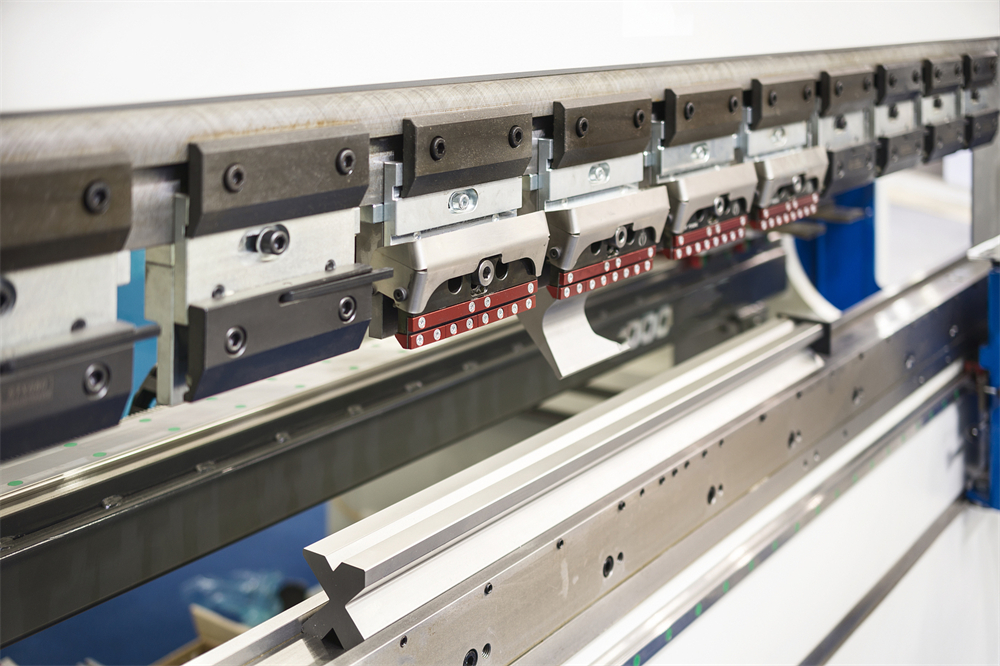
The relationship between the punch and the die is where the magic happens, but it is also where many problems begin. Over time, the tips of punches and the shoulders of dies wear down. Even a few thousandths of an inch of wear can change the radius of the bend and the depth of penetration. If you are experiencing inconsistent bends, inspect your tooling for signs of deformation, pitting, or uneven wear. Using a worn-out section of a die next to a new section will produce a noticeable twist in the finished part.
Selection is equally important. Using a V-opening that is too small for the material thickness increases the required tonnage and accelerates tool wear, while a V-opening that is too large reduces the accuracy of the bend. As a general rule, the V-opening should be 8 times the material thickness for mild steel. If your bends are inconsistent, verify that the tooling is correctly matched to the job and that the tools are seated and clamped perfectly square in the ram and bed.
Machine Deflection and the ‘Canoe Effect’
Every press brake, regardless of its brand, will deflect under load. The center of the ram and the bed tend to bow away from each other when pressure is applied, a phenomenon often called the “canoe effect.” This results in a bend that is more open in the middle than at the ends. If your parts are consistently inconsistent—meaning they are always wider in the center—the issue is likely a lack of proper crowning compensation.
Modern HARSLE machines utilize CNC crowning systems to counteract this deflection. However, if the crowning system is not calibrated correctly or if the operator is not inputting the correct tonnage data, the compensation will be inaccurate. Troubleshooting this requires checking the mechanical or hydraulic crowning settings and ensuring they are dynamically adjusting to the specific length and thickness of the part being processed.
Technical Details: Deep Dive into Machine Calibration
Hydraulic System Stability and Oil Temperature
The consistency of a hydraulic press brake is heavily dependent on the consistency of its hydraulic fluid. As the machine runs throughout the day, the oil heats up, which changes its viscosity. Thinner, hotter oil can flow through valves differently than cold oil, potentially causing the ram to drift or stop at slightly different points. This is a common reason why the first few parts of a shift might be perfect, but parts produced three hours later are out of tolerance.
To fix this, ensure your machine’s cooling system is functioning correctly. High-end CNC press brakes often include temperature sensors that allow the controller to compensate for viscosity changes. Additionally, check for air in the hydraulic lines or leaking seals, which can cause the ram to “stutter” or lose parallelism. Regular maintenance of the hydraulic filters and oil quality is a non-negotiable requirement for precision bending.
Ram Parallelism and Y1/Y2 Axis Synchronization
In modern CNC press brakes, the ram is controlled by two independent hydraulic cylinders, referred to as the Y1 and Y2 axes. These axes must be perfectly synchronized to ensure the ram descends and stays level throughout the stroke. If one side is slightly lower than the other, the bend angle will vary from left to right across the workpiece. This is a critical area for Press Brake Troubleshooting : Bends Are Inconsistent Fix Them.
Calibration of the linear encoders is the first step in fixing synchronization issues. These encoders provide feedback to the CNC controller about the exact position of each side of the ram. If an encoder is dirty, loose, or misaligned, the controller receives false data. Cleaning the encoder scales and performing a zero-point calibration can often resolve mysterious angle variations. If the mechanical alignment of the ram has shifted due to a collision or extreme off-center loading, a professional technician may be required to re-level the machine.
Backgauge Accuracy and Repeatability
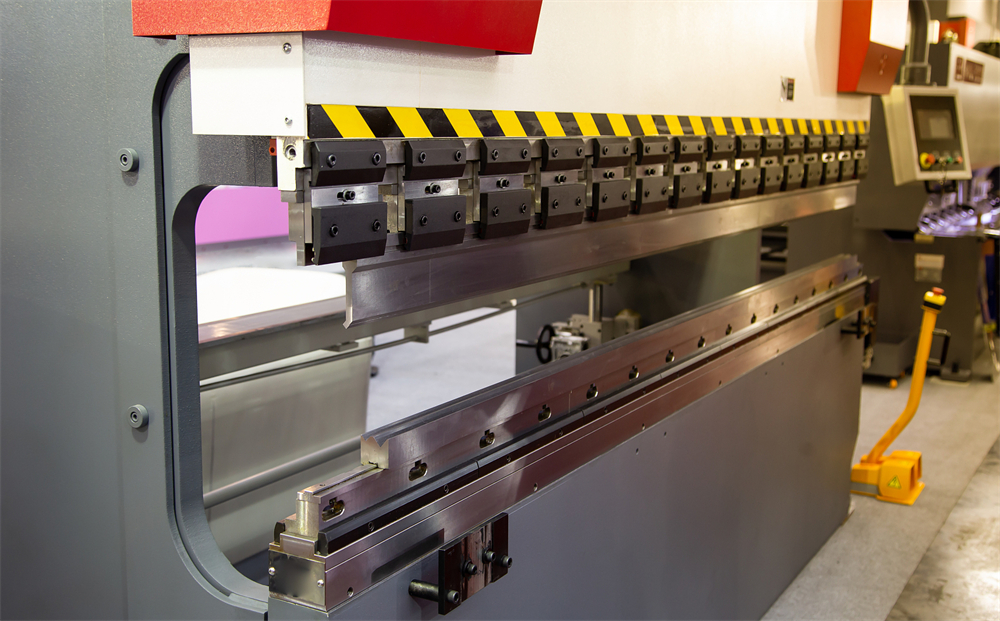
While the ram controls the angle, the backgauge controls the dimensions and the squareness of the bend. If your flange lengths are inconsistent, the backgauge is the primary suspect. Over time, the lead screws or drive belts in the backgauge system can wear, leading to “backlash” or play in the movement. This means the gauge might stop at 100mm when moving forward, but at 100.2mm when moving backward to the same position.
To troubleshoot backgauge issues, check for mechanical looseness in the R-axis (height) and X-axis (depth). Ensure that the fingers are tight and that they haven’t been bent by a collision. A common fix is to recalibrate the backgauge’s home position and check the tension on the drive components. In a high-production environment, even a small amount of debris on the backgauge tracks can cause the motor to skip steps, leading to significant dimensional errors.
Selection Advice: Choosing a Machine for Maximum Consistency
Prioritize Rigid Frame Construction
When purchasing a new press brake, the rigidity of the frame is the foundation of consistency. A machine with a heavy, stress-relieved steel frame will experience less deflection than a lighter, cheaper alternative. HARSLE emphasizes the use of high-quality steel and advanced welding techniques to ensure that the frame remains stable even under maximum tonnage. When evaluating machines, look at the total weight of the unit; a heavier machine generally indicates more robust construction and better long-term accuracy.
Advanced CNC Control and Software
The “brain” of the press brake is just as important as its “muscles.” A sophisticated CNC controller can automatically calculate the required tonnage, springback compensation, and crowning adjustments based on the material type and thickness you input. Look for systems that offer 2D or 3D graphical interfaces, as these help operators visualize the bend sequence and reduce the likelihood of human error. Features like “Automatic Bend Sequence” and “Collision Detection” not only improve consistency but also protect your investment from accidental damage.
Integrated Crowning and Angle Measurement Systems
For shops that require the highest levels of precision, investing in a machine with an integrated angle measurement system is a game-changer. These systems use lasers or mechanical probes to measure the angle of the bend in real-time and provide feedback to the CNC controller, which then adjusts the ram depth on the fly to achieve the perfect angle. While this adds to the initial cost, the reduction in scrap and setup time provides a rapid return on investment. Similarly, ensure the machine has a high-quality mechanical crowning system, which is often more stable and easier to calibrate than purely hydraulic versions.
Frequently Asked Questions (FAQ)
Why does my bend angle change when I move the part to a different section of the bed?
This is usually caused by uneven wear on the tooling or a lack of proper crowning. If the center of the bed has been used more frequently than the ends, the dies in that area will be more worn. Additionally, if the crowning system isn’t compensating for the bed’s deflection, the angle will naturally be more open in the center. To fix this, rotate your tooling regularly and verify your crowning settings.
How often should I calibrate my press brake?
For high-precision work, a quick daily check of the backgauge and ram zero-points is recommended. A full calibration of the hydraulic system, linear encoders, and mechanical levels should be performed at least once or twice a year, or whenever the machine has been moved or subjected to a significant collision.
Can the temperature of my shop affect bending consistency?
Yes, significantly. Not only does temperature affect the viscosity of the hydraulic oil, but it can also cause the metal frame of the machine to expand or contract. In shops with extreme temperature swings between morning and afternoon, you may need to adjust your settings as the day progresses. Some advanced CNCs have thermal compensation features to handle this automatically.
What is the most common cause of flange length errors?
The most common cause is a misaligned or loose backgauge. However, it can also be caused by the material slipping during the bend. If the clamping pressure isn’t sufficient or if the material is oily, it can shift as the punch makes contact. Ensure your backgauge fingers are properly positioned and that the material is clean and held firmly against the stops.
How do I calculate springback for different materials?
Springback is the tendency of the metal to return to its original shape after the bending force is removed. It varies by material type and hardness. Generally, mild steel has 1-2 degrees of springback, while stainless steel can have 3-5 degrees. Most modern CNC controllers have built-in databases to calculate this, but you should always perform a test bend and adjust the “angle offset” in the controller to compensate for the specific batch of material you are using.
Conclusion: Maintaining the Edge in Fabrication
Mastering Press Brake Troubleshooting : Bends Are Inconsistent Fix Them is an ongoing process of observation, maintenance, and technical adjustment. Inconsistency is rarely the result of a single “broken” part; rather, it is the accumulation of small errors in material handling, tooling maintenance, and machine calibration. By following a systematic approach—checking the material first, then the tooling, and finally the machine’s mechanical and hydraulic systems—you can quickly identify the culprit and return to production.
At HARSLE, we believe that providing the best machinery is only half the battle. Empowering our customers with the knowledge to maintain and troubleshoot their equipment is what truly drives success in the fabrication industry. Regular maintenance, such as lubricating moving parts, checking oil levels, and cleaning encoder scales, will prevent the majority of inconsistency issues before they even start. When you invest in high-quality equipment and pair it with a rigorous troubleshooting protocol, you ensure that every part leaving your shop meets the highest standards of precision.
Remember, a press brake is a precision instrument. Treat it with the care it deserves, and it will provide years of reliable, consistent service. If you continue to experience issues after following this guide, don’t hesitate to reach out to technical support or a qualified service engineer to perform a deep-dive diagnostic on your system. Precision is not just a goal; it is a requirement for excellence in modern manufacturing.